
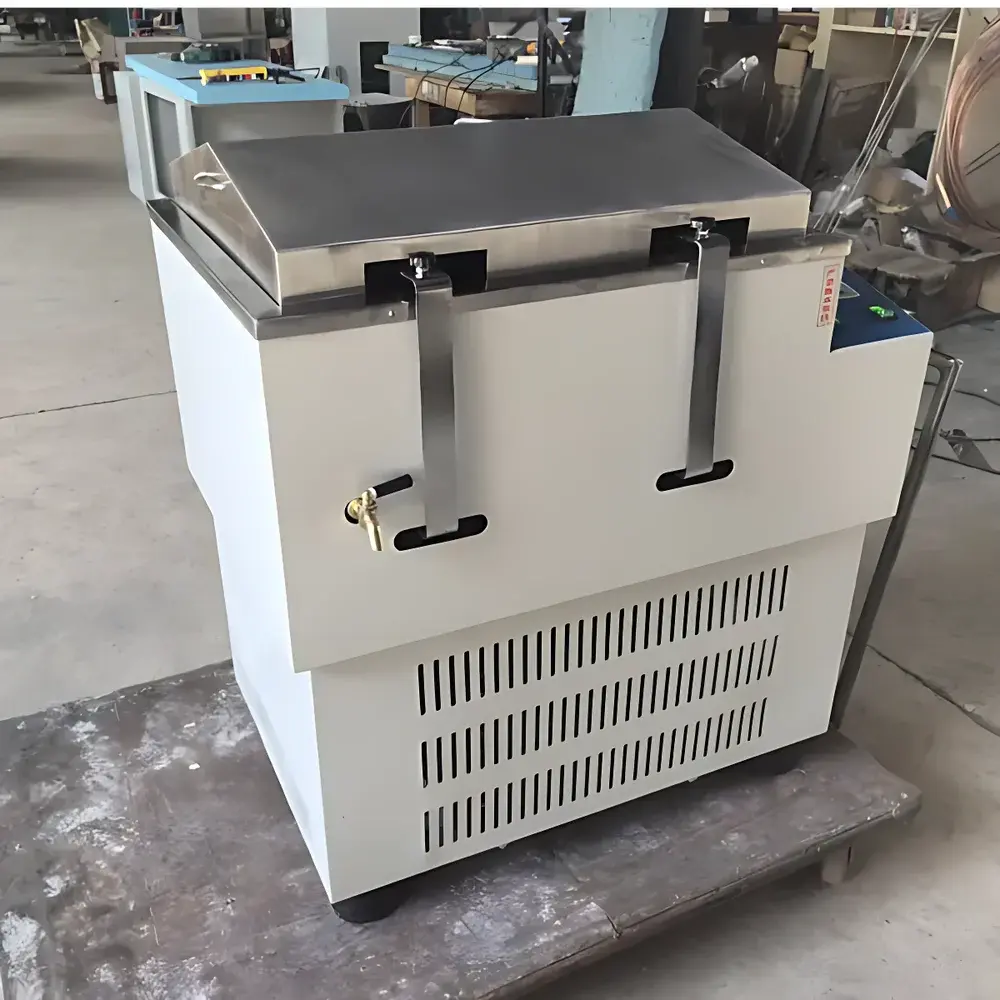
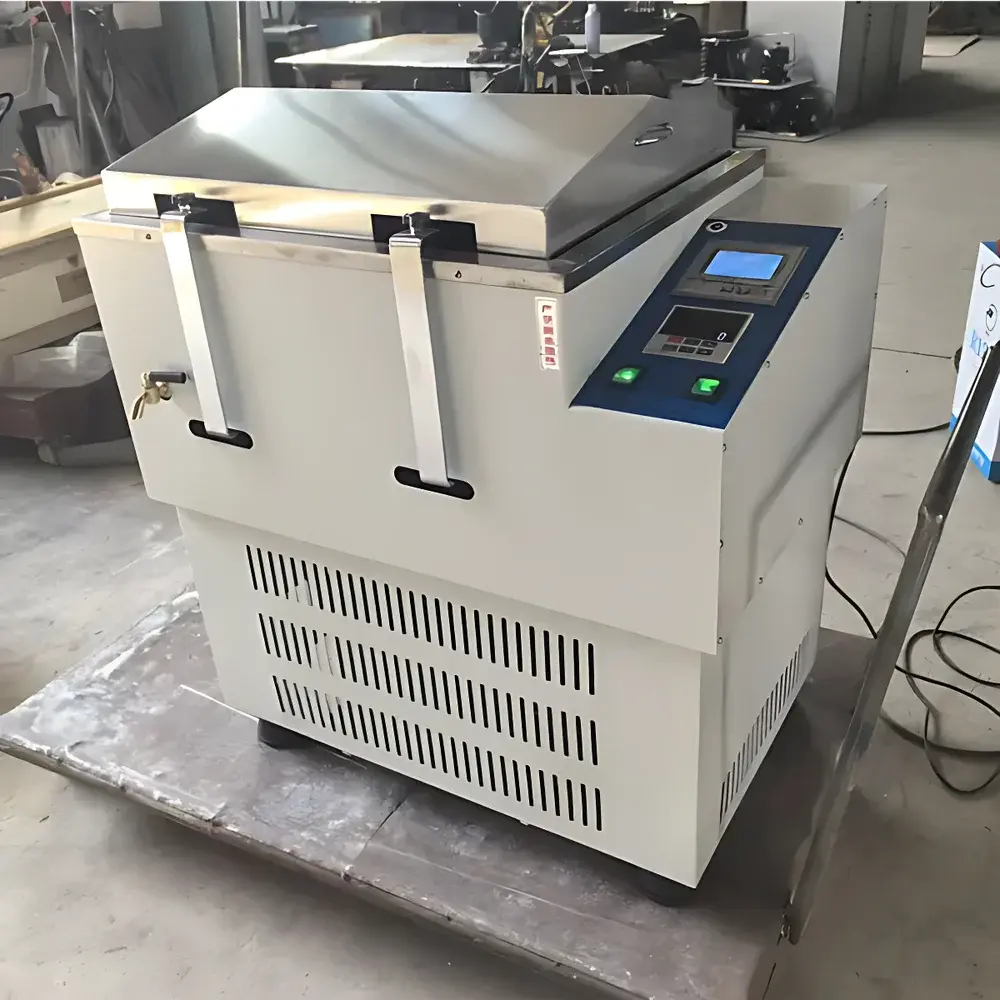
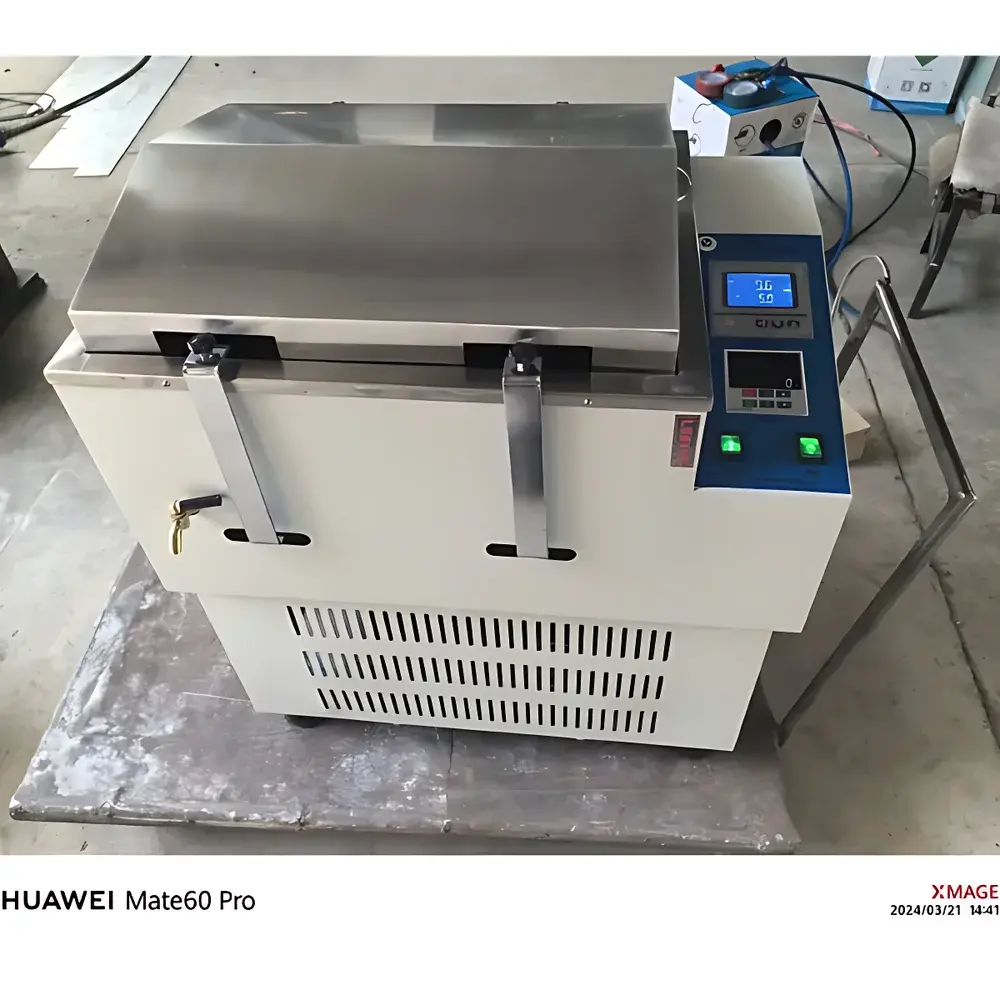
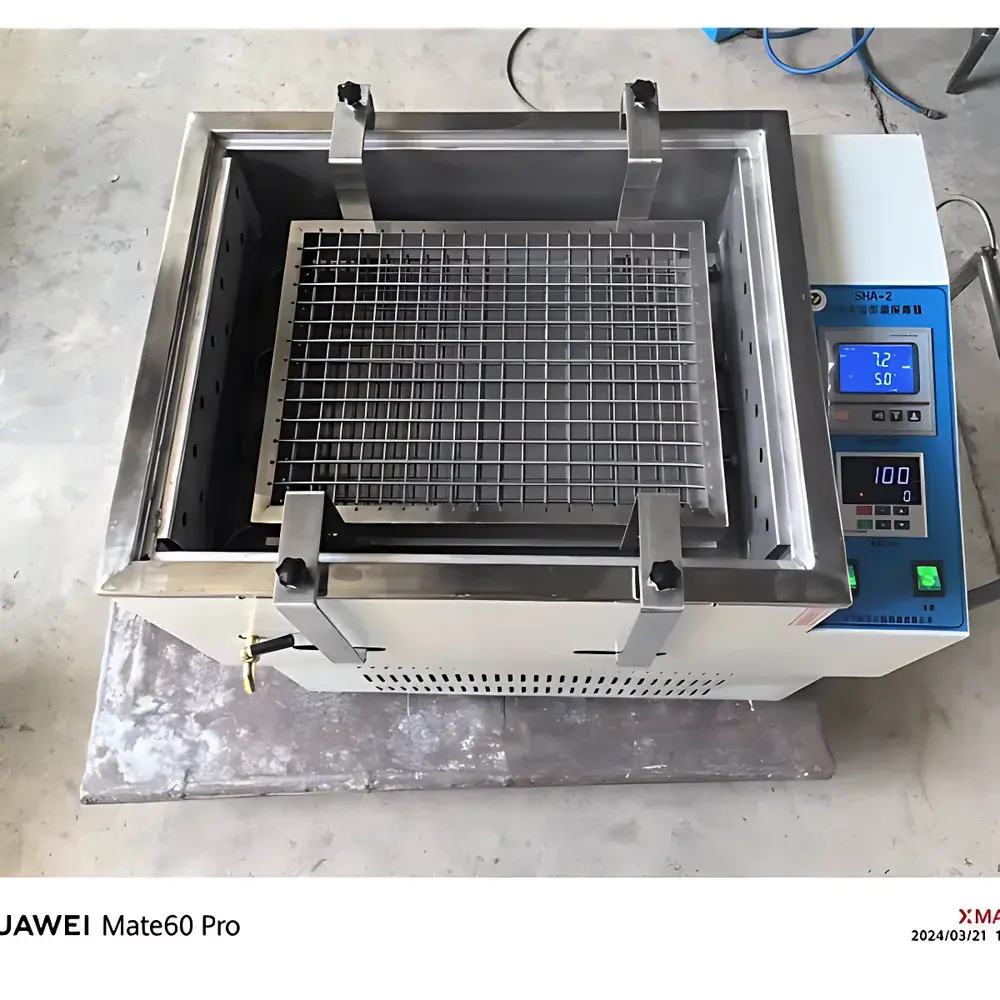
CZGY SHA-2 Cryogenic Water-Bath Orbital Shaker
| Brand | CZGY |
|---|---|
| Origin | Jiangsu, China |
| Manufacturer Type | Direct Manufacturer |
| Instrument Category | Domestic |
| Model | SHA-2 |
| Price Range | USD 700–1,400 |
| Instrument Type | Water-Bath Constant-Temperature Orbital Shaker |
| Timer Range | 0–9999 min |
| Oscillation Speed | 60–300 rpm |
| Orbit Diameter | 20 mm |
| Temperature Range | 0–100 °C |
| Platform Quantity | 1 |
| Power Supply | 220 V AC, 50 Hz |
| Total Power | 1800 W |
| Compressor Power | 300 W |
| Platform Dimensions | 405 × 310 mm |
Overview
The CZGY SHA-2 Cryogenic Water-Bath Orbital Shaker is an integrated temperature-controlled shaking platform engineered for precise, reproducible cultivation of biological and biochemical samples under tightly regulated thermal and mechanical conditions. It operates on the principle of orbital agitation—where a circular horizontal motion (20 mm orbit diameter) induces uniform mixing and oxygen transfer in liquid cultures—combined with dual-mode thermal regulation: resistive heating for temperatures above ambient and a dedicated refrigeration circuit (300 W hermetic compressor) for sub-ambient operation down to 0 °C. This hybrid thermal architecture enables uninterrupted incubation across the full 0–100 °C range without manual mode switching, making it suitable for applications requiring both cryogenic stabilization (e.g., enzyme kinetics at 4 °C) and elevated-temperature culture (e.g., thermophilic bacterial growth at 65 °C). The unit features a seamless stainless-steel water bath chamber and a static-charged cold-rolled steel exterior, ensuring corrosion resistance, structural rigidity, and long-term operational stability in shared laboratory environments.
Key Features
- Orbital shaking mechanism with continuously adjustable speed (60–300 rpm), calibrated to ±2 rpm accuracy across the full range
- Dual-mode temperature control system: Peltier-free compressor-based cooling + high-efficiency tubular heating elements, enabling stable setpoint maintenance within ±0.3 °C at 25 °C (load-dependent)
- Microprocessor-based PID temperature controller with auto-tuning capability, configurable proportional band (P = 1–200 °C), integral time (I = 0–999 s), and derivative time (D = 0–999 s)
- Extended digital timer (0–9999 minutes), supporting both timed operation and continuous “ON” mode; real-time display of elapsed time and remaining time
- Compressor protection logic: programmable restart delay (120–200 s default) to prevent high-pressure start-up damage
- Intelligent refrigeration engagement logic: compressor activates only when setpoint ≤ AFL (default 10.0 °C) and deactivates when setpoint ≥ AFH (default 35.0 °C), optimizing energy use and component longevity
- Calibration-accessible sensor offset correction (±19.9 °C resolution 0.1 °C) and alarm threshold configuration (AL2, default 10.0 °C deviation)
- Single-platform design (405 × 310 mm) with universal clamping interface compatible with standard flasks (50–2000 mL), test tubes, and multi-well plates using optional adapters
Sample Compatibility & Compliance
The SHA-2 accommodates aqueous and low-viscosity organic media in common laboratory vessels—including Erlenmeyer flasks, centrifuge tubes, Petri dishes, and deep-well microplates—when secured via spring-loaded or screw-type clamps. Its stainless-steel bath chamber resists degradation from saline buffers, phosphate-based media, and mild ethanol/water mixtures. While not certified for IEC 61000-6-3 EMC immunity or UL/CSA safety listing, the device conforms to general laboratory equipment safety practices per GB 4793.1–2007 (Chinese equivalent of IEC 61010-1). For GLP/GMP-aligned workflows, its digital controller supports audit-ready parameter logging (via optional RS-232 or USB data export), and all temperature and speed settings are password-protected (LcK level 1 or 2) to prevent unauthorized modification. It is routinely deployed in academic teaching labs, QC microbiology units, and R&D bioprocess development teams where ISO/IEC 17025 traceability is maintained via external calibration of the PT100 sensor against NIST-traceable standards.
Software & Data Management
The SHA-2 operates autonomously via its embedded 4-digit LED interface with dedicated keys for speed (︽/︾), time (H/M), SET, RUN/STOP, and status indicators (green = active, red = standby). No proprietary software is required for basic operation. However, optional firmware-enabled serial communication (RS-232, TTL-level) permits integration into centralized lab management systems for remote monitoring of real-time temperature, speed, and timer status. Logged data—comprising setpoints, actual readings, and event timestamps (e.g., compressor activation, over-temperature alarm)—can be exported as CSV for post-hoc analysis in MATLAB, Python (pandas), or LabArchives ELN. The controller stores up to 32 historical run profiles, each retaining speed, temperature, and duration parameters for rapid recall. All configuration changes—including PID tuning, AL1/AL2 thresholds, and AFL/AFH switching points—are retained after power cycling.
Applications
- Microbial culture: Escherichia coli, Bacillus subtilis, and yeast fermentations across physiological temperature gradients (e.g., 18 °C for slow-growth studies, 37 °C for standard LB broth, 55 °C for Geobacillus stearothermophilus validation)
- Enzyme activity assays: temperature-dependent kinetic profiling of restriction endonucleases, polymerases, and phosphatases under controlled agitation to minimize boundary-layer effects
- Cell suspension culture: maintenance of CHO or HEK293 cells in serum-free media during transfection optimization or metabolite sampling protocols
- Extraction and solubilization: accelerated solid–liquid extraction of plant metabolites or protein inclusion bodies using heated aqueous/organic solvent mixtures
- Environmental sample processing: homogenization and stabilization of wastewater, soil leachates, or air filter eluates prior to downstream HPLC or qPCR analysis
- Educational use: undergraduate biochemistry labs performing Michaelis–Menten experiments, antibiotic susceptibility testing (AST), or plasmid miniprep protocol training
FAQ
What is the minimum operating temperature, and does it require pre-cooling?
The SHA-2 achieves a verified minimum bath temperature of 0 °C. Pre-cooling is recommended for rapid attainment of sub-20 °C setpoints; ambient-start ramp time to 4 °C is approximately 45 minutes with a filled bath (12 L capacity).
Can the unit maintain temperature stability with large-volume flasks (e.g., 2 L) at high agitation speeds?
Yes—thermal uniformity remains within ±0.5 °C across the platform surface at 200 rpm with a 2 L flask containing 1.5 L of water, provided the bath level exceeds the heater element by ≥50 mm.
Is the water bath solution interchangeable, or must deionized water be used?
Deionized or distilled water is strongly recommended. Ethylene glycol–water mixtures (≤30% v/v) may be used for extended sub-zero operation, but viscosity increases above 25% reduce heat transfer efficiency and may impair circulation.
How is calibration verification performed?
Users should periodically validate temperature accuracy using a NIST-traceable handheld thermometer immersed at three locations (center, front-left, rear-right) while the unit runs at 25 °C and 150 rpm for ≥30 minutes. Deviations >±0.5 °C warrant SC offset adjustment.
Does the unit support 21 CFR Part 11 compliance for regulated pharmaceutical labs?
Out-of-the-box, it lacks electronic signature, audit trail, or user-role management. However, when connected to a validated third-party data acquisition system (e.g., LabVIEW with NI cDAQ), it can contribute to Part 11–compliant workflows under documented SOPs.




