
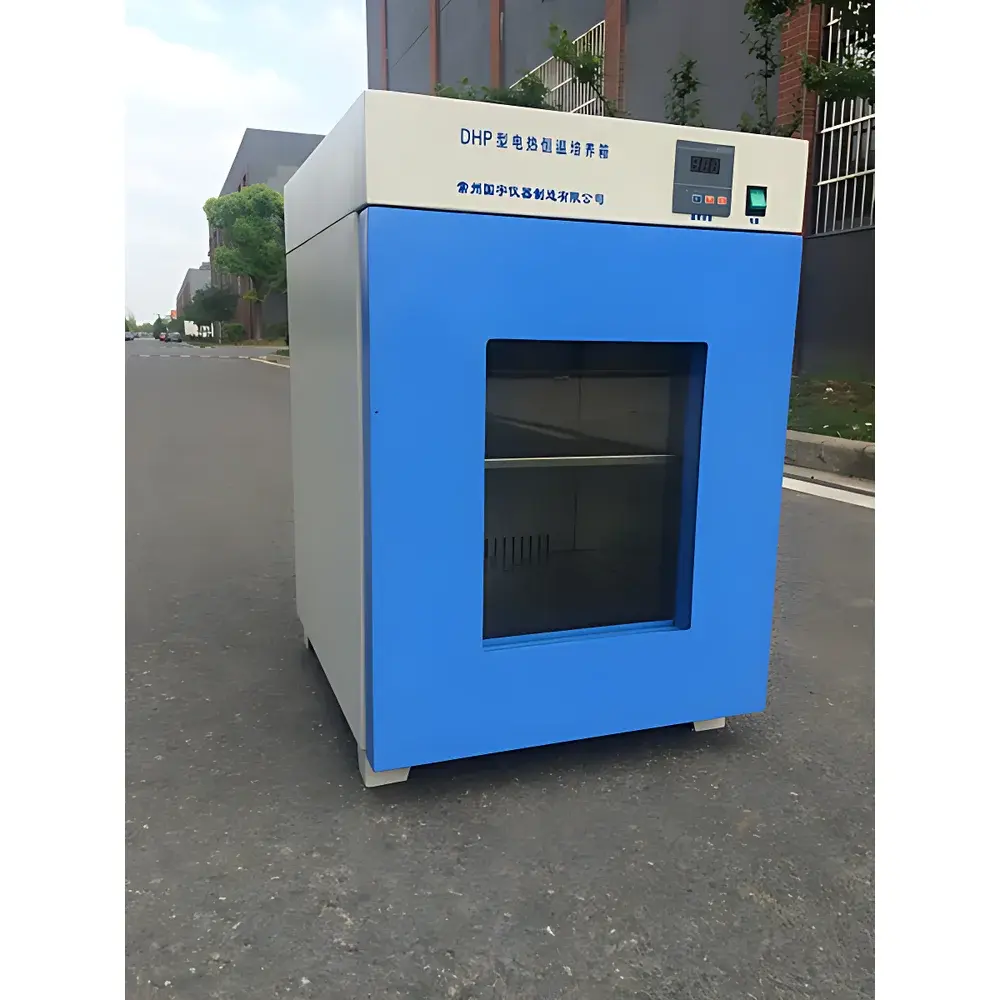
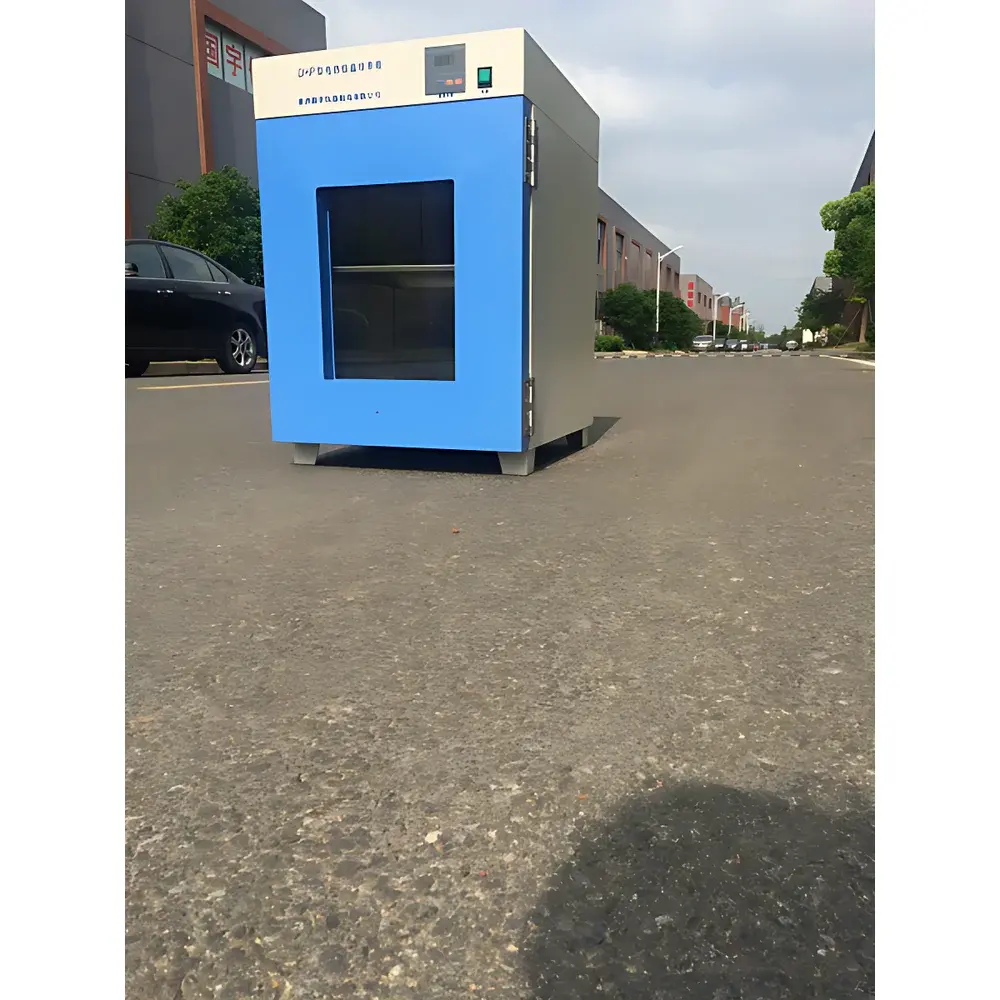
CZGY DHP-360 Precision Electrically Heated Incubator
| Brand | CZGY |
|---|---|
| Origin | Jiangsu, China |
| Manufacturer Type | Direct Manufacturer |
| Country of Origin | China |
| Model | DHP-360 |
| Control Range | Ambient +5°C to 65°C |
| Temperature Uniformity | ±1°C |
| Humidity Capability | None |
| Internal Chamber Dimensions | 360 × 360 × 420 mm (L×W×H) |
| Rated Power | 250 W |
| Voltage/Frequency | 220 V / 50 Hz |
| Shelf Load Capacity | 12 kg |
| Temperature Stability | ≤ ±0.5°C |
| Construction | Cold-rolled steel exterior with electrostatic powder coating |
Overview
The CZGY DHP-360 Precision Electrically Heated Incubator is a laboratory-grade, convection-driven thermal incubation system engineered for consistent, reliable temperature control in microbiological culture, cell maintenance, enzyme activity studies, and general biological sample conditioning. Unlike humidity-controlled or CO₂-capable incubators, the DHP-360 is purpose-built as a dry-heating platform optimized for applications requiring stable, non-condensing thermal environments—such as bacterial colony propagation, reagent pre-warming, media solidification, and stability testing of pharmaceutical intermediates under ambient-humidity conditions. Its operational principle relies on forced-air convection via an internal axial fan and strategically routed thermal channels, ensuring uniform heat distribution across the entire working volume without reliance on steam injection or humidification systems. The unit complies with fundamental safety and electromagnetic compatibility requirements per IEC 61010-1 for laboratory electrical equipment and meets structural durability benchmarks expected in ISO/IEC 17025-accredited quality control laboratories.
Key Features
- Microprocessor-based PID temperature controller with dual-line LED display: upper line shows real-time chamber temperature; lower line enables intuitive setpoint adjustment via △/▽ keys.
- High-fidelity PT100 sensor with user-accessible offset calibration (SC parameter, adjustable from –50°C to +50°C) to compensate for long-term sensor drift or installation-specific thermal gradients.
- Robust mechanical architecture: cold-rolled steel enclosure finished with corrosion-resistant electrostatic powder coating; seamless 304 stainless steel inner chamber with radius-cornered design for effortless cleaning and compliance with GLP-sanitation protocols.
- Optimized thermal insulation: high-density ultra-fine glass fiber填充 between outer shell and inner chamber minimizes heat loss and reduces external surface temperature rise during extended operation at 65°C.
- Intelligent safety logic: over-temperature alarm (AL parameter configurable across full scale) activates visual indicator (ALM LED) and cuts heating output when threshold is exceeded—critical for unattended overnight runs.
- Parameter lock function (LCK=1 or 2) prevents accidental modification of PID tuning constants (P, I, D), cycle time (t), or hysteresis (Hy), supporting audit-ready configuration management in regulated environments.
Sample Compatibility & Compliance
The DHP-360 accommodates standard laboratory consumables including Petri dishes (up to 150 mm diameter), multi-well plates (6–96-well), test tubes (13–25 mm OD), flasks (Erlenmeyer up to 1 L), and sealed vials. Its open-air, non-humidified chamber eliminates condensation-related contamination risks—making it suitable for applications where moisture introduction could compromise sterility or induce hydrolysis (e.g., lyophilized reagent storage, dry-cell pellet conditioning, or polymer curing trials). While not certified to FDA 21 CFR Part 11, its programmable alarm thresholds, calibration traceability via SC offset, and parameter locking support alignment with internal SOPs for GxP-aligned workflows. It conforms to EN 61000-6-3 (EMI emission) and EN 61000-6-2 (immunity) standards for industrial environments.
Software & Data Management
The DHP-360 operates as a standalone instrument with no embedded data logging or PC interface. All operational parameters—including setpoint, alarm limit, PID coefficients, and sensor offset—are retained in non-volatile memory during power interruption. For laboratories requiring electronic recordkeeping, integration with external temperature validation systems (e.g., calibrated thermistor arrays connected to USB data loggers compliant with ASTM E2874) is recommended. The unit supports periodic verification per ISO/IEC 17025 clause 5.10.4 through manual probe mapping at nine standardized points (center + eight corners), with results documented in lab notebooks or LIMS-compatible spreadsheets.
Applications
- Maintenance of mesophilic bacterial cultures (e.g., E. coli, Bacillus subtilis) at 30–37°C with minimal thermal fluctuation.
- Pre-incubation of enzymatic reaction mixtures prior to kinetic assay initiation.
- Controlled drying of thin-layer chromatography (TLC) plates post-development.
- Accelerated stability testing of excipients under elevated temperature (e.g., 40°C/75% RH simulation via separate humidity chamber).
- Conditioning of pH electrodes and reference solutions prior to calibration.
- Warm-up of optical components (e.g., cuvettes, lenses) to minimize thermal lensing artifacts in spectrophotometric measurements.
FAQ
Does the DHP-360 support humidity control?
No. It is a dry-heating incubator with no integrated humidification system or water reservoir.
Can the unit be used for CO₂-dependent cell culture?
No. It lacks gas-tight sealing, CO₂ injection ports, and pH-stabilizing mechanisms required for mammalian cell culture.
Is the temperature sensor replaceable by the end user?
The PT100 sensor is factory-installed and not field-replaceable; calibration verification and offset correction are the intended maintenance procedures.
What is the maximum safe continuous operating temperature?
65°C is the validated upper limit per design specification; sustained operation above this may accelerate insulation aging and void warranty coverage.
How often should temperature uniformity be verified?
Per ISO/IEC 17025 guidance, quarterly verification is recommended for routine QC use; monthly checks are advised for GLP-regulated applications.
Related Products




