
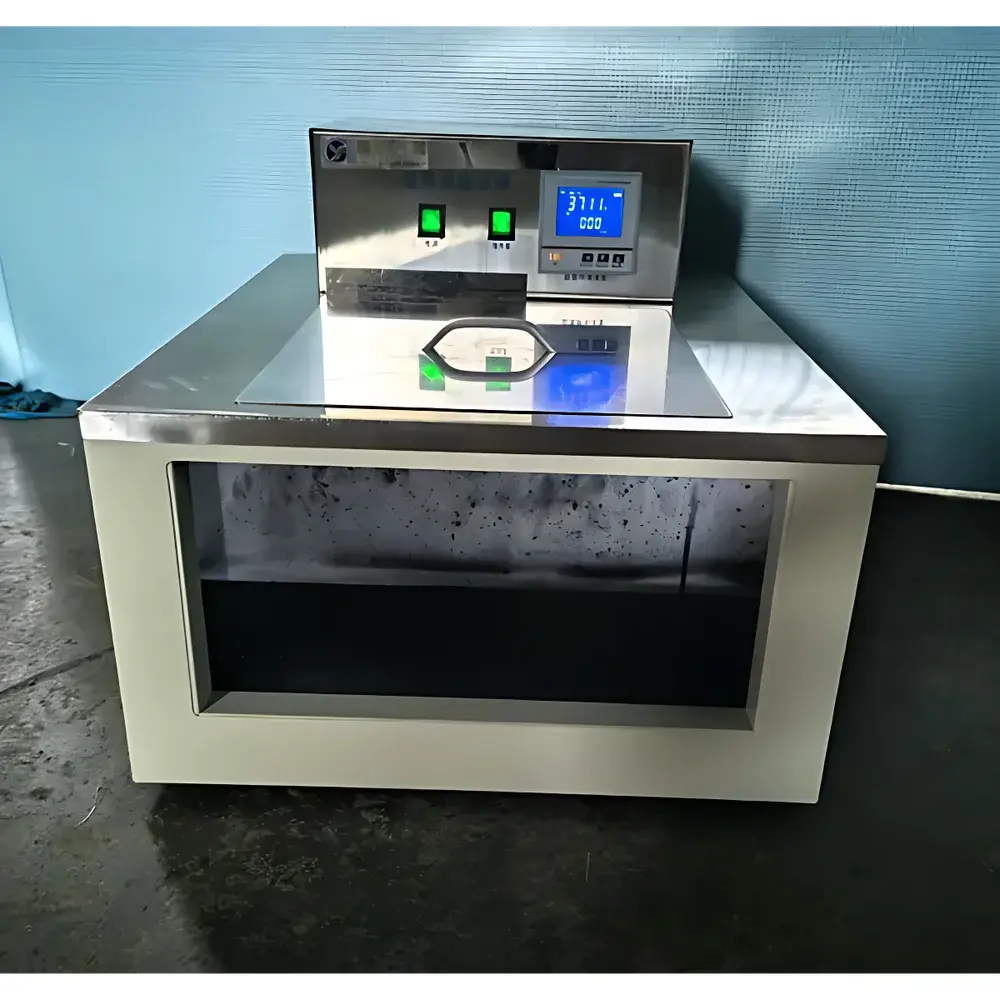
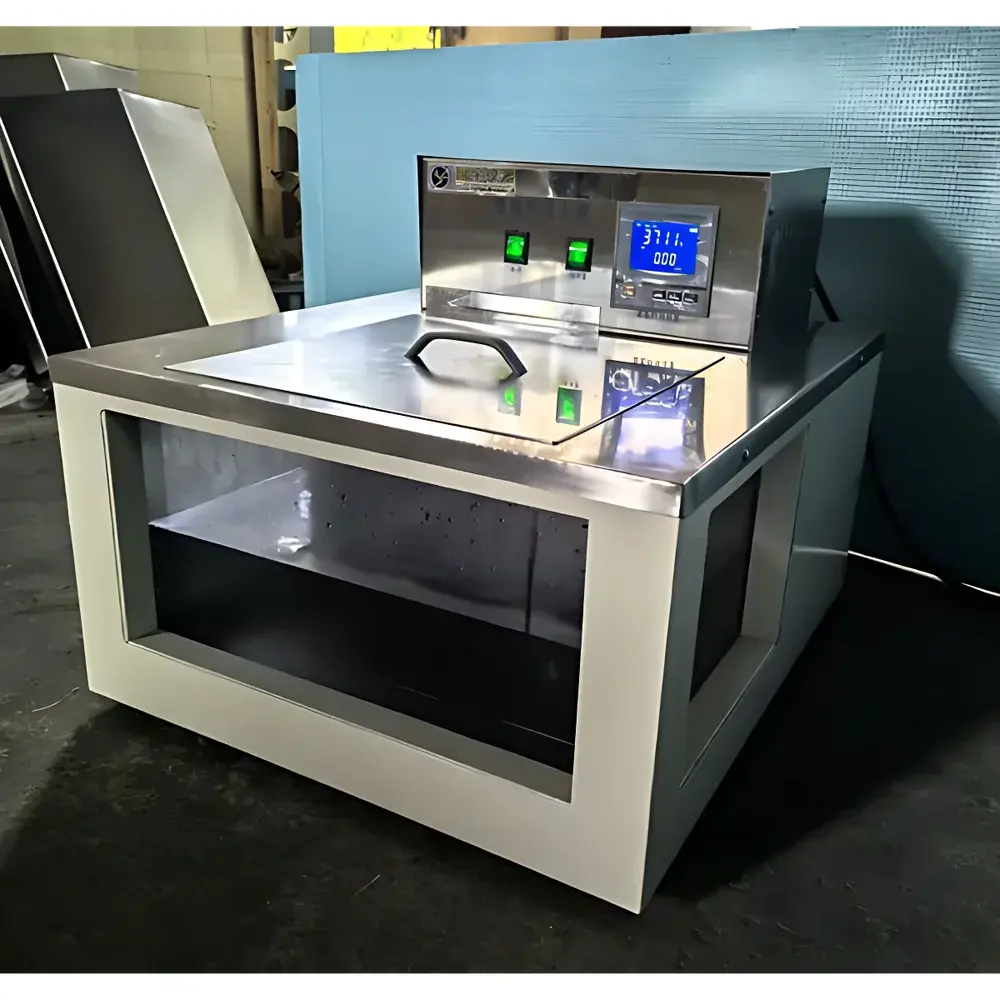
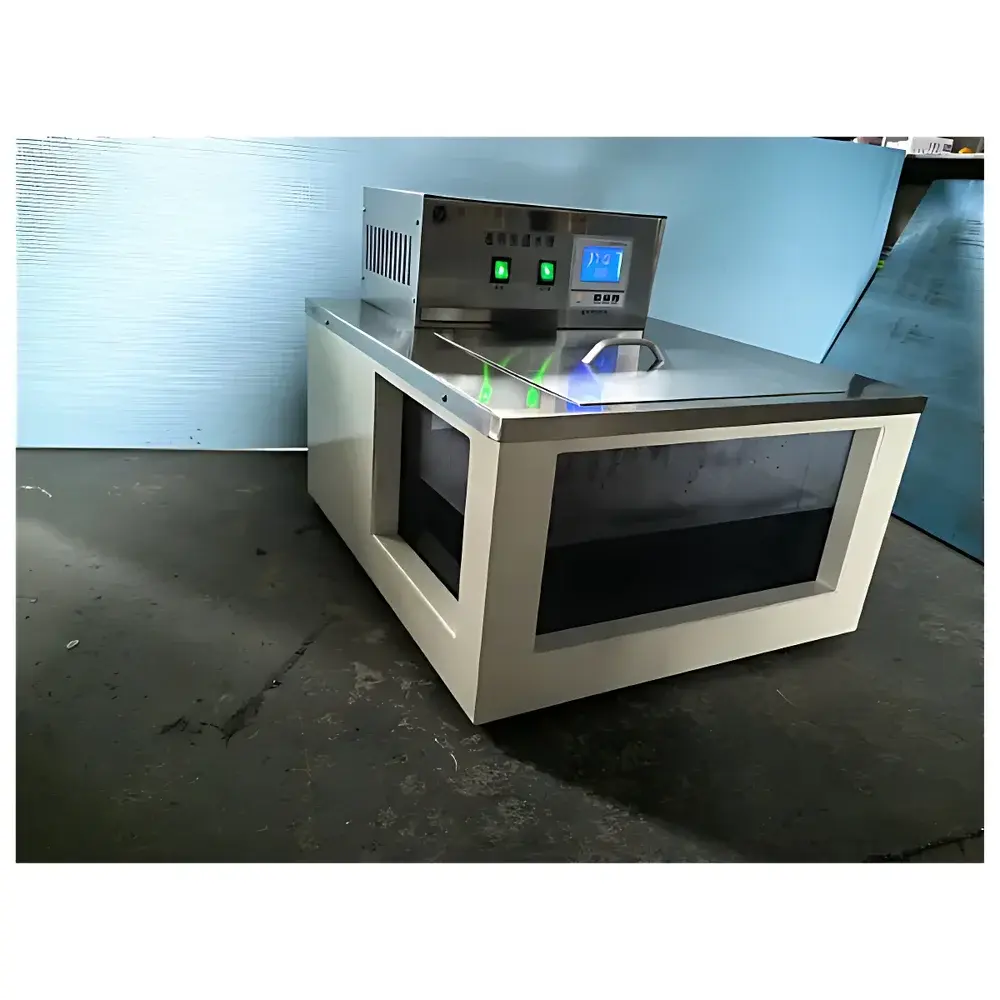
CZGY GY-30T-11 Transparent Constant-Temperature Circulating Water Bath
| Brand | CZGY |
|---|---|
| Origin | Jiangsu, China |
| Manufacturer Type | Direct Manufacturer |
| Instrument Type | Water/Oil Bath Thermostatic Tank |
| Circulation Mode | Internal Circulation |
| Temperature Control | Heating-Only |
| Bath Volume | 22.5 L |
| Temperature Range | RT + 5°C to 80°C |
| Temperature Stability | ±0.05°C |
| Temperature Resolution | 0.1°C |
| Power Supply | 220 V, 50 Hz |
Overview
The CZGY GY-30T-11 Transparent Constant-Temperature Circulating Water Bath is an engineered thermal platform designed for precise, stable, and visually monitored temperature control in laboratory applications requiring non-invasive observation of reaction dynamics. Unlike conventional opaque water baths, its bath chamber is constructed from high-transparency, chemically resistant organic polymer—enabling real-time, multi-angle visual inspection (front, left, and right) without lid removal or process interruption. This design supports experimental integrity during distillation, solvent evaporation, sample concentration, enzymatic incubation, and temperature-dependent chemical synthesis. Internally, a low-pulsation centrifugal circulation pump ensures homogeneous heat distribution across the entire 22.5 L working volume, minimizing axial and radial thermal gradients. Temperature regulation is achieved via a PID-controlled resistive heating system with a high-stability platinum resistance sensor (Pt100-class equivalent), delivering ±0.05°C stability under steady-state conditions within the operational range of RT + 5°C to 80°C.
Key Features
- Optically transparent bath chamber fabricated from UV-stabilized, hydrolysis-resistant acrylic—meets ISO 7208 requirements for optical clarity and long-term dimensional stability in aqueous environments
- Integrated internal recirculation system with adjustable flow rate (0–3.5 L/min), ensuring uniform thermal distribution and eliminating localized hot/cold zones
- Digital microprocessor-based controller with 0.1°C resolution and programmable timer (0–9999 minutes/hours), supporting unattended operation
- Stainless steel-reinforced structural frame with reinforced base plate for mechanical rigidity and vibration damping during concurrent agitation or stirring
- Heating power output of 2400 W enables rapid thermal ramping (typical 20°C/min from 25°C to 60°C at half-load), while maintaining energy efficiency through adaptive duty-cycle modulation
- Front-panel access to calibration offset adjustment and sensor diagnostics—supports traceable on-site verification per ISO/IEC 17025 guidelines
Sample Compatibility & Compliance
The GY-30T-11 accommodates standard laboratory glassware up to Ø250 mm diameter and 250 mm immersion depth, including round-bottom flasks, jacketed reactors, condensers, and sample holders for calorimetric or spectroscopic probes. Its open-top configuration (300 × 300 × 250 mm clear aperture) allows seamless integration with external stirrers, pH electrodes, or fiber-optic temperature sensors. The unit complies with IEC 61010-1:2010 for electrical safety in laboratory equipment and meets EN 60529 IP20 ingress protection standards. While not certified for Class I Division 1 hazardous locations, it is suitable for general-purpose use in GLP-compliant laboratories where temperature-critical protocols require documented thermal consistency (e.g., USP , ASTM E2876 for thermal validation of stability chambers).
Software & Data Management
The GY-30T-11 operates as a standalone analog-digital hybrid instrument with no embedded firmware-based data logging. However, its analog 0–5 V or 4–20 mA temperature output port (optional accessory) enables connection to external DAQ systems, SCADA platforms, or LIMS interfaces for time-stamped thermal profiling. When paired with third-party software such as LabVIEW or MATLAB, users can implement automated ramp-soak-hold sequences, generate calibration reports, and archive audit trails compliant with FDA 21 CFR Part 11 when used with validated electronic signature modules. All parameter settings—including setpoint, timer, and resolution—are retained after power cycling, supporting continuity in multi-shift operations.
Applications
- Controlled-rate solvent evaporation in pharmaceutical pre-formulation studies
- Thermal conditioning of viscosity standards prior to rheometer calibration (ASTM D445)
- Temperature stabilization of optical cells during UV-Vis spectrophotometric assays
- Pre-incubation of microbial cultures in biochemical oxygen demand (BOD) testing per EPA Method 405.1
- Support bath for rotary evaporators, particularly where visual confirmation of bumping or foaming is required
- Calibration reference environment for thermistor and RTD probe verification across mid-range temperatures
FAQ
Is the transparent bath chamber resistant to common organic solvents such as acetone or chloroform?
The acrylic chamber exhibits excellent resistance to water, alcohols, and dilute aqueous acids/bases, but prolonged exposure to strong ketones, halogenated solvents, or esters may cause surface crazing. Use of secondary containment or solvent-compatible liners is recommended for extended organic-phase operation.
Can external temperature probes be connected for independent verification?
Yes—the unit provides a dedicated analog output port (0–5 V DC proportional to measured temperature) compatible with most third-party digital multimeters or data loggers equipped with voltage-input channels.
Does the internal circulation system generate measurable vibration that could affect sensitive measurements?
Vibration amplitude at the bath surface is ≤0.5 µm RMS at 50 Hz, verified per ISO 20816-1, making it suitable for applications involving optical microscopy stages or precision weighing when mounted on vibration-damped workbenches.
What maintenance intervals are recommended for long-term accuracy retention?
We recommend quarterly verification of temperature uniformity (per ASTM E1112) and annual recalibration of the integrated Pt sensor by an ISO/IEC 17025-accredited provider; pump impeller inspection is advised every 12 months under continuous operation.



