
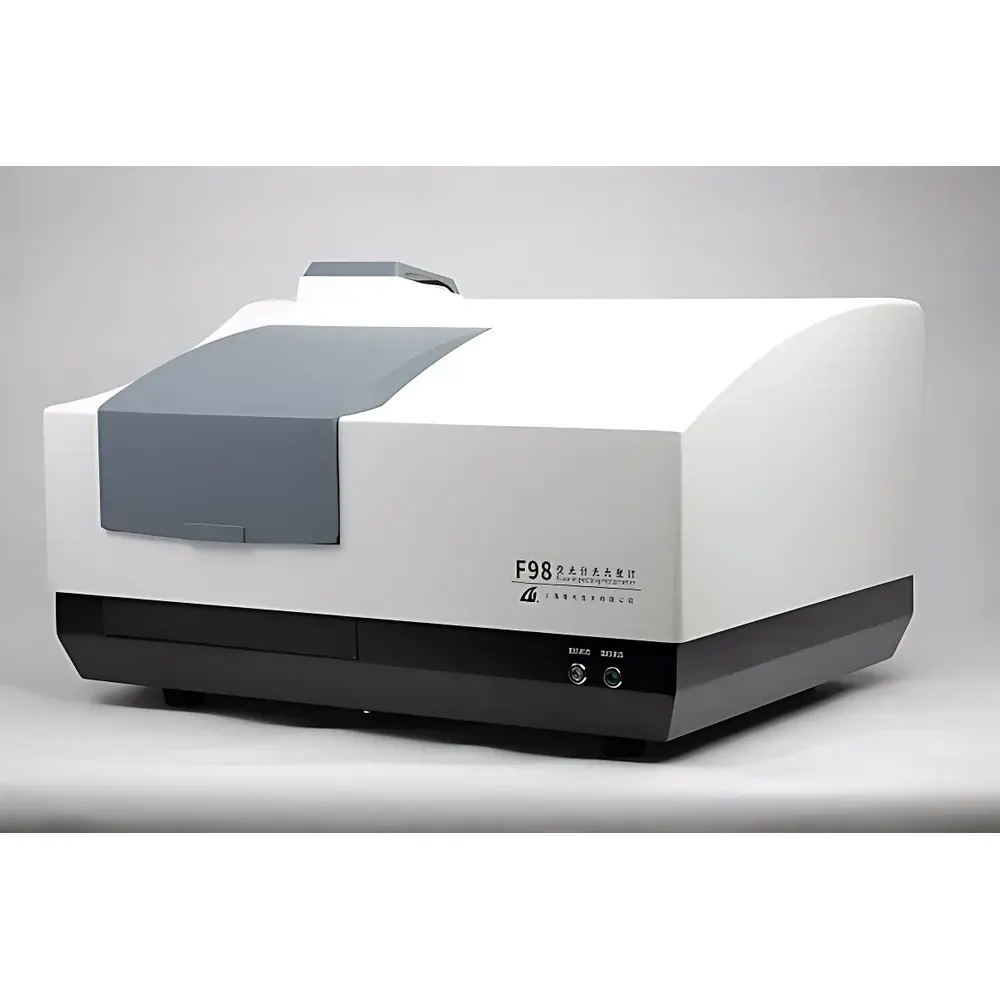
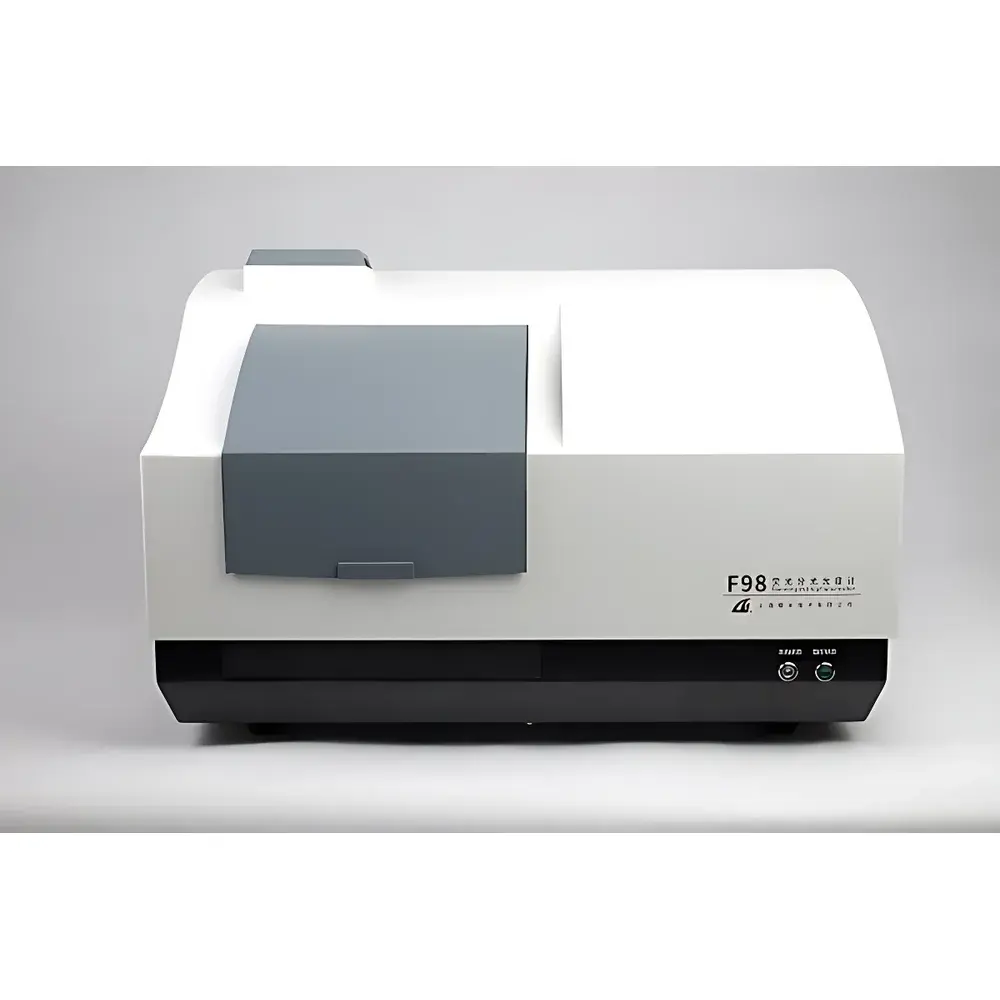
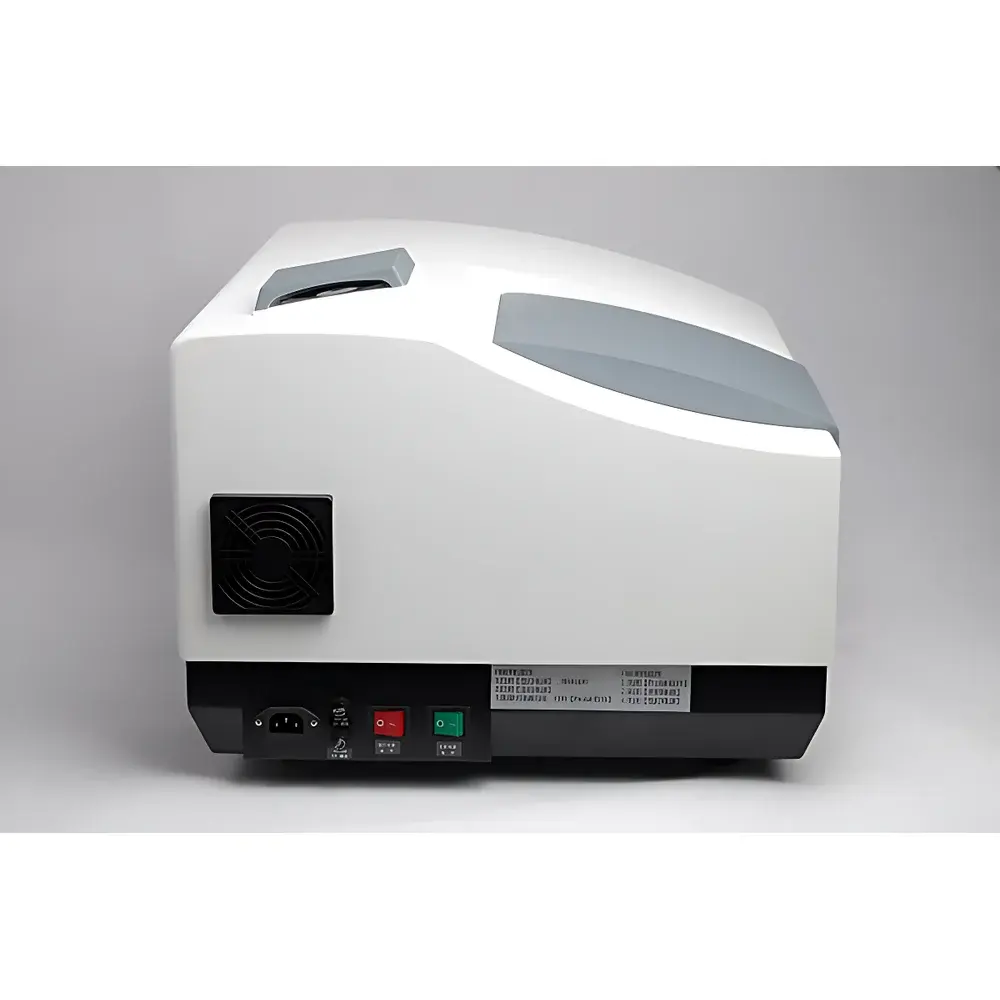
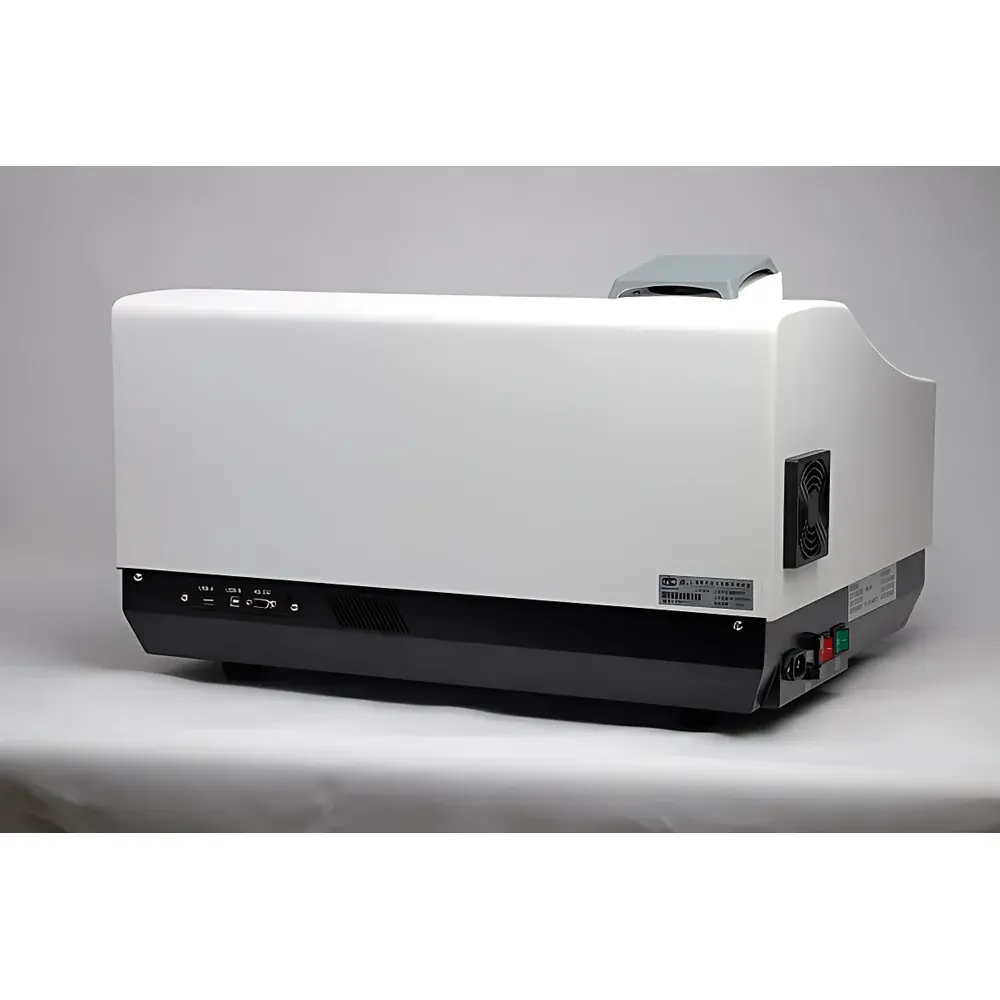
Lengguang Tech. F98 (2017) High-Performance Molecular Fluorescence Spectrophotometer
| Brand | Lengguang Tech. |
|---|---|
| Origin | Shanghai, China |
| Manufacturer Type | Original Equipment Manufacturer (OEM) |
| Instrument Type | Steady-State Fluorescence Spectrometer |
| Wavelength Range (Excitation) | 200–900 nm |
| Wavelength Range (Emission) | 200–900 nm |
| Slit Width (Spectral Bandpass) | 1.0–20.0 nm |
| Spectral Resolution | 1.0 nm |
| Wavelength Accuracy | ±0.4 nm |
| Signal-to-Noise Ratio (Water Raman Peak) | >350:1 (peak-to-peak) |
| Light Source | 150 W Ozone-Free Xenon Arc Lamp (Hamamatsu, 2000 h lifetime) |
| Detector | Hamamatsu R928 Red-Sensitive Photomultiplier Tube (PMT) |
| Optical Design | Horizontal Slit, Dual-Beam Ratio-Monitoring Excitation Path |
| Grating | Imported JY (Jobin Yvon) Blazed Grating |
| Excitation/Emisson Grating Blaze | 300 nm (EX), 400 nm (EM) |
| Linearity (Fluorescence Intensity) | ≥0.995 |
| Scan Speed | Up to 60,000 nm/min |
| Supported Scanning Modes | 3D Fluorescence Mapping, Time-Resolved Emission Scanning, Constant-Wavelength-Difference Synchronous Scanning, Constant-Wavenumber-Difference (Constant Energy Difference) Synchronous Scanning |
| Quantum Yield Measurement | Optional Integrated Accessory |
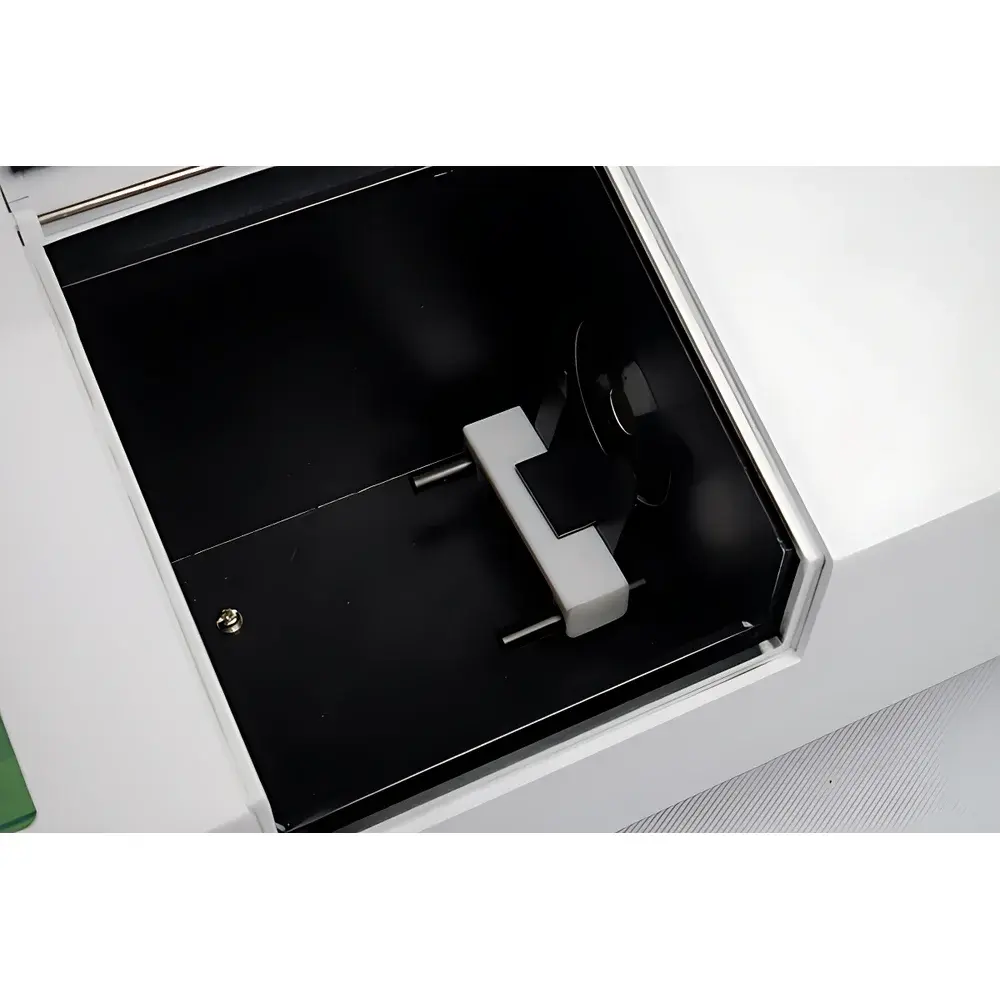
| Standard Cuvette Volume | 0.5 mL (10 mm pathlength) |
Overview
The Lengguang Tech. F98 (2017) is a high-performance steady-state molecular fluorescence spectrophotometer engineered for precision quantitative and qualitative fluorescence analysis across academic research, pharmaceutical development, clinical diagnostics, environmental monitoring, and food safety laboratories. Based on a horizontal-slit optical architecture with dual-beam ratio-monitoring excitation optics, the instrument employs a 150 W ozone-free xenon arc lamp (Hamamatsu, rated for 2000 h) and a red-sensitive R928 photomultiplier tube to deliver stable, high-intensity excitation and low-noise detection across the full 200–900 nm spectral range for both excitation and emission. Its core measurement principle relies on wavelength-selective excitation of fluorophores followed by dispersion and detection of emitted photons using a high-efficiency JY blazed grating (300 nm blaze for excitation, 400 nm for emission), enabling accurate spectral deconvolution under controlled slit bandwidths. The system achieves a spectral resolution of 1.0 nm and wavelength accuracy of ±0.4 nm — performance metrics aligned with ASTM E1316 and ISO 17025 requirements for trace-level fluorescence quantification.
Key Features
- Horizontal-slit optical design optimized for high photon collection efficiency and signal-to-noise ratio (SNR >350:1 peak-to-peak for water Raman peak at 350 nm excitation)
- Programmable electronic shutter for precise control over excitation pulse duration — critical for photolabile or time-dependent fluorophores
- Multi-step adjustable spectral bandpass (1.0–20.0 nm) supporting high-resolution analysis of narrow-emission species such as lanthanide complexes
- Ultra-fast scanning capability up to 60,000 nm/min, enabling full 3D excitation-emission matrix (EEM) acquisition in under 60 seconds
- Integrated spectral correction function to compensate for instrument-specific spectral response, yielding true sample emission profiles per IUPAC recommendations
- Dual-grating configuration with JY blazed gratings ensures minimal stray light and optimal throughput across UV-Vis-NIR regions
- Onboard filter wheel with harmonic rejection filters suppresses second-order diffraction artifacts, especially below 300 nm
Sample Compatibility & Compliance
The F98 accommodates standard 10 mm square quartz cuvettes (minimum 0.5 mL volume), microvolume adapters (200 µL centrifuge tubes), solid-state samples (powders, films), and fiber-optic coupled configurations via optional accessories. It supports GLP-compliant workflows through audit-trail-capable software logging (user actions, parameter changes, calibration events). While not pre-certified for FDA 21 CFR Part 11, the system architecture allows integration into validated environments when deployed with appropriate electronic signature and data integrity controls. All optical components comply with ISO 9001 manufacturing standards; lamp and PMT specifications meet JEDEC reliability guidelines for laboratory-grade photonic instrumentation.
Software & Data Management
The native F98 Control Suite provides intuitive operation for single-wavelength, kinetic, synchronous, and 3D fluorescence mapping experiments. Raw spectral data are stored in vendor-neutral ASCII formats (.txt, .csv) with embedded metadata (wavelength units, slit width, integration time, detector HV). Batch processing modules support baseline correction, inner-filter effect compensation, and parallel factor analysis (PARAFAC) preprocessing. Export options include PNG, SVG, and MATLAB-compatible .mat files. For regulated environments, the software supports user role-based access control, electronic signatures, and configurable audit trails — facilitating alignment with ISO/IEC 17025 clause 7.7 and USP analytical instrument qualification protocols.
Applications
- Quantitative determination of polycyclic aromatic hydrocarbons (PAHs) in drinking water per EPA Method 418.1
- Characterization of quantum dot emission profiles and Stokes shifts in nanomaterial synthesis labs
- Stability assessment of fluorescently labeled biologics under accelerated degradation conditions
- Identification of adulterants in olive oil and honey via EEM fingerprinting and multivariate modeling
- Measurement of absolute fluorescence quantum yield using the integrating sphere accessory (traceable to NIST SRM 936a reference standards)
- Time-resolved synchronous scanning for resolving overlapping emissions in complex protein-ligand systems
FAQ
What is the typical lifetime of the xenon lamp, and how is lamp aging compensated?
The Hamamatsu 150 W ozone-free xenon lamp is rated for 2000 hours of continuous operation. The software includes automatic lamp energy normalization using the built-in reference photodiode, ensuring intensity stability across long-term experiments.
Can the F98 perform lifetime measurements?
No — the F98 is a steady-state instrument only. Time-resolved fluorescence decay analysis requires pulsed excitation sources and TCSPC electronics, which are outside its design scope.
Is spectral calibration traceable to national standards?
Yes — factory calibration uses NIST-traceable holmium oxide and didymium glass filters. Users may perform routine verification using these certified references per ISO/IEC 17025 Section 6.4.10.
Does the system support external triggering or synchronization with other instruments?
Yes — TTL-compatible trigger input/output ports enable hardware synchronization with stopped-flow units, temperature controllers, or electrochemical workstations.
How is stray light managed below 250 nm?
Stray light suppression is achieved through a combination of JY grating blaze optimization, internal harmonic rejection filters, and double-monochromator-like optical path segmentation — verified by residual intensity measurements per ASTM E275.




