
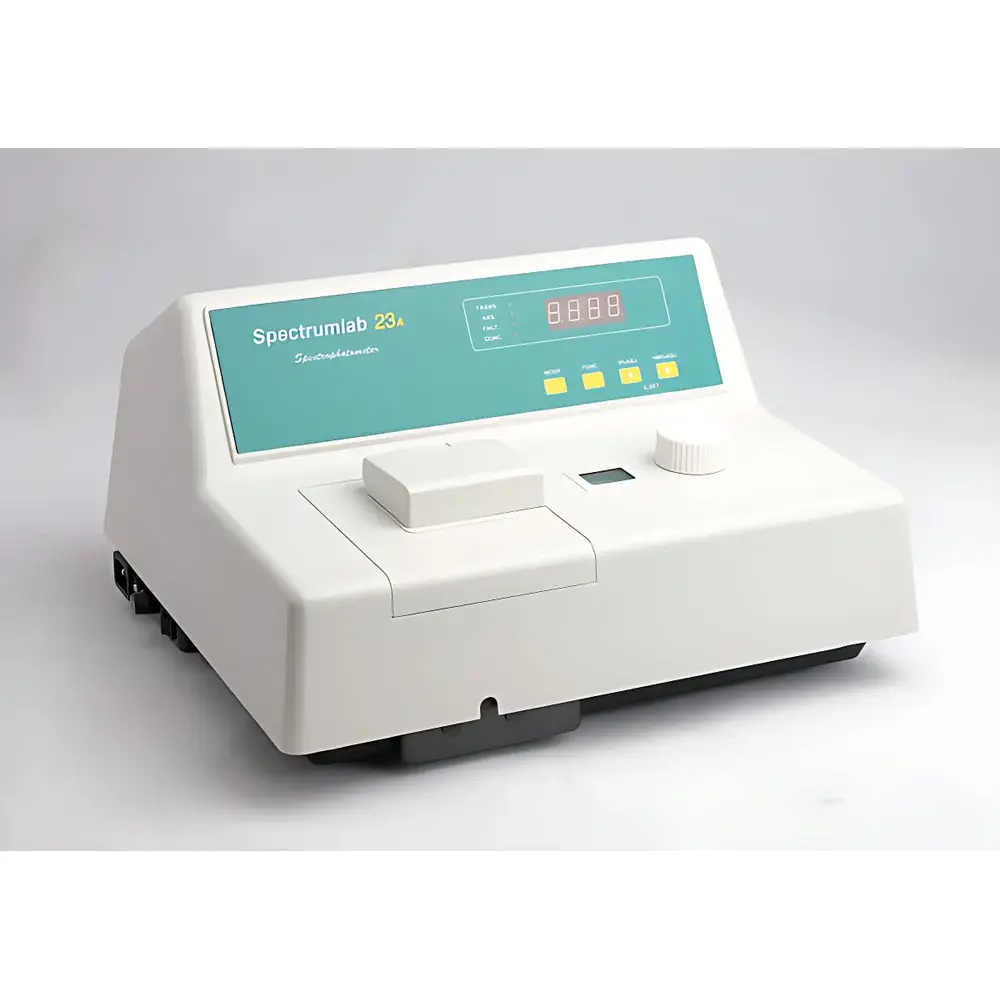
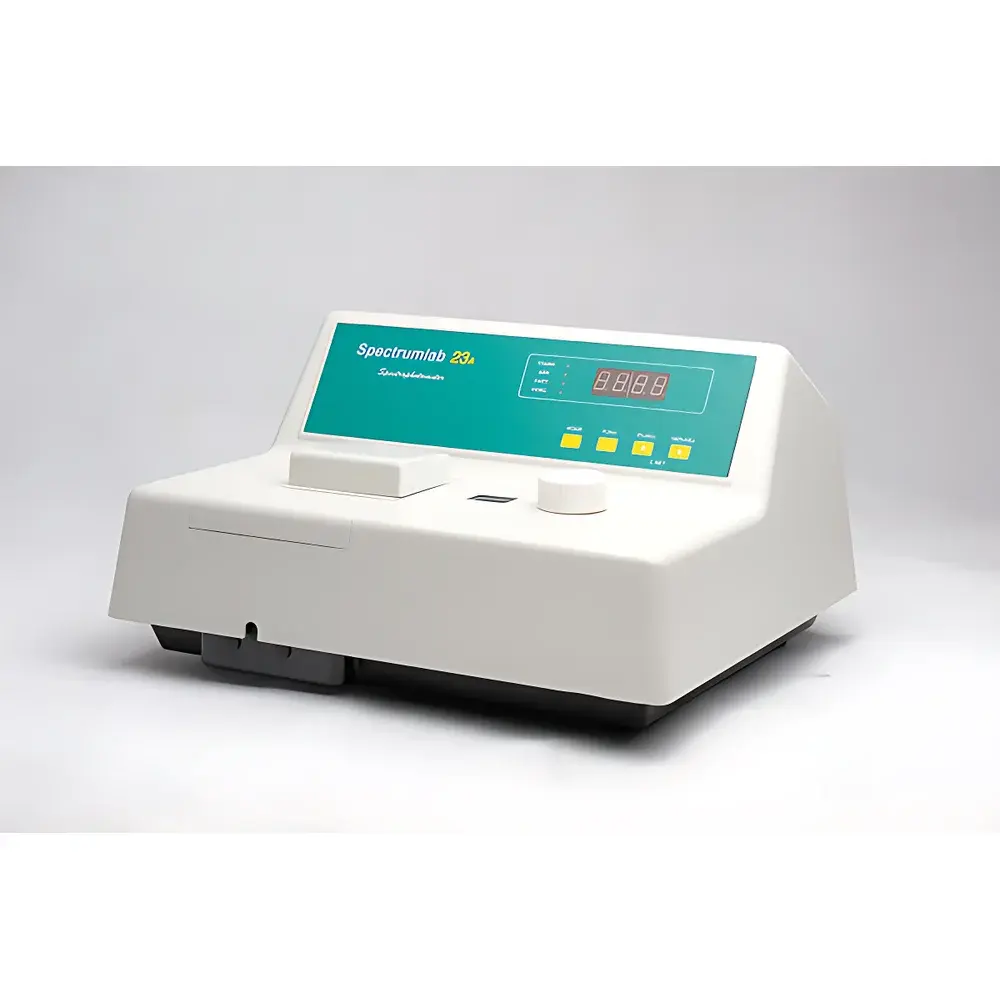
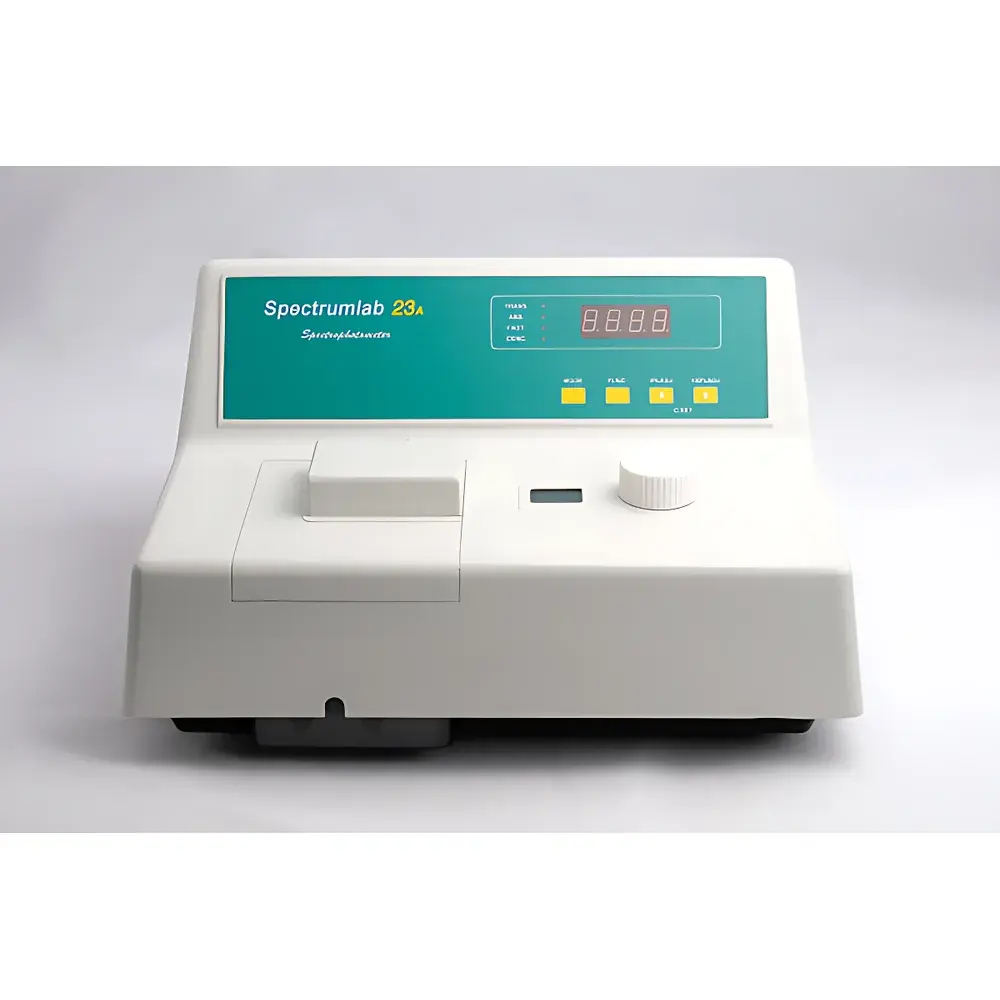
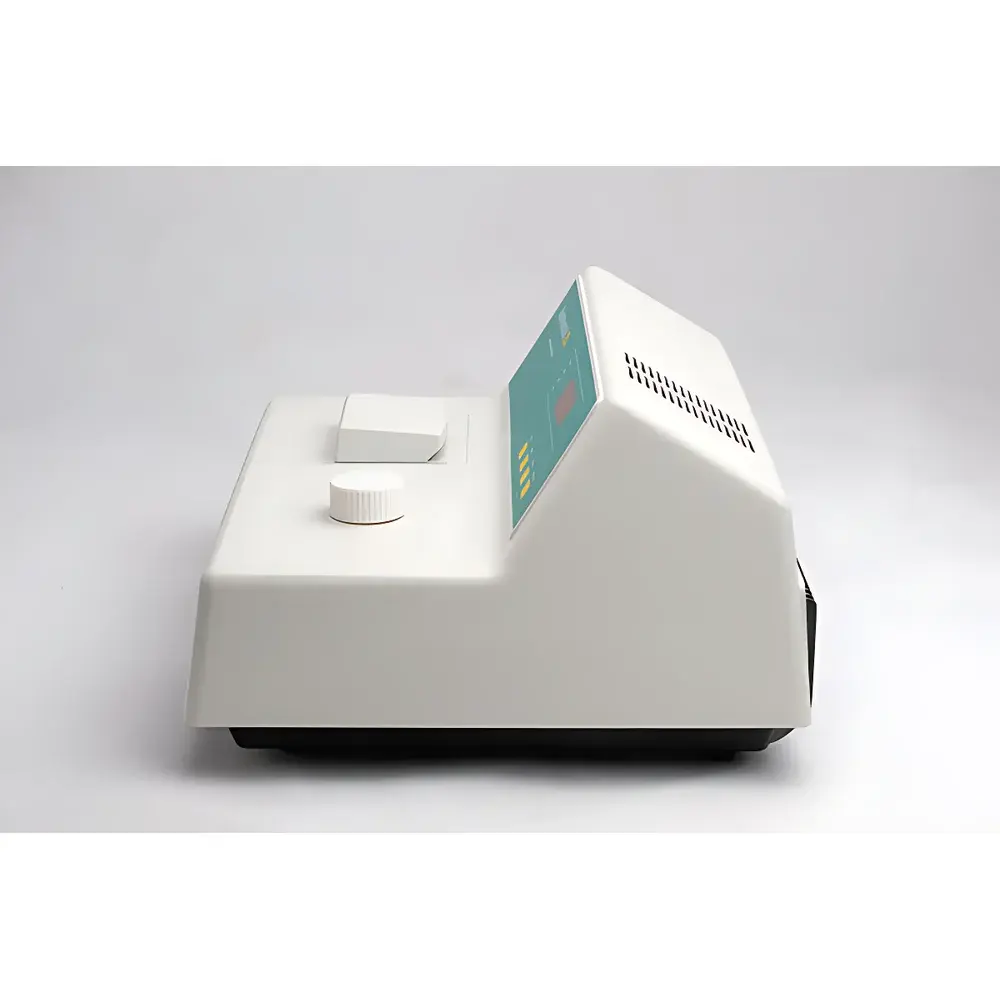
Lengguang Tech. S23A Visible Spectrophotometer
| Brand | Lengguang Tech. |
|---|---|
| Origin | Shanghai, China |
| Manufacturer Type | Direct Manufacturer |
| Product Origin | Domestic (China) |
| Model | S23A |
| Instrument Architecture | Single-Beam |
| Detector Type | Photodiode Array |
| Wavelength Range | 340–950 nm |
| Wavelength Adjustment | Manual |
| Spectral Bandwidth | 12 nm |
| Wavelength Accuracy | ±2.5 nm |
| Wavelength Repeatability | ≤1 nm |
| Stray Light | ≤0.5% T |
| Photometric Accuracy | ±2.0% T |
| Photometric Repeatability | ≤0.5% T |
| Absorbance Range | –0.3 to 2.999 A |
| Transmittance Range | 0.0 to 199.9% T |
| Dimensions | 370 × 320 × 190 mm |
| Net Weight | 7 kg |
Overview
The Lengguang Tech. S23A Visible Spectrophotometer is a precision single-beam optical instrument engineered for quantitative and qualitative analysis in the visible spectral region. Based on Czerny-Turner (C-T) monochromator architecture with a high-stability holographic diffraction grating, the S23A delivers consistent wavelength dispersion and reliable photometric performance across its operational range of 340–950 nm. Its optical design incorporates a 20 W/12 V halogen lamp as the stable broadband source, coupled with a pre-calibrated spectral energy correction system to maintain intensity linearity over time. The instrument operates on Beer-Lambert law principles, enabling accurate determination of analyte concentration via absorbance (A) or transmittance (%T) measurements. Designed for robustness in routine laboratory environments, the S23A features an all-aluminum die-cast chassis that minimizes thermal drift and mechanical deformation—critical for long-term measurement stability in teaching labs and field-deployable environmental monitoring settings.
Key Features
- Single-beam optical path with C-T monochromator and holographic diffraction grating for high wavelength fidelity and low polarization dependence
- Manual wavelength selection with ±2.5 nm accuracy and ≤1 nm repeatability—suitable for method-defined fixed-wavelength assays
- 12 nm spectral bandwidth optimized for balance between resolution and signal-to-noise ratio in routine visible-range applications
- Photodiode array detector providing uniform responsivity across 340–950 nm without moving parts or calibration drift
- Integrated T/A conversion, auto-zero, auto-100%T, direct concentration readout, and user-definable concentration factor functions
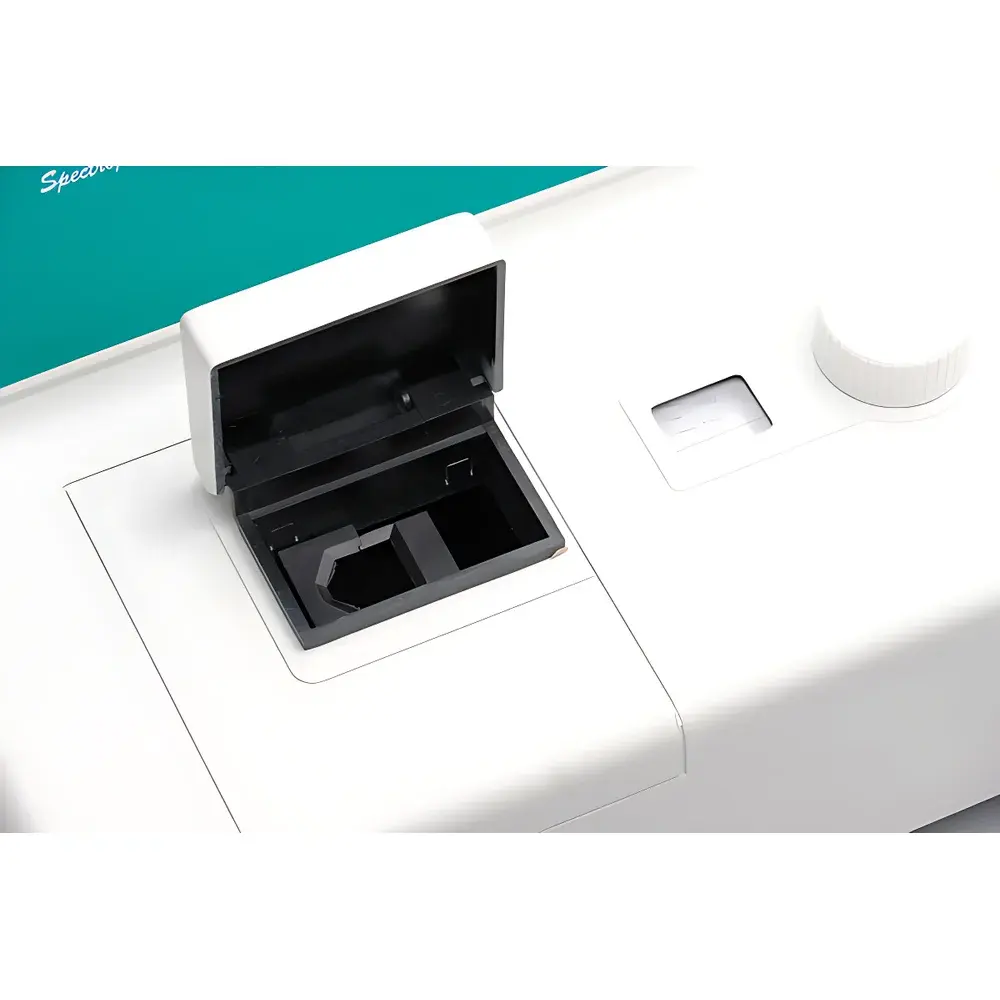
- Support for both Φ10–Φ16 mm round test tubes and standard rectangular cuvettes (10 mm pathlength), enhancing flexibility in sample handling
- Pre-aligned lamp module with spectral energy correction—enabling rapid source replacement without realignment or recalibration
Sample Compatibility & Compliance
The S23A accommodates common liquid-phase samples in quartz, glass, or plastic cuvettes (10 mm pathlength) as well as cylindrical test tubes used in educational and field-based protocols. Its 340–950 nm range covers key absorption bands for dyes, transition metal complexes, organic chromophores, and biological pigments (e.g., chlorophyll, hemoglobin derivatives). While not designed for UV-C or deep-UV quantification, its lower limit at 340 nm permits detection of many near-UV transitions relevant to water quality indicators (e.g., nitrate, humic substances). The instrument meets general-purpose photometric requirements outlined in ISO 6223:2020 (spectrophotometers for water analysis) and supports methodologies aligned with EPA Method 8000 series for colorimetric environmental testing. Its mechanical construction and electrical safety comply with IEC 61010-1:2010 for laboratory equipment.
Software & Data Management
The S23A supports optional PC-based data acquisition via RS-232 serial interface. The companion software package enables storage of up to 1,000 spectra or discrete measurements, linear regression analysis for calibration curve generation (including slope, intercept, and R² reporting), and export to CSV or TXT formats for integration into LIMS or statistical platforms. Audit trail functionality—including operator ID, timestamp, wavelength setting, and measured value—is configurable to support GLP-compliant documentation. When paired with a serial printer, raw %T/A values, concentration results, and metadata can be printed directly—facilitating paper-based record retention where electronic systems are unavailable or restricted. No proprietary drivers are required; standard Windows COM port configuration suffices.
Applications
- Academic instruction: Teaching Beer-Lambert law fundamentals, calibration curve construction, and spectrophotometric assay development in undergraduate chemistry and environmental science curricula
- Environmental monitoring: Quantification of COD, phosphate, ammonia, iron, manganese, and turbidity-related colorimetric endpoints per APHA Standard Methods
- Quality control in food & beverage: Measurement of color indices (e.g., Lovibond scale equivalents), pigment concentration, and additive stability studies
- Pharmaceutical education: Dissolution testing support, excipient interference screening, and basic purity assessment of dye-labeled compounds
- Industrial hygiene: Field verification of reagent concentrations in onsite water treatment or electroplating bath control
FAQ
Is the S23A compliant with FDA 21 CFR Part 11 for electronic records?
No—the base instrument lacks electronic signature capability and audit-trail hardware logging. However, when used with the optional software configured for manual operator entry and timestamped CSV export, it may serve as a documented component within a broader Part 11–compliant workflow under institutional SOPs.
Can the S23A measure absorbance below 340 nm?
No—its optical design and halogen lamp output limit effective operation to ≥340 nm. For UV-range measurements (190–340 nm), a dedicated UV-Vis spectrophotometer with deuterium lamp and quartz optics is required.
What cuvette materials are recommended for use with the S23A?
Standard 10 mm pathlength glass or plastic cuvettes are suitable for wavelengths >350 nm. Quartz cuvettes are unnecessary unless measuring near the 340 nm lower limit under high-precision conditions.
Does the instrument require warm-up time before use?
Yes—a minimum 15-minute stabilization period is recommended after power-on to ensure thermal equilibrium of the lamp and monochromator housing, improving wavelength and photometric reproducibility.
How often should the lamp be replaced?
Typical halogen lamp service life is 1,000–1,500 hours. Output degradation manifests as reduced signal intensity and increased noise; replacement is advised when %T baseline drift exceeds ±1% over 30 minutes or when absorbance readings show systematic deviation from certified reference standards.




