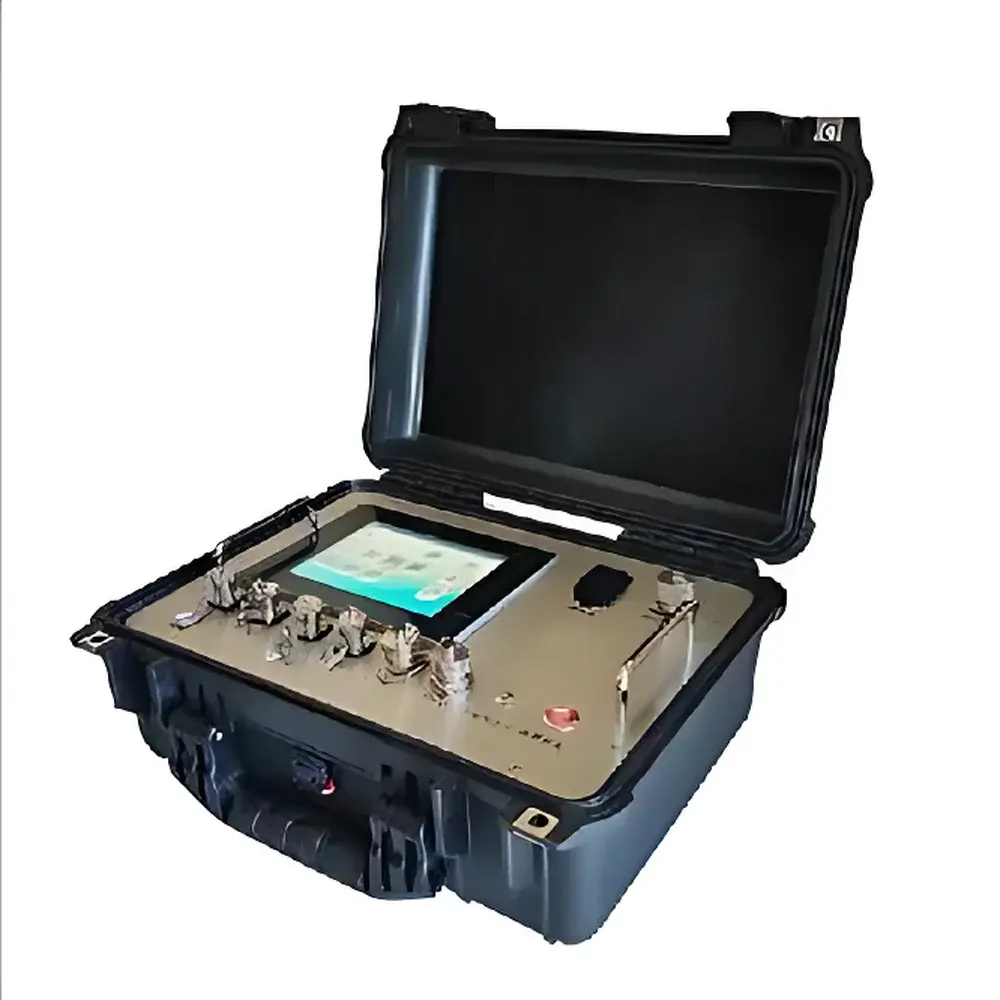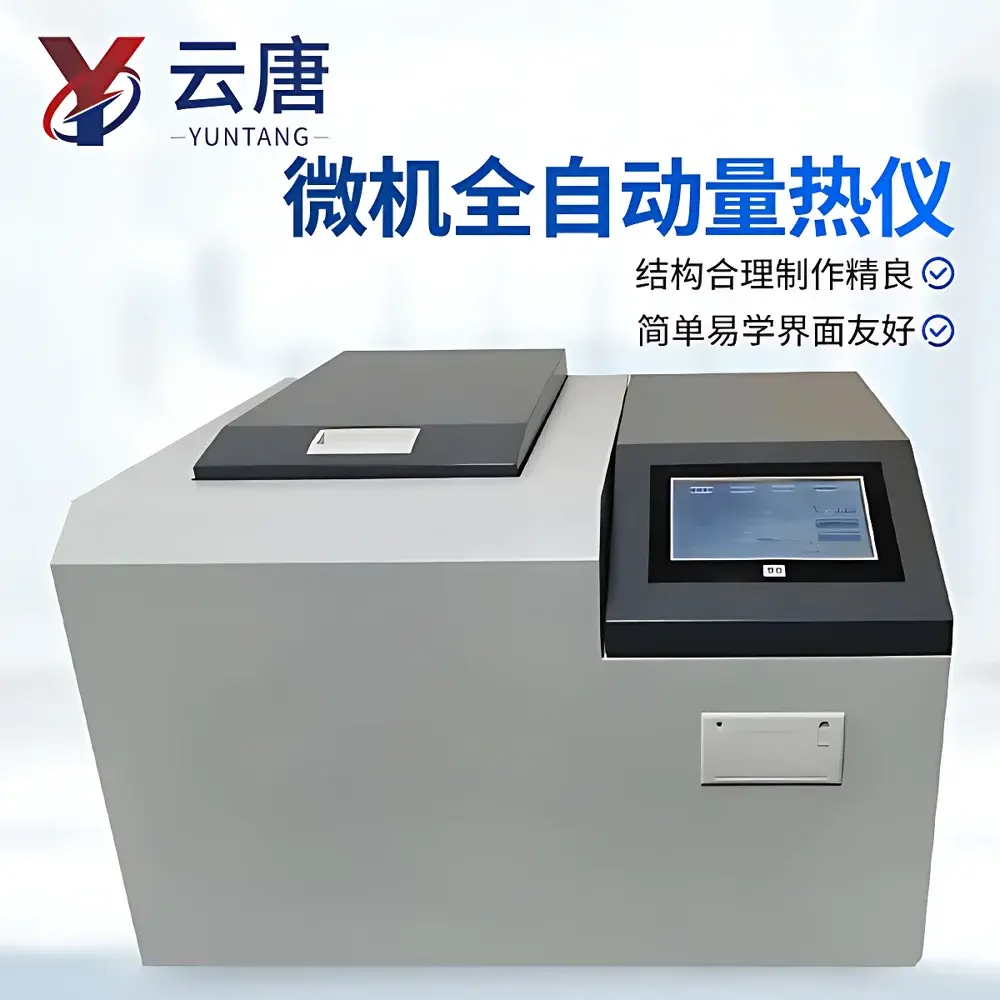
Yuntang YT-LR1 Oxygen Bomb Calorimeter for Coal and Solid Fuels
| Brand | Yuntang |
|---|---|
| Origin | Shandong, China |
| Manufacturer Type | Direct Manufacturer |
| Country of Origin | China |
| Model | YT-LR1 Oxygen Bomb Calorimeter |
| Price Range | USD 1,600 – 5,300 (FOB) |
| Measurement Principle | Isoperibol Bomb Calorimetry |
| Thermal Capacity | 10,500 J/K |
| Temperature Resolution | 0.0001 K |
| Ambient Temp. Range | 5–35 °C |
| Ignition Voltage | 24 V DC |
| Ignition Duration | 5 s |
| Measuring Temp. Range | 0–40 °C |
| Relative Humidity Limit | ≤80% RH |
| Max. Ambient Temp. Fluctuation | ±1 K during test |
| Power Supply | AC 220 V ±10%, 50 Hz ±1 Hz |
| Power Consumption | ≤80 W |
| Net Weight | 35 kg |
| Dimensions (W×D×H) | 420 × 600 × 470 mm |
| Gross Weight (incl. packaging) | 45 kg |
| Package Dimensions | 470 × 650 × 500 mm |
Overview
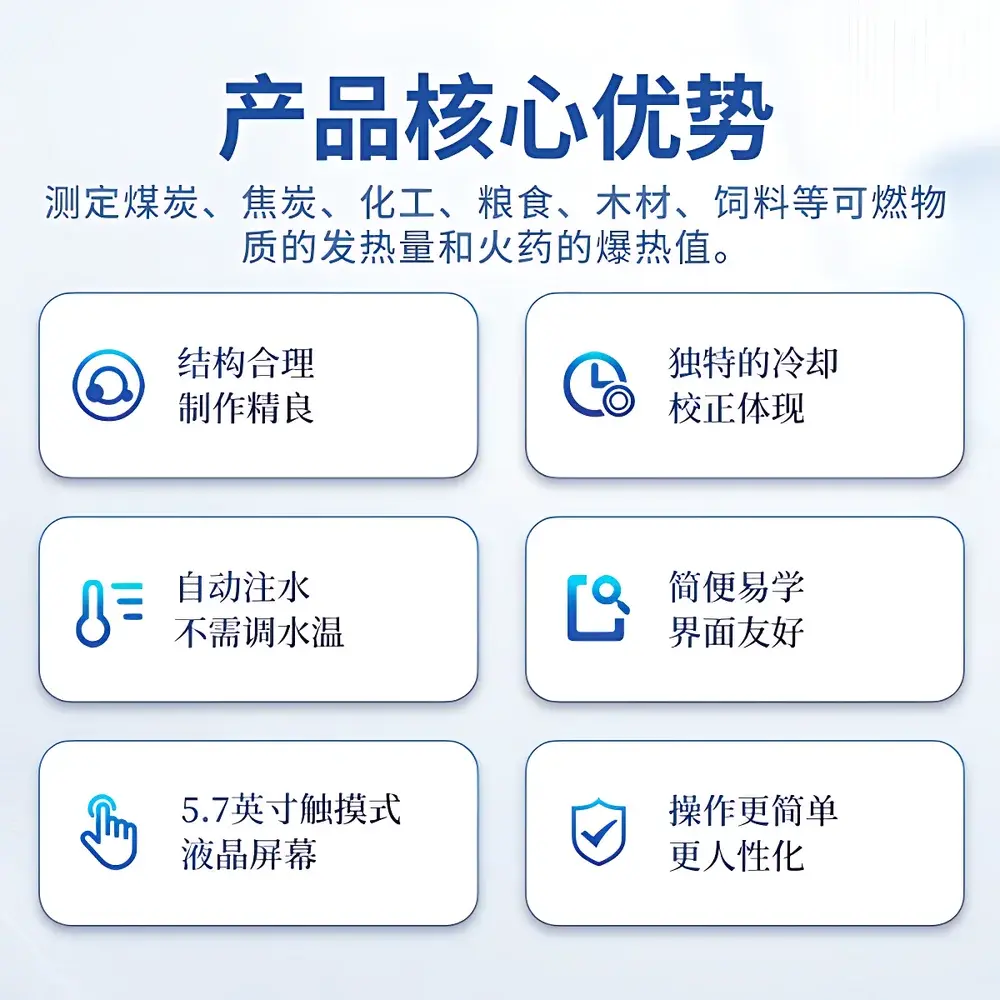
The Yuntang YT-LR1 Oxygen Bomb Calorimeter is a precision isoperibol-type instrument engineered for the accurate determination of gross calorific value (GCV), also known as higher heating value (HHV), of solid fuels—including coal, coke, biomass, agricultural feedstocks (e.g., grain, wood, and animal feed), and energetic materials such as propellants and explosives. Based on ASTM D5865 / ISO 1928 / GB/T 213–2008 compliant oxygen bomb combustion thermometry, the system operates by fully oxidizing a precisely weighed sample in a high-pressure (up to 3.2 MPa) oxygen environment inside a stainless-steel bomb vessel. The resulting heat release is absorbed by a precisely calibrated water jacket, and temperature rise is measured using a high-stability platinum resistance thermometer with 0.0001 K resolution. The instrument’s thermal capacity (10,500 J/K) is factory-determined and verified per ISO 1928 Annex A procedures, ensuring traceable, reproducible energy quantification across routine laboratory workflows.
Key Features
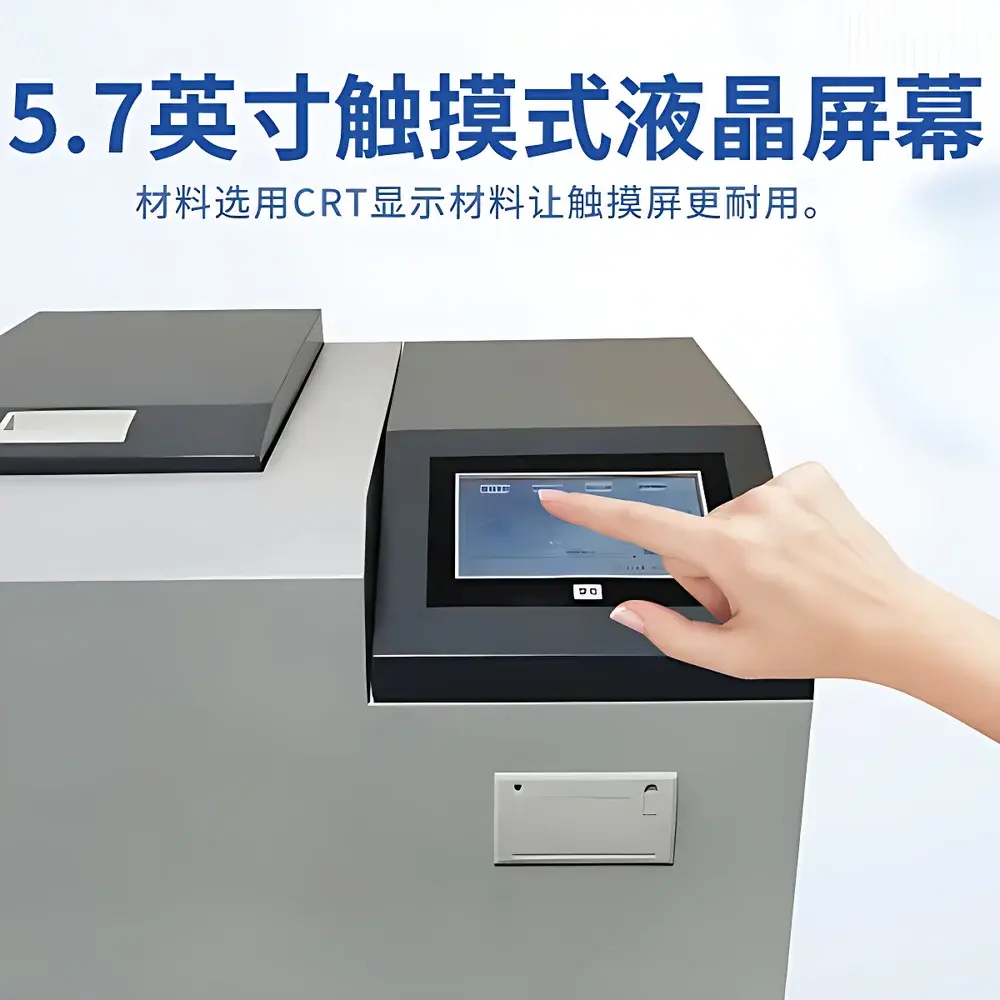
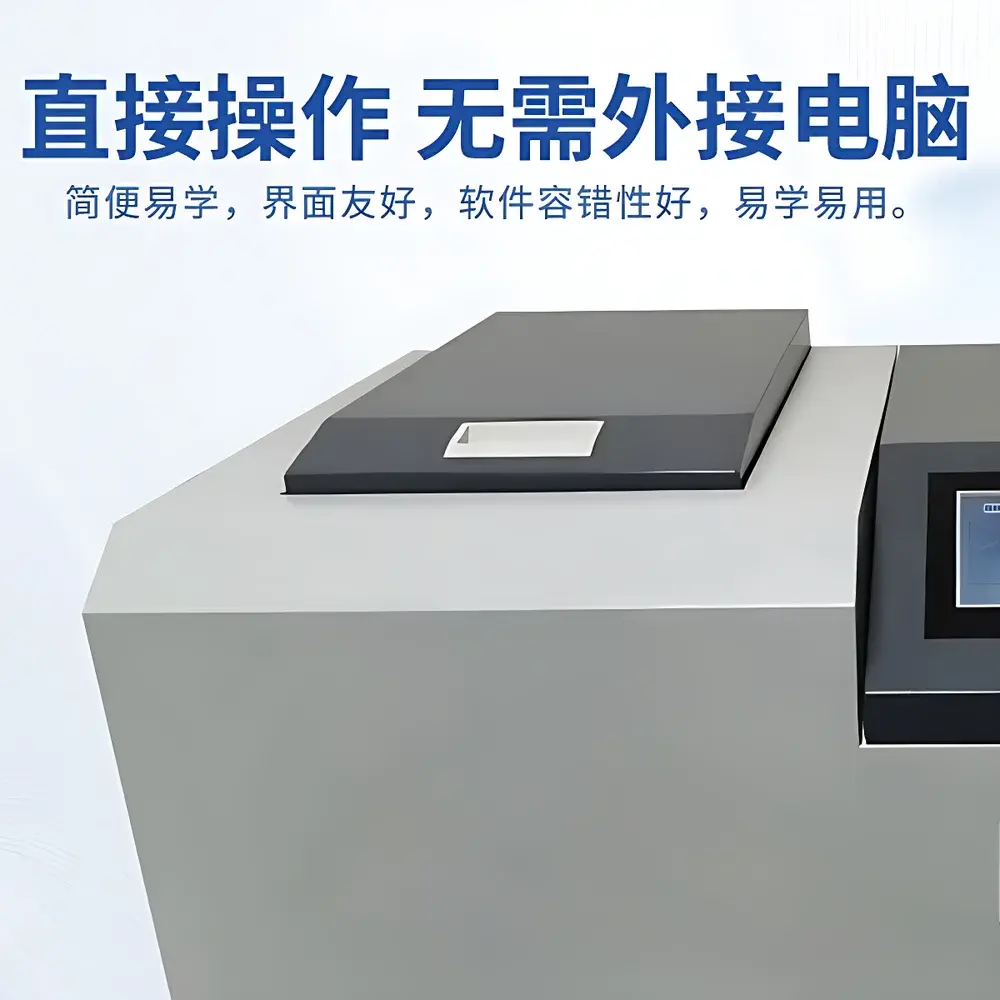
- Integrated 5.7-inch resistive touchscreen display with CRT-grade optical film, multi-layer anti-glare coating, and >90% active sensing area—designed for long-term durability (rated ≥10 years) and precise finger/stylus input without external PC dependency.
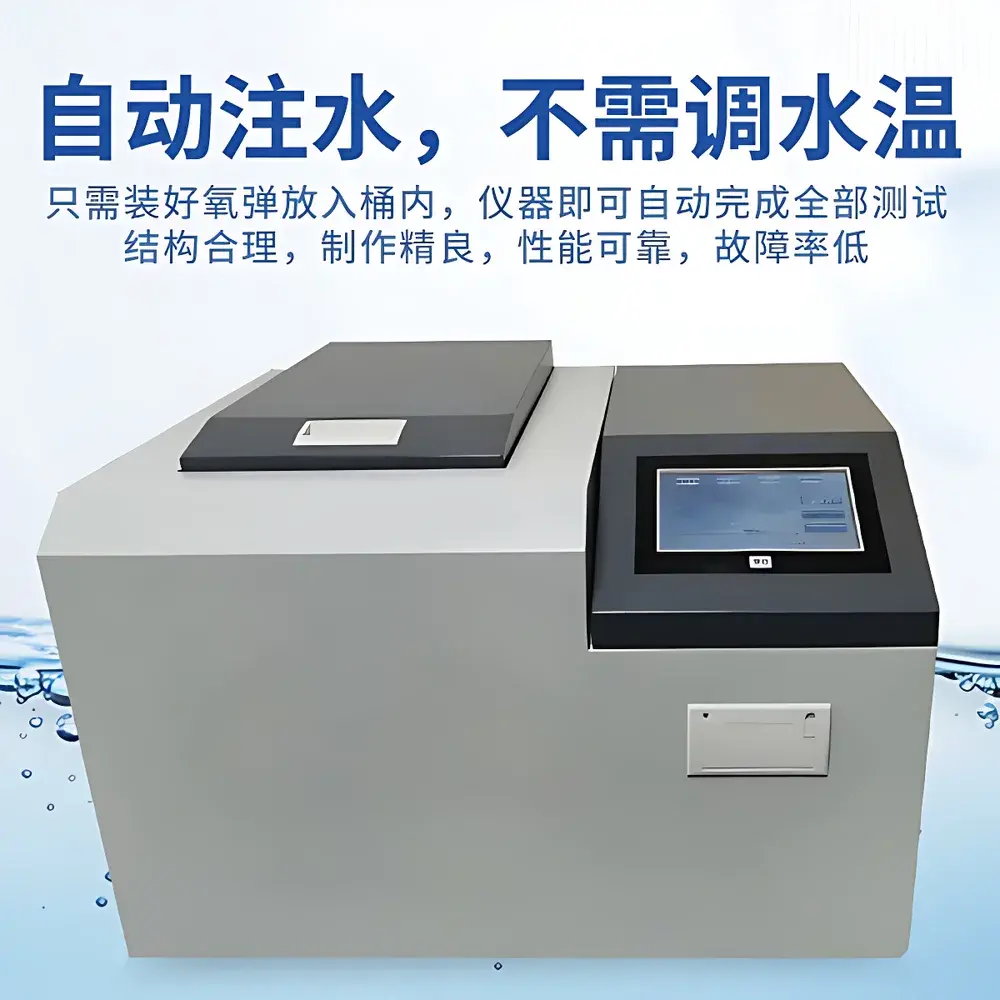
- Automated water handling: self-contained filling, leveling, and thermal equilibration eliminate manual water adjustment and reduce operator-induced variability.
- Advanced isoperibol cooling correction algorithm based on the Roth–Mahan–Searcy method, minimizing drift and maintaining calibration stability over extended operational cycles.
- Robust mechanical architecture: reinforced steel frame, sealed ignition circuitry, and vibration-damped bomb cradle ensure low failure rate and high uptime in QA/QC or production environments.
- Self-contained operation: all functions—including sample logging, test initiation, result calculation, and report generation—are executed locally; no network connection or third-party software required.
- Compliance-ready firmware: supports audit trails, user-level access control (admin/operator), and timestamped raw data storage—facilitating GLP/GMP-aligned documentation per FDA 21 CFR Part 11 principles where local regulatory interpretation permits.
Sample Compatibility & Compliance
The YT-LR1 accommodates standard 1 g coal pellets (as specified in GB/T 213–2008 and ASTM D5865), coke fines, pulverized biomass, and pressed explosive charges up to 1.2 g. Sample crucibles are platinum- or nickel-alloy lined to prevent catalytic side reactions during combustion. The instrument meets repeatability criteria of ≤0.15% RSD (n=5) and reproducibility limits per GB/T 213–2008 Clause 8.2 for bituminous coal reference materials. It is routinely validated using certified coal standards (e.g., NIST SRM 1840b, GBW11100 series). While not CE-marked or UL-listed, its electrical design conforms to IEC 61010-1:2010 safety requirements for laboratory equipment. Environmental operating constraints—ambient temperature stability (±1 K), humidity ≤80% RH, and absence of direct solar irradiation or drafts—are explicitly defined to uphold measurement integrity.
Software & Data Management
Firmware v3.2+ provides an embedded Linux-based interface supporting Chinese/English language toggle, customizable report templates (PDF/CSV export via USB flash drive), and internal storage for ≥10,000 test records with full metadata (date/time, operator ID, sample ID, ambient T, ΔT, GCV, moisture/ash corrections). All calculations apply standardized corrections for nitric acid formation, sulfuric acid formation, and fuse wire contribution per ISO 1928:2020 Annex B. Audit logs record every parameter change, test start/stop event, and calibration action—enabling retrospective review without reliance on external database infrastructure. Data export complies with LIMS interoperability conventions (tab-delimited ASCII), allowing seamless integration into enterprise QA systems.
Applications
- Coal trading and quality assurance: rapid GCV screening for contractual compliance (ASTM D3176, ISO 1170).
- Power plant fuel procurement: batch-level calorific evaluation prior to blending or boiler feed scheduling.
- Research laboratories: comparative energy density analysis of alternative solid fuels (e.g., torrefied biomass, RDF, sewage sludge pellets).
- Explosives testing labs: determination of detonation heat (Qvol) for propellant formulations under controlled oxygen-rich combustion.
- Educational use: undergraduate thermodynamics and fuel science curricula requiring hands-on calorimetry with industrial-grade instrumentation.
FAQ
What standards does the YT-LR1 comply with for coal testing?
It implements core algorithms and procedural logic aligned with GB/T 213–2008, ASTM D5865–22, and ISO 1928:2020 for gross calorific value determination.
Is external computer connectivity required for operation?
No—the instrument operates autonomously with integrated touchscreen interface, onboard processing, and USB-based data export.
How often must the calorimeter be recalibrated?
Thermal capacity verification is recommended annually or after major maintenance; certified benzoic acid checks should be performed before each analytical session per ISO 1928 Clause 7.3.
Can the YT-LR1 measure net calorific value (NCV)?
Yes—NCV is calculated automatically from GCV using input values for total moisture, hydrogen, and ash content, following ISO 1928 Annex C equations.
What maintenance is required to sustain accuracy?
Routine tasks include oxygen bomb leak testing, thermometer calibration verification, cleaning of the water jacket and ignition electrodes, and periodic replacement of ignition wires and crucibles—detailed in the English-language maintenance manual supplied with each unit.