
TH-analyzer THA100-NH3 NDIR Ammonia Gas Analyzer
| Brand | TH-analyzer |
|---|---|
| Origin | Beijing, China |
| Manufacturer Type | OEM Manufacturer |
| Country of Origin | China |
| Model | THA100-NH3 |
| Instrument Type | Online Gas Analyzer |
| Measurement Principle | Non-Dispersive Infrared (NDIR) Spectroscopy |
| Target Gas | NH₃ (Ammonia) |
| Range | 0–300 ppm and 0–100% vol (dual-range configuration) |
| Operating Temperature | 5–45 °C |
| Stability | ±2% FS / 7 days |
| Repeatability | ≤1% FS |
| Linearity Error | ±2% FS |
| Response Time (T90) | ≤25 s |
| Temperature Drift | ±2% FS (5–45 °C) |
| Interference Error | ±2% FS |
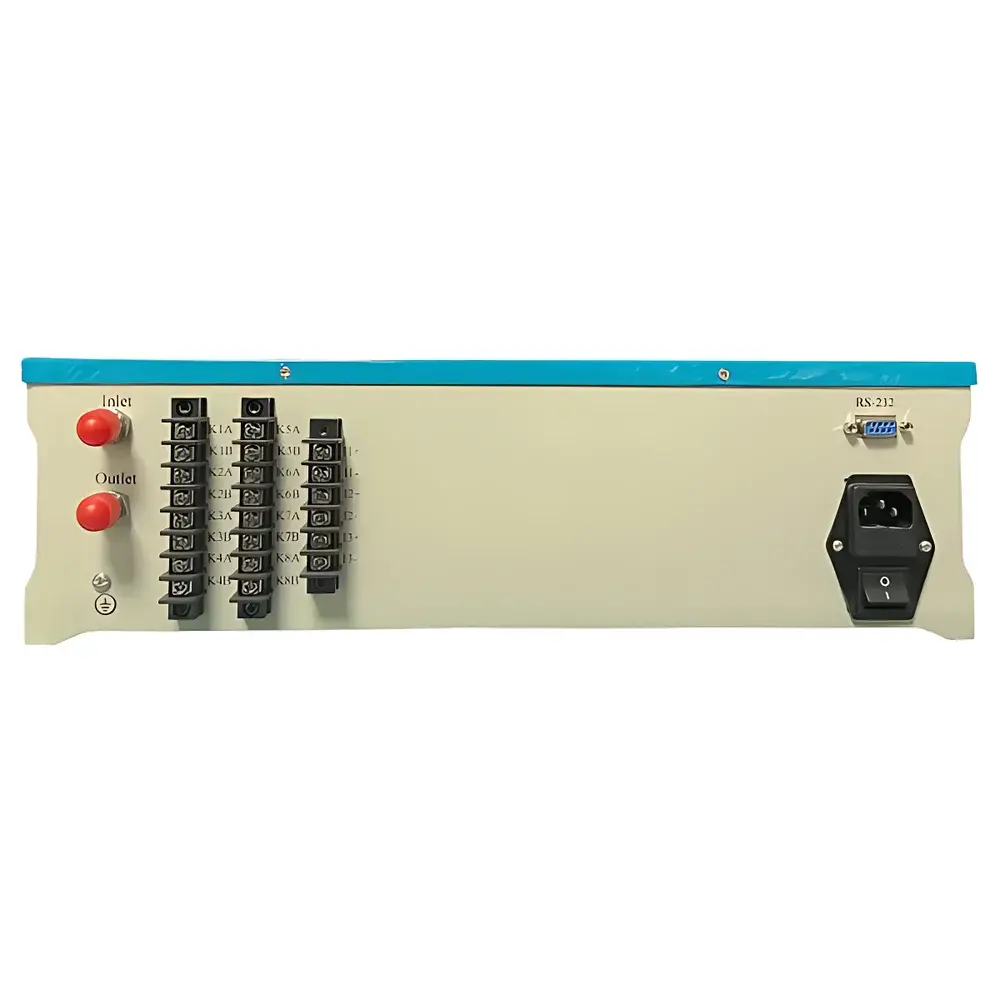
| Output | 4–20 mA analog current loop |
| Digital I/O | 8 isolated relay outputs |
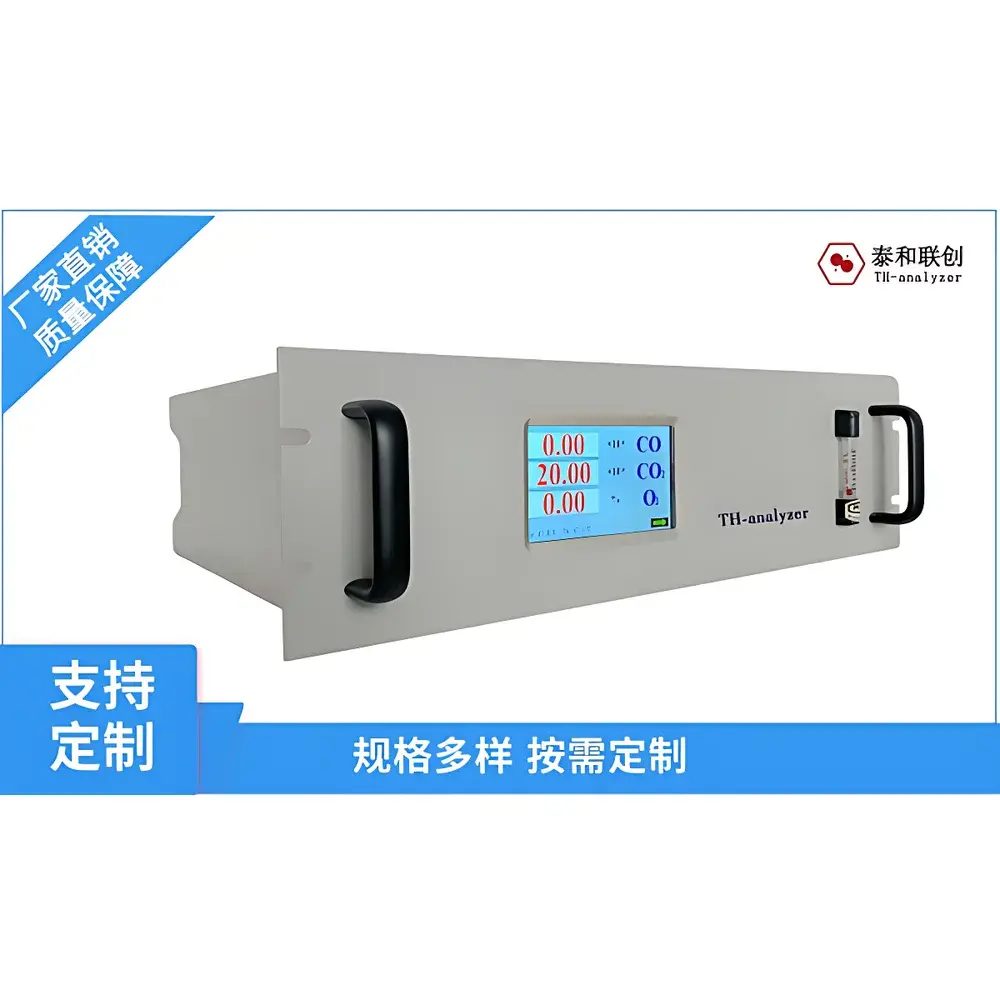
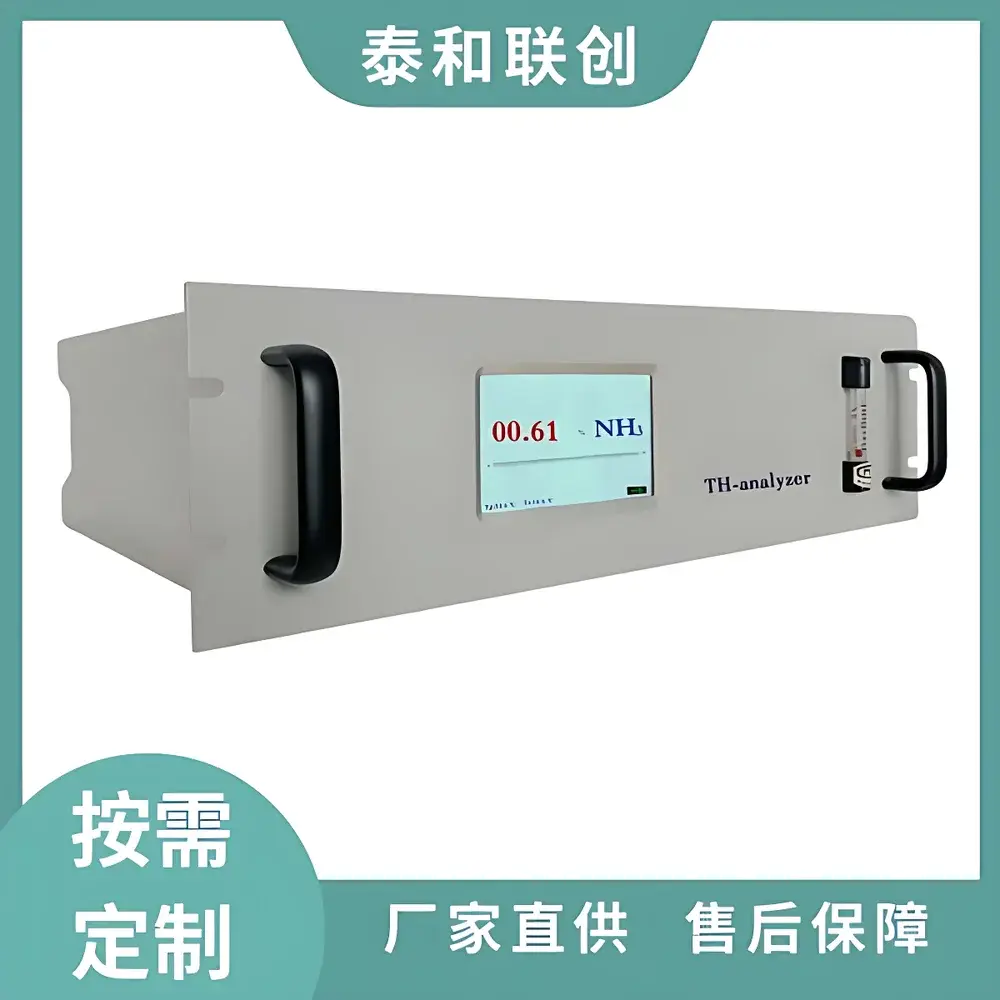
| Display | Color LCD with capacitive touch interface |
| Optional O₂ Channel | Yes (electrochemical or paramagnetic sensor integration) |
Overview
The TH-analyzer THA100-NH3 is a fixed-mount, online non-dispersive infrared (NDIR) gas analyzer engineered for continuous, real-time quantification of ammonia (NH₃) concentration in industrial process streams and ambient or stack environments. It operates on the fundamental principle of molecular absorption spectroscopy: NH₃ exhibits strong, unique vibrational-rotational absorption bands in the mid-infrared region (~2.9–3.0 µm), enabling selective detection without chemical reaction or consumables. The instrument employs a MEMS-based pulsed infrared source and a dual-channel pyroelectric detector architecture to implement ratio-metric signal processing—effectively compensating for optical aging, dust deposition, and source intensity drift. This design ensures high long-term stability and resistance to environmental perturbations, making it suitable for unattended operation in demanding settings such as fertilizer synthesis lines, cement kiln exhaust ducts, and CEMS (Continuous Emission Monitoring Systems) installations compliant with EN 15267 and EPA Method 3A.
Key Features
- MEMS infrared source with high-frequency electronic modulation—optimized for thermal detector response and signal-to-noise ratio enhancement
- Dual-channel NDIR detection system with active reference compensation, delivering improved baseline stability and reduced zero drift
- Integrated temperature-controlled optical bench maintaining detector and cell thermal equilibrium within ±0.1 °C, minimizing thermal-induced measurement variance
- Barometric pressure compensation algorithm—automatically corrects for local atmospheric pressure fluctuations using an onboard absolute pressure sensor
- Configurable dual-range NH₃ measurement (0–300 ppm and 0–100% vol), supporting both trace-level process control and high-concentration safety monitoring
- Optional integrated O₂ channel via electrochemical or paramagnetic sensing—enabling stoichiometric combustion analysis or flue gas correction
- Industrial-grade color TFT-LCD with capacitive touch interface—supporting multilingual menu navigation, real-time trend plotting, and alarm status visualization
- Galvanically isolated 4–20 mA analog output with HART protocol support, plus eight programmable SPDT relay outputs for alarm staging, valve actuation, or data logging triggers
Sample Compatibility & Compliance
The THA100-NH3 is designed for direct in-situ or extractive sampling of dry, non-corrosive gas matrices. For applications involving humid or particulate-laden streams (e.g., boiler flue gas or biogas), optional heated sample conditioning systems—including PTFE-lined sampling probes, thermoelectric chillers, and particle filters—are recommended to prevent condensation and optical fouling. The analyzer complies with electromagnetic compatibility standards IEC 61326-1 (industrial environment) and meets IP65 enclosure rating for outdoor panel mounting. Its measurement methodology aligns with ISO 4014 (gas analysis — general guidelines) and supports audit-ready data integrity when deployed under GLP or ISO/IEC 17025 frameworks. While not intrinsically safe certified, explosion-proof enclosures (Ex d IIB T4) are available upon request for Zone 1/2 hazardous area deployment.
Software & Data Management
The embedded firmware supports Modbus RTU/TCP and Ethernet/IP protocols for seamless integration into DCS, SCADA, or MES platforms. Local data logging stores up to 30 days of second-resolution NH₃ concentration, temperature, pressure, and diagnostic parameters in non-volatile memory. Remote configuration and firmware updates are performed via secure HTTPS interface with role-based access control (admin/operator/guest). All calibration events, zero/span adjustments, and alarm activations are time-stamped and retained with user ID attribution—ensuring full traceability required under FDA 21 CFR Part 11 for regulated environmental reporting. Optional cloud gateway modules enable TLS-encrypted telemetry to AWS IoT Core or Azure IoT Hub for centralized fleet monitoring and predictive maintenance analytics.
Applications
- Real-time NH₃ slip monitoring downstream of SCR (Selective Catalytic Reduction) systems in power plants and waste-to-energy facilities
- In-line concentration control during urea production, caprolactam synthesis, and ammonium nitrate granulation processes
- CEMS-compliant NH₃ reporting for regulatory compliance (e.g., EU IED BREF documents, US EPA 40 CFR Part 60 Subpart Db)
- Lab-scale reactor off-gas analysis in catalysis research and nitrogen-cycle studies
- Biogas upgrading plant feedstock quality assurance—detecting NH₃ breakthrough before membrane or PSA units
- Ambient air quality networks measuring agricultural emission plumes near livestock operations or fertilizer storage zones
FAQ
What is the minimum detectable NH₃ concentration in the 0–300 ppm range?
The instrument achieves a limit of detection (LoD) of 2 ppm NH₃ (signal-to-noise ratio ≥3) under standard operating conditions.
Can the THA100-NH3 be calibrated using certified gas standards?
Yes—it supports two-point (zero/span) calibration with NIST-traceable NH₃-in-N₂ standards; automated span validation routines are configurable.
Is cross-sensitivity to water vapor or CO₂ compensated?
The dual-channel architecture and spectral filtering mitigate interference from H₂O and CO₂; additional compensation algorithms are activated when optional humidity and CO₂ channels are installed.
What maintenance intervals are recommended for field operation?
Optical path cleaning and zero calibration every 3 months; annual verification of detector responsivity and pressure sensor accuracy is advised.
Does the analyzer support automatic background correction for dirty optical windows?
Yes—the firmware includes adaptive baseline tracking that dynamically adjusts for gradual transmission loss due to window fouling, extending maintenance cycles.
Related Products







