PSI Scientific EX870B Stirred-Batch Production-Scale Peptide Synthesizer
| Brand | PSI Scientific |
|---|---|
| Origin | USA |
| Manufacturer Type | Authorized Distributor |
| Origin Category | Imported |
| Model | EX870B |
| Amino Acid Delivery | Automated |
| Reagent Delivery | Automated |
| Audit Trail | Yes |
| Synthesis Scale | Configurable (0.1–5 mmol typical batch range) |
| Reactor Count | 1 |
| Reactor Type | Hydraulic-actuated, jacketed stirred-tank reactor with integrated resin handling |
Overview
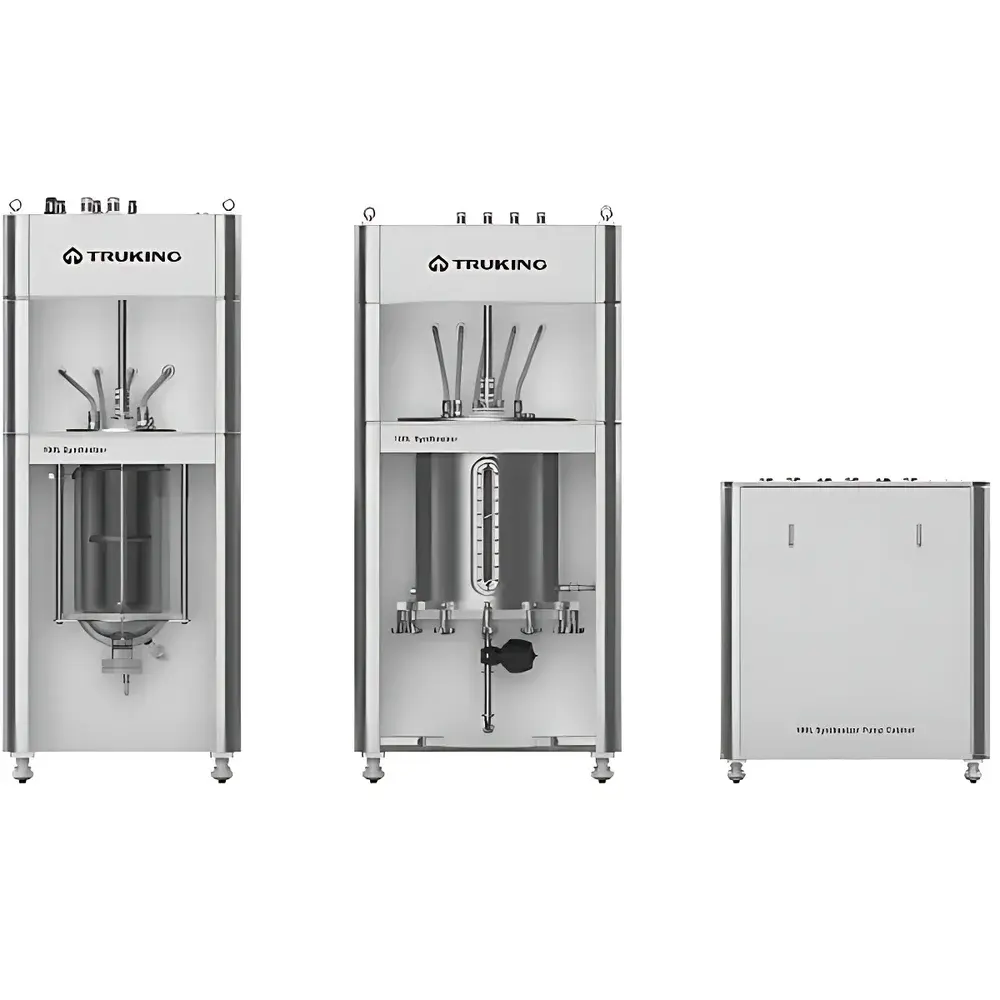
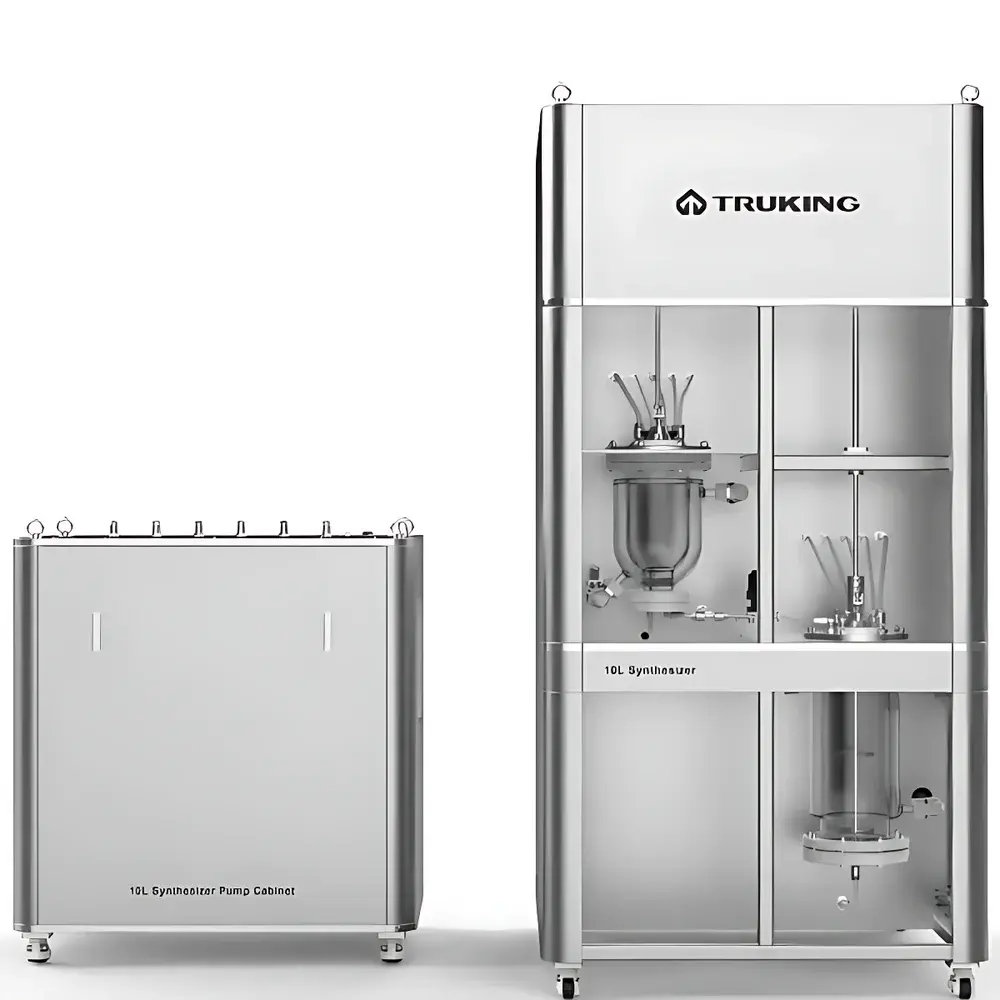
The PSI Scientific EX870B Stirred-Batch Production-Scale Peptide Synthesizer is an engineered solution for robust, scalable solid-phase peptide synthesis (SPPS) in cGMP-aligned manufacturing and preclinical development environments. Unlike conventional batch synthesizers relying on static resin beds or passive agitation, the EX870B employs a precisely controlled stirred-tank architecture grounded in Couette-type mixing dynamics—ensuring uniform suspension of functionalized resin beads throughout coupling, deprotection, washing, and critically, the acidolytic cleavage (lysis) phase. This design directly addresses a key failure mode in large-scale SPPS: mechanical attrition of polystyrene- or PEG-based resins during vigorous agitation or manual transfer. The system integrates process-critical unit operations—including automated resin charging, real-time reagent dosing, temperature-regulated lysis, vacuum-assisted solvent removal, and precipitated peptide recovery—within a single, closed, and operator-safe platform.
Key Features
- Patented resin lift-and-feed mechanism: Enables precise, contamination-free introduction of dry resin into the reactor without manual handling or exposure to TFA or DCM vapors.
- Low-shear impeller geometry with variable-speed control (50–300 rpm): Optimized for maintaining resin integrity while ensuring homogeneous mass transfer during lysis and neutralization steps.
- Hydraulic reactor lifting and quick-disconnect coupling: Facilitates rapid, tool-free reactor removal for cleaning, maintenance, or resin discharge—reducing downtime and eliminating ergonomic strain.
- Integrated solid discharge valve (licensed from楚天, adapted for US cGMP compliance): Automates spent resin ejection under inert atmosphere, minimizing operator contact with hazardous waste streams.
- Full 21 CFR Part 11-compliant audit trail: Captures timestamped records of all critical actions—including reagent dispense volumes, agitation profiles, temperature setpoints, valve actuations, and user logins—with immutable digital signatures.
- Modular footprint: Base unit (reactor + fluidics + control cabinet) occupies ≤1.2 m²; optional add-ons include integrated nitrogen purge manifold, cold trap condenser, or inline conductivity/pH monitoring ports.
Sample Compatibility & Compliance
The EX870B supports standard SPPS resins (Wang, Rink amide MBHA, Sieber amide) and common protecting groups (Fmoc/tBu, Boc/Bzl). It accommodates amino acid derivatives with steric or solubility challenges—including phospho-serine, N-methylated residues, and C-terminal modifications—via programmable extended coupling cycles and solvent-swelling protocols. All wetted materials comply with USP Class VI and FDA 21 CFR 177.2600 standards. System validation documentation aligns with ASTM E2500-13 (Guide for Specification, Design, and Verification of Pharmaceutical and Biopharmaceutical Manufacturing Systems) and supports IQ/OQ/PQ execution per ICH Q5E and Annex 15 requirements. Full GMP traceability is maintained across firmware revisions, calibration logs, and preventive maintenance records.
Software & Data Management
Control and monitoring are executed via PSI SynthOS v4.2—a deterministic real-time operating system running on an embedded industrial PC. The HMI features a 15-inch resistive touchscreen with role-based access control (admin, operator, QA reviewer). All synthesis methods are stored as encrypted XML templates with version history. Raw sensor data (temperature, pressure, torque, flow rate) is logged at 10 Hz and exported in CSV or ASTM E1394-compliant format. Electronic batch records (EBRs) integrate seamlessly with LIMS platforms via OPC UA or HL7 interfaces. Audit trail reports meet ALCOA+ criteria (Attributable, Legible, Contemporaneous, Original, Accurate, Complete, Consistent, Enduring, Available) and support FDA inspection readiness.
Applications
- cGMP production of clinical-grade peptides up to 50 residues (e.g., GLP-1 analogs, antimicrobial peptides, epitope vaccines)
- Process development studies requiring direct scale-up correlation from lab-scale (0.1 mmol) to pilot-scale (5 mmol) batches
- Stability-indicating method development for lysis optimization—minimizing diketopiperazine formation or tert-butyl cation side reactions
- Automated synthesis of isotopically labeled peptides for structural biology (NMR, cryo-EM)
- Regulatory filing support: Generates complete data packages compliant with ICH M4Q(R2) and EMA CHMP/Q5B guidelines
FAQ
Does the EX870B support both Fmoc and Boc chemistries?
Yes—the system’s corrosion-resistant fluid path (Hastelloy C-276 valves, PFA tubing) and programmable acid/base delivery enable full compatibility with TFA-based Boc deprotection and piperidine-based Fmoc removal protocols.
Can synthesis scale be adjusted without hardware modification?
Yes—scale is configured via software-defined resin mass, reagent stoichiometry, and solvent volume parameters; physical reactor volume remains constant (2.5 L working capacity), supporting 0.1–5 mmol batches through optimized packing density and flow dynamics.
Is remote monitoring and troubleshooting supported?
Yes—SynthOS v4.2 includes TLS-secured VNC server and SNMPv3 agent for real-time performance telemetry and secure vendor-assisted diagnostics, subject to customer network policy approval.
What validation documentation is supplied with the system?
Standard delivery includes Factory Acceptance Test (FAT) report, Installation Qualification (IQ) protocol/templates, Operational Qualification (OQ) test scripts, and a complete Design Qualification (DQ) summary aligned with user requirement specifications (URS).