
PerfuseCell Perfuse Cell Perfusion Bioreactor
| Brand | PerfuseCell |
|---|---|
| Origin | Germany |
| Model | Perfuse Cell |
| Reactor Count | 12 |
| Vessel Material | Stainless Steel (316L) |
| Working Volume Range | 0.1–25 L (configurable per module) |
| Conductivity Sensor Range | 1–200 mS/cm |
| Sensor Type | 4-Electrode Pt1000-Integrated ConducCell |
| Pump Integration | Thalia A-SUP (alternating tangential flow) & Clio O-SUP (unidirectional TFF) |
| Compliance | ISO 13485, ASTM E2500, USP <1043>, FDA 21 CFR Part 11-ready software architecture |
Overview
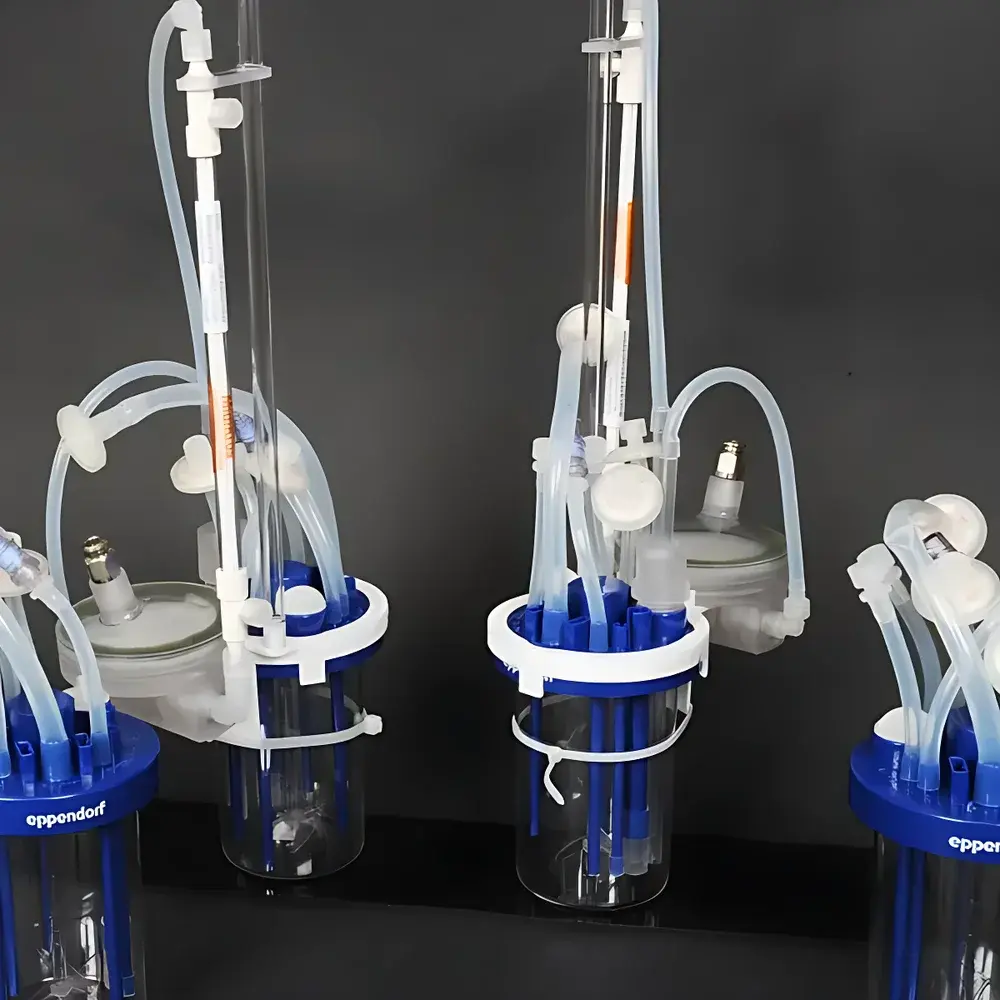
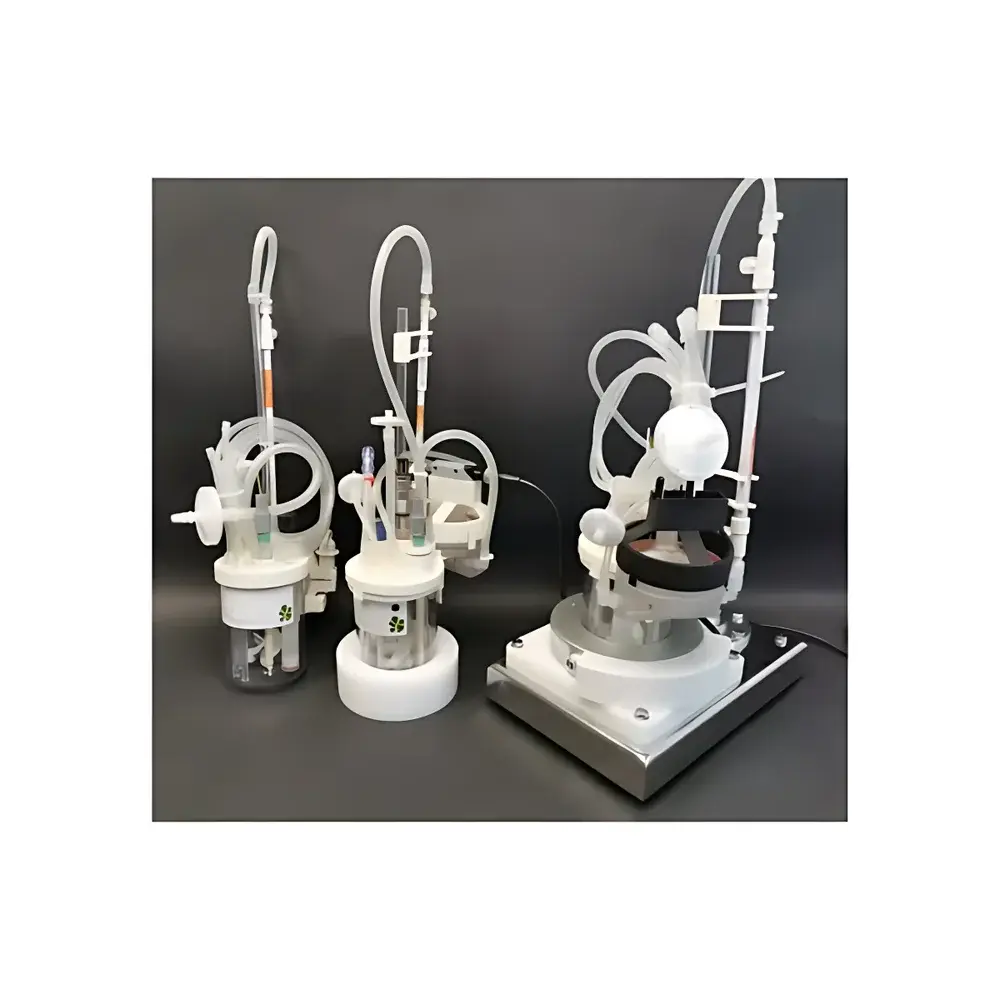
The PerfuseCell Perfuse Cell Perfusion Bioreactor is an engineered single-use bioprocessing platform designed for extended high-density mammalian cell culture under continuous perfusion conditions. It operates on the principle of tangential flow filtration (TFF) coupled with precision fluidic control to maintain viable cell concentrations exceeding 20 × 10⁶ cells/mL over multi-week runs—enabling robust production of monoclonal antibodies (mAbs), viral vectors, mRNA, and other biologics requiring high titer and consistent quality attributes. Unlike traditional fed-batch systems, this bioreactor sustains metabolic homeostasis by continuously exchanging spent media while retaining cells via integrated hollow-fiber filters (HFFs). Its modular architecture supports scalable process development—from early-stage screening in 100 mL working volume modules up to 25 L clinical-grade manufacturing—without requalification, thereby reducing tech transfer risk and accelerating process validation timelines.
Key Features
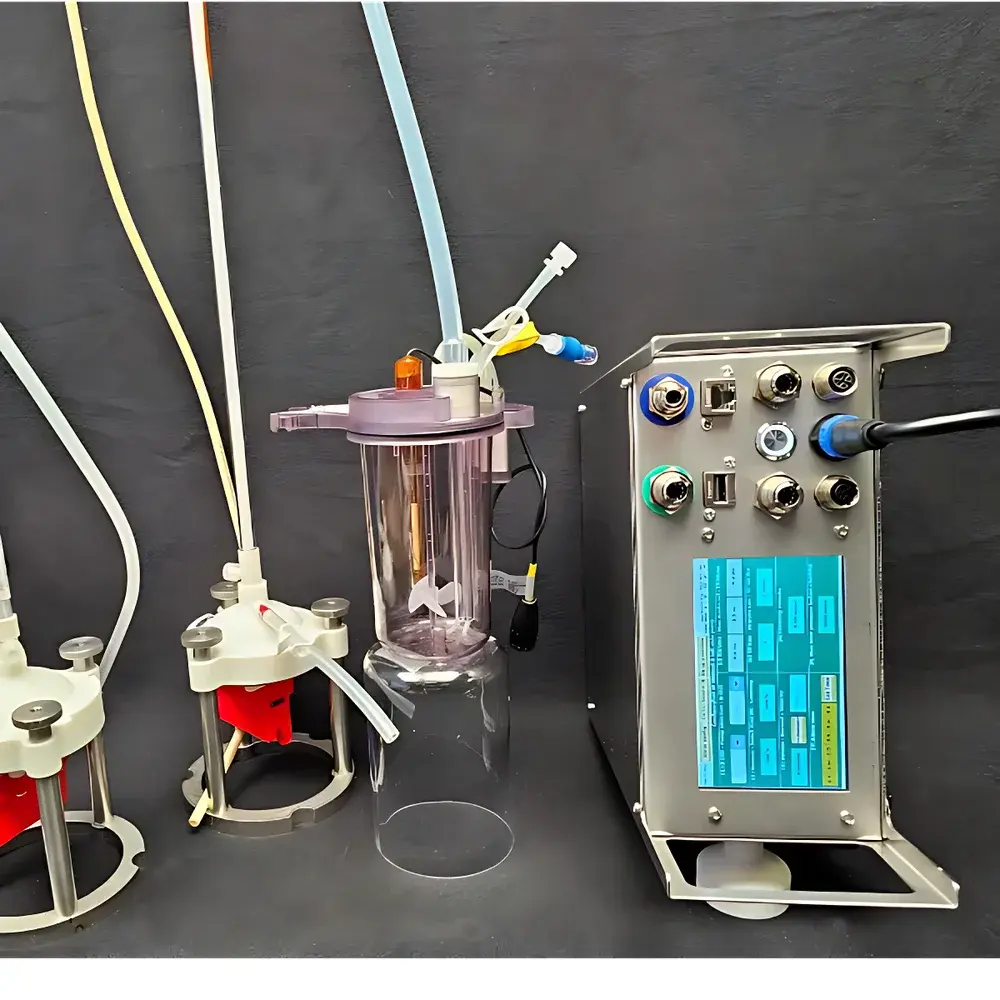
- Twelve independently controllable reactor modules housed in a compact, stainless steel (316L) chassis—enabling parallel process optimization or DoE-based studies.
- Pre-assembled, gamma-irradiated single-use assemblies including CellMembra™ (TFF-30 series) and CellRetention™ (P-SUB-31 series), each pre-validated for extractables/leachables per USP <661.1> and ISO 10993-18.
- Integrated ConducCell 4-electrode conductivity sensor with Pt1000 temperature compensation (Class C), offering linear response across 1–200 mS/cm and <60 s stabilization time at 25°C.
- Laser-guided, positive-displacement disposable pumps: Thalia A-SUP (valveless alternating flow) for shear-sensitive applications; Clio O-SUP (unidirectional TFF with integrated check valve) for precise feed/permeate control.
- Full compatibility with third-party process control systems (PCS), including DeltaV, Foxboro DCS, and LabVIEW-based custom platforms—via standard 4–20 mA, Modbus RTU, and Ethernet/IP interfaces.
- Pre-configured sensor integration points for pH, DO, glucose, and capacitance—supporting future expansion without hardware modification.
Sample Compatibility & Compliance
The system accommodates suspension-adapted CHO, HEK293, CAP-T, and hybridoma cell lines, as well as microcarrier-based adherent cultures (e.g., hMSCs on Cytodex 3). All wetted components comply with USP Class VI biological safety requirements and meet ISO 13485:2016 for medical device manufacturing. The ConducCell sensor conforms to IEC 60746-3 for conductivity measurement accuracy and supports GLP/GMP audit trails when paired with validated PCS software. Data integrity is maintained per FDA 21 CFR Part 11 through electronic signatures, audit logging, and role-based access control—fully documented in the system’s Design Qualification (DQ) and Installation Qualification (IQ) packages.
Software & Data Management
While the Perfuse Cell hardware operates autonomously via analog/digital I/O, it is designed for seamless integration into compliant data ecosystems. Sensor outputs are timestamped and logged at ≤1 Hz resolution. When connected to a validated PCS, all raw and calculated parameters—including viability, metabolite profiles, and filter flux rates—are stored in relational databases with immutable audit trails. Batch records automatically generate PDF reports compliant with Annex 11 and EU GMP Chapter 4 requirements. Optional cloud synchronization enables remote monitoring and predictive maintenance alerts based on pump cycle count and membrane fouling indices.
Applications
- Process intensification of mAb production—reducing footprint and increasing volumetric productivity by 3–5× versus fed-batch.
- Manufacturing of lentiviral and AAV vectors under cGMP conditions, where low shear stress and stable transduction efficiency are critical.
- Stem cell expansion for regenerative medicine applications requiring strict control of lactate and ammonium accumulation.
- Accelerated formulation screening using parallel bioreactor modules to evaluate media supplements, feed strategies, and pH/DO setpoints.
- Technology transfer support from lab-scale (0.1 L) to clinical manufacturing (25 L) without re-optimization—leveraging identical HFF geometry and pump dynamics.
FAQ
Is the Perfuse Cell system compliant with FDA 21 CFR Part 11?
Yes—when deployed with a validated process control system that implements electronic signatures, audit trail generation, and user access controls per Part 11 Subpart B.
Can the 12-module chassis operate all reactors simultaneously at different setpoints?
Yes—each module has independent PID loops for temperature, pH, DO, and perfusion rate, configurable via external PCS or manual analog input.
What is the maximum recommended operating pressure for the hollow-fiber filters?
The standard CellMembra™ HFF cartridges are rated for ≤2.5 bar transmembrane pressure (TMP); operation above 1.8 bar requires real-time TMP monitoring and automated backflush protocols.
Are replacement sensors and pump sets supplied with full CoA and CoC documentation?
Yes—all single-use components ship with Certificate of Analysis (CoA), Certificate of Conformance (CoC), and gamma irradiation validation reports traceable to ISO/IEC 17025-accredited laboratories.
Does the system support PAT (Process Analytical Technology) integration?
Yes—it provides native analog and digital outputs compatible with NIR, Raman, and inline HPLC systems for real-time multivariate analysis and model-predictive control implementation.





