
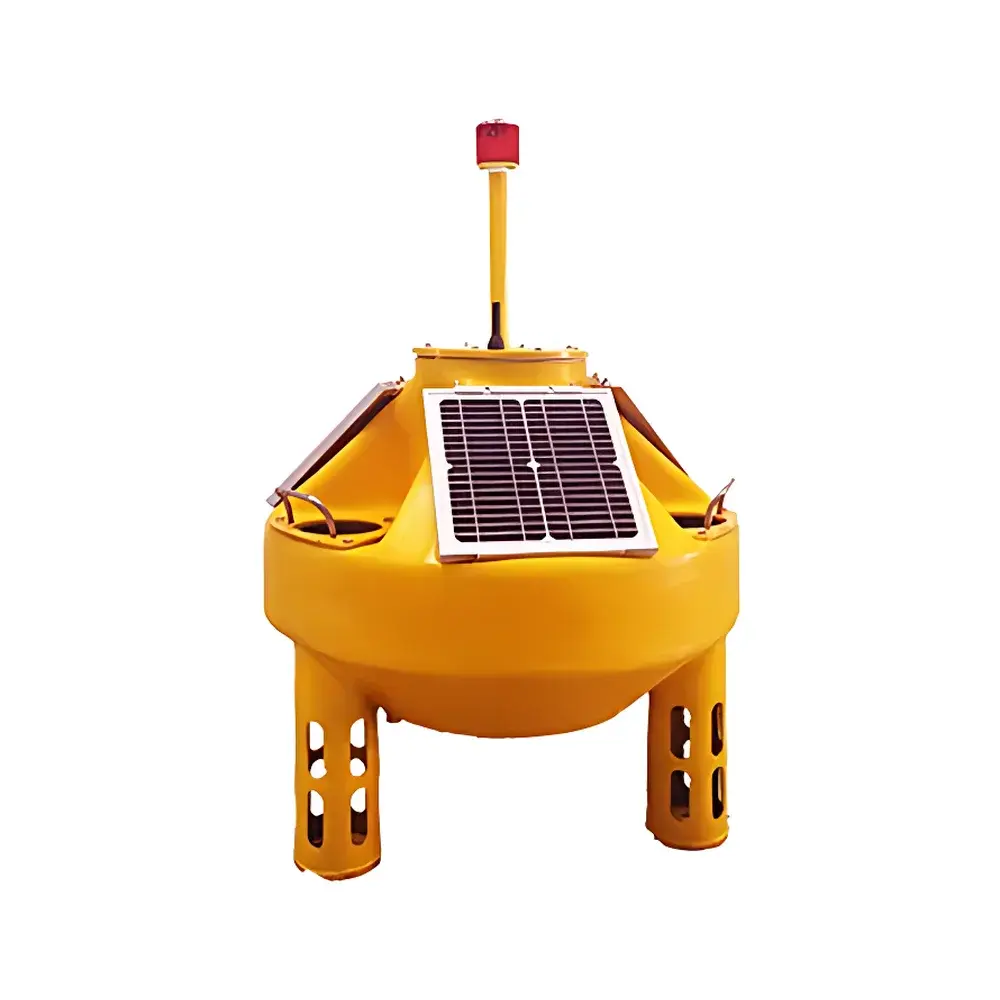
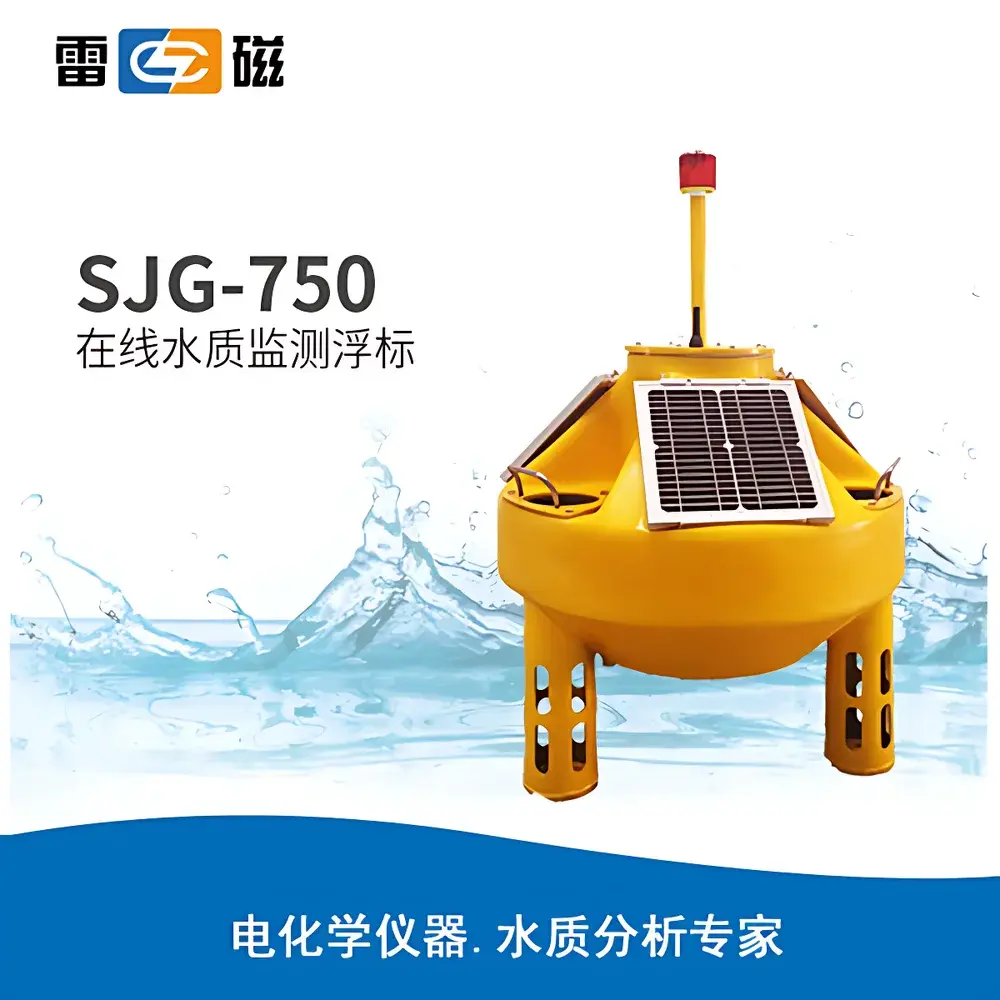
Leici SJG-750 In-Situ Surface Water Quality Monitoring Buoy
| Brand | Leici |
|---|---|
| Origin | Shanghai, China |
| Manufacturer Type | Direct Manufacturer |
| Country of Origin | China |
| Model | SJG-750 |
| Pricing | Available Upon Request |
| pH Range | 0–14 pH |
| pH Resolution | 0.01 pH |
| pH Accuracy | ±0.05 pH ±1 digit |
| Conductivity Range | 0–200.0 mS/cm |
| Conductivity Accuracy | ±1.5% FS |
| Dissolved Oxygen Range | 0.00–20.00 mg/L |
| DO Resolution | 0.01 mg/L |
| DO Electronic Error | ±0.2 mg/L |
| Turbidity Range | 0–1000 NTU |
| Turbidity Resolution | 0.1 NTU |
| Turbidity Linearity Error | ±5% |
| Temperature Range | 0.0–60.0 °C |
| Temperature Resolution | 0.1 °C |
| Temperature Accuracy | ±0.5 °C ±1 digit |
| Power Supply | AC 220 V ±10%, 50 Hz ±2% |
| Dimensions (L×W×H) | 285 × 205 × 97 mm |
| Weight | 3 kg |
Overview
The Leici SJG-750 In-Situ Surface Water Quality Monitoring Buoy is an autonomous, solar-compatible, multi-parameter water quality sensor platform engineered for long-term deployment on rivers, canals, reservoirs, and other open surface water bodies. It operates on the principle of electrochemical and optical sensing—employing glass electrode-based potentiometry for pH, four-electrode conductivity cells for wide-range conductance measurement, luminescence-based dissolved oxygen (DO) detection with temperature compensation, and 90° scattered-light turbidity measurement per ISO 7027. Designed for unattended operation in dynamic hydraulic environments, the buoy integrates all sensors into a single compact housing with sealed, corrosion-resistant materials (316 stainless steel and marine-grade ABS), enabling stable performance under fluctuating flow, wave action, and biofouling-prone conditions. Its real-time data acquisition architecture supports continuous monitoring at user-defined intervals (1 min to 24 h), delivering time-synchronized measurements critical for trend analysis, early warning of pollution events, and compliance reporting.
Key Features
- Modular sensor architecture allowing field-selectable configuration of pH, conductivity, dissolved oxygen, turbidity, and temperature—each sensor independently calibrated and replaceable without system downtime.
- Integrated automatic cleaning mechanism utilizing low-power mechanical wipers and optional ultrasonic transducers to mitigate biofilm accumulation on optical windows and electrode surfaces.
- Wireless telemetry via dual-mode transmission: LoRaWAN (up to 10 km line-of-sight) for regional network integration and 4G LTE-M for direct cloud upload, both supporting TLS 1.2 encryption and MQTT/HTTP(S) protocols.
- Hybrid power system: rechargeable lithium-thionyl chloride battery (10-year shelf life, 6-month operational life at 15-min sampling interval) with optional monocrystalline solar panel (5 W, IP68-rated) and intelligent charge management to sustain year-round operation in temperate climates.
- Zero-reagent operation—eliminating consumables, hazardous waste generation, and associated maintenance logistics—fully compliant with ISO 5667-22 for non-intrusive environmental monitoring.
- Compact form factor (285 × 205 × 97 mm, 3 kg) enables rapid deployment from small vessels or shore-based launch; no civil works, mooring pilings, or permanent infrastructure required.
Sample Compatibility & Compliance
The SJG-750 is validated for use in natural freshwater systems with salinity ≤5 ppt, suspended solids ≤500 mg/L, and ambient temperatures between 0 °C and 60 °C. Sensor modules meet IEC 60529 IP68 ingress protection (submersible to 5 m for 72 h), and electrical isolation complies with IEC 61000-6-2/6-4 for industrial electromagnetic compatibility. Data integrity adheres to GLP principles: each measurement record includes embedded timestamps (NTP-synchronized), sensor serial IDs, calibration history flags, and diagnostic codes (e.g., fouling index, signal saturation). While not certified for regulatory submission under EPA Method 160.1 or ISO 10523/7888, its performance specifications align with ASTM D1293 (pH), D1125 (conductivity), D888 (DO), and D turbidity standards for screening-level monitoring.
Software & Data Management
Data is ingested into Leici’s CloudLink Water Intelligence Platform—a secure, browser-based SaaS environment supporting role-based access control (RBAC), customizable dashboards, automated alerting (SMS/email/webhook), and export in CSV, JSON, or NetCDF formats. The platform maintains full audit trails per FDA 21 CFR Part 11 requirements—including electronic signatures, change logs, and immutable raw-data archiving for ≥10 years. Firmware updates are delivered over-the-air (OTA) with rollback capability and SHA-256 signature verification. Local edge storage (8 GB eMMC) retains 30 days of high-frequency data during connectivity outages, ensuring zero data loss.
Applications
- River basin management: tracking diurnal DO cycles, nutrient loading surges, and acidification events across longitudinal transects.
- Urban runoff monitoring: detecting stormwater-induced turbidity spikes and conductivity anomalies near CSO outfalls.
- Ecological restoration projects: validating target thresholds for pH (6.5–8.5) and DO (>5 mg/L) in rehabilitated wetlands.
- Early warning systems for algal bloom prediction using multivariate correlation of temperature, turbidity, and conductivity trends.
- Supporting national water quality assessment programs (e.g., China’s “Blue Sky and Clear Water” initiative) through standardized, interoperable data streams compatible with national monitoring platforms.
FAQ
What is the maximum deployment depth for the SJG-750 buoy?
The sensor housing is rated IP68 to 5 meters static submersion depth; however, optimal performance is achieved with the sensor array positioned 0.5–1.0 m below the water surface to avoid surface scum and wave-induced air entrainment.
Can the system be integrated with third-party SCADA or GIS platforms?
Yes—via RESTful API, Modbus TCP, or MQTT endpoints with configurable topic structures and JSON payload schemas; documentation and sample integrations (ArcGIS Online, Ignition SCADA, Grafana) are provided upon request.
How often does the system require calibration maintenance?
Factory calibration remains valid for 6 months under typical field conditions; field verification using NIST-traceable standard solutions is recommended quarterly, with automated drift-check routines triggered before each scheduled measurement cycle.
Is the buoy suitable for tidal estuaries or brackish water?
While designed for freshwater, the conductivity module covers up to 200 mS/cm—sufficient for salinities up to ~12 ppt; for sustained use above 5 ppt, optional Ag/AgCl reference electrodes and anti-fouling coatings are available as accessories.
Does the system support remote firmware updates and diagnostics?
Yes—over-the-air updates are cryptographically signed and staged with pre-update health checks; real-time diagnostics include sensor impedance spectra, battery voltage decay rate, and wireless link quality metrics (RSSI/SNR).
Related Products







