
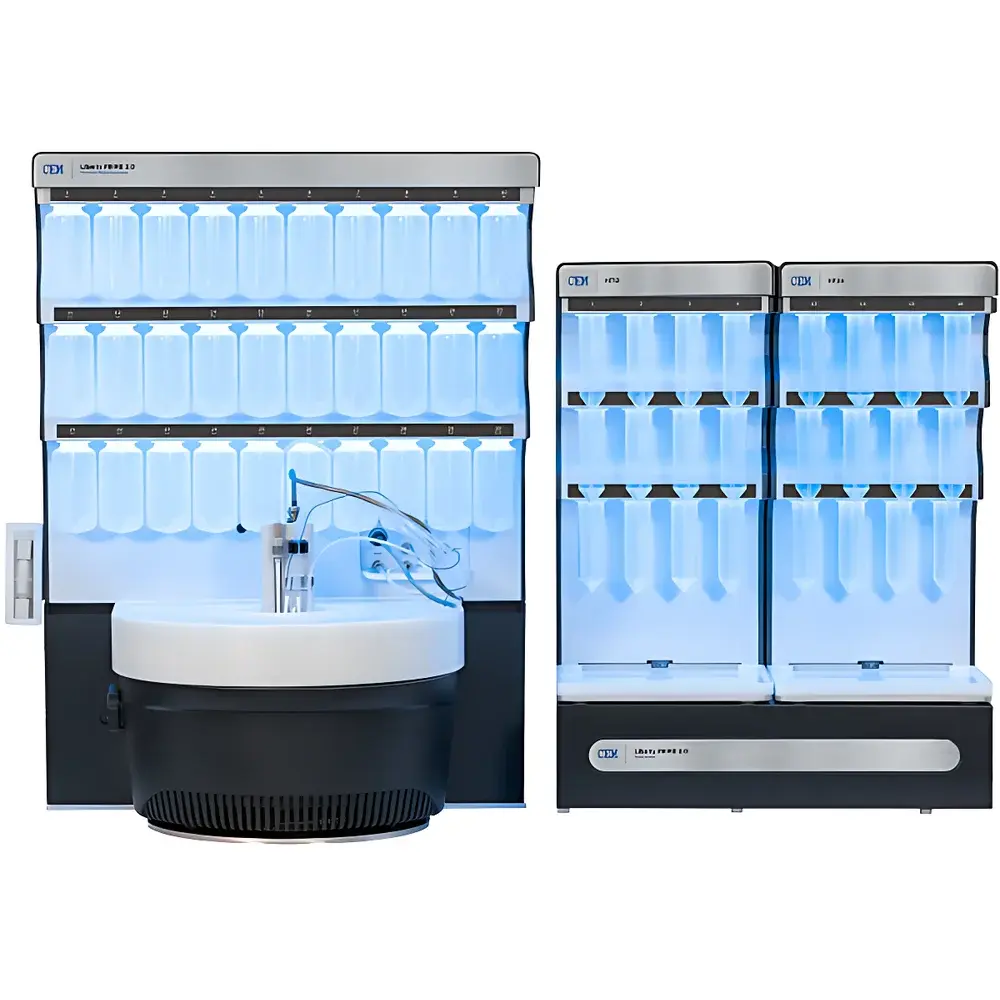
CEM Liberty Prime 2.0 High-Throughput Microwave Peptide Synthesizer
| Brand | CEM |
|---|---|
| Origin | USA |
| Manufacturer Status | Authorized Distributor |
| Origin Category | Imported |
| Model | Liberty Prime 2.0 |
| Quotation | Upon Request |
| Amino Acid Delivery | Automated |
| Reagent Delivery | Automated |
| Synthesis Scale | 0.0005–5 mmol |
| Number of Reactors | 3 |
| Reactor Volume Range | 10–125 mL |
| Syringe Pump Accuracy | ±0.01 mL |
| Crude Peptide Purity | >70% |
Overview
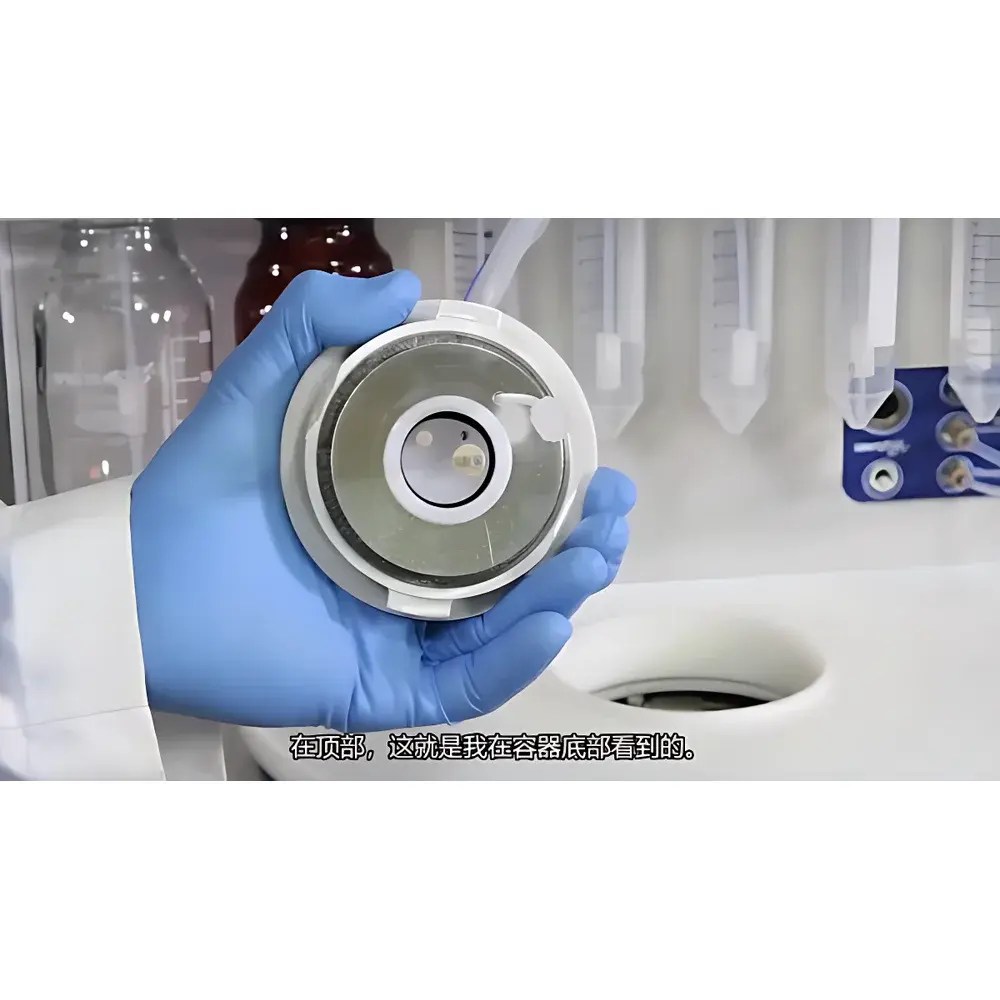
The CEM Liberty Prime 2.0 High-Throughput Microwave Peptide Synthesizer is an engineered platform for rapid, reproducible solid-phase peptide synthesis (SPPS) under controlled microwave irradiation. It operates on the principle of single-mode microwave energy delivery—enabled by CEM’s patented PowerMAX™ annular focusing technology—to achieve uniform, precise thermal activation across the reaction volume. Unlike conventional multimode or early-generation single-mode systems, the Liberty Prime 2.0 delivers scalable microwave power (up to 300 W) with real-time, in-situ fiber-optic temperature monitoring at the resin bed, ensuring kinetic control over both Fmoc deprotection and coupling steps. Its defining innovation is the “One-Pot Coupling & Deprotection” methodology: rather than draining and recharging solvents between steps, the system introduces piperidine-based deprotection reagent directly into the post-coupling mixture, eliminating intermediate washes and reducing cycle time while suppressing side reactions such as aspartimide formation or diketopiperazine cyclization. This architecture enables synthesis of challenging sequences—including long (>30-mer), hydrophobic, or sterically hindered peptides—with improved crude purity and reduced epimerization risk.
Key Features
- Single-mode microwave cavity with PowerMAX™ annular focusing—enabling homogeneous energy distribution and scalable reaction volumes up to 300 mL
- In-situ fiber-optic temperature sensing at the resin interface for closed-loop thermal control (±0.5 °C accuracy)
- Flex-Add™ fluidics system: simultaneous, metered transfer of amino acids, activators (e.g., HATU, DIC), base (e.g., DIPEA), and deprotection reagents (e.g., 20% piperidine/DMF)
- Three independently controlled reactors (10–125 mL capacity), supporting parallel synthesis across variable scales (0.0005–5 mmol)
- Inert gas sparging for homogeneous resin suspension and oxygen exclusion during sensitive couplings
- Headspace Flushing™ technology: inert gas purge above the reaction mixture to remove volatile amines and prevent condensation-induced side reactions on reactor walls
- Automated logging of all fluid dispenses, temperature profiles, microwave power output, and timing events per synthesis step
Sample Compatibility & Compliance
The Liberty Prime 2.0 supports standard Fmoc-protected amino acids—including 30 preloaded natural residues and up to 7 additional positions for non-canonical or post-translationally modified building blocks (e.g., phospho-serine, N-methyl-glycine). Resin compatibility includes polystyrene-, PEG-based (e.g., ChemMatrix®), and acid-labile linkers (e.g., Rink amide MBHA). All fluidic pathways are chemically resistant to DMF, DCM, NMP, and piperidine solutions. The system complies with general laboratory safety standards (ANSI Z9.5, IEC 61000-6-3) and supports audit-ready operation when integrated with validated LIMS or ELN environments. While not inherently 21 CFR Part 11-compliant out-of-the-box, its PDF method export, timestamped event logs, and user-access-controlled settings enable configuration for GLP/GMP workflows under site-specific validation protocols.
Software & Data Management
Control is executed via a Windows-based application running on an external laptop (wireless connectivity optional). The software allows full method definition—including coupling/deprotection times, temperature ramps, reagent stoichiometry, and microwave power profiles—as well as real-time visualization of temperature, pressure (if equipped), and power absorption. Each synthesis generates a comprehensive log file (.csv) and a human-readable PDF report containing step-by-step execution metadata, deviations (e.g., temperature overshoot >2 °C), and total reagent consumption. Methods are encrypted and version-controlled; user roles support operator, supervisor, and administrator permissions. Exported data conforms to FAIR principles (Findable, Accessible, Interoperable, Reusable) and integrates with third-party data lakes via standardized APIs.
Applications
- Rapid generation of peptide libraries for structure–activity relationship (SAR) studies
- Synthesis of long or aggregation-prone peptides for structural biology (e.g., NMR, cryo-EM targets)
- Production of GMP-grade peptide intermediates under validated conditions (with supplementary IQ/OQ/PQ)
- Development of constrained peptides, macrocycles, and peptide–drug conjugates requiring high-fidelity coupling
- Method optimization for difficult sequences involving repetitive motifs (e.g., poly-Gly, poly-Pro) or C-terminal modifications
- Academic and industrial scale-up from µmol-scale discovery to mmol-scale pilot batches
FAQ
What is the minimum and maximum synthesis scale supported?
The system operates from 0.0005 mmol (500 nmol) to 5 mmol per reactor, with optimal reproducibility observed between 0.01–2 mmol.
Does the Liberty Prime 2.0 support Boc chemistry?
No—it is optimized exclusively for Fmoc-based SPPS; Boc deprotection requires strong acid (e.g., TFA), which is incompatible with the fluidic materials and microwave cavity design.
Can the system be validated for regulated environments?
Yes—while the base instrument is not pre-certified, its deterministic fluidic control, traceable temperature measurement, and complete digital audit trail allow for successful IQ/OQ/PQ execution per ASTM E2500 and ISO 13485 frameworks.
Is resin swelling monitored or controlled?
Swelling is managed empirically through solvent selection and inert gas flow rate; no direct volumetric swelling sensor is included, but consistent batch-to-batch performance is ensured via fixed solvent-to-resin ratios and temperature-regulated swelling periods.
What maintenance is required for long-term reliability?
Scheduled replacement of syringe pump tubing (every 6 months under continuous use), annual calibration of fiber-optic probes, and quarterly inspection of microwave waveguide integrity and O-ring seals.






