AQ M-Tech CCS15.75-25 Ultrasonic Air-in-Liquid Sensor for Pharmaceutical Bubble Detection
| Brand | AQ M-Tech |
|---|---|
| Origin | Sweden |
| Model | CCS15.75-25 |
| Material (Wetted Parts) | 316L Stainless Steel (EN 1.4404) |
| Connection | Tri-Clamp 25 mm |
| Operating Temperature | 0–100 °C (continuous), –20 to 130 °C (SIP, 500 h cumulative) |
| Pressure Rating | 1 MPa (10 bar g) at rated temperature |
| IP Rating | IP67 |
| Surface Roughness (Ra) | <0.375 µm (<15 µin) |
| Detectable Bubble Size | ≥2 mm |
| Compliance | EN 10204 3.1B Certificate Available |
| Cable Length | Standard 7 m (optional 20 m / 40 m) |
Overview
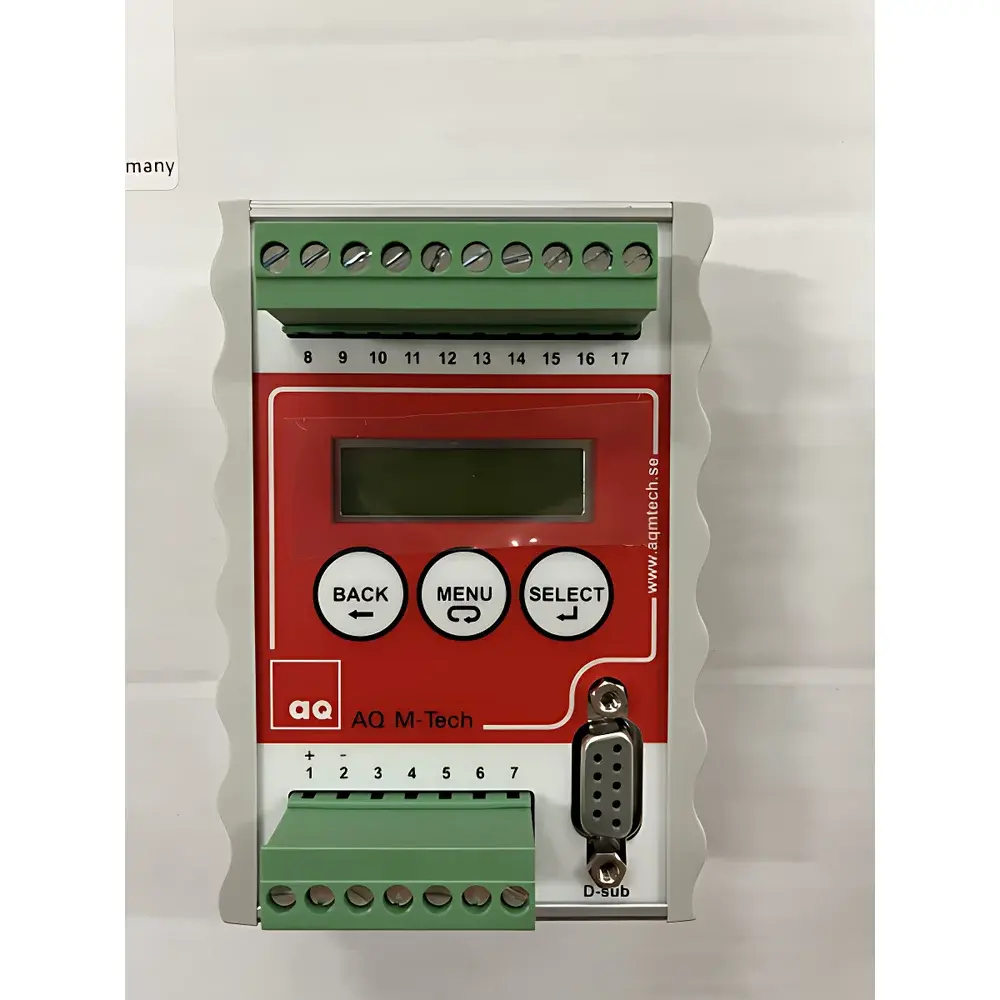
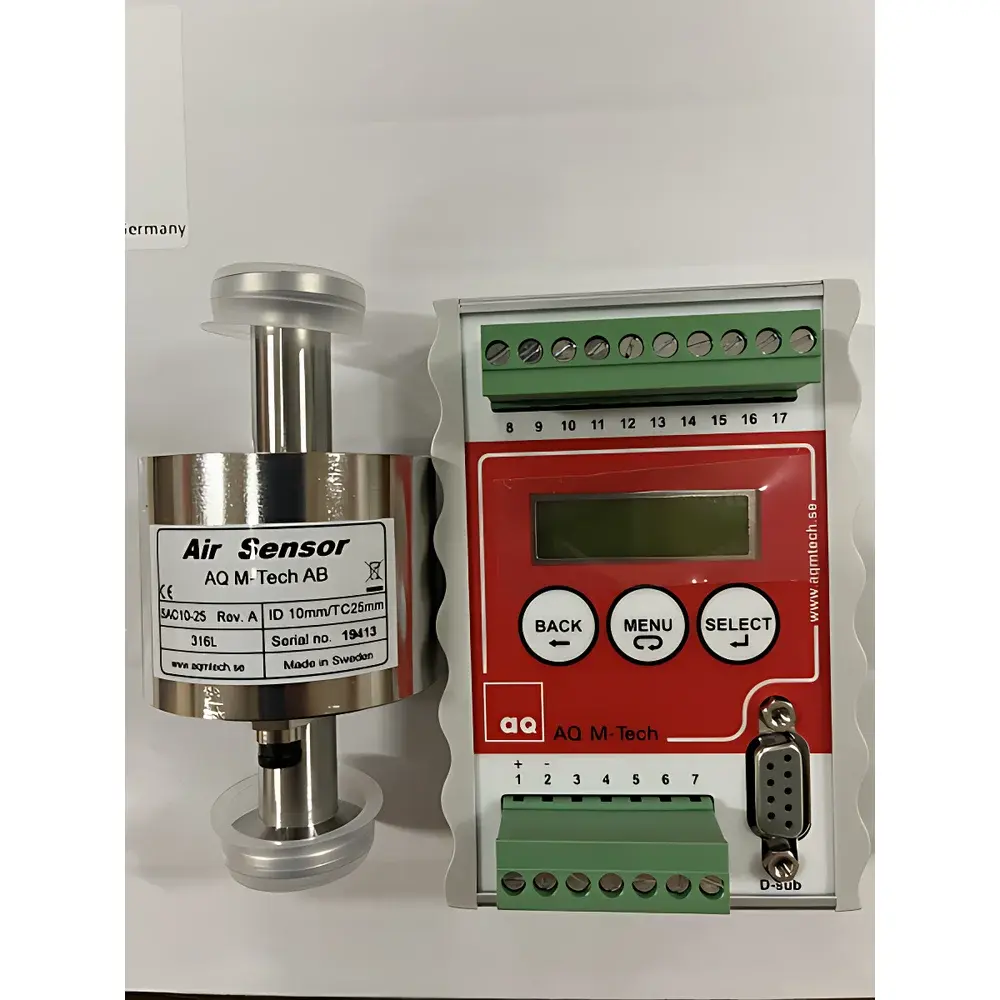
The AQ M-Tech CCS15.75-25 is a non-invasive, clamp-on ultrasonic air-in-liquid sensor engineered for real-time detection of gas bubbles and suspended particulates in sterile liquid process streams—specifically designed for critical applications in pharmaceutical manufacturing, bioprocessing, and aseptic filling lines. Unlike optical or capacitive sensors, the CCS15.75-25 employs high-frequency ultrasonic transmission and reflection analysis across the pipe wall, enabling continuous, contactless monitoring without compromising system integrity or introducing dead-legs. Its measurement principle relies on differential acoustic impedance between liquid and entrained gas phases: when ultrasound propagates through a fluid-filled pipe, the presence of discrete gas bubbles or solid particles causes measurable attenuation and time-of-flight shifts in the received signal. These changes are processed by an external ultrasonic controller (e.g., AQ UCC series) to generate binary or analog output signals—enabling integration into PLC-based SCADA systems or distributed control architectures for automated alarm triggering or pump interlock logic.
Key Features
- Non-intrusive, clamp-on installation—no wetted electronics, no flow disruption, zero risk of contamination or pressure drop
- Fully smooth internal bore (Ra < 0.375 µm) compliant with ASME BPE and EHEDG hygienic design standards
- Construction from electropolished 316L stainless steel (EN 1.4404), certified to EN 10204 3.1B for full material traceability
- Rated for CIP (Clean-in-Place) and SIP (Steam-in-Place) up to 130 °C (cumulative 500 h), validated per ISO 13485 and FDA 21 CFR Part 11-compliant validation protocols
- Tri-Clamp 25 mm (1″) sanitary connection standard; custom flange or DIN connections available upon request
- IP67-rated housing suitable for washdown environments in Grade C/D cleanrooms
- Configurable sensitivity threshold—adjustable to detect discrete bubbles ≥2 mm diameter under laminar or turbulent flow conditions
- Integrated diagnostics including signal strength monitoring, self-test routines, and fault-code reporting via analog 4–20 mA or digital RS-485 Modbus RTU output
Sample Compatibility & Compliance
The CCS15.75-25 is validated for use with aqueous buffers, cell culture media, purified water (PW), water-for-injection (WFI), and low-viscosity solvents commonly encountered in upstream and downstream bioprocessing. It is incompatible with highly viscous fluids (>500 cP), opaque emulsions, or slurries containing abrasive solids >50 µm. Regulatory alignment includes adherence to ISO 13485:2016 quality management systems, compliance with EU Annex 1 requirements for bubble detection in aseptic processes, and support for GMP audit trails when paired with AQ’s validated UCC-PRO controller. Documentation packages include Factory Acceptance Test (FAT) reports, calibration certificates traceable to NIST standards, and full 3.1B material certification for all wetted components.
Software & Data Management
The sensor operates as a field device within AQ’s Unified Control Concept (UCC) ecosystem. When connected to the UCC-PRO controller, it supports configurable alarm thresholds, event logging with timestamped bubble incidence records, and export of CSV-formatted data for trend analysis in LIMS or MES platforms. Audit trail functionality meets FDA 21 CFR Part 11 requirements—including electronic signatures, user access levels, and immutable record retention. Firmware updates are performed via secure USB or Ethernet interface, with version history and change logs retained in device memory. Optional OPC UA integration enables seamless interoperability with Siemens Desigo, Rockwell FactoryTalk, or Emerson DeltaV DCS environments.
Applications
- Monitoring for air ingress during buffer transfer between bioreactors and chromatography skids
- Early detection of vacuum leaks in ultrafiltration/diafiltration loops
- Verification of degassing efficiency prior to sterile filtration
- Real-time verification of line priming status before aseptic fill-finish operations
- Alarm-triggered shutdown of peristaltic pumps during vial/bag filling to prevent air entrapment
- Supporting Annex 1 §6.49 requirements for “continuous monitoring of air bubbles in product streams”
FAQ
Is the CCS15.75-25 suitable for use with WFI systems operating at 80 °C continuously?
Yes—its continuous operating range is 0–100 °C; WFI at 80 °C falls well within specification.
Can this sensor detect microbubbles smaller than 2 mm?
No—minimum detectable discrete bubble diameter is 2 mm under nominal flow velocity (0.3–3 m/s) and Reynolds number >2,000.
Does the sensor require recalibration after SIP cycles?
No—ultrasonic transduction is inherently stable across thermal cycling; however, annual performance verification against reference standards is recommended per ISO/IEC 17025.
Is third-party validation support available?
Yes—AQ M-Tech provides IQ/OQ documentation templates and on-site validation engineering support aligned with ASTM E2500 and GAMP 5 guidelines.
What is the maximum allowable system pressure at 121 °C?
At 121 °C, the sensor is rated for SIP duty only (not continuous pressure service); maximum allowable pressure is 0.35 MPa (3.5 bar g) for ≤30 min exposure per cycle.