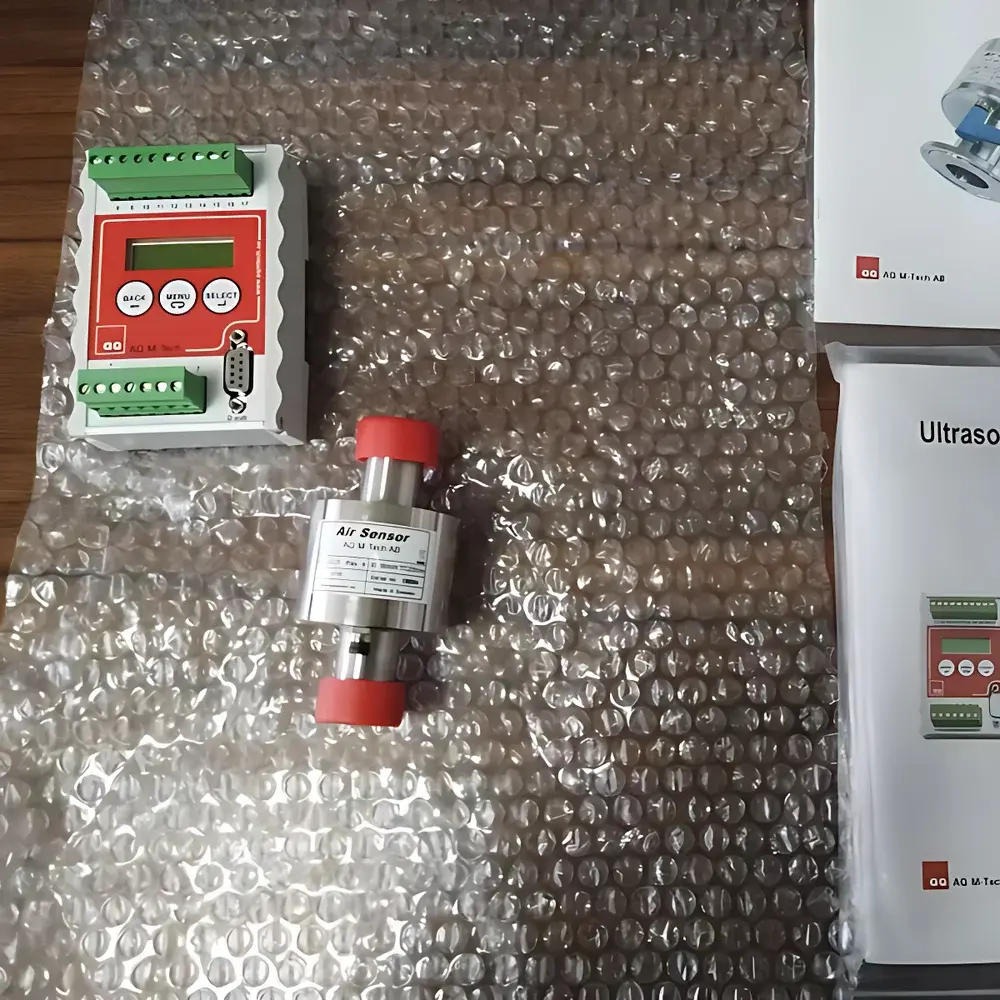
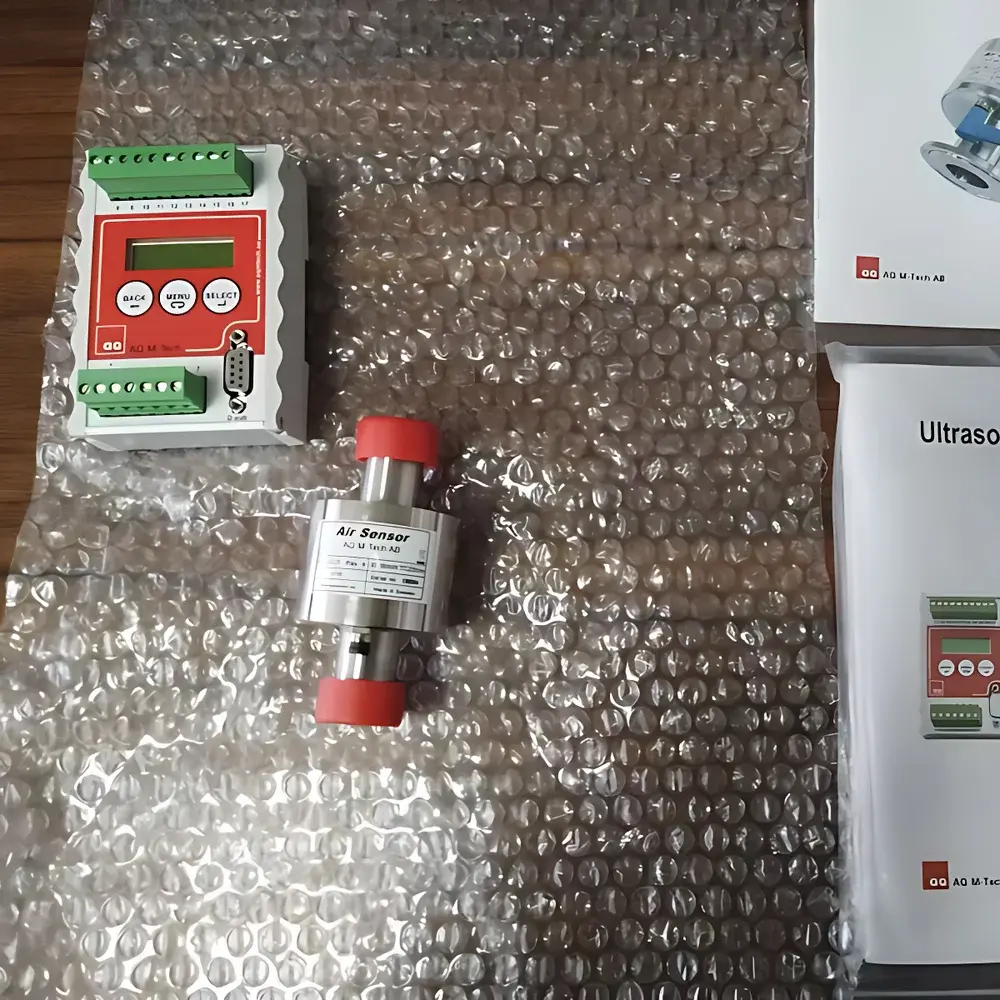
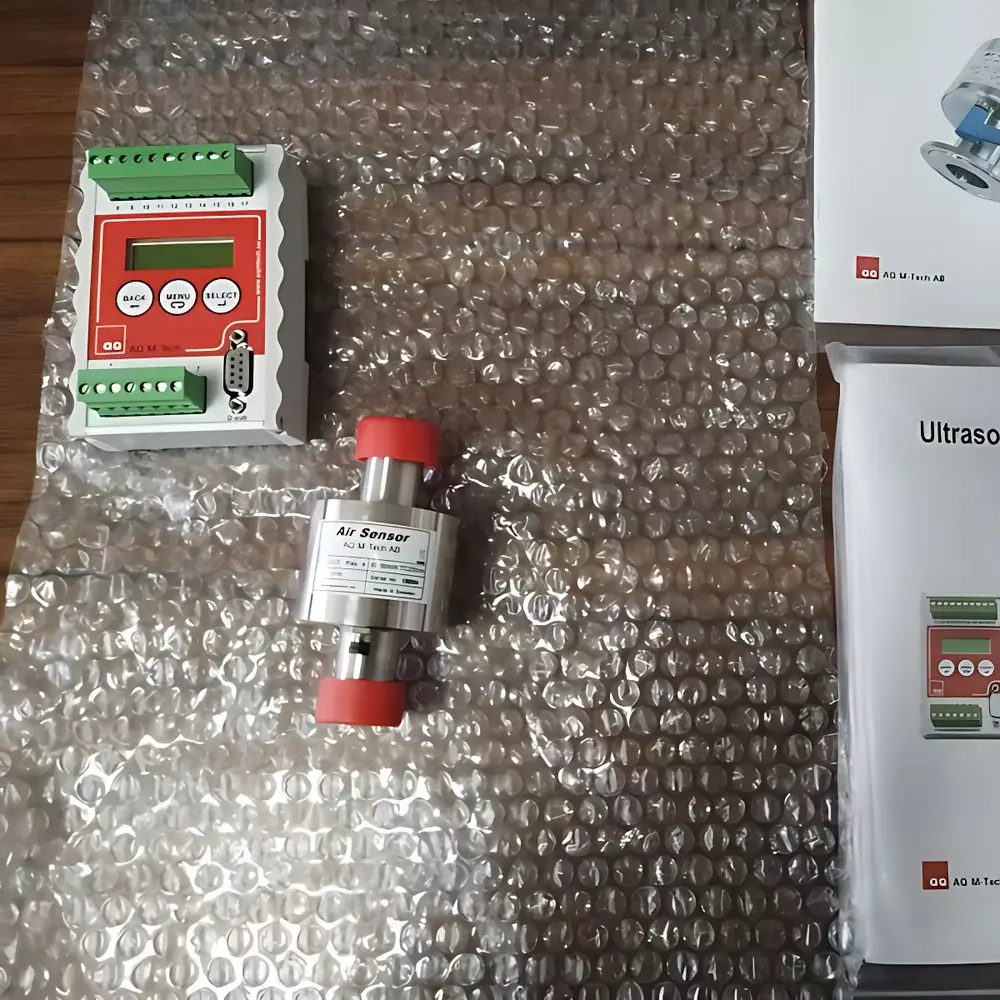
AQ M-Tech SAC4.5-25 Air Bubble Detector for Chromatography Systems in Pharmaceutical Manufacturing
| Brand | AQ M-Tech |
|---|---|
| Origin | Sweden |
| Model | SAC4.5-25 |
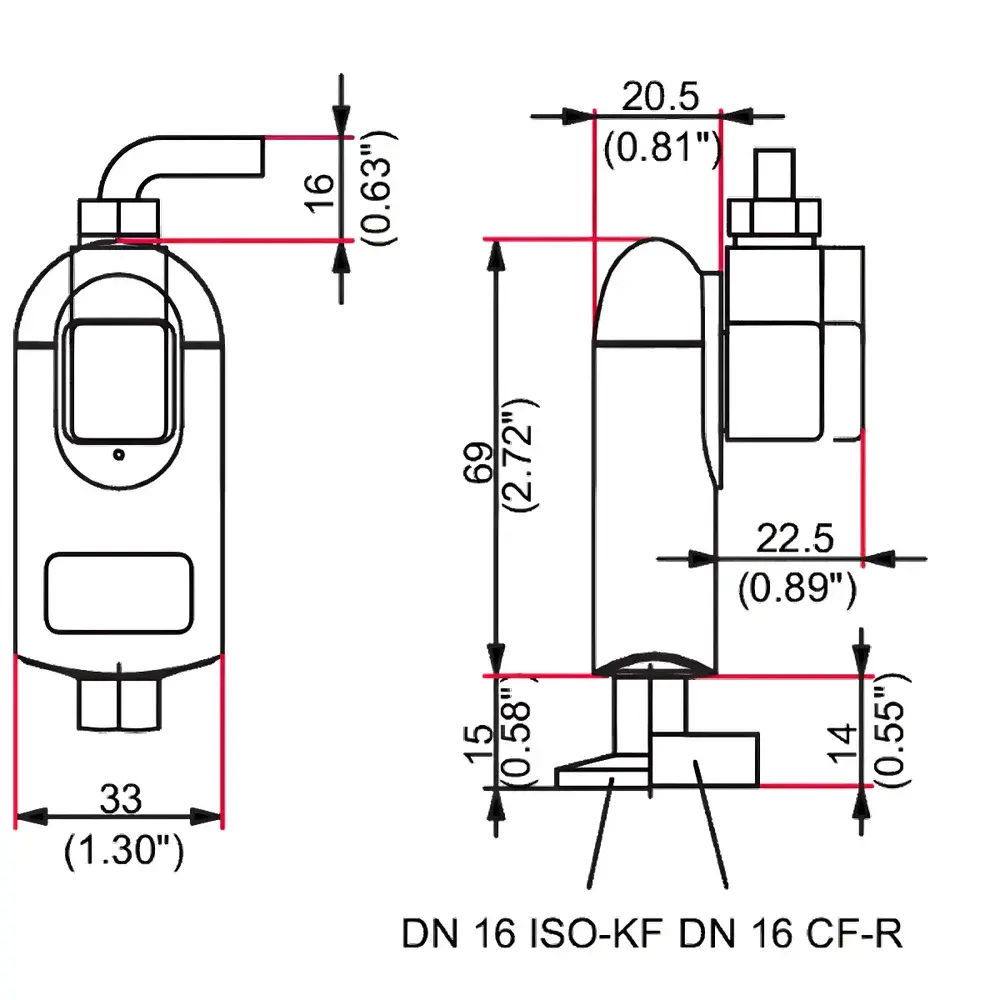
| Tubing ID | Ø4.5 mm |
| Tubing OD | Ø38 mm |
| Clamp Connection | 25 mm (DIN 11851 / ISO 2852) |
| Standard Cable Length | 7 m |
| Housing Material | ASTM A276 Type 316L Stainless Steel |
| Compliance | Designed for GMP-compliant biopharmaceutical fluid paths |
Overview
The AQ M-Tech SAC4.5-25 is a high-integrity, non-invasive air bubble detector engineered specifically for real-time gas phase detection in sterile, low-flow liquid streams within chromatography systems used in pharmaceutical downstream processing. It operates on the principle of ultrasonic transmission time difference (TTD) measurement: two piezoelectric transducers—mounted diametrically opposite across the sensor body—emit and receive ultrasonic pulses through the process fluid. The presence of an air bubble alters the acoustic impedance and propagation velocity, resulting in a measurable shift in transit time. This method enables reliable, zero-drift detection of discrete gas pockets ≥100 µL at flow rates typical of preparative HPLC, FPLC, and continuous chromatography skids (0.1–10 mL/min), without introducing dead legs, pressure drops, or wetted surface discontinuities.
Key Features
- Material-of-construction fully compliant with USP Class VI and EP 3.1.9 requirements: 316L stainless steel (ASTM A276) wetted surfaces, electropolished to Ra ≤ 0.4 µm, passivated per ASTM A967.
- DIN 11851 / ISO 2852 sanitary clamp interface (25 mm) ensures seamless integration into ASME BPE-compliant tubing assemblies; no welding or additional gasket interfaces required.
- Non-intrusive design eliminates risk of particle generation, biofilm nucleation, or flow turbulence—critical for maintaining column integrity and product purity in cGMP environments.
- Factory-calibrated for aqueous buffers (pH 3–11) and common chromatographic solvents (e.g., ethanol, isopropanol, acetonitrile); calibration traceable to NIST-traceable reference standards.
- IP67-rated electronics housing with reinforced polyamide (PA66-GF30) enclosure; operating ambient temperature range: −10 °C to +50 °C.
- 4–20 mA analog output with HART® 7 protocol support for integration into DeltaV™, PCS7, or Emerson DeltaV DCS platforms; optional Modbus RTU over RS-485 available.
Sample Compatibility & Compliance
The SAC4.5-25 is validated for use with single-use and stainless-steel fluid paths handling purified water (PW), water for injection (WFI), buffer solutions, eluents, and intermediate purification fractions. It meets the functional safety requirements outlined in IEC 61511 for SIL 1 applications when deployed in alarm-only configurations. All materials comply with FDA 21 CFR Part 11 (electronic records/signatures) when paired with AQ’s certified firmware v2.3+, which includes full audit trail logging, user role-based access control, and immutable event timestamps. The sensor supports qualification per IQ/OQ protocols aligned with Annex 15 of the EU GMP Guide and ISPE Baseline Guide Volume 4 (Biotechnology).
Software & Data Management
AQ M-Tech provides the SAC Configurator Suite—a Windows-based engineering tool supporting device parameterization, diagnostic trending, and raw signal visualization. Configuration data is stored in encrypted binary format with SHA-256 checksum validation. Firmware updates are performed via secure USB-C interface with dual-signature verification (manufacturer + site administrator). All operational events—including bubble detection triggers, self-test results, and communication status—are timestamped and exportable in CSV/CSV-UTF8 format for inclusion in batch records. Optional integration with MES systems (e.g., Siemens Opcenter Execution) enables automatic flagging of bubble events against specific chromatographic runs for deviation investigation.
Applications
- Early-phase air ingress detection upstream of protein A affinity columns to prevent resin dry-out and irreversible binding loss.
- Monitoring buffer exchange lines during diafiltration steps to ensure uninterrupted flow and avoid column over-pressurization.
- Verification of degassing efficiency in mobile phase delivery modules prior to gradient elution initiation.
- Alarm supervision of pump priming sequences in automated multi-column chromatography (MCC) systems such as PATfix or TwinStrep.
- Supporting Quality-by-Design (QbD) initiatives by providing quantitative bubble frequency and duration metrics correlated with system pressure profiles and valve actuation logs.
FAQ
What is the minimum detectable bubble volume under laminar flow conditions?
The SAC4.5-25 reliably detects discrete air volumes ≥100 µL at Reynolds numbers below 2,300 (typical for 4.5 mm ID tubing at ≤5 mL/min). Detection threshold is verified per ASTM F2723-18 Annex A2 using calibrated micro-syringe injection.
Can the sensor be sterilized in place (SIP) using steam at 121 °C?
Yes—the 316L body and clamp interface are rated for repeated SIP cycles at 121 °C, 2 bar(g) for 30 minutes; however, the electronic module must be removed prior to SIP and reinstalled post-cycle per AQ’s validated mounting procedure.
Is the SAC4.5-25 compatible with CIP using 1–2% NaOH at 80 °C?
Fully compatible: the electropolished surface withstands caustic cleaning per ASME BPE-2022 Section SD-4.3; cable gland seals meet IP68 after 72 h immersion in 2% NaOH at 80 °C.
Does the device require periodic recalibration?
No routine recalibration is required; the TTD principle is inherently drift-free. Annual performance verification using AQ’s NIST-traceable test kit (P/N VER-SAC-KIT) is recommended for GMP audits.
How is electrical grounding managed to prevent EMI interference in sensitive detector arrays?
The sensor features double-shielded twisted-pair cabling with drain wire termination at the electronics housing only; chassis ground is isolated from signal ground to suppress common-mode noise in multi-channel installations.