
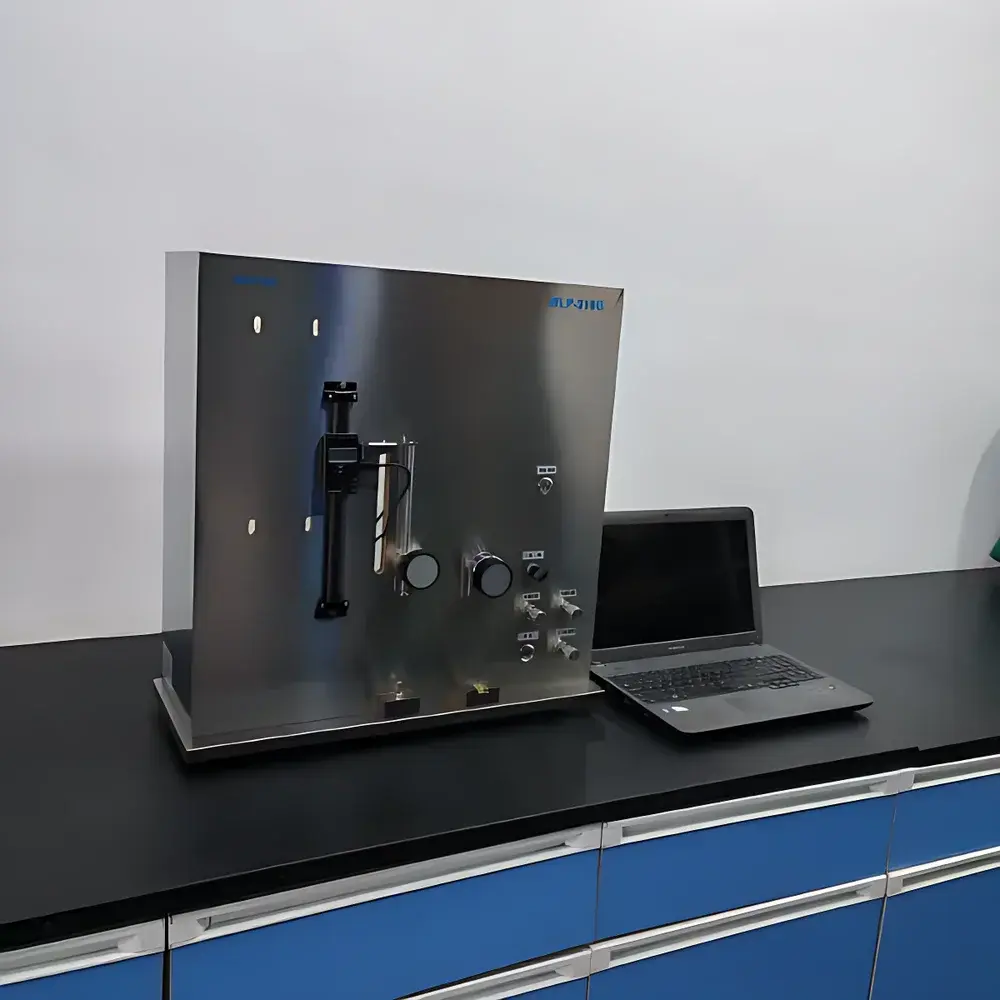
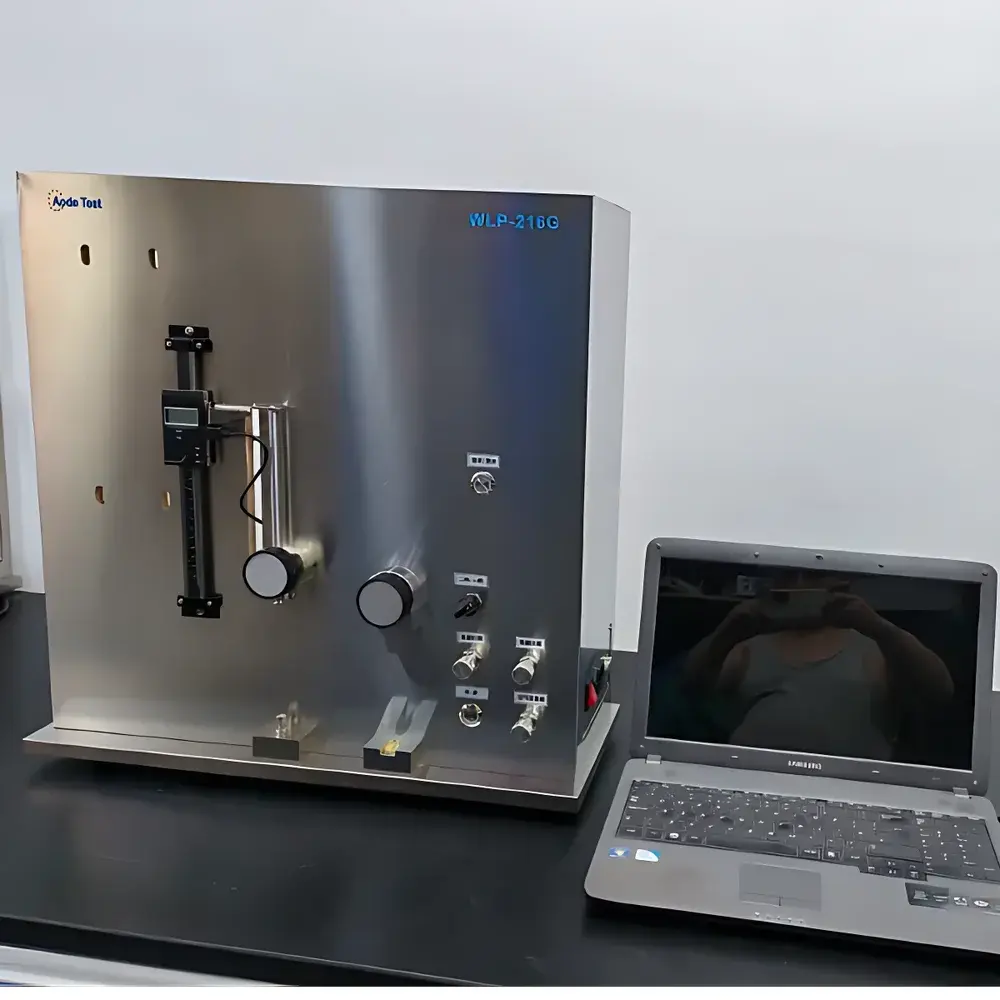
Aode WLP-216G Fisher Sub-Sieve Sizer
| Brand | Aode |
|---|---|
| Origin | Liaoning, China |
| Manufacturer Type | Direct Manufacturer |
| Model | WLP-216G |
| Product Type | Intelligent Fisher Sub-Sieve Analyzer |
| Porosity Range | 0.25–0.95 |
| Repeatability | ±3% |
| Measurement Range | 0.2–100 µm |
| Display Interface | PC-based Software Visualization |
| Inlet Gas Pressure | 5 kPa |
| Power Supply | 220 V / 50–60 Hz, 60 W |
| Host Weight | 17 kg |
| Dimensions (W×D×H) | 57 × 59 × 25 cm |
| Operating Environment | 15–35 °C, ≤80% RH, vibration-free, non-corrosive atmosphere |
| Compliance | ASTM B330, ISO 9277 (gas adsorption correlation), USP <429>, GLP-ready audit trail and user management |
Overview
The Aode WLP-216G Fisher Sub-Sieve Sizer is an intelligent, precision-engineered instrument designed for the quantitative determination of average particle size and specific surface area of fine powders via gas permeability analysis. It operates on the fundamental principle of laminar airflow through a consolidated powder bed—governed by the Kozeny-Carman equation—where volumetric gas flow rate, applied differential pressure, bed height, and void fraction are measured to derive the equivalent spherical diameter (Fisher Number) and specific surface area (cm²/g). Unlike laser diffraction or dynamic light scattering methods, this technique is uniquely suited for dense, non-spherical, cohesive, magnetic, or electrostatically agglomerated powders that resist dispersion in liquid media or optical interrogation. The WLP-216G delivers traceable, reproducible results under controlled pneumatic conditions, making it indispensable for QC laboratories in metallurgy, pharmaceutical manufacturing, advanced ceramics, and nuclear fuel processing where regulatory compliance and batch-to-batch consistency are critical.
Key Features
- Stable, low-noise diaphragm air pump delivering consistent 5 kPa inlet pressure with minimal mechanical vibration—ensuring measurement integrity across sensitive, low-density beds.
- Integrated DPSK-type torque-controlled compaction system enabling precise, operator-independent compression force application; eliminates inter-user variability in bed density and height measurement.
- Dual-pressure sensing architecture: simultaneous monitoring of upstream and downstream differential pressure across the powder column, automatically capturing pressure drop at equilibrium flow.
- High-resolution digital caliper with automated height acquisition—directly interfaces with software to record compacted bed thickness with ±0.01 mm resolution.
- Fully compliant RS232 serial interface supporting bidirectional communication with Windows-based control software; supports UVC-compliant USB data export and direct thermal/inkjet printer integration.
- Multi-level user access control with role-based permissions, electronic signature capability, and FDA 21 CFR Part 11–aligned audit trail logging—including timestamped parameter changes, test start/stop events, and calibration history.
Sample Compatibility & Compliance
The WLP-216G accommodates a broad spectrum of dry, free-flowing to moderately cohesive powders—including metallic alloys (e.g., Ni, Co, Fe, Ti), oxide ceramics (Al₂O₃, ZrO₂), pharmaceutical actives (lactose, mannitol), nuclear fuel precursors (UO₂, ThO₂), and food-grade starches. Its gas-permeation methodology inherently avoids solvent interference, particle dissolution, or sonication-induced breakage—making it ideal for fragile or reactive materials. The instrument conforms to ASTM B330 (Standard Test Method for Fisher Number of Metal Powders), aligns with ISO 9277 Annex C for permeability-derived surface area estimation, and supports USP requirements for powder characterization in solid dosage form development. All firmware and software modules are validated for GLP/GMP environments, including full electronic record retention, calibration lockout, and password-protected method editing.
Software & Data Management
The embedded Windows application provides real-time visualization of pressure transients, flow stabilization curves, and bed height dynamics during compaction and permeation phases. Each test generates a structured XML report containing raw sensor values, calculated Fisher Number (µm), specific surface area (m²/g), porosity (ε), Kozeny constant (K), and statistical repeatability metrics. Data is stored in an encrypted local SQLite database with configurable backup intervals and automatic versioning. Export options include CSV (for LIMS integration), PDF (with embedded QA stamps), and Excel-compatible XLSX with formula-locked calculation sheets. Audit logs retain full contextual metadata—user ID, workstation IP, OS build, and cryptographic hash of each exported file—for regulatory submission readiness.
Applications
- Powder Metallurgy: Monitoring sinterability of atomized metal powders prior to HIP or MIM processing.
- Pharmaceutical Development: Assessing granule densification behavior and excipient surface area impact on tablet compressibility.
- Nuclear Fuel Fabrication: Verifying UO₂ powder homogeneity and green density predictability in pellet pressing operations.
- Advanced Ceramics: Correlating sub-micron alumina particle packing efficiency with final sintered density and grain growth kinetics.
- Quality Control Labs: Routine release testing per internal SOPs aligned with ISO/IEC 17025 documentation requirements.
FAQ
What standards does the WLP-216G comply with?
ASTM B330, ISO 9277 (permeability-based surface area), USP , and supports validation for FDA 21 CFR Part 11 and EU Annex 11 requirements.
Can it measure magnetic or hygroscopic powders?
Yes—the dry, gas-based method eliminates dispersion media, preventing oxidation, agglomeration, or moisture absorption artifacts common in wet-sieving or laser-based systems.
Is calibration traceable to national standards?
Yes—pressure transducers are factory-calibrated against NIST-traceable deadweight testers; optional annual recalibration service includes certificate of conformance.
How is operator error minimized during sample compaction?
Via the DPSK torque-controlled compression unit, which enforces repeatable load application independent of technician strength or technique.
Does the system support multi-language UI or LIMS integration?
The software interface is English-only by default but supports UTF-8 encoding for localized report generation; LIMS connectivity is achieved via configurable ODBC drivers and HL7-compliant API endpoints.



