
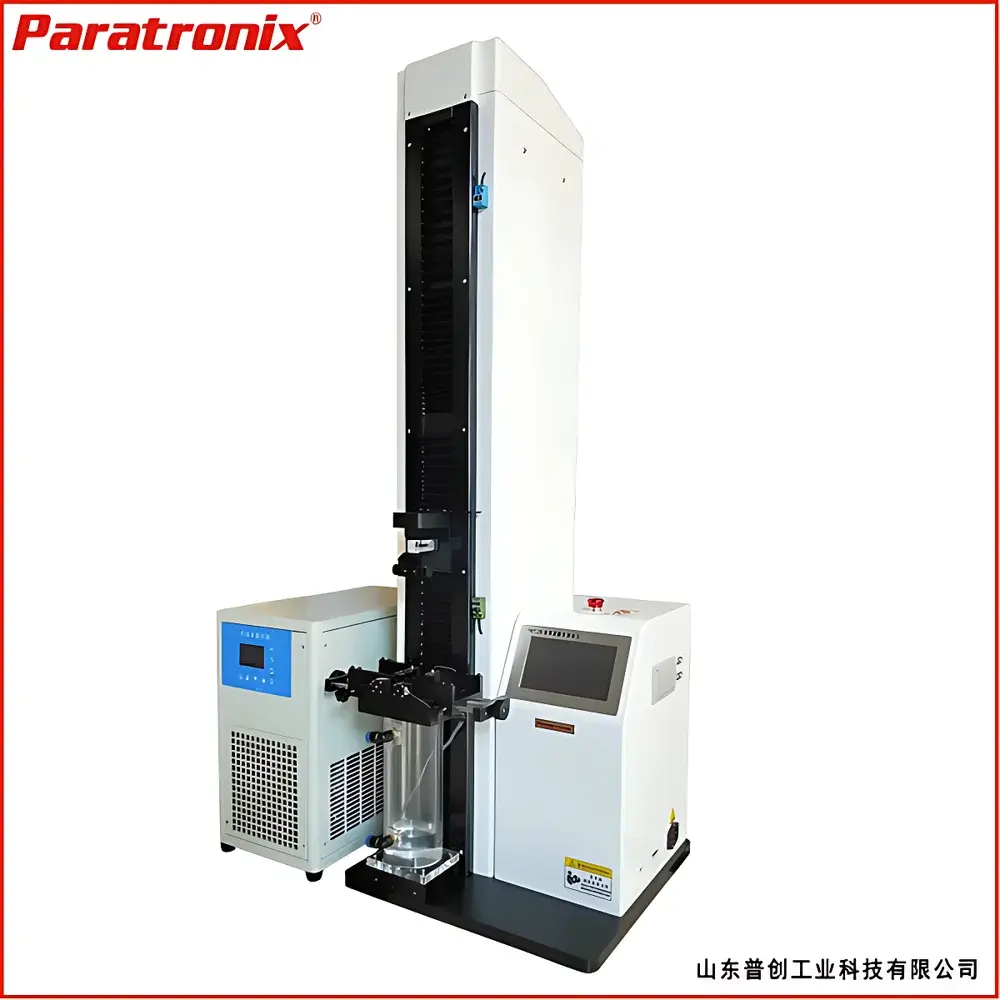
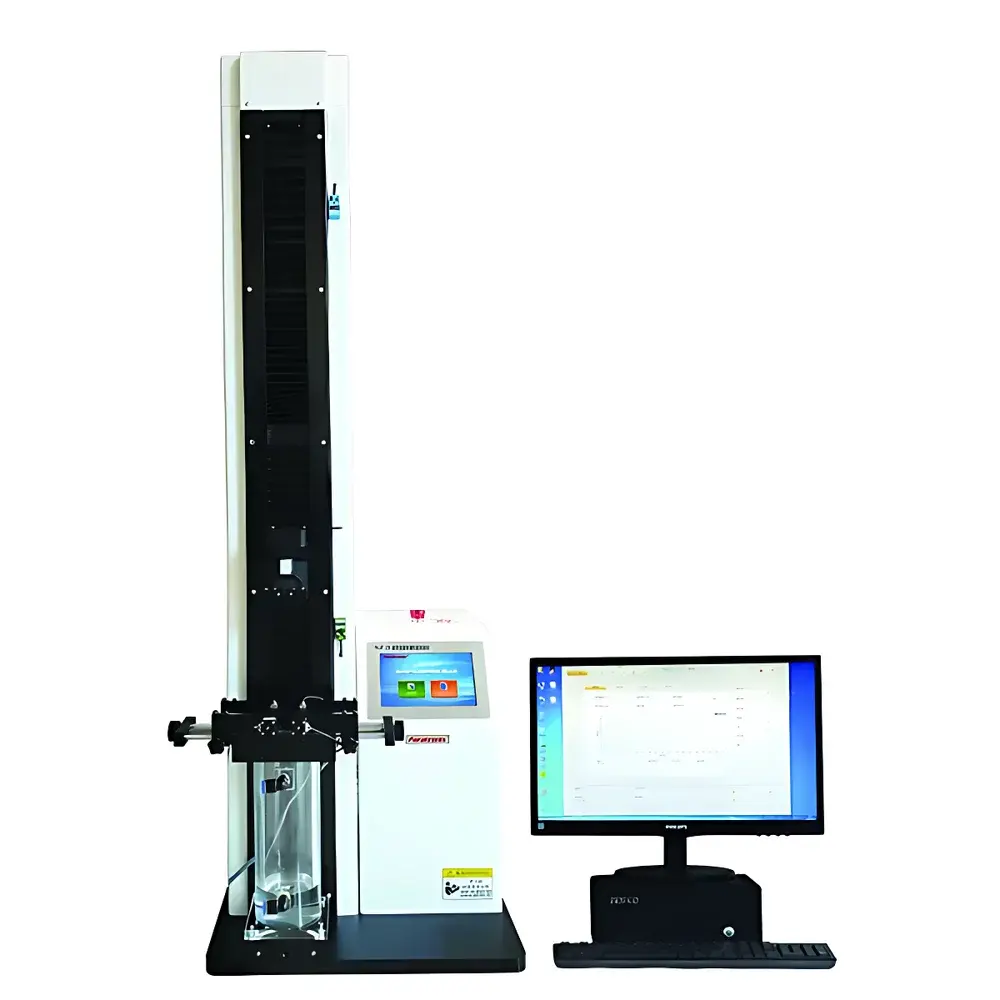
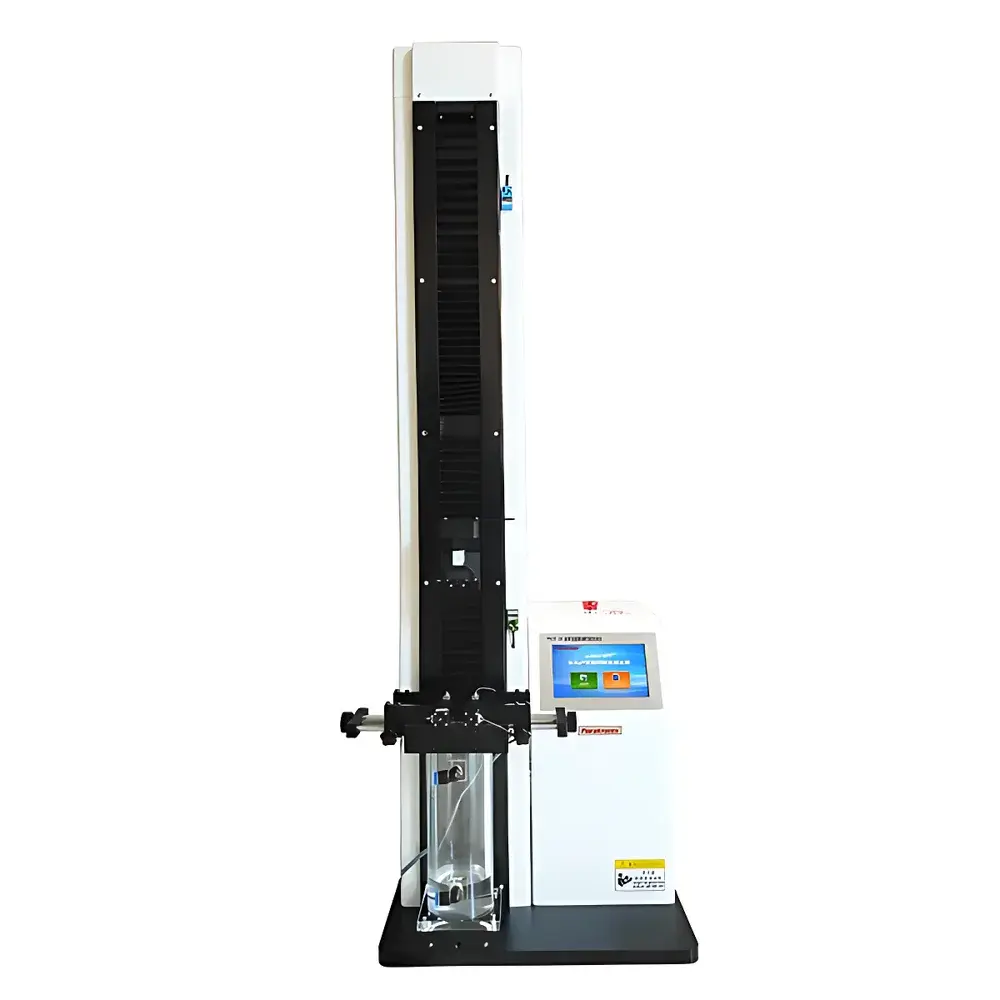
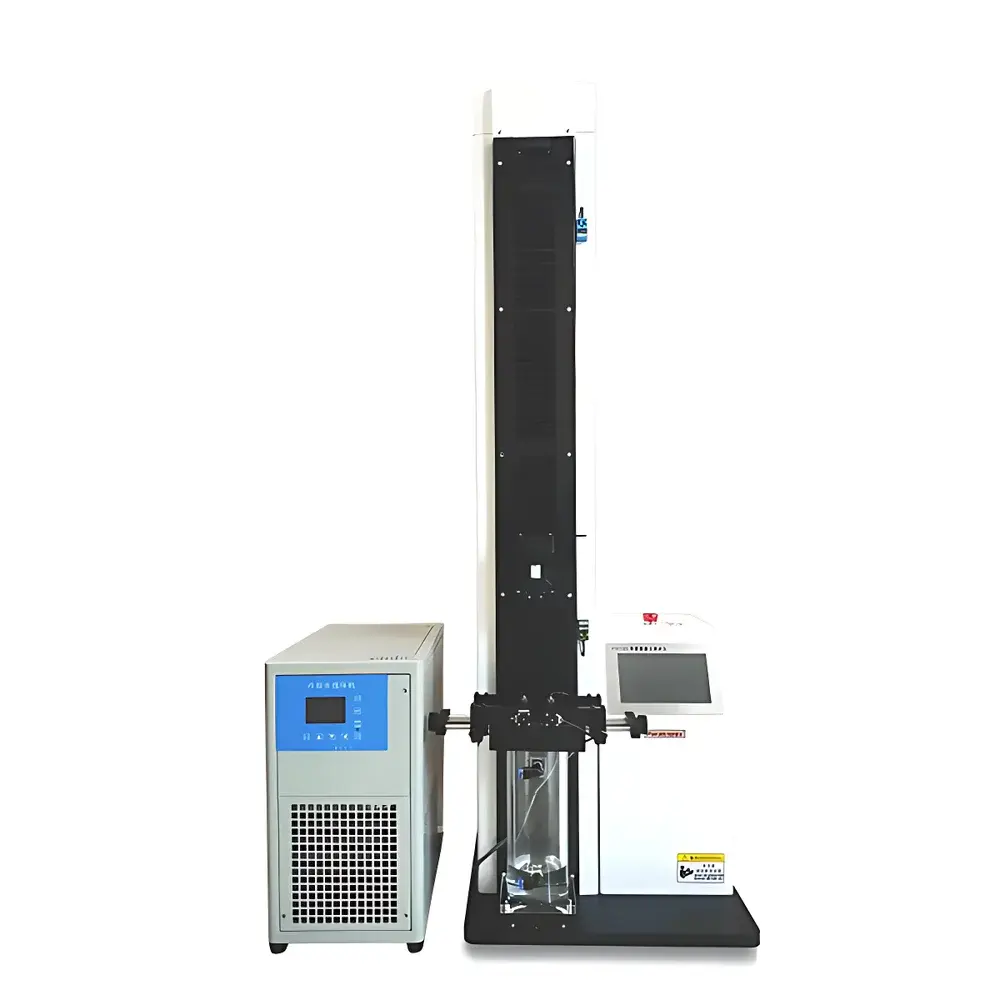
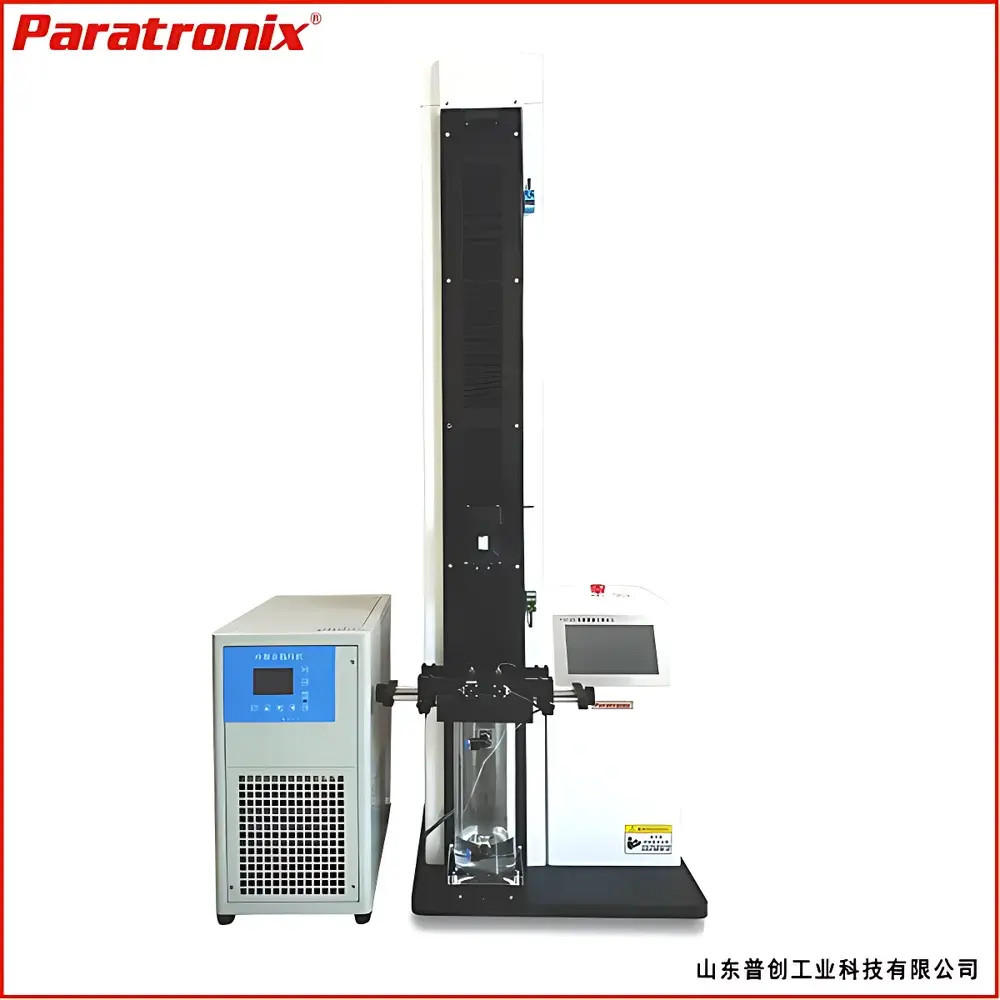
Paratronix PMT-05 Medical Catheter Coefficient of Friction Tester
| Brand | Paratronix |
|---|---|
| Origin | Shandong, China |
| Manufacturer Type | Manufacturer |
| Country of Origin | China |
| Model | PMT-05 |
| Measurement Range | 1 kg / 5 kg / 25 kg / 50 kg (selectable) |
| Force Units | N, kgf, lbf |
| Force Accuracy | ≤0.5 class |
| Speed Range | 1–500 mm/min (stepless) |
| Speed Accuracy | ±1% (1–10 mm/min), ±0.5% (10–500 mm/min) |
| Displacement Resolution | 0.001 mm |
| Force Resolution | 0.001 N |
| Test Stroke | 1000 mm |
| Clamp Force Adjustment | 0–10 N |
| Temperature Control Range | −10 to +80 °C |
| Temperature Accuracy | ±0.1 °C |
| Water Bath Flow Rate | 10 L/min |
| Dimensions (L×W×H) | 480 × 560 × 1430 mm |
| Weight | ~90 kg |
| Power Supply | AC 220 V ±22 V, 50 Hz |
Overview
The Paratronix PMT-05 Medical Catheter Coefficient of Friction Tester is a precision-engineered instrument designed specifically for quantitative evaluation of surface sliding performance in urological and interventional medical devices. It operates on the principle of controlled linear traction—measuring static and kinetic friction forces between catheter surfaces and standardized substrates under regulated environmental conditions. Compliant with YY/T 1536–2017 (“Standard Test Model for Evaluating Surface Sliding Performance of Non-Vascular Catheters”) and T/CAMDI 021–2019 (“Single-Use Hydrophilic-Coated Guide Wires”), the system delivers traceable, repeatable force-displacement data essential for regulatory submissions, material qualification, and process validation in ISO 13485-certified manufacturing environments.
Key Features
- High-accuracy load cell (≤0.5 class accuracy, 0.001 N resolution) with temperature-compensated signal conditioning for stable force measurement across physiological temperature ranges (−10 °C to +80 °C)
- Stepless speed control from 1 to 500 mm/min, enabling precise replication of clinical insertion velocities and non-standard test protocols
- Integrated water-bath temperature control system (±0.1 °C stability) with 10 L/min circulation capacity—critical for simulating in vivo thermal and hydration conditions during friction testing
- Modular clamping assembly with micrometer-adjustable cross-alignment mechanism ensures coaxial specimen loading and eliminates parasitic bending moments
- 7-inch high-resolution color touchscreen interface with real-time force–displacement curve visualization, statistical summary (mean, SD, CV%), and automated pass/fail flagging against user-defined thresholds
- Dual-mode operation: force-targeted (e.g., hold at 0.5 N until displacement threshold) and displacement-targeted (e.g., extend 50 mm at 50 mm/min), supporting both ASTM F2624-compliant and custom protocol execution
- Built-in calibration verification routine compliant with ISO/IEC 17025 requirements—facilitates third-party metrological audit and GLP documentation workflows
Sample Compatibility & Compliance
The PMT-05 accommodates a broad spectrum of tubular and filamentary medical devices, including Foley catheters, urinary drainage tubes, guidewires (coated and uncoated), nasogastric tubes, and tracheal cannulas. Specimen mounting fixtures support outer diameters from 0.3 mm to 12 mm and lengths up to 1000 mm. All test configurations adhere strictly to the geometric and kinematic constraints defined in YY/T 1536–2017, including substrate material (polyethylene or stainless steel reference plates), contact pressure (10 kPa nominal), and immersion depth (≥50 mm in saline or simulated body fluid). The system supports full traceability per FDA 21 CFR Part 11 when paired with optional PC-based software featuring electronic signatures, audit trails, and secure data archiving.
Software & Data Management
An optional Windows-based control and analysis suite enables bidirectional communication with the PMT-05. The software provides advanced data handling capabilities: multi-curve overlay, derivative analysis (dF/dx for stick-slip onset detection), automatic peak identification (static vs. kinetic friction thresholds), and export to CSV, PDF, or XML formats compatible with LIMS integration. All raw data files include embedded metadata (operator ID, timestamp, calibration certificate ID, environmental logs), satisfying GMP documentation requirements for device biocompatibility and coating durability assessments. Software validation packages—including IQ/OQ documentation templates—are available upon request for regulated laboratories.
Applications
- Quantitative validation of hydrophilic polymer coatings (e.g., polyvinylpyrrolidone, polyacrylamide) on silicone or PVC catheters
- Comparative friction profiling across sterilization cycles (EtO, gamma, e-beam) to assess coating integrity degradation
- Raw material screening for extrusion-grade thermoplastics used in minimally invasive device manufacturing
- QC release testing of finished catheters per internal specifications aligned with ISO 8536-5 and ISO 11070
- Root cause analysis of clinical insertion resistance complaints via correlation of lab-measured COF values with clinician-reported ease-of-use scores
- Supporting preclinical biotribology studies required for 510(k) or De Novo submissions to the U.S. FDA and EU MDR Notified Bodies
FAQ
Does the PMT-05 comply with international regulatory standards for medical device friction testing?
Yes—the system implements the mechanical and procedural requirements of YY/T 1536–2017 and T/CAMDI 021–2019, and its architecture supports alignment with ISO 15223-1 labeling, ISO 14971 risk management, and IEC 62304 software lifecycle expectations.
Can the instrument operate without the water bath for dry-condition testing?
Yes—temperature control is modular; the water bath subsystem may be disconnected or bypassed to conduct ambient-air or desiccated-environment tests per ASTM D1894 or ISO 8295 protocols.
Is third-party calibration certification included with purchase?
A factory calibration report (traceable to NIM, China) is provided. Full ISO/IEC 17025-accredited calibration with uncertainty budgets is available as an add-on service through authorized metrology partners.
What maintenance intervals are recommended for long-term accuracy retention?
Load cell zero-point verification every 3 months; mechanical rail lubrication and belt tension check every 6 months; annual full-system recalibration recommended for GMP environments.
How is specimen slippage at the clamp interface mitigated during high-speed testing?
The dual-axis micrometer alignment fixture ensures uniform clamping pressure distribution, while the 0–10 N adjustable pneumatic clamp prevents extrusion-induced deformation—validated per YY/T 0615.1–2016 for medical device gripping systems.




