
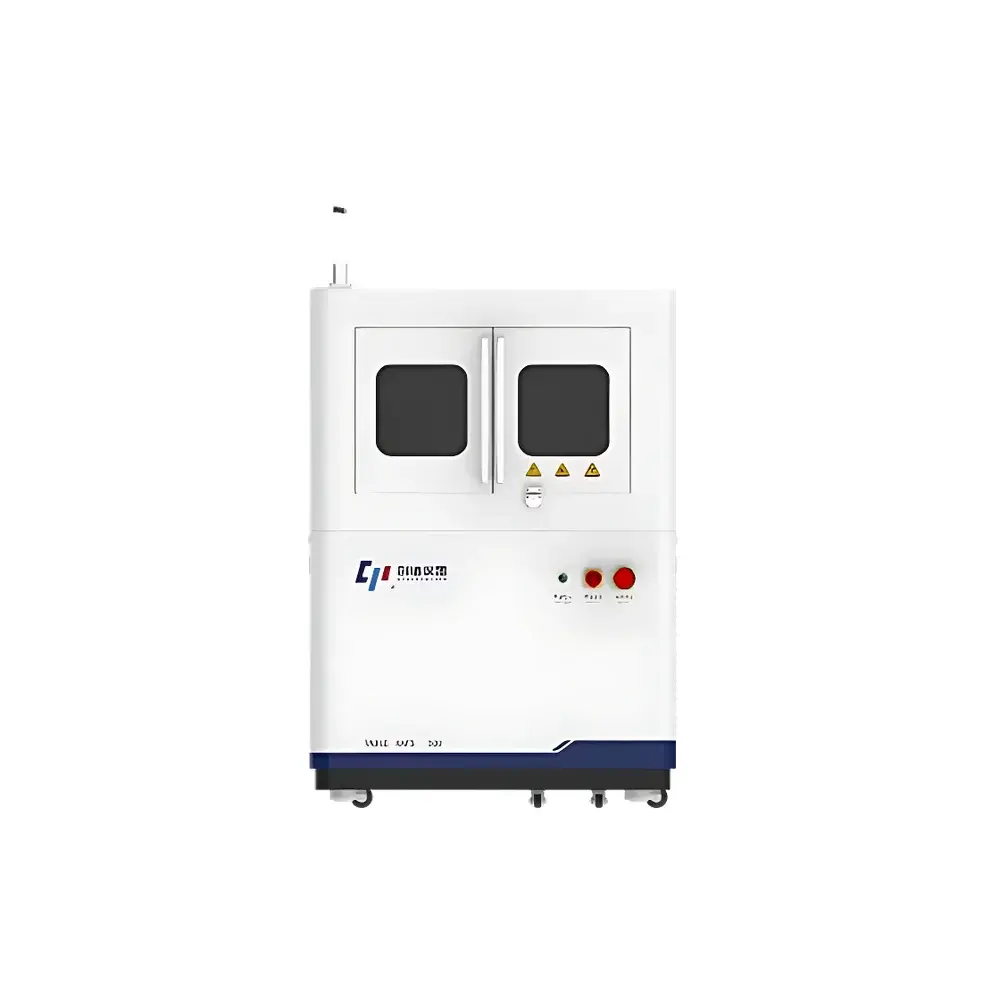
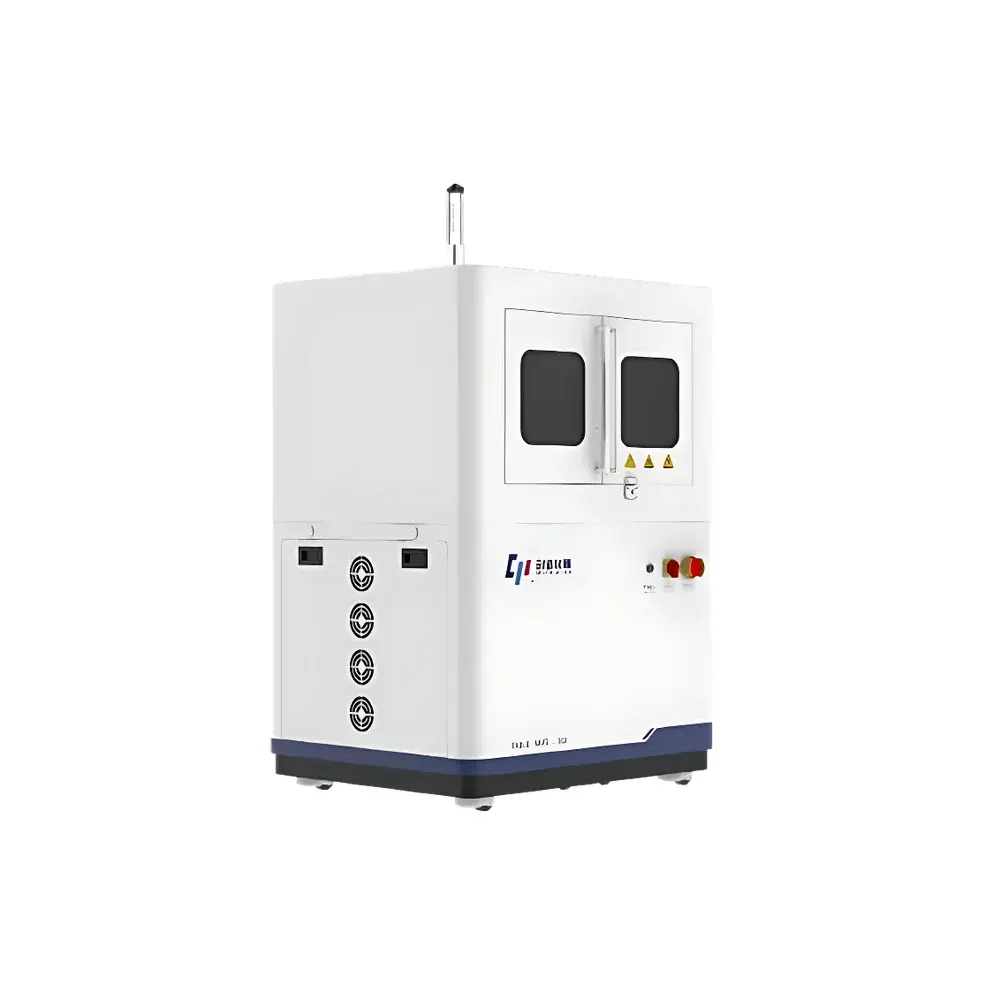
SPECREATION TableXAFS-500 Desktop X-ray Absorption Fine Structure Spectrometer
| Brand | SPECREATION |
|---|---|
| Model | TableXAFS-500 |
| Origin | Anhui, China |
| X-ray Source Power | 1.2 kW |
| Monochromatic Photon Flux | 500,000–1,000,000 photons/sec @ 9 keV |
| Detectable Elemental Concentration Limit | ≥1 wt% |
| Tunable X-ray Energy Range | 5–20 keV |
| XAFS Scan Speed | 20 eV/min |
| Energy Resolution | 0.5–1.5 eV (near-edge, 7–9 keV) |
| Monochromator Crystal | 100 mm diameter, R = 500 mm spherical Si or Ge bent crystal |
| Detector | Silicon Drift Detector (SDD) |
| Sample Carousel Capacity | 7–16 positions |
| Single-Scan Energy Coverage | >600 eV @ 7–9 keV |
Overview
The SPECREATION TableXAFS-500 is a compact, laboratory-scale X-ray Absorption Fine Structure (XAFS) spectrometer engineered for high-fidelity elemental speciation and local structural analysis without reliance on synchrotron radiation facilities. It operates on the fundamental principle of core-level X-ray absorption spectroscopy: incident monochromatic X-rays excite inner-shell electrons of a target element, and the resulting fine structure oscillations in the absorption coefficient—comprising both XANES (X-ray Absorption Near Edge Structure) and EXAFS (Extended X-ray Absorption Fine Structure)—encode quantitative information about oxidation state, coordination number, bond distance, disorder, and neighboring atom identity. The system employs a Rowland-circle geometry with large-aperture bent-crystal monochromators (100 mm diameter, 500 mm radius), enabling efficient collection and dispersion of X-rays from a conventional 1.2 kW sealed-tube X-ray source. This architecture delivers photon fluxes of 5×10⁵–1×10⁶ photons/sec at 9 keV—sufficient to acquire high signal-to-noise XAFS spectra across the 5–20 keV range, covering K-edges of elements from P (2.15 keV) through Sb (30.5 keV), and L₃-edges of 4d/5d transition metals. Designed for benchtop deployment, the TableXAFS-500 eliminates beamtime scheduling constraints while maintaining spectral fidelity comparable to bending-magnet beamlines for routine characterization.
Key Features
- Compact desktop footprint (≤1.2 m² floor space) with integrated radiation shielding and interlocked safety systems compliant with IEC 61010-1 and national X-ray equipment regulations.
- High-throughput monochromator using spherically bent Si or Ge crystals (R = 500 mm), optimized for angular acceptance and flux density over broad energy ranges.
- Precision goniometric scanning mechanism with sub-arcsecond angular reproducibility, ensuring long-term energy calibration stability (<0.1 eV drift per 8 h).
- Automated 7–16 position sample carousel with programmable stage positioning and vacuum-compatible sample holders for solid, powder, thin-film, and liquid-cell configurations.
- Real-time data acquisition and remote monitoring via Ethernet-connected control interface; full experimental logs—including motor positions, detector counts, and environmental parameters—are timestamped and exportable.
- Modular detection options: primary SDD configuration supports both transmission and fluorescence modes; optional X-ray Emission Spectroscopy (XES) add-on enables complementary valence-to-core spectral analysis.
- One-click measurement protocol with automated energy ramping, dwell time optimization, and background subtraction—typical XANES/EXAFS acquisition completed in ≤30 minutes per sample.
Sample Compatibility & Compliance
The TableXAFS-500 accommodates diverse sample forms including pressed pellets, self-supporting foils, catalyst-coated electrodes, frozen solutions, and in situ/operando electrochemical cells. Its energy tunability (5–20 keV) supports K-edge studies of third-period elements (e.g., P, S, Cl, K, Ca) and first-row transition metals (e.g., Fe, Co, Ni, Cu, Zn), as well as L₃-edge analysis of heavier elements (e.g., Mo, Ru, Pd, Ag, Sn). All hardware and firmware comply with ISO/IEC 17025 requirements for analytical instrument qualification. Data acquisition software includes audit trails, user access controls, and electronic signature support aligned with FDA 21 CFR Part 11 for regulated environments. Radiation exposure is continuously monitored; interlocks disable X-ray emission if shielding doors are opened or vacuum integrity is lost.
Software & Data Management
The proprietary XAFS Control Suite provides integrated instrument control, real-time spectral visualization, and post-acquisition processing. Raw μ(E) data are exported in standard Demeter-compatible formats (.dat, .chi) for downstream analysis using Athena, Artemis, or FEFF-based modeling workflows. Built-in routines include energy calibration (using reference foils), background removal (Victoreen or spline-based), normalization, and k-space conversion. For routine QA/QC, the software supports batch processing of multi-sample datasets with configurable pass/fail criteria (e.g., edge jump ≥0.5, R-factor <0.02 in EXAFS fitting). All processed spectra and fitting reports are stored with metadata (sample ID, operator, date/time, acquisition parameters) in an encrypted SQLite database, supporting GLP/GMP traceability.
Applications
- Energy Materials: In situ monitoring of Ni/Co/Mn oxidation states and local coordination changes during Li-ion battery charge/discharge cycles; quantification of Pt dispersion and Pt–support bonding in PEM fuel cell catalysts.
- Heterogeneous Catalysis: Identification of single-atom metal sites (e.g., Fe-N₄ in N-doped carbon) and dynamic reconstruction under reaction conditions; speciation of ppm-level dopants in oxide-supported catalysts.
- Environmental Science: Speciation of Cr(III)/Cr(VI) in soils and tannery waste; As redox state mapping in arsenic-contaminated rice tissues; Se coordination in selenium-enriched algae.
- Materials Chemistry: Structural evolution of MOFs during gas adsorption; local symmetry distortions in perovskite photovoltaics; amorphous phase characterization in metallic glasses.
- Bioinorganic Systems: Active-site geometry of Fe-S clusters in nitrogenase; Zn coordination in metalloproteases; Mn oxidation ladder in photosystem II oxygen-evolving complex.
FAQ
What is the minimum detectable concentration for elemental analysis using TableXAFS-500?
The system achieves reliable XAFS detection for elements present at ≥1 wt% in homogeneous solid samples. Sensitivity improves significantly in fluorescence mode for dilute systems (e.g., 100–500 ppm for mid-Z elements with high-fluorescence yield).
Can the instrument perform in situ or operando measurements?
Yes—compatible with custom-built electrochemical cells, gas-flow reactors, and heating/cooling stages (–100°C to +800°C); optical windows and electrical feedthroughs are supported.
Is synchrotron calibration required for quantitative analysis?
No—energy scale is calibrated using certified metal foil standards (e.g., Cu, Ni, Fe) traceable to NIST SRMs; long-term stability ensures reproducibility without external reference scans.
What software licenses are included with purchase?
Full perpetual license for XAFS Control Suite, including instrument control, data acquisition, and basic processing modules; Demeter/Athena installation packages are provided for advanced analysis.
Does the system support XES measurements?
XES capability is available as an optional upgrade, requiring a high-resolution von Hamos spectrometer and additional detector electronics; integration is fully supported within the same software framework.
Related Products




