
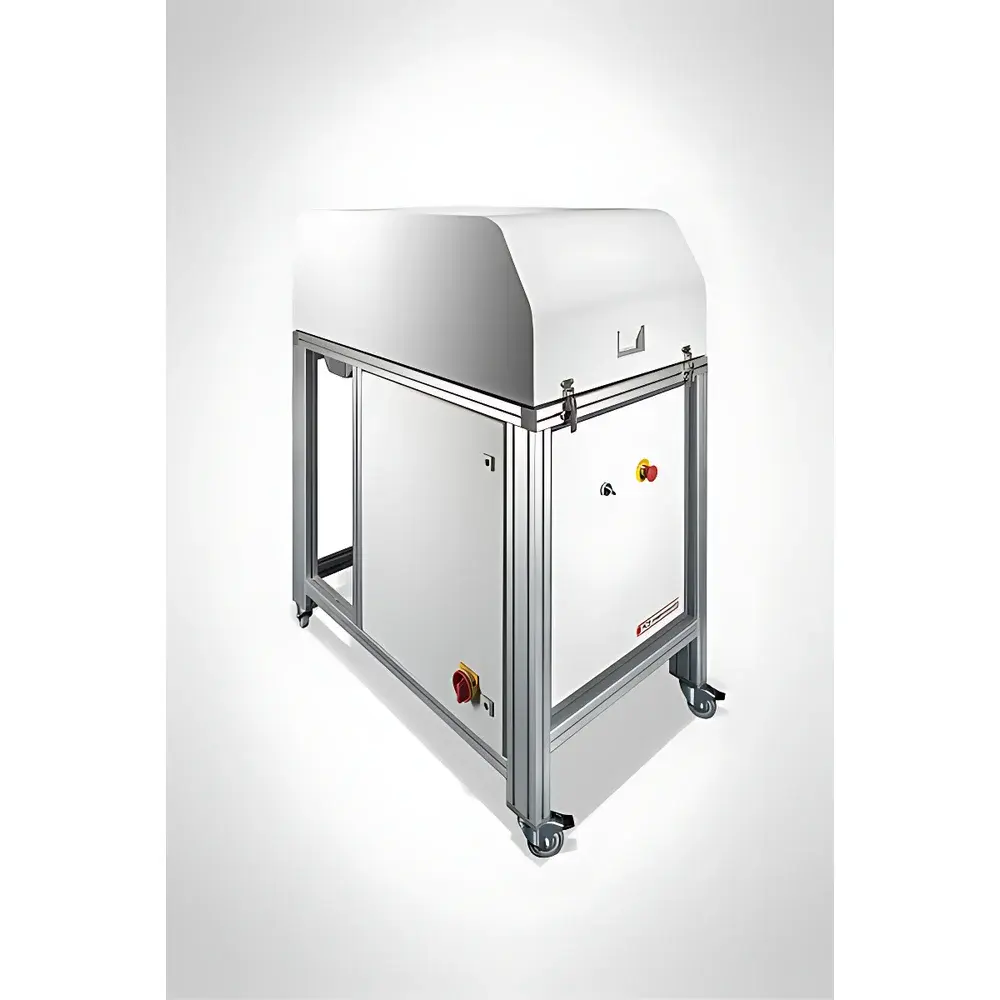
PCS Instruments MPR Micro-Pitting Rig
| Brand | PCS Instruments |
|---|---|
| Origin | United Kingdom |
| Manufacturer Status | Authorized Distributor |
| Origin Category | Imported |
| Model | MPR |
| Product Type | Laboratory Instrument |
| Test Parameter | Friction and Wear |
| Load Range | 0–2000 N |
| Contact Pressure | 0–3.2 GPa |
| Sliding/Rolling Ratio | 0–200% |
| Temperature Range | Ambient to 150 °C |
| Specimen Volume | 150 mL |
Overview
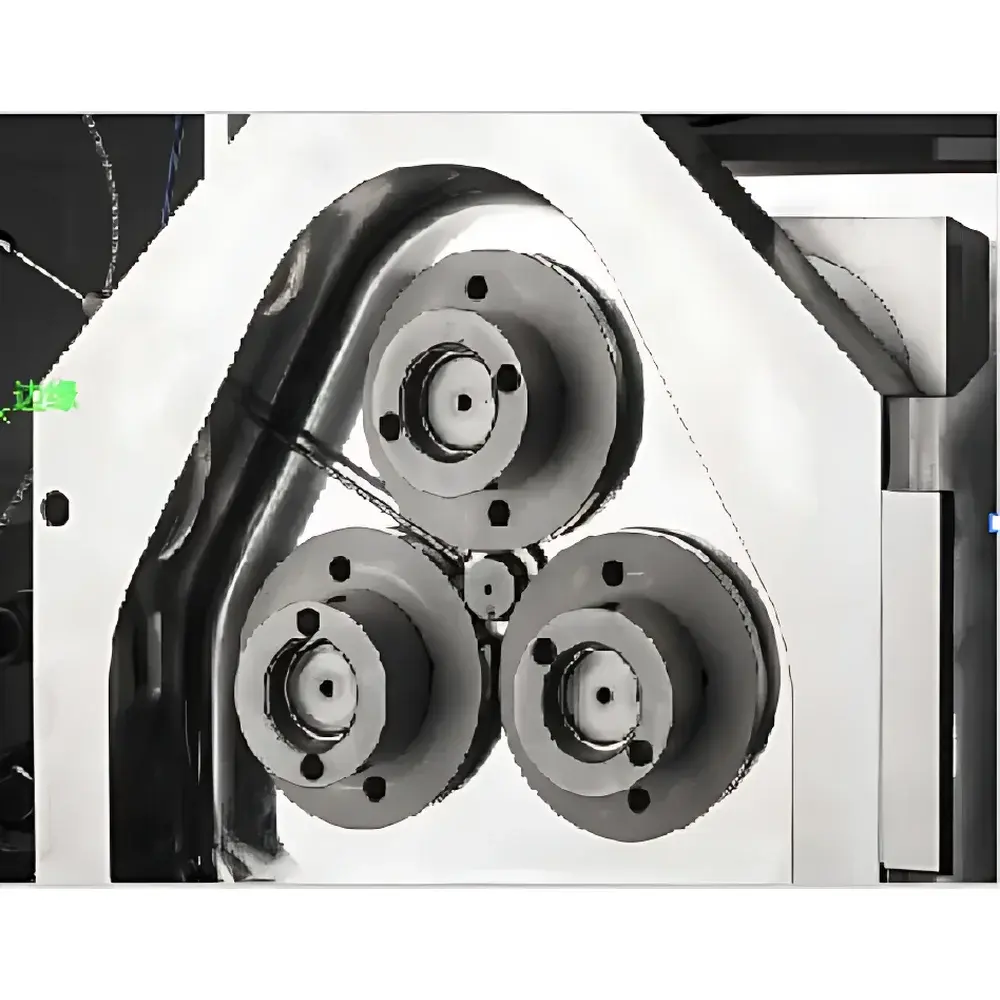
The PCS Instruments MPR Micro-Pitting Rig is a precision-engineered tribological test system designed to replicate and quantify micro-pitting—a subsurface-initiated fatigue failure mechanism prevalent in heavily loaded, lubricated rolling/sliding contacts. Operating on the principle of controlled elastohydrodynamic (EHD) contact under defined load, speed, and thermal conditions, the MPR enables accelerated simulation of real-world gear and bearing surface degradation. Its tri-ring configuration—three identical-diameter counterfaces with a centrally positioned smaller-diameter roller—generates high-cycle rolling contact with precise control over sliding-to-rolling ratio (SRR), enabling statistically robust fatigue life assessment within practical laboratory timeframes. The system is engineered for reproducibility in evaluating lubricant film-forming capability, additive efficacy, and surface treatment durability under boundary-to-mixed lubrication regimes.
Key Features
- Tri-ring geometry with central roller: Ensures uniform contact stress distribution and high cycle accumulation (>10⁶ cycles/hour at typical operating conditions), significantly reducing test duration versus conventional four-ball or pin-on-disk rigs.
- Programmable loading system: Electromechanical actuator delivers stable, repeatable normal loads from 0 to 2000 N with closed-loop force feedback and <±0.5% full-scale accuracy.
- Adjustable sliding/rolling ratio: Precisely controllable from pure rolling (0%) to dominant sliding (200%), facilitating systematic investigation of SRR-dependent pitting initiation thresholds.
- Integrated temperature control: Heated oil bath and PID-regulated thermal management maintain specimen temperature between ambient and 150 °C ±1 °C, supporting evaluation of thermal stability and viscosity-pressure effects.
- Real-time monitoring suite: Simultaneous acquisition of friction torque, roller rotational speed, axial displacement, and oil temperature with 1 kHz sampling rate and timestamped data logging.
- Modular sample mounting: Standardized fixtures accommodate cylindrical specimens (e.g., rings, rollers) with diameters compliant with ASTM D5183 and ISO 12156-1 geometries; optional custom holders available for coated substrates or non-standard profiles.
Sample Compatibility & Compliance
The MPR accommodates standard tribological specimens including AISI 52100 steel rings (typically Ø40 mm × 12 mm), hardened steel rollers (Ø10–15 mm), and coated variants (e.g., DLC, CrN, Ni-P). Lubricant volume requirement is 150 mL per test, compatible with mineral, synthetic, and bio-based oils—including gear oils meeting API GL-4/GL-5, ISO VG 68–460, and MIL-PRF-2104G specifications. The system complies with fundamental design principles referenced in ASTM D5183 (Standard Test Method for Determining the Micro-Pitting Resistance of Lubricating Oils), ISO 12156-1 (Rolling Contact Fatigue Testing), and supports traceable calibration per ISO/IEC 17025 requirements when operated within accredited laboratories. Data integrity safeguards align with GLP and GMP expectations, including user access controls and audit-trail-enabled software operation.
Software & Data Management
Control and analysis are performed via PCS’s proprietary Tribometer Control Suite (TCS v4.2+), a Windows-based application supporting automated test sequencing, real-time parameter visualization, and post-test statistical processing. Raw data export is available in CSV and HDF5 formats, ensuring compatibility with MATLAB, Python (pandas, NumPy), and JMP for advanced fatigue life modeling (e.g., Weibull analysis, S–N curve generation). The software incorporates configurable pass/fail criteria based on cumulative wear scar depth, friction coefficient deviation, or acoustic emission thresholds—enabling objective endpoint determination. All user actions, parameter changes, and calibration events are recorded with timestamps and operator IDs, satisfying FDA 21 CFR Part 11 requirements for electronic records and signatures when configured with validated system settings.
Applications
- Quantitative ranking of gear oil anti-micro-pitting performance under DIN 51354-2 and FVA 54/I conditions.
- Investigation of white etching crack (WEC) precursors in bearing steels subjected to hydrogen-charged or electrically stressed environments.
- Evaluation of surface engineering solutions—such as nitriding, carburizing, and PVD coatings—for extended rolling contact fatigue life in wind turbine gearboxes and EV transmission systems.
- Correlation studies between laboratory micro-pitting onset and field failures in heavy-duty automotive axles and marine propulsion gears.
- Development and validation of next-generation EP additives and friction modifiers targeting reduced subsurface shear stress and improved film resilience.
FAQ
What lubricant volume does the MPR require per test?
The standard test configuration requires 150 mL of test lubricant to ensure adequate immersion and thermal stability during extended runtime.
Can the MPR be used to study white etching cracks (WECs)?
Yes—the MPR’s ability to sustain high contact pressures (up to 3.2 GPa) and controlled sliding/rolling ratios makes it suitable for accelerating WEC-relevant subsurface damage mechanisms, particularly when combined with hydrogen charging or electrical current injection modules (optional add-ons).
Is the system compliant with international testing standards?
While the MPR itself is not certified to a single standard, its mechanical architecture, control fidelity, and data reporting protocols are engineered to support execution of ASTM D5183, ISO 12156-1, and FVA 54/I test methodologies, with documentation packages available for method validation.
Does the system support automated test sequences?
Yes—TCS software enables multi-step programs with variable load, speed, temperature, and duration profiles, including conditional logic for automatic shutdown upon predefined wear or friction thresholds.
What materials are recommended for test specimens?
Standard specimens are made from through-hardened 52100 bearing steel (HRC 58–62); alternative materials—including stainless steels, titanium alloys, and polymer composites—can be accommodated with appropriate fixture adaptation and validation.
Related Products





