
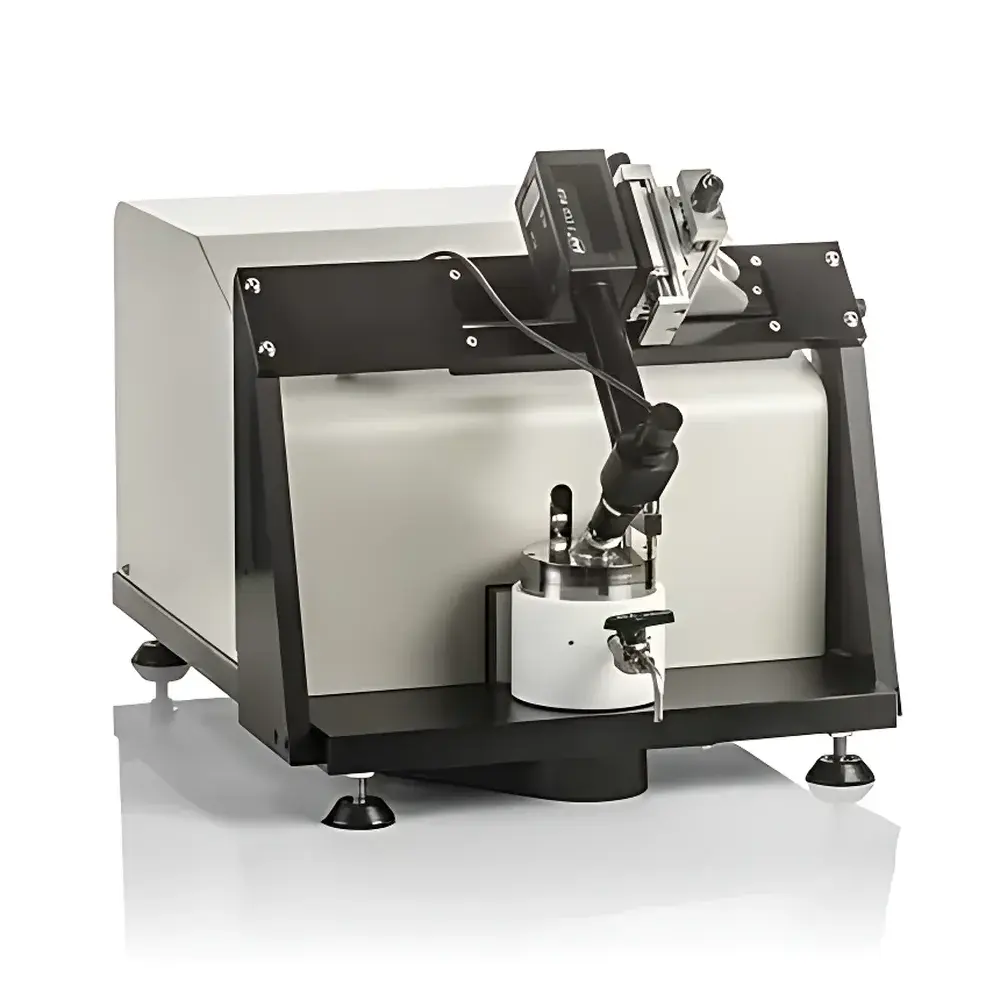
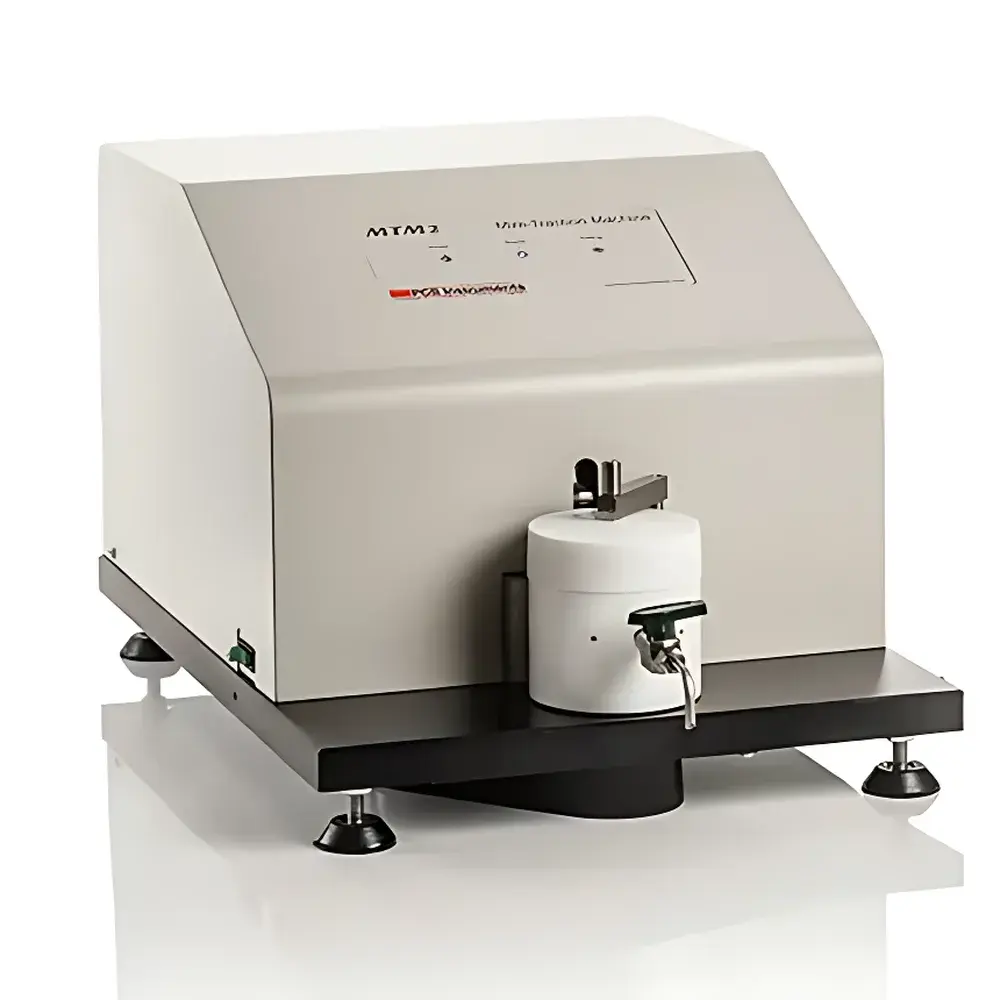
PCS MTM2 Mini-Traction Machine
| Brand | PCS Instruments |
|---|---|
| Origin | United Kingdom |
| Manufacturer Status | Authorized Distributor |
| Import Status | Imported |
| Model | MTM2 |
| Product Type | Laboratory Instrument |
| Test Parameter | Friction and Wear |
| Sample Volume | 10–35 mL |
| Load Range | 0–75 N |
| Contact Pressure Range | 0–1.25 GPa (standard test geometry) |
| Sliding/Rolling Velocity | −4 to +4 m·s⁻¹ |
| Temperature Range | Ambient to 150 °C (sub-ambient operation supported via external refrigerated oil bath) |
| Power Supply | 100–240 V AC, 50/60 Hz, 750 VA |
| Host Weight | 30 kg |
Overview
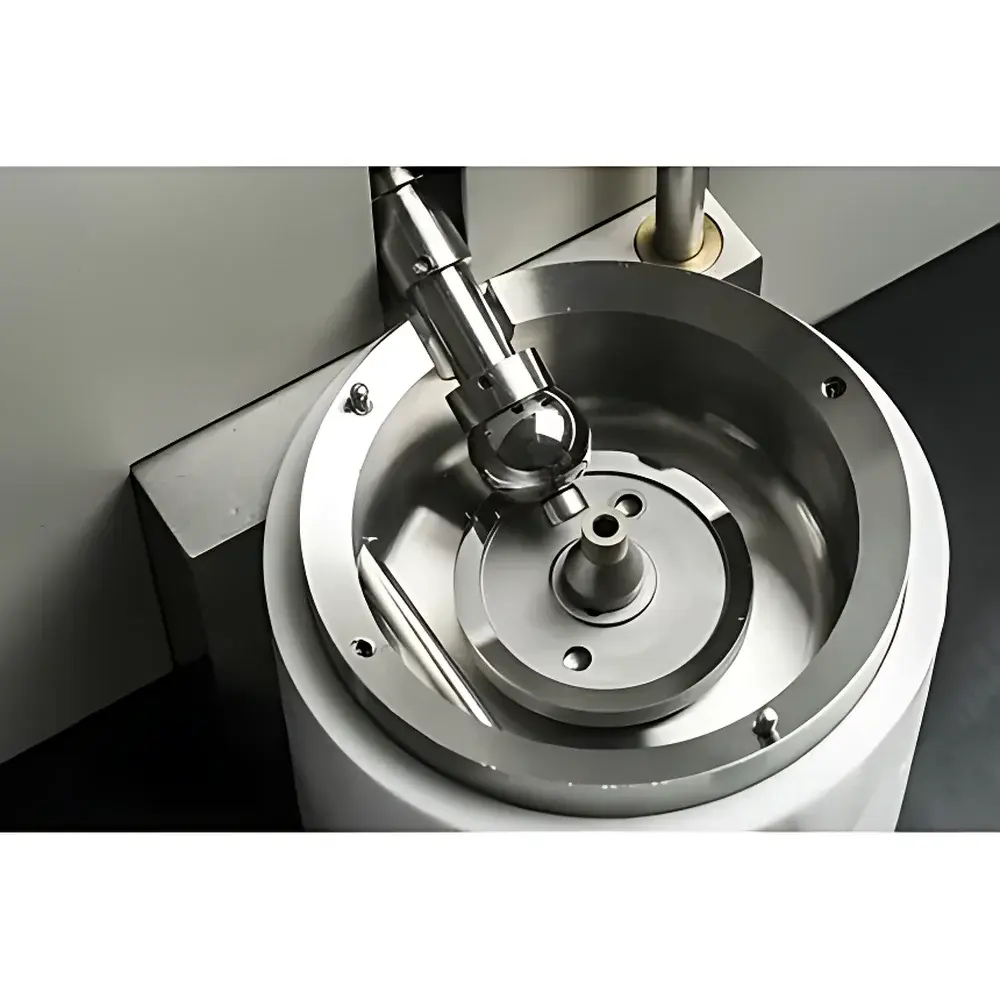
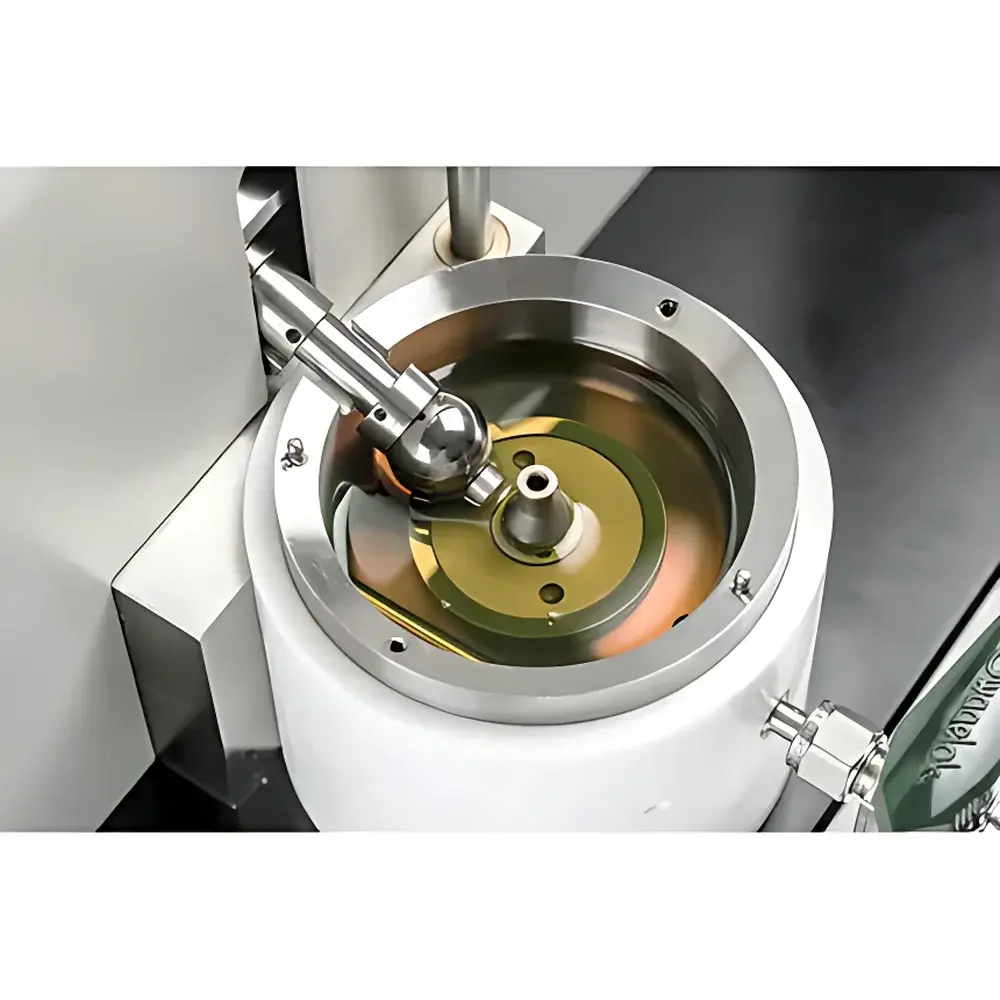
The PCS MTM2 Mini-Traction Machine is a precision-engineered tribological testing platform designed for quantitative characterization of traction (frictional shear) behavior in lubricated and non-lubricated contacts under controlled rolling, sliding, and mixed regimes. Based on the well-established twin-disk (or ball-on-disk) configuration, the MTM2 implements a high-fidelity, closed-loop servo-controlled system that replicates critical contact kinematics found in real-world mechanical systems—particularly internal combustion engine components such as cam-follower interfaces, gear teeth, and hydraulic pump elements. Its core measurement principle relies on real-time acquisition of torque, normal load, angular velocity, and interfacial temperature to compute traction coefficient (μ = τ/P), where τ is interfacial shear stress and P is nominal contact pressure. This enables direct correlation between lubricant rheology, additive chemistry, and macroscopic friction performance under representative elastohydrodynamic (EHL) and boundary lubrication conditions.
Key Features
- High-resolution, bidirectional velocity control from −4 to +4 m·s⁻¹, supporting both unidirectional and oscillatory sliding protocols.
- Programmable multi-step test sequences integrating synchronized variation of load, speed, temperature, and dwell time—enabling full mapping of traction curves (Stribeck-type analysis).
- Modular contact geometry support: standard steel-on-steel disk pair (for baseline calibration), plus optional ball-on-disk, pin-on-disk, or custom substrate configurations to accommodate diverse material systems and pressure regimes (up to 3.1 GPa with hardened geometries).
- Integrated dual-platinum RTD sensors provide redundant, traceable temperature monitoring at both the bulk sample reservoir and immediate contact interface—critical for evaluating thermal stability and viscosity-temperature coupling effects.
- Mechanically interlocked sample chamber with automatic safety cutoff ensures operator protection during high-load or elevated-temperature operation.
- Compact benchtop architecture (30 kg host unit) with universal AC input (100–240 V, 50/60 Hz) facilitates deployment in ISO 17025-accredited laboratories and R&D environments without dedicated infrastructure.
Sample Compatibility & Compliance
The MTM2 accommodates liquid lubricants—including mineral oils, synthetic esters, polyalphaolefins (PAOs), bio-based formulations, and nanoparticle-enhanced fluids—in volumes ranging from 10 mL (with optional filler inserts) to 35 mL. Solid-phase additives (e.g., ZDDP, MoDTC, ionic liquids) are evaluated in situ via time-resolved traction response, enabling kinetic assessment of tribofilm formation and depletion. The instrument complies with fundamental requirements of ASTM D5001 (Standard Test Method for Apparent Viscosity of Used Engine Oils Using the High-Temperature, High-Shear (HTHS) Viscometer), ISO 12156-1 (Lubricants — Determination of the Traction Coefficient), and supports method development aligned with OEM-specific specifications (e.g., GM dexos®, Ford WSS-M2C945-A). All hardware and software architectures are designed to support GLP/GMP-compliant workflows, including audit-trail-enabled data logging and user-access controls.
Software & Data Management
Control and analysis are executed via the proprietary PCS WinTribo software suite, installed on standard Windows-based PCs. The software provides intuitive graphical test setup, real-time parameter visualization (traction coefficient vs. slide-roll ratio, temperature, time), and automated post-processing for film thickness estimation, friction hysteresis analysis, and wear scar quantification. Raw data exports conform to ASTM E1447 and ISO/IEC 17025 traceability standards, generating timestamped .csv and .tdms files with embedded metadata (operator ID, calibration certificate IDs, environmental logs). Optional 21 CFR Part 11 compliance packages include electronic signatures, role-based permissions, and immutable audit trails—suitable for regulated lubricant formulation labs serving pharmaceutical-grade hydraulic fluid or aerospace grease markets.
Applications
- Formulation screening of anti-wear (AW) and extreme-pressure (EP) additives under dynamically varying SRR (slide-to-roll ratio) conditions.
- Quantitative evaluation of low-viscosity, fuel-efficient engine oils (e.g., SAE 0W-8, 0W-16) across transient thermal profiles mimicking cold-start and high-load operating cycles.
- Tribochemical interaction studies between lubricants and novel bearing materials (e.g., Si₃N₄, DLC coatings, polymer composites).
- Development and validation of predictive traction models for powertrain efficiency optimization in hybrid and electric vehicle drivelines.
- Root-cause analysis of scuffing, micropitting, and polishing wear mechanisms in gear oil qualification programs.
FAQ
What contact pressures can the MTM2 achieve?
The standard configuration delivers up to 1.25 GPa using a 19 mm diameter steel disk pair under 75 N load; higher pressures (up to 3.1 GPa) are attainable with reduced-radius or hardened geometries.
Is sub-ambient temperature testing supported?
Yes—via integration with an external refrigerated oil bath; the system maintains stable thermal control down to −20 °C when paired with compatible chillers.
Can the MTM2 be used for solid lubricant or grease testing?
Greases may be tested using modified sample cups and low-speed protocols; solid lubricant films (e.g., MoS₂, WS₂) require substrate pre-coating and are evaluated via boundary traction response and wear evolution tracking.
Does the system meet ISO/IEC 17025 requirements for accredited testing?
The MTM2’s metrological traceability, documented calibration procedures, and software audit-trail capabilities support implementation within ISO/IEC 17025 quality management systems when operated per defined SOPs.
What maintenance intervals are recommended?
Annual verification of load cell linearity, velocity encoder accuracy, and RTD calibration is advised; routine cleaning of the sample chamber and disk surfaces is required between tests to ensure repeatability.







