
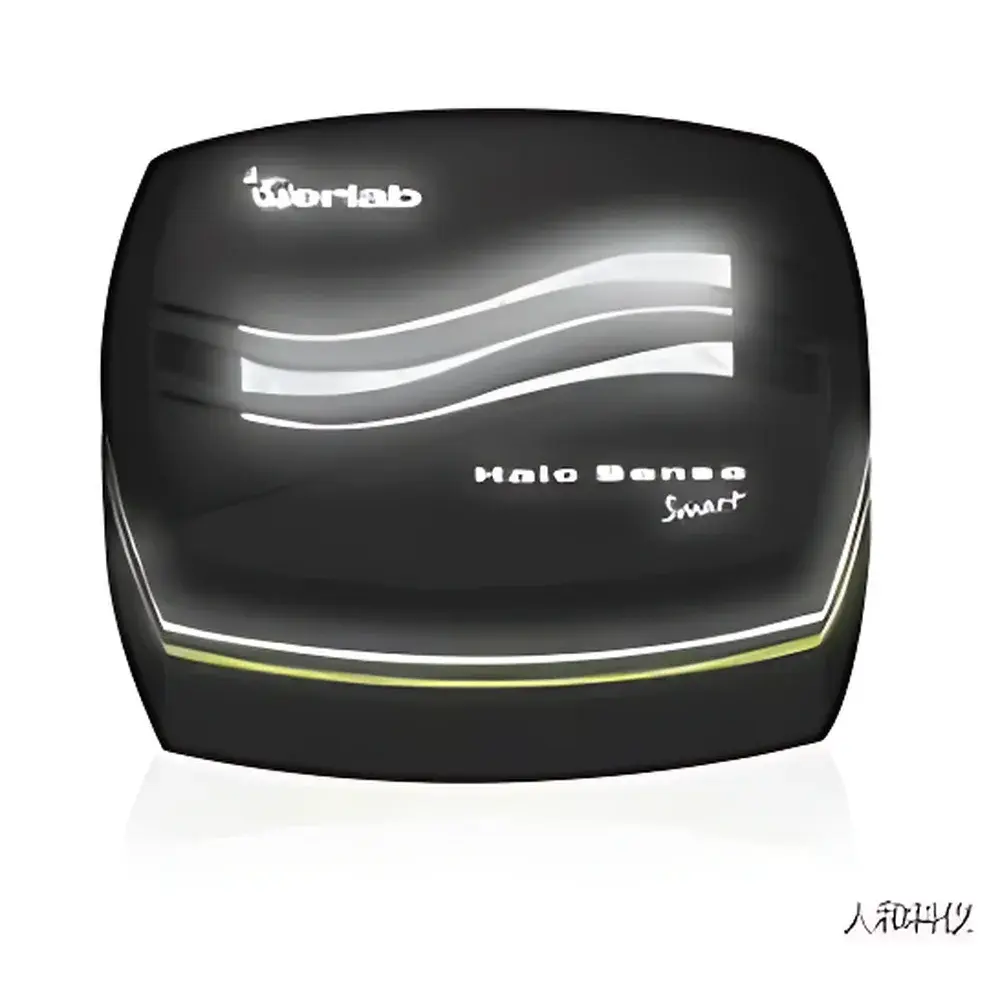
Erlab Halo Sense Laboratory Air Quality Sensor
| Brand | Erlab |
|---|---|
| Origin | France |
| Model | Halo Sense |
| Detection Targets | VOCs, Acidic Gases, Formaldehyde |
| Sensor Types | Metal Oxide Semiconductor (VOC), Electrochemical (Acid & Formaldehyde) |
| Power Supply | 100–240 V AC, 50–60 Hz |
| Power Consumption | 10 W |
| Enclosure Material | Lightweight, Durable Plastic |
| Mounting Options | Wall-mounted or Desktop |
| Weight | 1 kg |
| Compliance | CE, RoHS, EN 61000-6-3, EN 61000-6-1 |
| Software Platform | eGuard Cloud-Enabled Monitoring Suite |
| Data Connectivity | Ethernet (RJ45), Wi-Fi (optional), USB for local configuration |
| Alarm Output | Visual (RGB Status Light Band), Audible (85 dB @ 30 cm), Push Notifications via eGuard App |
Overview
The Erlab Halo Sense is a purpose-built, real-time laboratory air quality sensor engineered to detect hazardous airborne contaminants in chemical research and analytical laboratories. Operating on a multi-sensor architecture, it continuously monitors three critical contaminant classes—volatile organic compounds (VOCs), acidic gases (e.g., HCl, HF, NO2, SO2), and formaldehyde—using application-optimized transduction technologies: metal oxide semiconductor (MOS) sensors for broad-spectrum VOC detection, and selective electrochemical sensors for acid and formaldehyde quantification. Unlike generic IAQ monitors, Halo Sense is calibrated and validated specifically for laboratory environments where low-concentration, intermittent, and chemically diverse emissions occur near fume hoods, reagent storage cabinets, and synthesis workstations. Its design adheres to occupational exposure principles defined in ISO 16000-23 (indoor air—determination of formaldehyde) and supports compliance with OSHA PELs and ACGIH TLVs through early-warning capability—not measurement-grade certification—enabling timely intervention before exposure thresholds are approached.
Key Features
- Tri-mode detection platform: Dedicated sensor modules for VOCs, acidic gases, and formaldehyde—each optimized for selectivity, response time (<60 s typical), and resistance to cross-interference from common lab solvents (e.g., acetone, ethanol, chloroform)
- Smart RGB status light band: Dynamically indicates operational state (green = normal), warning level (amber = elevated concentration), and alarm condition (red pulsing + audible alert at 85 dB)
- eGuard cloud-connected software: Provides real-time dashboard visualization, historical trend logging (≥90 days local buffer + cloud sync), configurable alarm thresholds, and automated event reporting
- Flexible deployment: Supports wall-mounting (included bracket) or desktop placement; operates continuously on standard 100–240 V AC power with low 10 W consumption
- Secure remote access: Role-based user permissions, TLS 1.2 encrypted data transmission, and audit-ready event logs compliant with GLP documentation requirements
- Interoperability ready: Integrates with Erlab’s SmartAir ventilation control ecosystem to trigger automatic hood sash adjustment or exhaust ramp-up upon alarm confirmation
Sample Compatibility & Compliance
Halo Sense is validated for use in ISO Class 7–8 cleanrooms and general-purpose chemical laboratories handling IARC Group 1/2A carcinogens (e.g., formaldehyde), corrosive acids, and halogenated or aromatic VOCs. It does not require sample extraction or consumables—detection occurs via passive diffusion sampling at ambient pressure and temperature (10–40 °C, 30–80% RH non-condensing). While not intended as a regulatory compliance instrument per ISO 17025 or EPA Method TO-17, its alarm logic aligns with NIOSH-recommended action levels for short-term exposure (e.g., formaldehyde STEL = 0.3 ppm). Device firmware and eGuard software support FDA 21 CFR Part 11-compliant electronic signatures and audit trails when deployed in GxP environments.
Software & Data Management
The eGuard platform delivers secure, browser-based monitoring across Windows, macOS, iOS, and Android. Each Halo Sense unit is assigned a unique device ID and authenticated via TLS handshake upon network registration. Data is timestamped with UTC precision and stored in dual redundancy: locally on embedded flash memory (retaining ≥10,000 events offline) and redundantly in AWS-hosted EU-datacenter servers. Users configure custom notification rules—including SMS/email alerts, escalation chains, and integration with Microsoft Teams or Slack via webhooks. Export options include CSV (time-series concentration data), PDF summary reports (daily/weekly/monthly), and annotated alarm incident logs suitable for internal safety audits or EHS committee review.
Applications
- Continuous verification of fume hood containment integrity during active use or standby mode
- Early detection of leaks from solvent storage cabinets, gas cylinders, or aging tubing in GC/HPLC systems
- Post-maintenance validation after ductwork cleaning or filter replacement in local exhaust ventilation (LEV) systems
- Monitoring formaldehyde off-gassing from new lab furniture, adhesives, or preserved biological specimens
- Supporting ISO/IEC 17025 Clause 6.3.3 (environmental conditions monitoring) in accredited testing labs
- Documenting exposure risk mitigation efforts for occupational health surveillance programs
FAQ
Does Halo Sense provide quantitative concentration values (e.g., ppm) for detected gases?
It delivers semi-quantitative relative concentration indicators optimized for alarm triggering—not certified metrological measurement. Calibration is factory-performed against traceable standards; field recalibration is not supported.
Can multiple Halo Sense units be managed from a single eGuard dashboard?
Yes. The eGuard Enterprise license supports centralized monitoring of up to 128 devices across multiple lab sites, with customizable group views and shared alert templates.
Is the device compatible with existing building management systems (BMS)?
Via optional Modbus TCP or BACnet/IP gateway module (sold separately), Halo Sense can feed status and alarm signals into third-party BMS platforms for integrated facility-wide air safety management.
What is the expected service life of the sensors?
MOS and electrochemical sensors have a nominal functional lifespan of 24 months under typical lab conditions; performance degradation is tracked autonomously and reported via eGuard maintenance alerts.
Does Halo Sense meet explosion-proof or intrinsically safe requirements for hazardous areas?
No. It is rated for general laboratory use only (IP20 enclosure) and must be installed outside classified hazardous zones per NEC Article 500 / IEC 60079-0.







