
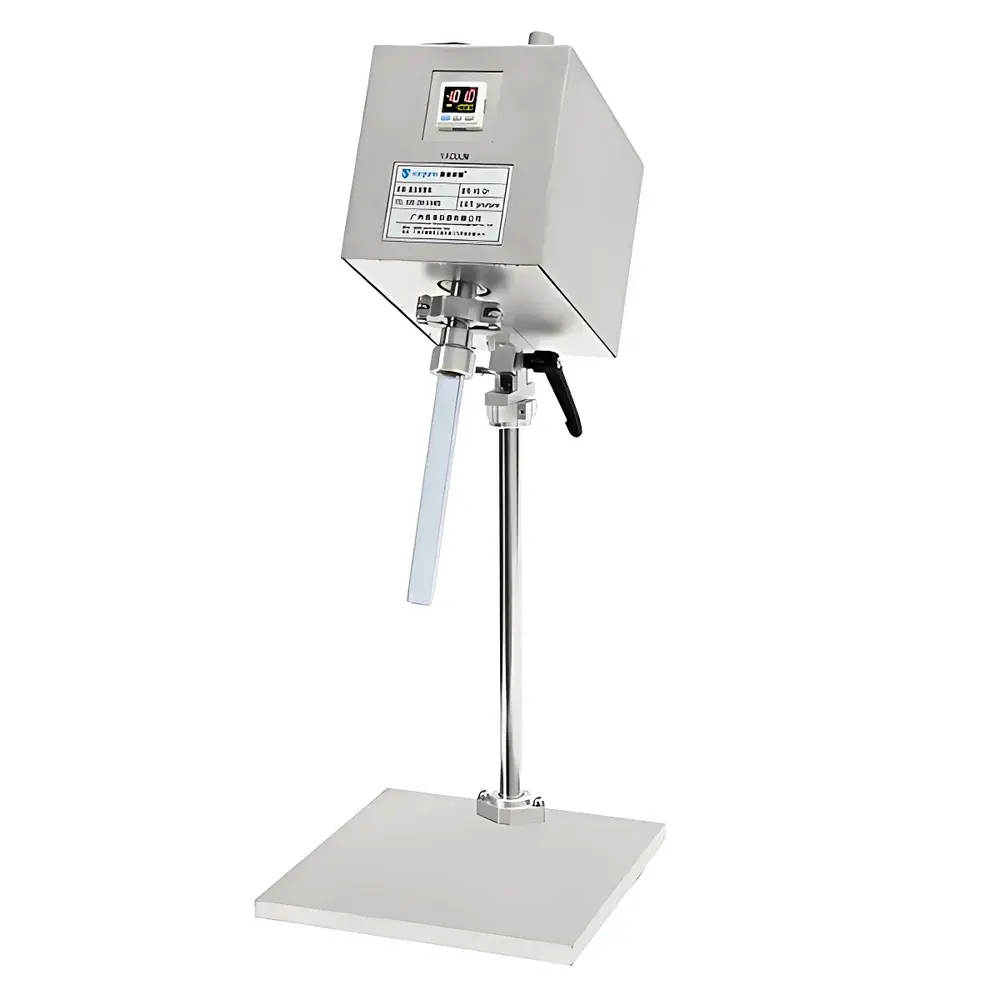
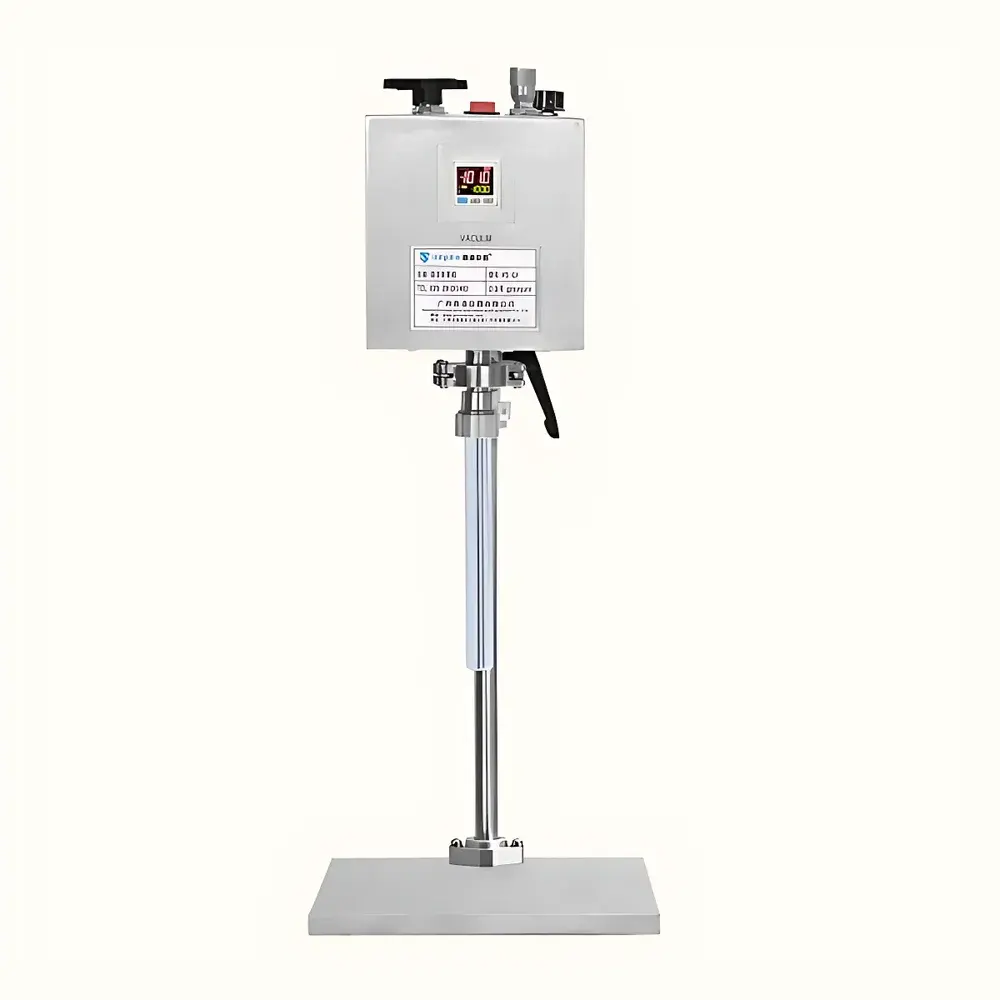
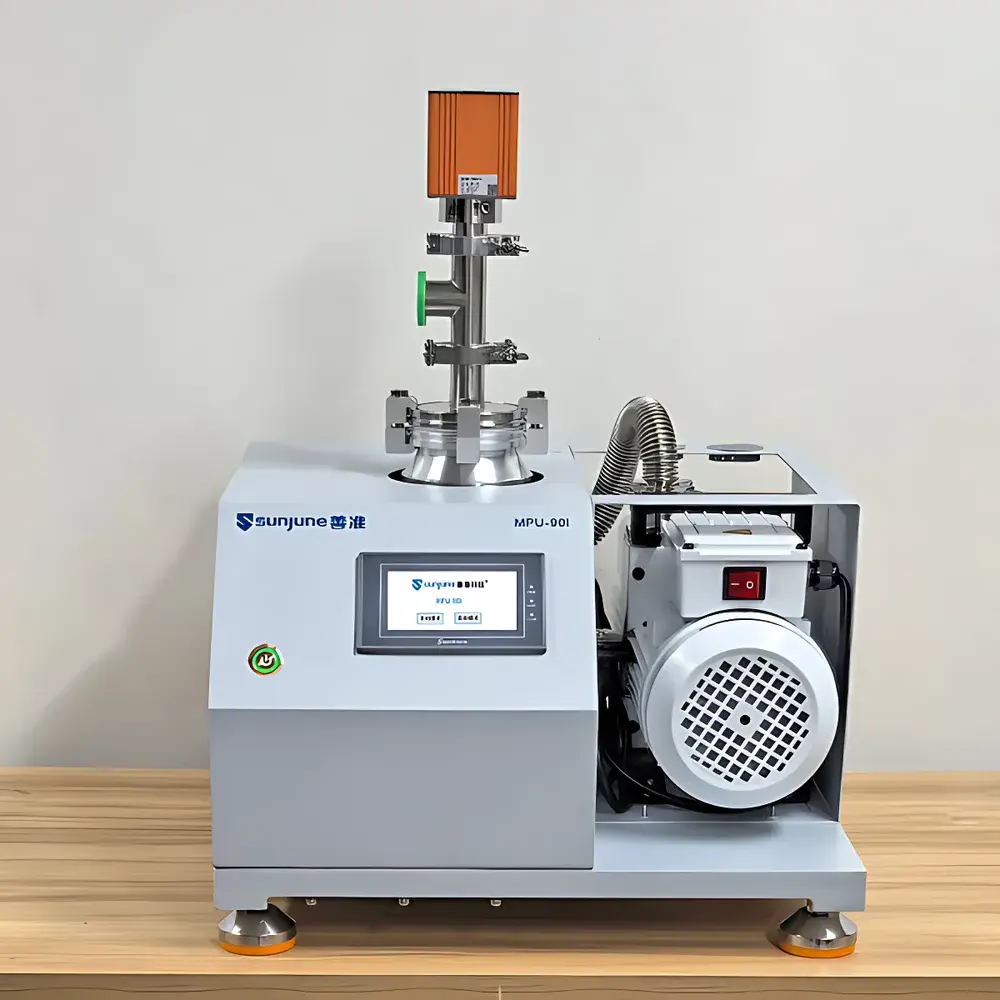
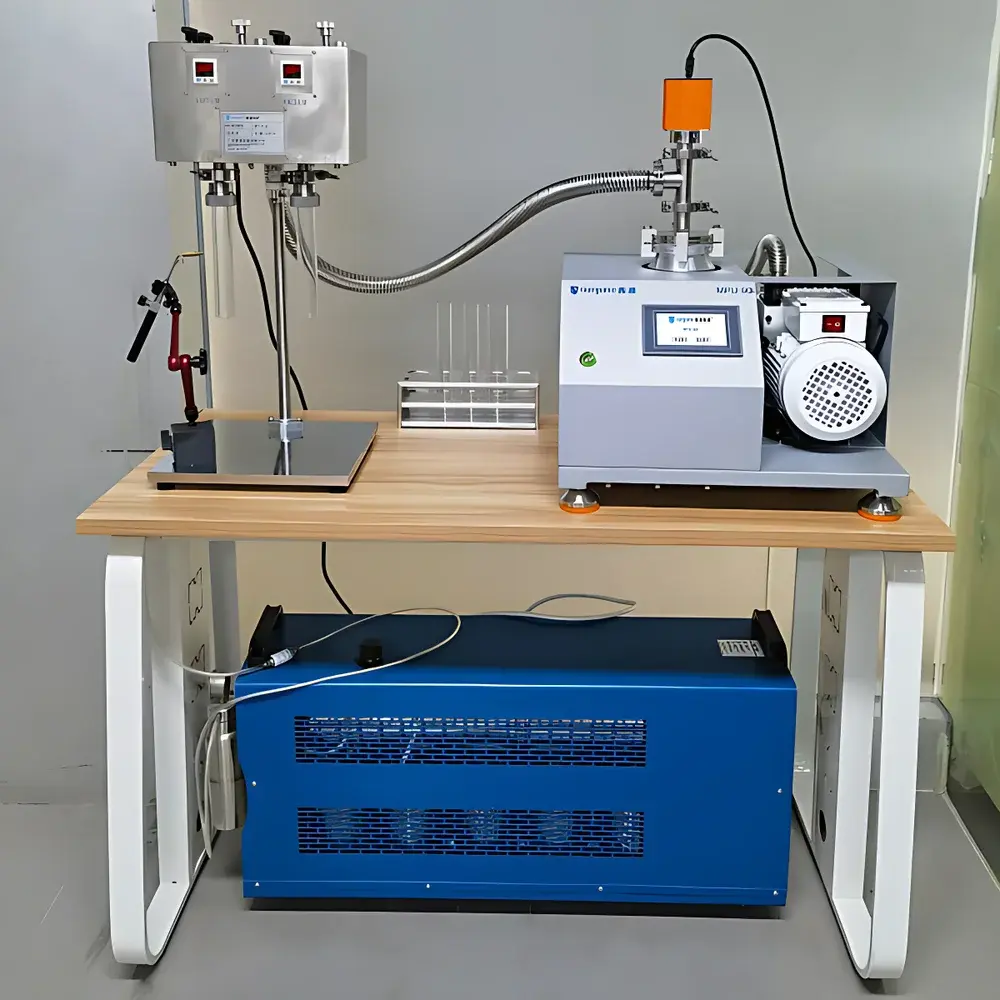
SUNJUNE VS-Q2 Quartz Tube Vacuum Sealing System for Sulfide-Based Solid-State Electrolyte Battery Research
| Brand | SUNJUNE |
|---|---|
| Model | VS-Q2 |
| Origin | Guangdong, China |
| Manufacturer Type | Direct Manufacturer |
| Country of Origin | China |
| Price Range | USD 2,800 – 12,600 |
| Vacuum Performance (Mechanical Pump Only) | < 5 Pa |
| Vacuum Performance (MPU-90i Molecular Pump Unit) | < 1×10⁻⁵ Pa (with full-range vacuum gauge) |
| Ultimate Vacuum (MPU-90i in optimized configuration) | ≤ 1×10⁻⁶ Pa |
| Quartz Tube Compatibility | OD 5–50 mm, Length 80–1500 mm |
| Rotational Speed Control | Adjustable |
| Vacuum Pumping Rate | Adjustable |
| Protective Gas Backfilling Rate | Adjustable |
| Control Interface | Touchscreen with IL Intelligent Logic Program |
| Operating Modes | Manual (independent mechanical pump control) and Auto (interlocked mechanical + molecular pump sequencing) |
| Enclosure | One-piece stainless steel housing |
| Compliance | Designed for GLP-compliant lab environments |
Overview
The SUNJUNE VS-Q2 Quartz Tube Vacuum Sealing System is an integrated, laboratory-grade instrument engineered specifically for the preparation of air- and moisture-sensitive electrode and electrolyte samples used in next-generation sulfide-based solid-state battery (SSB) research. It combines a precision rotary vacuum sealing station, a high-purity hydrogen–oxygen flame generator, and a dual-stage vacuum pumping system — comprising a robust scroll-type mechanical pump and an optional high-performance MPU-90i turbomolecular pump unit — into a single, compact stainless-steel platform. Unlike conventional static tube sealers, the VS-Q2 employs patented rotational sealing technology (Patent No.: CN2021XXXXXXX), enabling uniform thermal distribution during quartz fusion and eliminating localized overheating or tube deformation. This ensures reproducible hermetic seals essential for long-term electrochemical stability testing of Li₆PS₅Cl, Li₁₀GeP₂S₁₂, and other hygroscopic sulfide electrolytes under inert or reducing atmospheres.
Key Features
- One-piece 304 stainless-steel enclosure with IP54-rated dust/moisture resistance and reinforced structural rigidity for vibration-free operation.
- Motor-driven quartz tube rotation (0–30 rpm, continuously adjustable) synchronized with vacuum drawdown and flame positioning to ensure concentric, bubble-free seal formation.
- Dual-mode vacuum control: manual mode permits independent activation of the mechanical pump for rough vacuum applications (e.g., pre-bake cycles); auto mode initiates sequential pump staging — mechanical pump first, followed by automatic molecular pump engagement at ≤10 Pa — minimizing oil backstreaming and extending pump lifetime.
- IL Intelligent Logic firmware embedded in the MPU-90i controller prevents unsafe operational sequences (e.g., molecular pump start-up without adequate fore-vacuum), includes real-time pump health diagnostics, and logs all vacuum events with timestamps for audit readiness.
- Full-range capacitance manometer (1×10⁻⁷ – 1×10³ Pa) integrated into the MPU-90i unit enables accurate pressure monitoring across both rough and ultra-high vacuum regimes.
- Modular gas handling interface supports precise backfilling with Ar, N₂, or forming gas (e.g., 5% H₂/95% Ar) at programmable flow rates (0.1–5 sccm), critical for controlled atmosphere encapsulation of sulfur-rich cathodes.
Sample Compatibility & Compliance
The VS-Q2 accommodates standard quartz tubing dimensions (OD: 5–50 mm; length: 80–1500 mm), supporting both powder-filled ampoules and pelletized electrode composites. Its sealed architecture meets ISO 14644-1 Class 7 cleanroom compatibility when operated within laminar flow hoods. All vacuum path components are electropolished stainless steel with metal-sealed CF flanges, ensuring leak rates <1×10⁻⁹ mbar·L/s (He). The system conforms to ASTM E2913-22 for handling air-sensitive battery materials and supports documentation required for GLP audits — including electronic log export (CSV), user-access-level permissions, and 21 CFR Part 11–compliant optional digital signature modules.
Software & Data Management
A 7-inch capacitive touchscreen runs embedded Linux-based control software with intuitive graphical workflow navigation. Each sealing cycle records vacuum curve data (pressure vs. time), rotational speed profile, flame dwell duration, and gas backfill parameters. Raw datasets are timestamped, stored locally on industrial-grade SD card (16 GB), and exportable via USB or Ethernet (TCP/IP). Optional cloud synchronization enables centralized fleet monitoring across multi-lab R&D programs. Audit trails include operator ID, session start/end times, and any parameter override events — fully traceable for internal quality reviews or regulatory submissions.
Applications
- Encapsulation of sulfide solid electrolytes (e.g., LGPS, argyrodites) for long-term ambient storage and accelerated aging studies.
- Preparation of sealed quartz cells for in situ XRD, XAS, or synchrotron-based operando characterization under inert conditions.
- Thermal treatment of composite cathodes (e.g., NMC + Li₃PS₄) without oxidative degradation prior to coin-cell assembly.
- Gas-tight packaging of lithium metal anodes and interfacial buffer layers for interfacial stability benchmarking.
- Supporting DOE and EU Battery 2030+ initiatives requiring standardized sample preparation protocols for solid-state energy storage materials.
FAQ
What vacuum level is achievable with the base configuration (mechanical pump only)?
The standard scroll-type mechanical pump achieves a base pressure of < 5 Pa, sufficient for most preliminary degassing and inert-gas purging steps.
Can the VS-Q2 seal quartz tubes containing reactive lithium metal powders?
Yes — when paired with the MPU-90i molecular pump and high-purity Ar backfill, the system achieves ≤1×10⁻⁶ Pa residual pressure and enables oxygen/water partial pressures below 10 ppb, meeting stringent requirements for Li-metal handling per IEC 62660-3.
Is remote monitoring or integration with lab information management systems (LIMS) supported?
The Ethernet port supports Modbus TCP and RESTful API endpoints for bidirectional communication with third-party LIMS or MES platforms; custom integration support available upon request.
Does the system include calibration certificates for vacuum gauges?
Each MPU-90i unit ships with a NIST-traceable calibration certificate for the full-range vacuum gauge, valid for 12 months from date of shipment.
What maintenance intervals are recommended for the molecular pump and flame system?
The MPU-90i requires annual performance verification; the hydrogen–oxygen generator needs quarterly nozzle inspection and biannual regulator recalibration — both documented in the included maintenance logbook.
Related Products





