
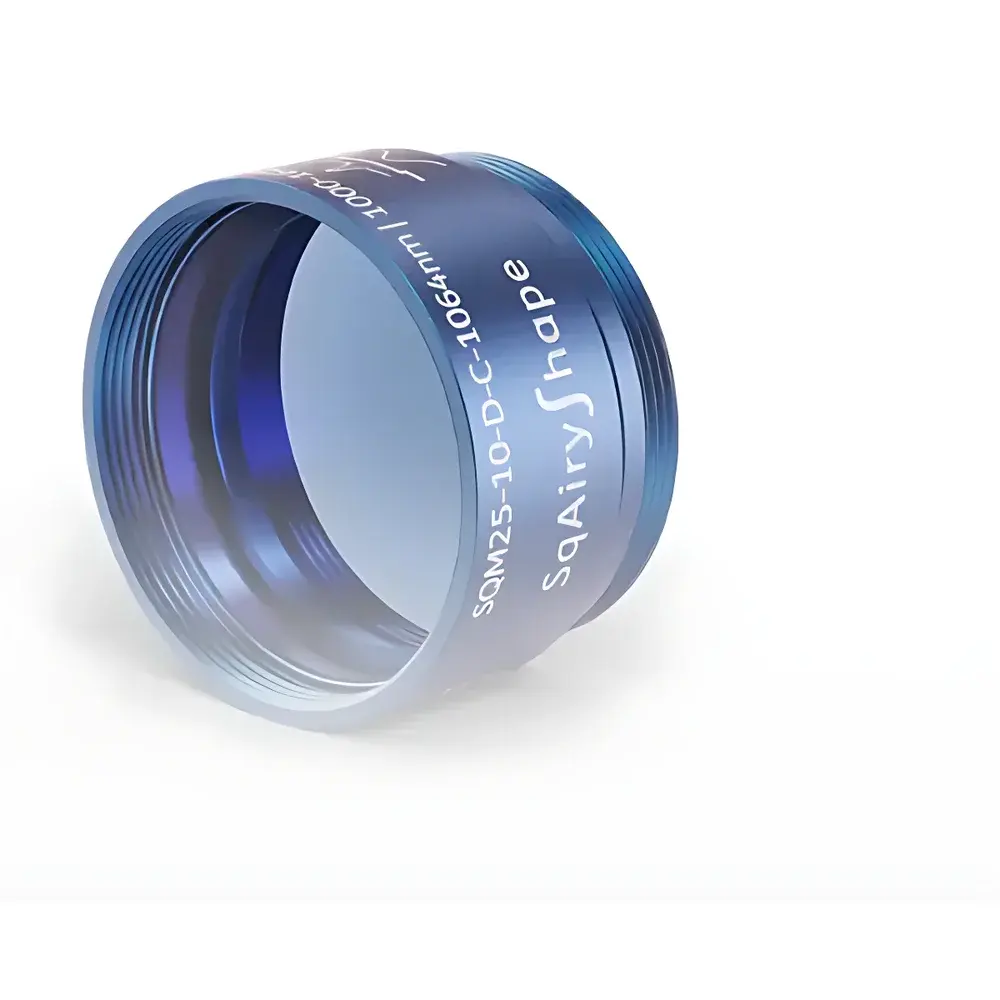
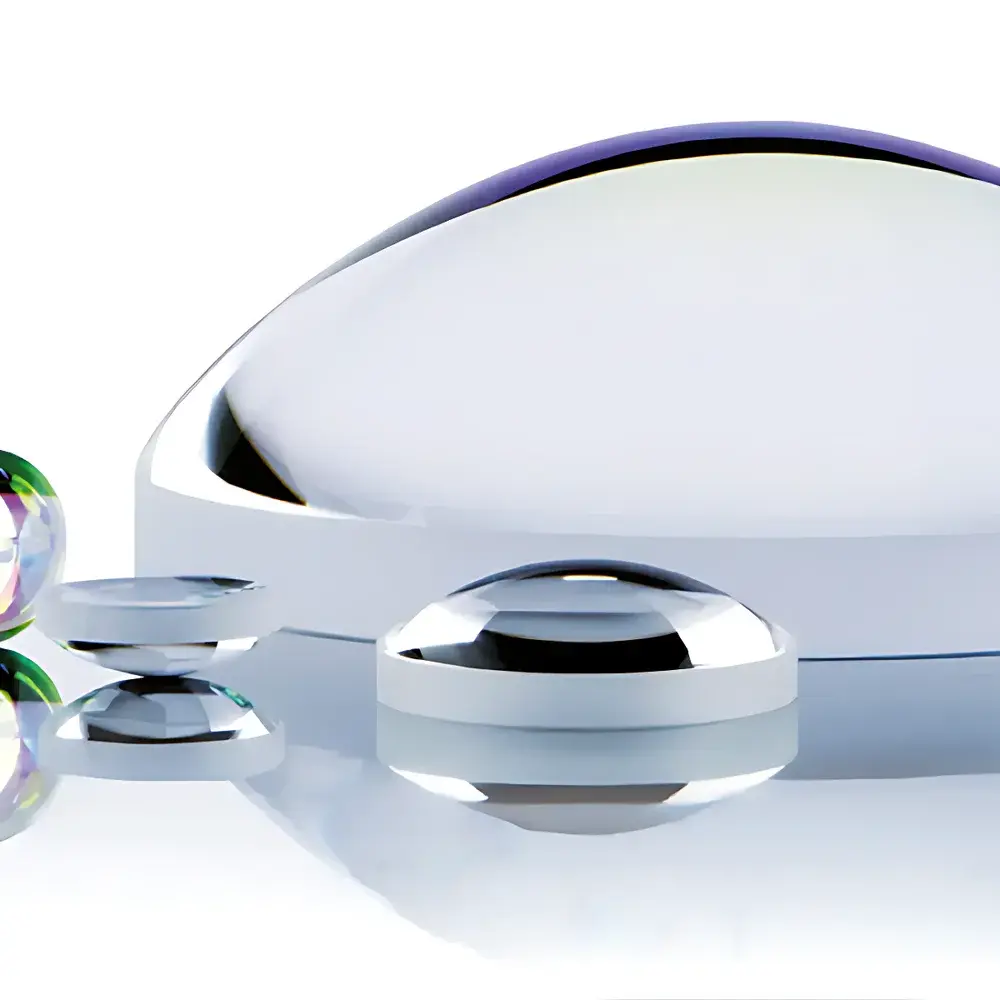
Asphericon SQM25-10-A-532 Square Top-Hat Beam Shaper
| Brand | Asphericon |
|---|---|
| Origin | Germany |
| Model | SQM25-10-A-532 |
| Thread | M28×0.75 mm |
| Outer Diameter Mount | 30 mm |
| Length | 17.3 mm |
| Input Beam Diameter @1/e² | 10 mm |
| Output Beam Diameter (FWHM) | 10 mm |
| Design Wavelength | 532 nm |
| Operating Wavelength Range | 500–620 nm |
| Laser Damage Threshold | 12 J/cm², 100 Hz, 6 ns @ 532 nm |
Overview
The Asphericon SQM25-10-A-532 is a high-precision, monolithic aspheric beam shaper engineered to transform collimated Gaussian laser beams into tightly focused square-shaped top-hat (flat-top) intensity profiles at the focal plane. Unlike diffractive or multi-element solutions, this device leverages optimized refractive phase modulation—based on Airy function synthesis—to generate near-diffraction-limited square irradiance distributions with minimal side lobes and high energy containment (>90% within the defined square boundary). It operates exclusively in conjunction with an external focusing lens (not included), where the SQM25-10-A-532 is placed in the collimated beam path upstream of the lens. Its design wavelength is 532 nm, with full functional compatibility across 500–620 nm, making it suitable for frequency-doubled Nd:YAG, DPSS, and visible diode laser systems used in precision micromachining, optical trapping, lithography alignment, and structured illumination microscopy.
Key Features
- Monolithic fused silica substrate with ultra-low wavefront error (< λ/10 RMS @ 633 nm), ensuring high spatial coherence preservation and minimal beam degradation
- Compact form factor: 17.3 mm total length, 30 mm outer diameter, M28×0.75 mounting thread—designed for seamless integration into space-constrained optical breadboards and OEM laser processing heads
- Input beam specification: collimated Gaussian beam with 1/e² diameter of 10 mm (±10% tolerance supported via optional alignment adapters)
- Focal spot scalability: square top-hat dimensions are linearly adjustable by varying the focal length of the downstream focusing lens (e.g., 100 mm lens yields ~10 µm × 10 µm; 500 mm yields ~50 µm × 50 µm)
- Laser damage resistance certified to ISO 21254: 12 J/cm² (100 Hz, 6 ns pulses, 532 nm), validated under clean-room handling and AR-coated surface conditions
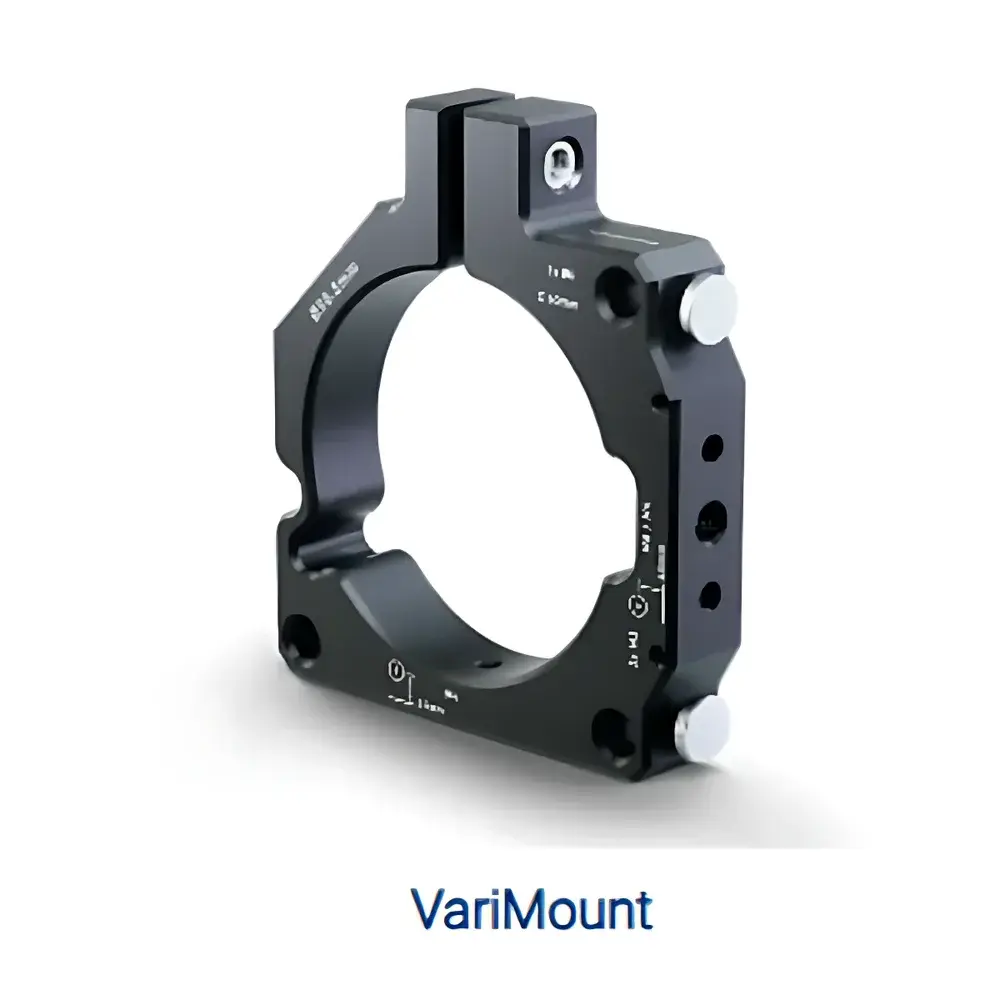
- High-accuracy kinematic mounting interface compatible with Asphericon’s a|Mount series—enabling sub-5 µrad angular alignment repeatability and axial positioning stability < ±1 µm
Sample Compatibility & Compliance
The SQM25-10-A-532 is designed for use with continuous-wave (CW) and pulsed lasers operating within its specified spectral bandwidth. It maintains consistent performance across input beam quality metrics meeting ISO 11146 M² ≤ 1.1 and pointing stability < 2 µrad over 8-hour thermal equilibration (23 ± 0.5 °C ambient). The component complies with RoHS 2011/65/EU and REACH (EC) No. 1907/2006 directives. While not a medical device, its optical performance aligns with requirements for Class 4 laser system integration per IEC 60825-1:2014. Documentation includes full Zemax-compatible optical prescription files (ZOS, CODE V, OSLO formats), mechanical drawings (STEP, IGES), and test reports traceable to PTB (Physikalisch-Technische Bundesanstalt) calibration standards.
Software & Data Management
No embedded firmware or proprietary software is required—the SQM25-10-A-532 functions as a passive optical element. However, Asphericon provides downloadable simulation tools (a|BeamShaper Simulator v3.2) supporting Gaussian-to-square profile prediction across variable focal lengths, input divergence, and wavelength shifts. Exportable outputs include intensity cross-sections (ASCII .dat), MTF curves, and encircled energy plots compliant with ISO 13694:2013. All simulation data adhere to NIST-traceable radiometric units and support batch analysis for DOE (Design of Experiments) workflows in laser process development environments. Audit trails for simulation parameters are exportable in CSV format for GLP-compliant documentation.
Applications
- Precision laser scribing and ablation of thin-film solar cells, where uniform square fluence eliminates edge tapering and improves yield in P1–P3 patterning
- Optical tweezer arrays requiring identical trapping potential across multiple sites—enabled by simultaneous generation of N × N square foci using multi-lens array configurations
- Calibration targets for CMOS/CCD flat-field correction, leveraging the high-intensity uniformity (±2.5% peak-to-valley across 90% of square area) and sharp edge definition (10–90% rise distance < λ/NA)
- Structured illumination in super-resolution fluorescence microscopy (SIM), where stable square excitation geometry enhances grating contrast and simplifies Fourier reconstruction
- UV-curable adhesive dispensing verification, where square focus enables deterministic exposure zone definition without post-processing masking
FAQ
Can the SQM25-10-A-532 generate a donut-shaped focus?
No—this model is specifically optimized for square top-hat profiles. For ring-shaped (donut) foci, refer to the ASM25-10-A-532 variant in the a|AiryShape product family.
Is the output beam truly diffraction-limited?
Yes—when used with a diffraction-limited focusing lens and aligned to manufacturer-specified tolerances, the focused square profile achieves Strehl ratios >0.82, confirming near-theoretical performance per scalar diffraction theory.
Does it require beam expansion before use?
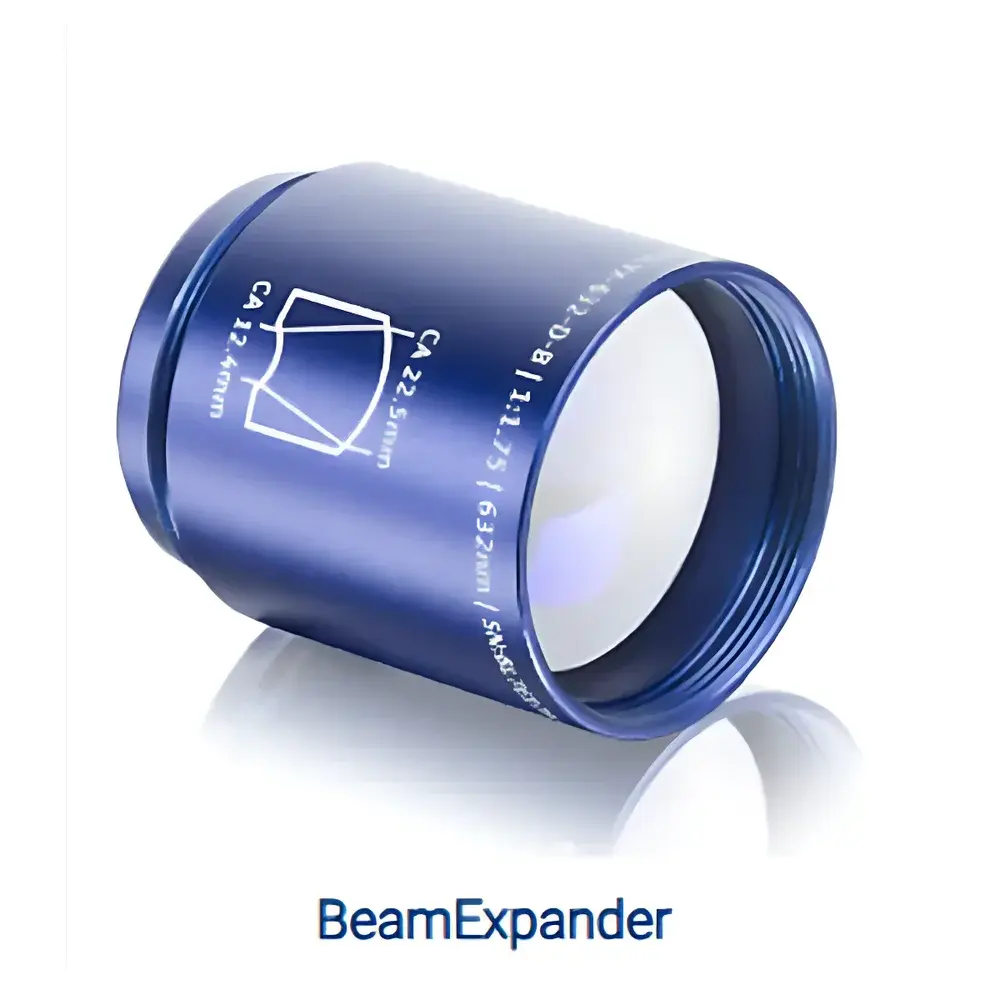
No—its nominal input diameter is 10 mm @1/e². Using significantly larger or smaller beams degrades uniformity and increases sidelobe energy; beam expanders are only recommended if input divergence exceeds ±0.5 mrad.
Can it be used with femtosecond lasers?
Not without spectral dispersion compensation. The fused silica substrate introduces group delay dispersion (GDD ≈ +40 fs² at 532 nm); for pulses < 100 fs, consult Asphericon’s a|DispersionCompensator add-on modules.
What mounting hardware is included?
The unit ships with a precision-machined M28×0.75 retaining ring and kinematic base adapter (a|Mount-K25). Optional motorized rotation stages (a|Rotator-M25) are available for polarization-sensitive applications.




