
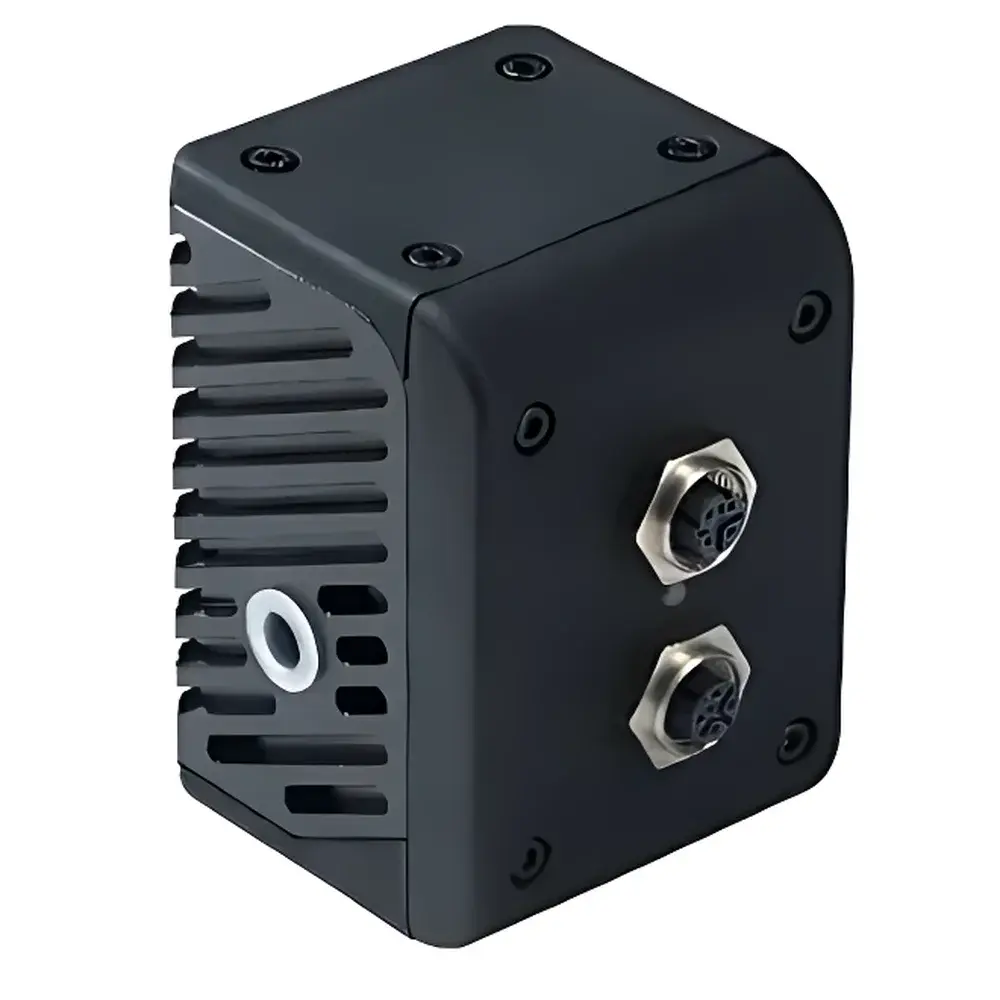
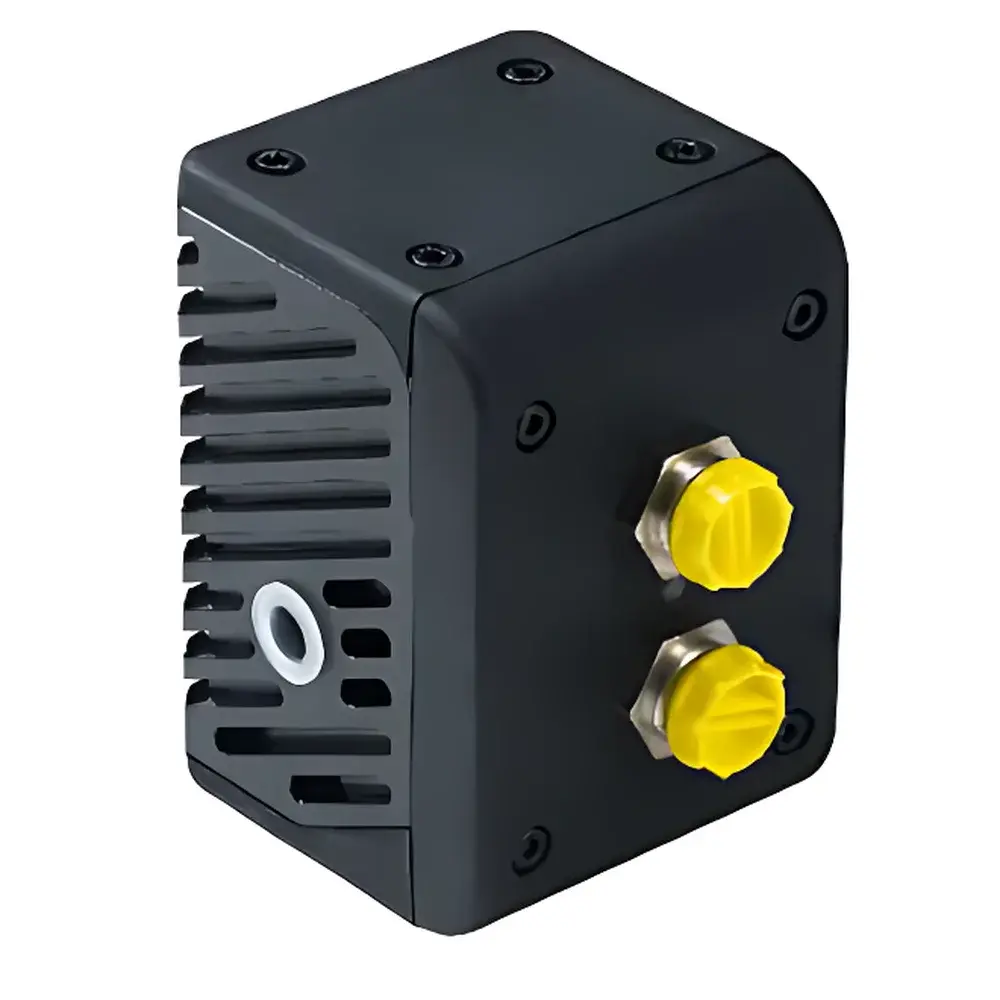
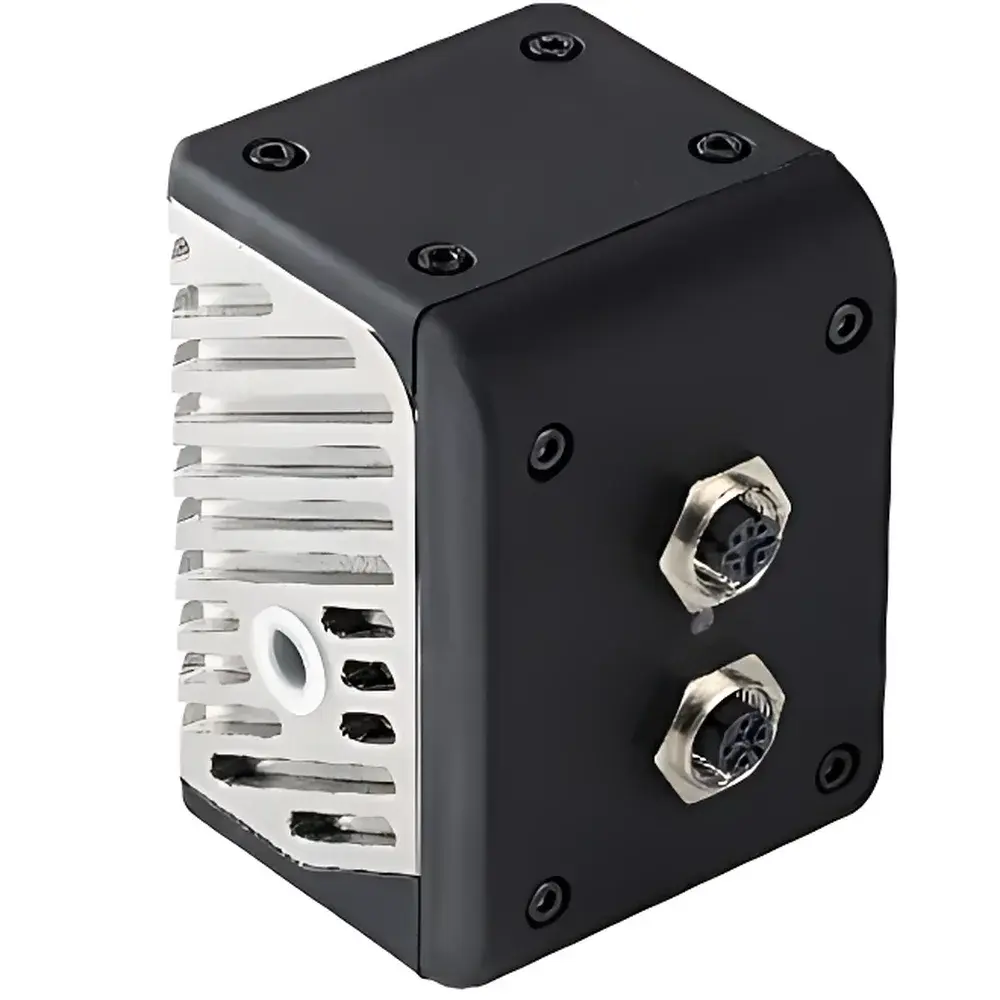
Atten2 C100 Online Oil Cleanliness Sensor
| Brand | Atten2 |
|---|---|
| Origin | Spain |
| Model | C100 |
| Product Type | Online Instrument |
| Detection Target | Mechanical Contaminants |
| Particle Recognition Capability | ≥4 µm |
| Compliance Support | ISO 4406, NAS 1638 |
| Compatible Fluids | Hydraulic oil, lubricating oil, fuel, mineral oil, synthetic oil, coolant, cleaning solution, cutting fluid |
| AI Engine | Trained on >500 commercial lubricant models and ferrographic particle morphology database |
| Data Output | Wired (Ethernet gateway) or Wireless (Wi-Fi/LoRaWAN) |
Overview
The Atten2 C100 Online Oil Cleanliness Sensor is an industrial-grade, real-time particulate monitoring system engineered for continuous in-line assessment of lubricant and hydraulic fluid contamination. Unlike conventional particle counters based solely on light obscuration or pore-blockage principles, the C100 employs high-resolution digital imaging coupled with proprietary AI-driven morphological analysis to classify wear debris by origin—distinguishing fatigue spalls, cutting abrasion fragments, pitting particles, and non-metallic contaminants such as seal degradation products or ingress dust. The sensor operates on a flow-through optical cell with integrated LED illumination and CMOS imaging, capturing sequential micrographs of suspended particles at user-defined intervals (1–60 min). Its core measurement principle combines quantitative particle counting (per ISO 4406:2017 and NAS 1638 Class Code) with qualitative forensic analysis derived from shape descriptors—including aspect ratio, convexity, roundness, edge texture, and grayscale intensity gradients—enabling root-cause diagnostics directly at the point of installation.
Key Features
- Real-time, non-invasive inline monitoring without bypass loops or sample extraction
- Dual-mode output: standardized cleanliness codes (ISO/NAS) + AI-classified wear mechanism report (fatigue, abrasion, corrosion, cavitation)
- Particle detection threshold: ≥4 µm equivalent spherical diameter (ESD), with sub-pixel interpolation for shape fidelity
- Multi-fluid compatibility: validated for mineral oils, PAOs, ester-based synthetics, water-glycol fluids, and aqueous coolants
- Embedded AI inference engine trained on over 500 commercially available lubricant baselines and 12+ years of laboratory ferrography datasets
- Robust industrial enclosure (IP67 rated) with stainless-steel wetted parts (316L) and wide operating temperature range (−20 °C to +80 °C)
- Configurable communication protocols: Modbus TCP, MQTT, OPC UA; supports both wired Ethernet gateways and wireless LoRaWAN/Wi-Fi modules
Sample Compatibility & Compliance
The C100 is designed for direct integration into pressurized lubrication circuits (up to 25 bar) and low-flow hydraulic return lines. It complies with ISO 4406:2017 for particle count reporting and aligns with ASTM D7690 for image-based particle characterization methodology. While not a certified reference instrument per ISO 11171, its calibration traceability is maintained via NIST-traceable polystyrene latex (PSL) standards and field-referenced ferrographic slide validation. The system meets electromagnetic compatibility requirements per EN 61000-6-2/6-4 and is suitable for deployment in environments requiring ATEX Zone 2 / IECEx certification (optional housing variant). Data integrity conforms to GLP-aligned audit trail requirements, including timestamped image capture logs, firmware versioning, and operator-accessible metadata export.
Software & Data Management
The Atten2 OilWear Intelligence Suite provides web-based dashboard visualization, trend analytics, and automated alerting (email/SMS/webhook). Each captured particle image is tagged with geolocation, system ID, fluid type, and operational context (e.g., load condition, temperature, runtime hours). Historical data is stored in encrypted SQLite or PostgreSQL backends with configurable retention policies. The software supports FDA 21 CFR Part 11-compliant electronic signatures and role-based access control (RBAC) for multi-site fleet management. Custom model ingestion is supported via API—clients may upload spectral or ferrographic reference data to extend the AI’s recognition library for proprietary lubricants or unique wear mechanisms. All raw image data remains customer-owned and exportable in TIFF/CSV format without vendor lock-in.
Applications
The C100 serves as a foundational element in predictive maintenance programs across asset-intensive industries. In wind turbine gearboxes, it detects early-stage micropitting before vibration signatures emerge. In coal mining draglines and hydraulic shovels, it correlates abrasive particle morphology with filter efficiency decay and bearing raceway wear progression. Power generation facilities deploy it on turbine lube oil systems to avoid catastrophic journal bearing failure; case studies show 98% reduction in unplanned outages when paired with scheduled oil reclamation workflows. Rail traction motors, marine main engines, tunnel boring machines (TBMs), and aerospace ground support equipment benefit from its ability to differentiate between normal run-in debris and pathological wear modes. It is also deployed pre-commissioning to verify new oil quality prior to system startup—preventing premature component wear caused by residual manufacturing contaminants or additive package instability.
FAQ
Does the C100 require periodic recalibration?
No routine recalibration is needed. The system performs self-diagnostic checks during idle cycles and maintains stability through thermal drift compensation algorithms. Annual verification using PSL standards is recommended for ISO-compliant reporting.
Can the AI identify water droplets or air bubbles as contaminants?
Yes. The morphology engine discriminates gas bubbles (spherical, uniform refractive index, transient presence) and water emulsions (low-contrast, coalescing behavior) from solid wear particles using dynamic sequence analysis and refractive index modeling.
Is retrofitting possible on existing equipment without system downtime?
Yes. The C100 mounts in-line via standard SAE J1926 or ISO 8434-2 flanges. Installation typically requires <15 minutes of planned maintenance window; no lubricant draining or circuit modification is necessary.
How does the system handle highly viscous or dark-colored oils?
Optical path length and illumination intensity are automatically adjusted via closed-loop feedback. For oils exceeding 300 cSt at 40 °C or with severe oxidation-induced coloration (ASTM D1500 >5), optional UV-enhanced imaging modules are available.
What level of IT infrastructure is required for remote monitoring?
Minimal: a local network with DHCP-enabled Ethernet port or Wi-Fi SSID credentials. Cloud hosting is optional; all processing occurs onboard the sensor or at the edge gateway—no continuous cloud dependency is required for core functionality.





