
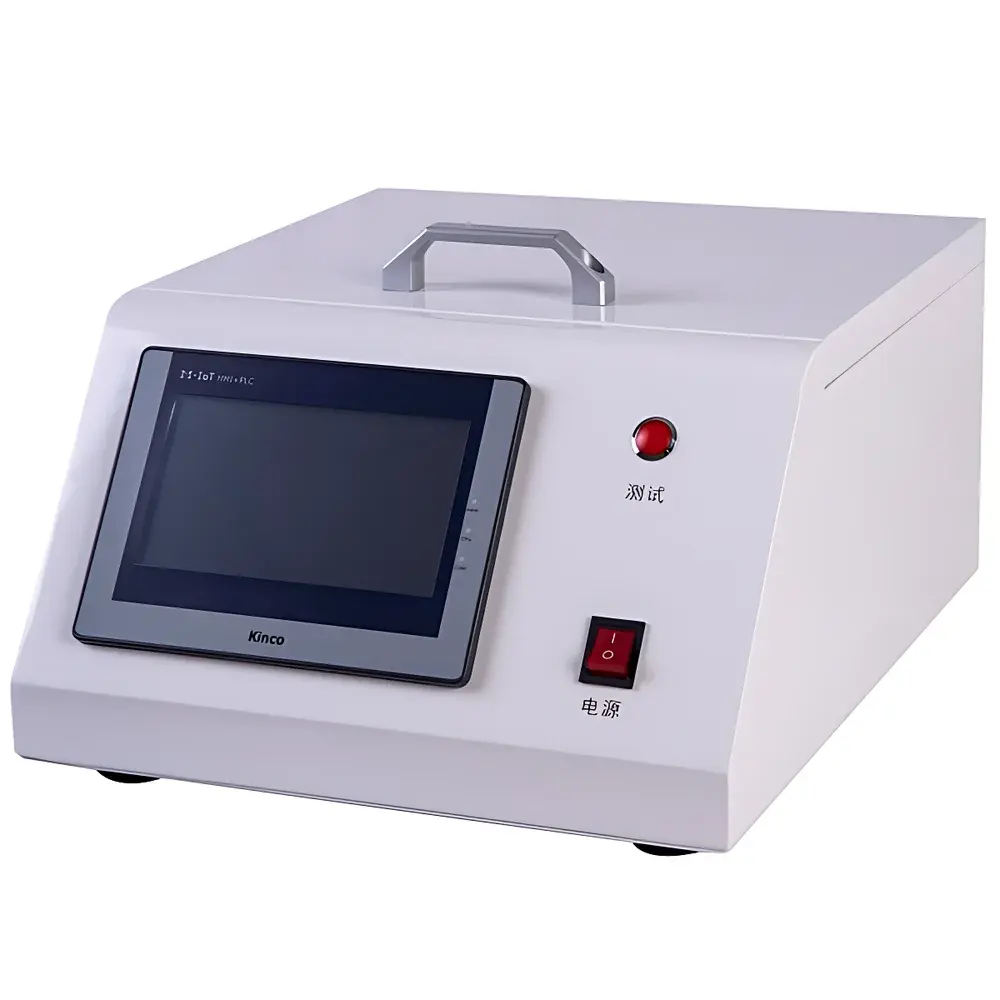
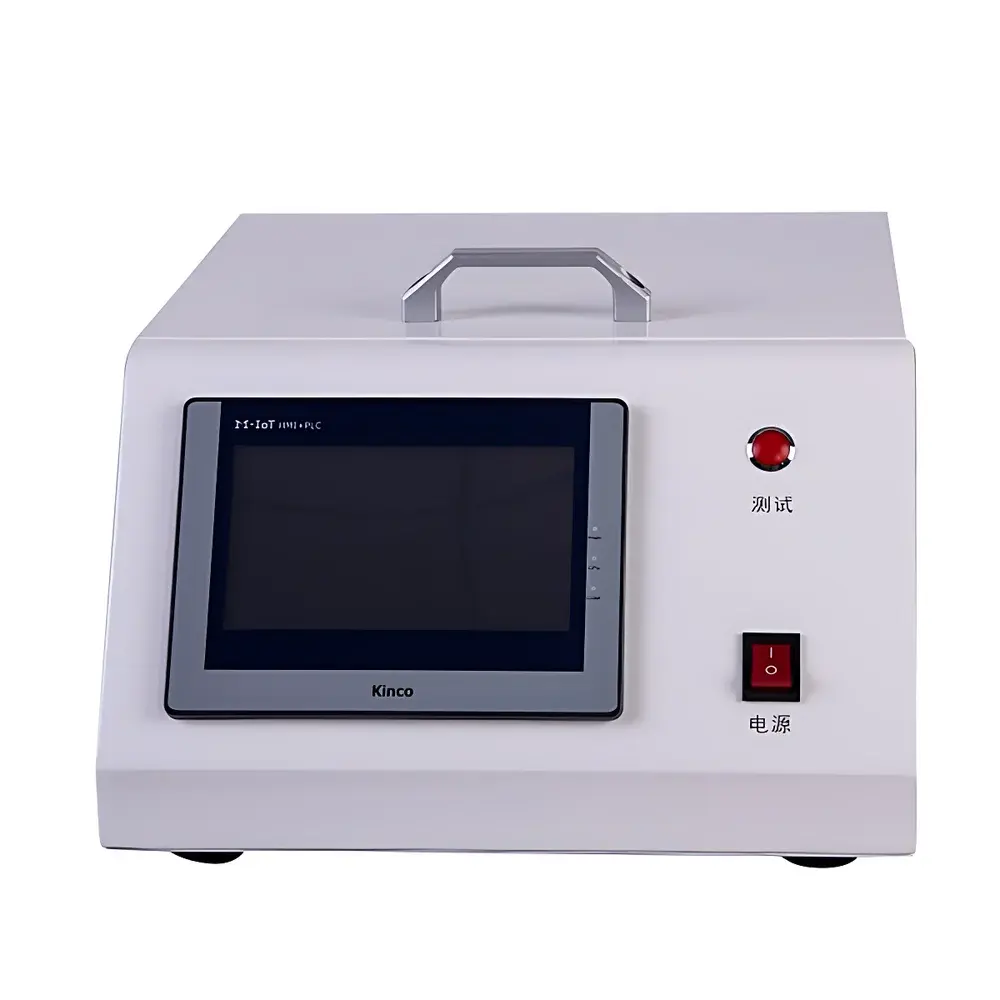
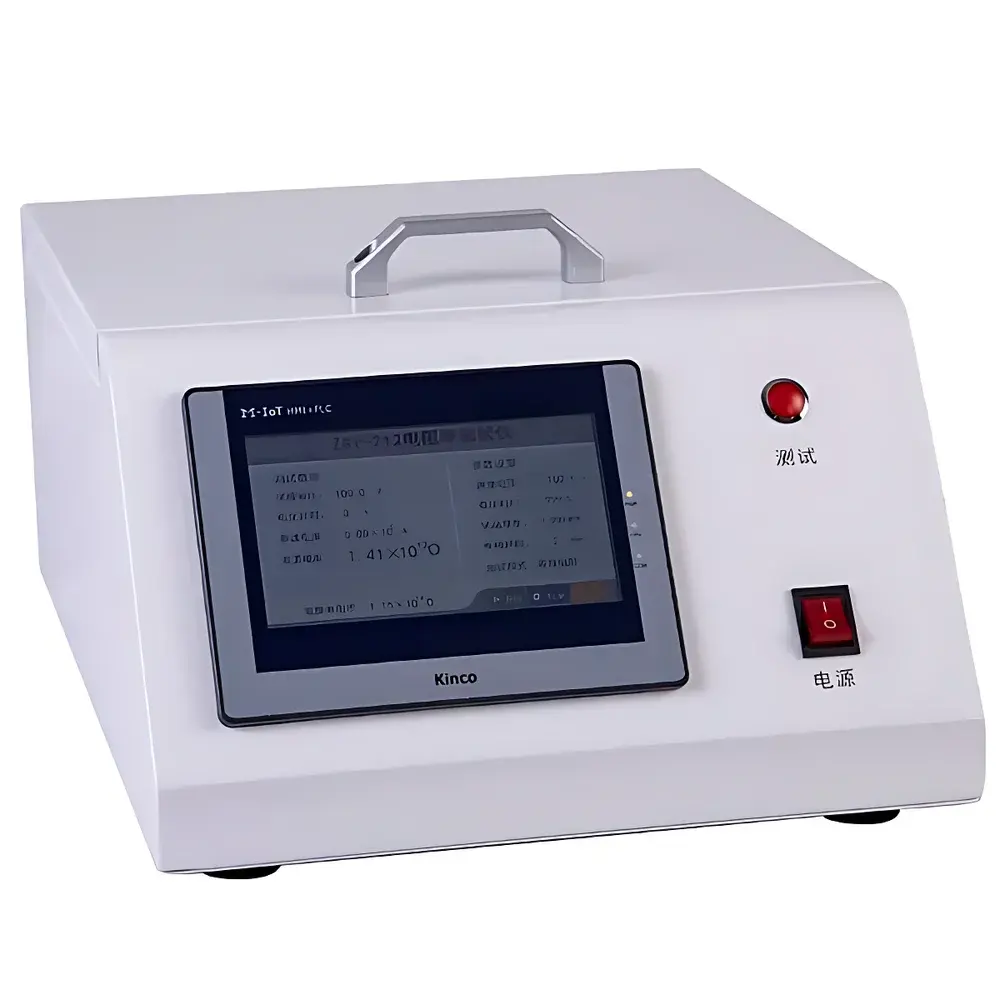
Aerospace ZST-212 High-Resistance Meter for Ceramic Materials
| Brand | Aerospace |
|---|---|
| Origin | Beijing, China |
| Manufacturer Type | Authorized Distributor |
| Product Category | Domestic |
| Model | ZST-212 High-Resistance Meter |
| Price Range | USD 2,800 – 7,000 |
| Standards Compliance | IEC 60093, ASTM D257, GB/T 31838.2–2019, IEC 62631-3-1, GB/T 1410–2006, GB/T 1692–2008 |
| Display | 4.3-inch HD TFT |
| Voltage Range | ±10 V to ±1500 V DC (continuously adjustable) |
| Resistance Measurement Range | 10⁶ Ω to 10¹⁸ Ω (standard configuration) |
| Minimum Detectable Current | 10 fA |
| Input Impedance | >10¹⁶ Ω |
| Leakage Compensation | Dual-channel active current-voltage feedback network |
| Interface Options | USB 2.0, RS-232C, Handler (TTL/PLC-compatible) |
| Safety Features | ATEX-compliant explosion-proof variant available |
| Environmental Operating Range | −20 °C to +55 °C (industrial grade), relative humidity ≤75% RH (non-condensing) |
| Warm-up Time | ≥30 min required for metrological validity |
| Measurement Modes | Automatic & manual |
Overview
The Aerospace ZST-212 High-Resistance Meter is a precision metrology instrument engineered for the quantitative characterization of electrical insulation properties in advanced ceramic, polymeric, and composite materials. It operates on a rigorously optimized two-terminal and four-terminal (Kelvin) voltmeter-ammeter principle, incorporating bipolar high-voltage sourcing and real-time leakage current compensation to eliminate contact potential errors and lead resistance artifacts. Designed in strict accordance with IEC 60093, ASTM D257, and GB/T 31838.2–2019, the ZST-212 delivers traceable measurements of volume resistivity (ρv, in Ω·m), surface resistivity (ρs, in Ω/sq), and low-level conduction currents down to 10 fA. Its architecture integrates solid-state high-frequency inverter technology with sub-0.01% output ripple, ceramic-core dual-shielded isolation transformers (>1015 Ω insulation resistance), and opto-isolated feedback loops (ground-loop rejection ≥140 dB), ensuring measurement integrity in electrically noisy industrial laboratories and cleanroom-based R&D environments.
Key Features
- Triple-synchronized acquisition system monitoring voltage, current, and ambient temperature concurrently for thermal drift correction
- Ultra-high-input-impedance electrostatic amplifier stage using dual-gate MOSFET front-end (>1016 Ω input impedance) with vacuum-sealed terminals to suppress surface leakage paths
- Dynamic zero-tracking compensation (temperature coefficient ≤0.5 ppm/°C) and sub-200 ns overload cutoff response
- Four-wire Kelvin configuration with adaptive impedance matching network covering 1 kΩ to 100 TΩ
- Bipolar voltage sourcing (±10 V to ±1500 V DC) enabling contact potential nulling via reverse-bias measurement (ΔV < 100 µV)
- Polarization-aware timing protocol: programmable charge/stabilization/acquisition sequences (e.g., 15 s / 300 s / 20 s) with differential polarization artifact detection
- Dual-layer dielectric shielding: polyimide substrate + alumina coating to suppress charge injection (<10 pC/s)
- ATEX-certified explosion-proof enclosure option and radiation-hardened variant rated for 50 kRad total ionizing dose
Sample Compatibility & Compliance
The ZST-212 supports standardized resistivity testing across solid, liquid, paste, and powder forms per ISO 3915, ASTM D257 Annex A3 (for films), and GB/T 1692–2008 (for rubber). It accommodates custom electrode configurations—including suspended three-ring electrodes (contact force <0.03 N) for ultra-low-stress silicone elastomer evaluation—and interfaces with environmental test chambers for simultaneous UV aging (ASTM G154), mechanical loading (5 kN max, 1 µm displacement resolution), or fluid circulation (0.1 mL/min flow control). All configurations maintain full compliance with GLP audit requirements, including electronic signature support, 21 CFR Part 11–compliant data integrity logs, and built-in calibration traceability to quantum Hall resistance standards via six-and-a-half-digit reference multimeters.
Software & Data Management
Firmware supports automated calibration workflows aligned with ISO/IEC 17025:2017—executing forward traceability (quantum Hall standard → reference resistor bank → system gain verification) and reverse validation (bridge cross-comparison, random noise injection for baseline interference profiling). Raw data export is available in CSV, XML, and HDF5 formats. The embedded USB/RS-232C/Handler interface enables seamless integration into LIMS platforms and automated test stations. Audit trails record operator ID, timestamp, environmental conditions, calibration status, and all parameter modifications with immutable hashing. Firmware updates are digitally signed and verified prior to installation.
Applications
- Volume and surface resistivity mapping of structural ceramics (Al2O3, SiC, ZrO2) for aerospace thermal barrier coatings
- Quality control of antistatic flooring, ESD-safe footwear, and conductive polymer composites per ANSI/ESD S20.20
- Insulation integrity assessment of medical-grade silicone implants and catheter-grade thermoplastics
- Spacecraft cable insulation screening under simulated microgravity using magnetohydrodynamic electrode positioning
- Dielectric relaxation analysis of piezoelectric ceramics and ferroelectric thin films
- In-process monitoring of resin cure kinetics via time-resolved resistivity tracking during composite layup
FAQ
What is the minimum measurable current, and how is it achieved?
The ZST-212 achieves 10 fA resolution through a combination of guarded triaxial cabling, dual-gate MOSFET input amplification, and active leakage compensation circuitry that dynamically cancels parasitic currents in real time.
Does the instrument support automated compliance reporting for ISO/IEC 17025 accreditation?
Yes—built-in calibration management includes certificate generation, uncertainty budgeting per GUM, and full audit trail logging compatible with ILAC-MRA requirements.
Can the ZST-212 measure materials at elevated temperatures?
When paired with an external temperature-controlled chamber (−70 °C to +150 °C), the ZST-212 maintains measurement fidelity via synchronized thermal compensation algorithms and low-drift voltage sourcing.
Is four-terminal (Kelvin) measurement mandatory for accurate resistivity results?
For samples with contact resistance >1 kΩ or geometries prone to edge effects (e.g., thin films, porous ceramics), four-terminal configuration is required to eliminate lead and contact contributions per ASTM D257 Section 10.
How does the instrument handle dielectric absorption and polarization artifacts?
It implements programmable polarization timing sequences and employs a differential polarization monitoring algorithm that distinguishes true conduction from interfacial charge buildup, reducing systematic error in long-duration measurements.






