
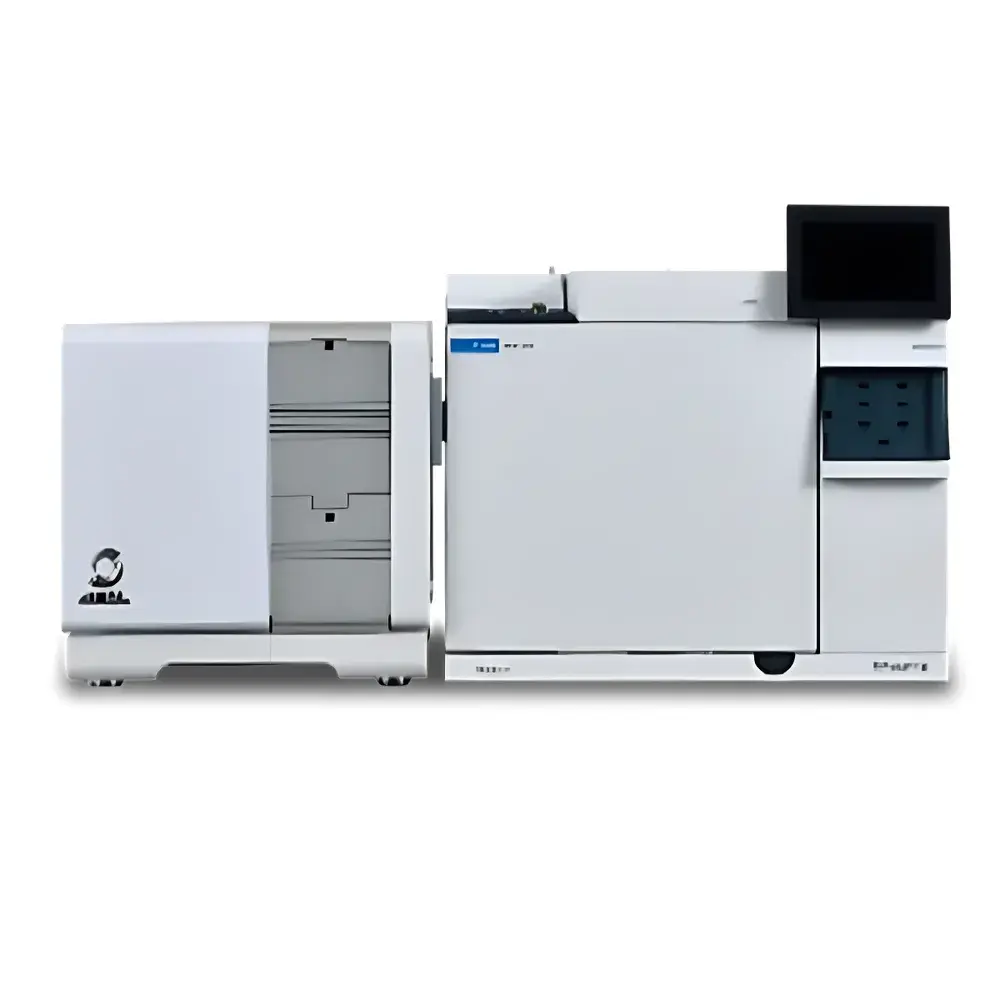
JEOL JMS-Q1600GC UltraQuad™ SQ-Zeta Gas Chromatography Quadrupole Mass Spectrometer
| Brand | JEOL |
|---|---|
| Origin | Japan |
| Model | JMS-Q1600GC |
| Instrument Type | Single Quadrupole Mass Spectrometer |
| GC Configuration | Conventional Gas Chromatography-Mass Spectrometry (GC-MS) |
| Series | UltraQuad™ SQ-Zeta |
| Generation | 6th-generation JEOL GC-MS platform |
| Application Scope | Quantitative and Qualitative Analysis in Environmental, Food Safety, Agrochemical, Materials, and Flavor Chemistry |
| Compliance Framework | Designed for GLP/GMP-aligned laboratories |
Overview
The JEOL JMS-Q1600GC UltraQuad™ SQ-Zeta is a sixth-generation single quadrupole gas chromatography–mass spectrometer engineered for high-fidelity separation and detection of volatile and semi-volatile organic compounds. Built upon JEOL’s five-decade heritage in mass spectrometry, the system integrates a thermally robust electron ionization (EI) source, a precision-engineered quadrupole mass filter, and a high-stability detector array—optimized for reproducible ion transmission across the full mass range. Unlike legacy platforms, the UltraQuad™ SQ-Zeta employs an enhanced RF/DC voltage control architecture to minimize mass drift during extended acquisition sequences, ensuring consistent mass assignment over multi-hour GC-MS runs. Its core design supports both targeted quantitation (e.g., EPA Method 8270D, ISO 17993) and untargeted screening workflows, making it suitable for regulated environmental testing labs, food safety monitoring centers, and R&D facilities engaged in aroma profiling or polymer additive identification.
Key Features
- UltraQuad™ SQ-Zeta quadrupole mass analyzer with optimized rod geometry and dynamic voltage compensation for improved mass stability and long-term calibration retention
- Dual-mode ion source: Electron Ionization (EI) standard; optional Chemical Ionization (CI) capability via field-replaceable source module
- Integrated GC interface with programmable temperature-controlled transfer line (up to 350 °C) and low-dead-volume connections for minimal peak broadening
- Real-time tuning and calibration using perfluorotributylamine (PFTBA) or proprietary JEOL reference standards
- Modular vacuum system featuring dual-stage turbomolecular pumping with active pressure monitoring and auto-threshold leak detection
- Front-panel diagnostics and remote status monitoring via Ethernet-connected instrument controller
Sample Compatibility & Compliance
The JMS-Q1600GC accepts standard 0.25–0.53 mm ID capillary columns and interfaces seamlessly with major GC platforms—including Agilent, Thermo Fisher, and Shimadzu—via universal GC-MS interface kits. It supports split/splitless, on-column, and PTV injection modes. For regulatory compliance, the system is architected to operate within validated analytical workflows aligned with ISO/IEC 17025, USP , and ASTM D7622. When paired with compliant chromatography data systems (CDS), audit trails, electronic signatures, and raw data integrity are maintained in accordance with FDA 21 CFR Part 11 requirements. Routine performance verification follows JEOL’s PQ/QC protocol, including resolution verification at m/z 502, sensitivity checks at m/z 69 (perfluorotributylamine), and mass accuracy assessment using internal lock-mass correction.
Software & Data Management
Acquisition and processing are managed through JEOL’s MassCenter™ v4.x software suite—a Windows-based application supporting method development, real-time spectral viewing, library search (NIST, Wiley, JEOL MS Library), and quantitative report generation. The software includes built-in tools for deconvolution of co-eluting peaks, isotopic pattern fitting, and retention index matching. All raw data files (.jms) are stored in vendor-neutral, timestamped directories with SHA-256 checksums for forensic traceability. MassCenter™ supports export to common formats (mzML, .cdf, .txt) and integrates with LIMS via ASTM E1384-compliant APIs. Audit trail logging records all user actions—including parameter edits, calibration events, and report exports—with immutable timestamps and operator IDs.
Applications
The JMS-Q1600GC delivers robust performance across diverse application domains: quantification of polycyclic aromatic hydrocarbons (PAHs) in soil extracts per EPA 8270D; residue analysis of organophosphorus pesticides in fruits and vegetables under EU SANTE/11813/2021; identification of volatile organic compounds (VOCs) in polymer degradation studies; characterization of fragrance components in essential oils using retention index libraries; and screening of plasticizers and flame retardants in consumer goods. Its thermal stability and low background noise enable reliable detection of trace-level analytes even in complex matrices without extensive sample cleanup.
FAQ
Is the JMS-Q1600GC compatible with third-party GC systems?
Yes—the instrument features a universal GC interface kit supporting Agilent, Thermo Fisher, Shimadzu, and PerkinElmer GC models.
Does the system support automated calibration and performance verification?
Yes—MassCenter™ includes scheduled calibration routines with automated PFTBA tuning and QC report generation per JEOL PQ/QC guidelines.
Can the JMS-Q1600GC be operated in a 21 CFR Part 11–compliant environment?
Yes—when deployed with validated CDS software and documented SOPs, the platform meets technical requirements for electronic records and signatures.
What maintenance intervals are recommended for the ion source and detector?
JEOL recommends quarterly cleaning of the EI source and annual replacement of the electron multiplier under typical usage conditions (≤ 8 h/day, routine pesticide analysis).
Is high-resolution mass measurement supported?
No—the JMS-Q1600GC is a unit-mass-resolution single quadrupole system; high mass accuracy or HRAM capabilities require time-of-flight or magnetic sector instrumentation.
Related Products





