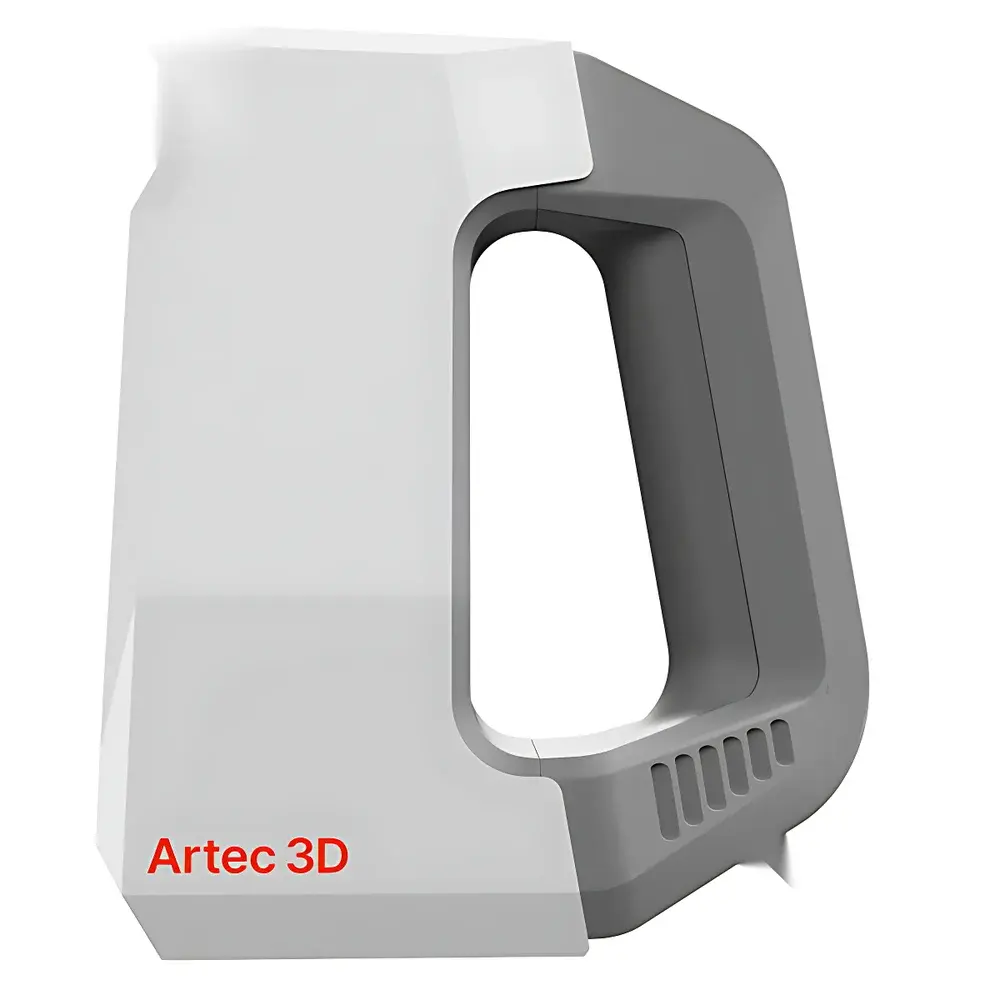
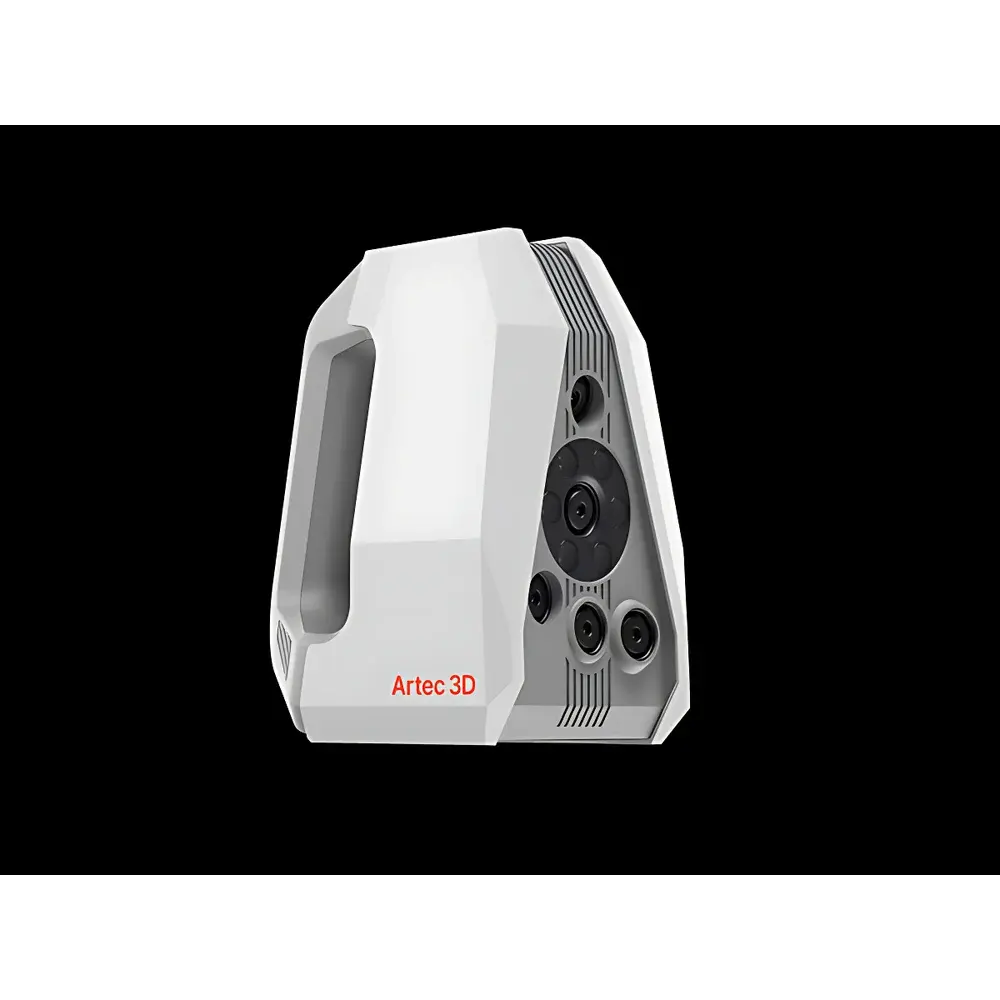
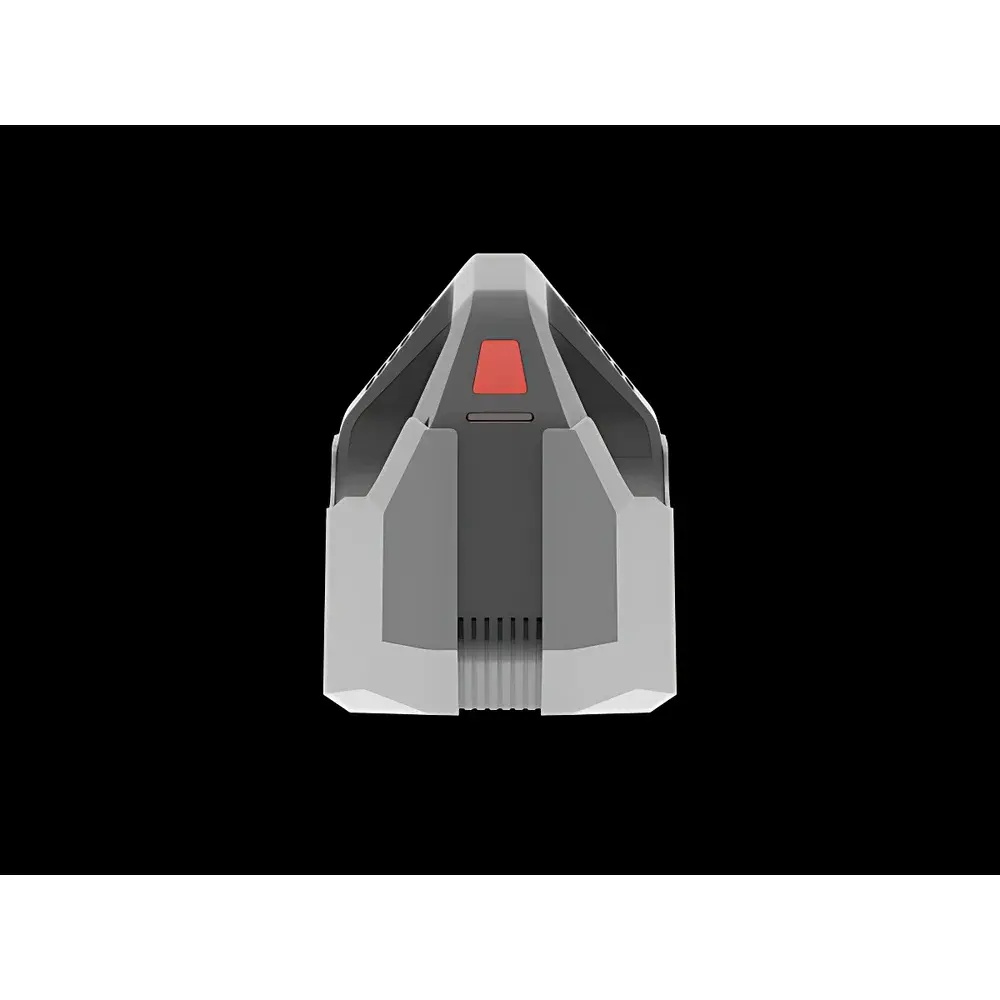
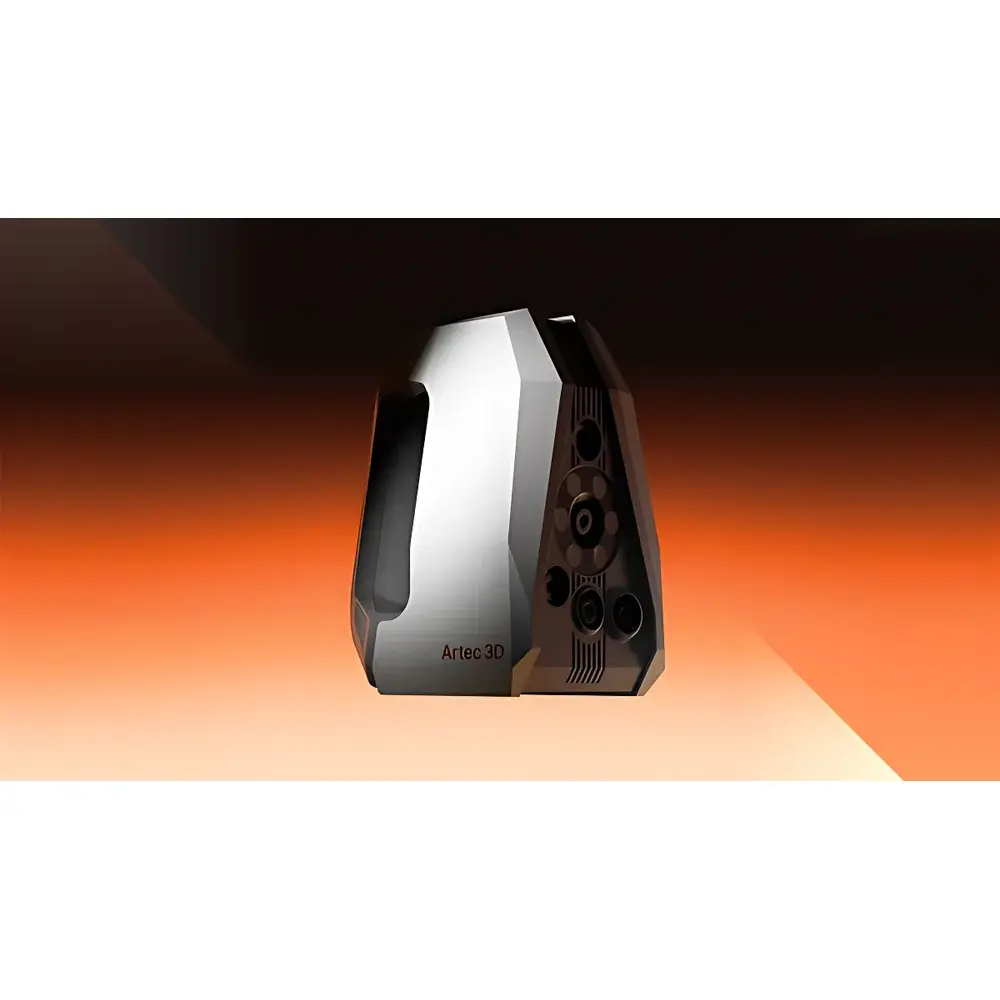
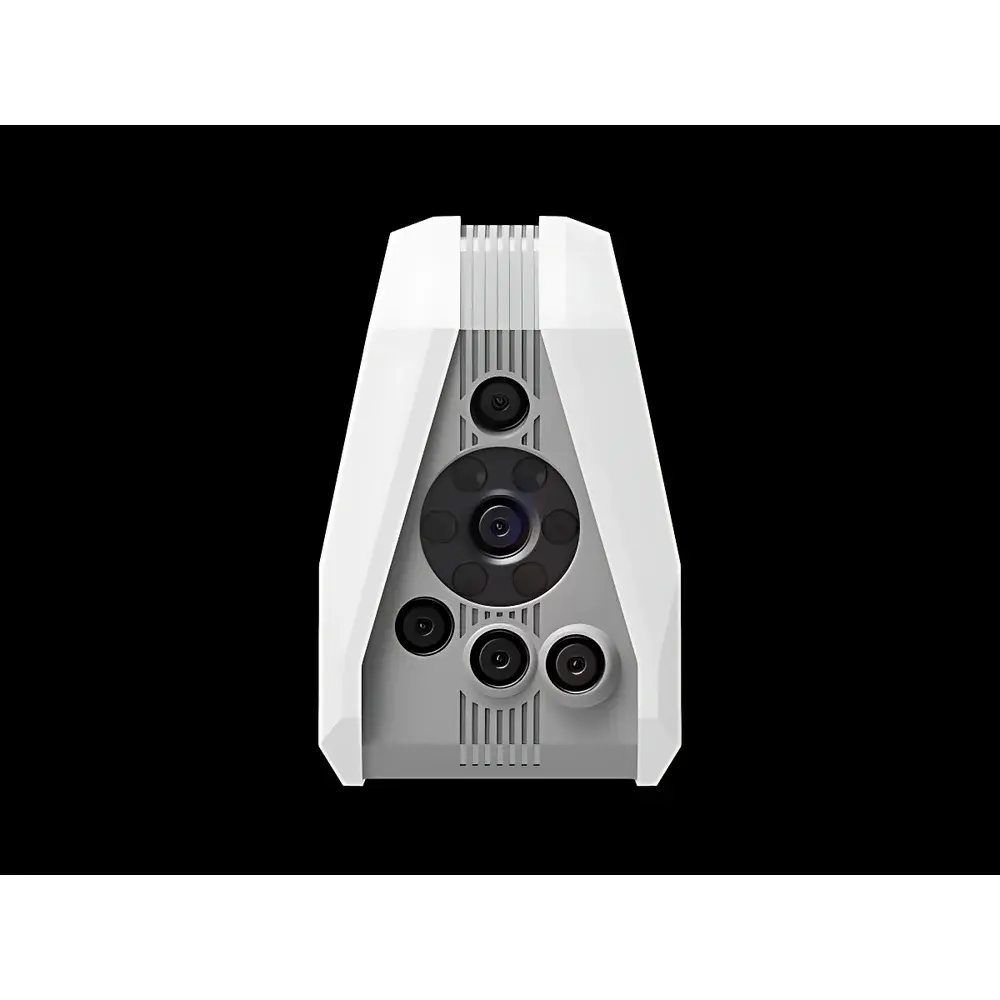
Artec Spider II High-Resolution Handheld 3D Scanner
| Brand | Artec |
|---|---|
| Origin | Imported |
| Manufacturer Type | Authorized Distributor |
| Instrument Category | Structured Light 3D Scanner |
| Model | ARTEC SPIDER II |
| Measurement Speed | 30 fps |
| Accuracy | 0.05 mm |
| Resolution | 0.05 mm |
| Maximum Scanning Range | 1 m |
| Single-Frame Capture Time | 0.0002 s |
| Operating System | Windows 10/11 (64-bit) |
| Weight | 0.95 kg |
| Field of View (Near) | 128 × 104 mm |
| Field of View (Far) | 171 × 152 mm |
| 3D Distance Accuracy | 0.05 mm + 0.3 mm/m |
| Texture Resolution | 5 MP |
| Color Depth | 24 bpp |
| Light Source | 450 nm Blue LED (structured light), White LED (CRI > 95, 4000 K) |
| Interface | Thunderbolt 3 (backward compatible with Thunderbolt 4) |
| Power Supply | 24 V DC via AC/DC adapter |
| Dimensions (H×D×W) | 187 × 156 × 118 mm |
| Warranty | 2 years |
| Output Formats | OBJ, PLY, WRL, STL, AOP, ASC, PTX, E57, XYZRGB, STEP, IGES, X_T, CSV, DXF, XML |
Overview
The Artec Spider II is a professional-grade, high-resolution handheld 3D scanner engineered for precision geometric digitization of small-to-medium objects with complex geometry, sharp edges, fine engravings, and challenging surface finishes—including black, glossy, or low-contrast materials. Utilizing advanced blue-light structured light technology at 450 nm, the Spider II achieves sub-100 µm resolution and accuracy without requiring photogrammetric markers or surface preparation. Its real-time 3D reconstruction engine processes up to 30 frames per second (fps), enabling intuitive, natural-motion scanning while maintaining geometric fidelity and photorealistic texture capture at 5 MP resolution and 24-bit color depth. Designed for metrology-grade applications in controlled environments, the Spider II delivers traceable, repeatable results compliant with foundational principles of ISO/IEC 17025—particularly when integrated into validated workflows under GLP or GMP-aligned quality systems.
Key Features
- Markerless scanning architecture eliminates dependency on adhesive targets, reducing setup time and avoiding surface contamination—critical in medical device prototyping, forensic evidence documentation, and sterile clinical environments.
- Blue-light structured illumination ensures stable, high-contrast pattern projection even on dark or reflective surfaces, significantly improving point cloud density and edge definition compared to white-light alternatives.
- Real-time fusion engine synchronizes geometry and texture data at 30 fps, enabling smooth, continuous motion capture without motion blur or alignment artifacts.
- Compact ergonomic design (187 × 156 × 118 mm; 0.95 kg) supports extended handheld operation with minimal operator fatigue—validated for use in production line QC stations, lab-based reverse engineering, and field-deployed forensic units.
- Thermal stabilization circuitry enables rapid thermal equilibrium (<60 seconds from cold start), ensuring consistent measurement repeatability across ambient temperature fluctuations (15–30 °C operating range).
- Native Thunderbolt 3 interface guarantees deterministic latency and high-bandwidth data streaming, supporting synchronized multi-sensor configurations within Artec’s ecosystem.
Sample Compatibility & Compliance
The Spider II is optimized for objects ranging from coin-sized components (e.g., watch gears, dental prostheses) to mid-scale industrial parts (e.g., intake manifolds, turbine blades, orthopedic implants). It reliably captures geometry on non-cooperative surfaces—including matte black plastics, anodized aluminum, polished ceramics, and human skin—without spray or coating. While not certified as a medical device under FDA 510(k) or CE IVD, its non-contact, Class 1 LED-based illumination complies with IEC 62471 for photobiological safety. Data integrity meets baseline requirements for ISO 10360-8 (coordinate measuring machines) and ASTM E2924-21 (guidelines for 3D scanning in dimensional metrology), particularly when used with calibrated reference artifacts and documented SOPs. The system supports audit-ready data provenance when paired with Artec Studio’s built-in logging (timestamped scan sessions, user ID tagging, parameter versioning).
Software & Data Management
Artec Studio 19+ serves as the unified processing platform, offering dual-mode operation: automated one-click alignment and mesh generation for rapid QA/QC throughput, or granular manual control over registration, outlier removal, curvature-based smoothing, and NURBS surface fitting. The software natively supports direct export to industry-standard CAD formats (STEP, IGES, X_T) and metrology-ready point cloud containers (E57, PTX, XYZRGB). Its “Scan-to-CAD” module includes GD&T annotation tools aligned with ASME Y14.5–2018, enabling first-article inspection reports without third-party translation. All processing steps are logged with immutable metadata, satisfying traceability requirements under FDA 21 CFR Part 11 (when deployed on validated Windows 10/11 workstations with domain authentication and encrypted storage). Annual software releases introduce algorithmic enhancements—including improved occlusion handling, enhanced multi-view fusion heuristics, and tighter integration with Siemens NX and Autodesk Fusion 360 APIs.
Applications
- Reverse Engineering: Accurate digitization of legacy parts for CAD model reconstruction, tolerance analysis, and functional redesign—especially where original drawings are unavailable or outdated.
- Quality Control & First-Article Inspection: Comparative analysis against nominal CAD models using deviation heatmaps, cross-section extraction, and statistical process control (SPC) charting.
- Digital Twin Generation: Creation of high-fidelity as-built digital replicas for asset lifecycle management, predictive maintenance simulation, and virtual assembly validation.
- Medical & Dental Applications: Non-invasive acquisition of anatomical structures for custom orthotics, surgical guides, and implant fit verification—used under institutional review board (IRB)-approved protocols.
- Forensic Documentation: Contactless evidence capture preserving chain-of-custody integrity, including footwear impressions, toolmarks, and ballistic casings.
- Cultural Heritage & CGI: Archival-grade reproduction of artifacts and museum specimens with photorealistic texture mapping for VR exhibitions and film VFX pipelines.
FAQ
Is the Artec Spider II suitable for ISO/IEC 17025-accredited calibration labs?
Yes—when operated within a documented measurement uncertainty budget, using certified reference standards (e.g., NIST-traceable step gauges, sphere arrays), and following defined procedures for environmental monitoring and operator qualification.
Does it require external tracking hardware or motion capture systems?
No—the Spider II uses self-contained geometric-texture hybrid tracking, eliminating dependence on external trackers, turntables, or laser trackers for typical S–M object workflows.
Can it scan transparent or highly reflective objects without surface treatment?
Transparent objects (e.g., glass lenses) remain challenging; however, semi-glossy and moderately reflective surfaces (e.g., machined steel, chrome-plated fixtures) are routinely captured without spray, thanks to adaptive exposure control and blue-light wavelength optimization.
What computing resources are required for real-time processing?
A minimum configuration includes Intel Core i9-12900K or newer, NVIDIA RTX 4060 (8 GB VRAM), 32 GB RAM, and Thunderbolt 3 host controller—though optimal performance for large assemblies (>50M polygons) requires RTX 4070 or higher.
How does Artec Studio ensure data integrity during long-term archival?
All projects store raw sensor data, processed meshes, and metadata in a versioned .archive format; exports support lossless compression and embedded checksums (SHA-256), facilitating integrity verification during migration or regulatory audits.