
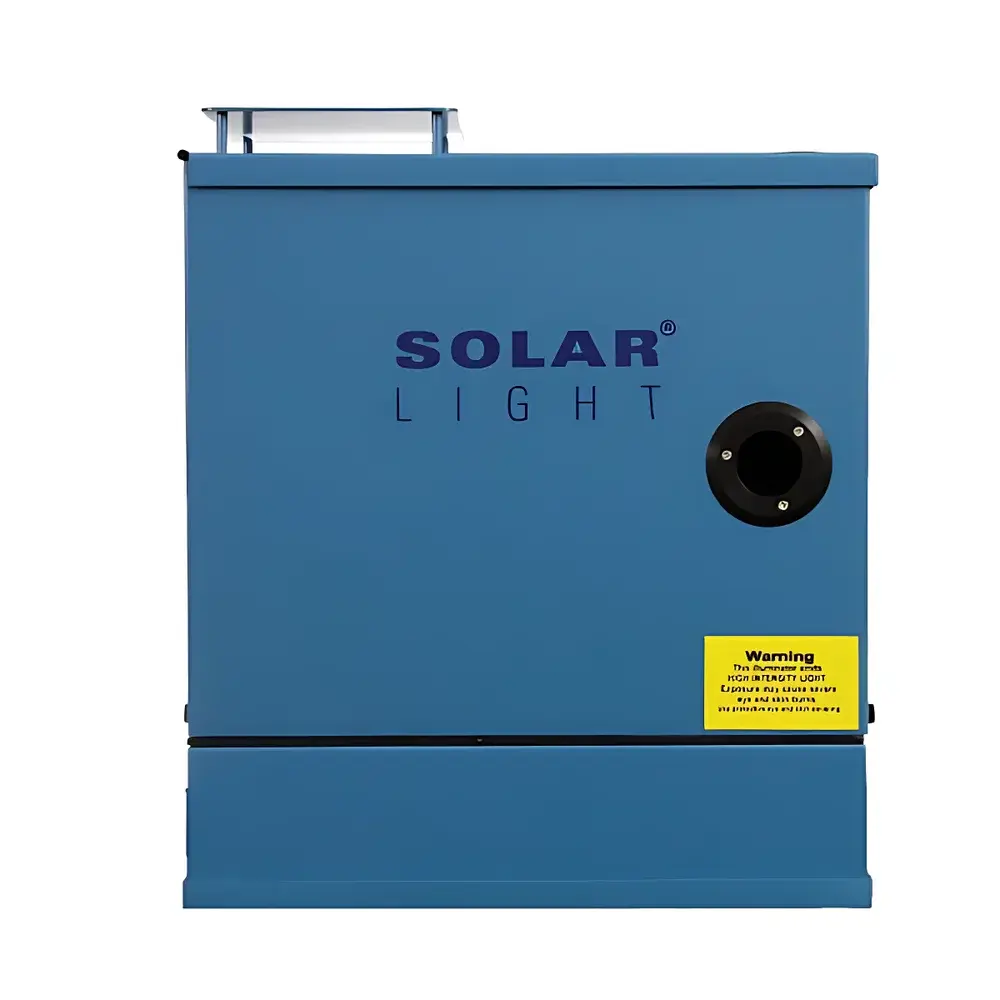
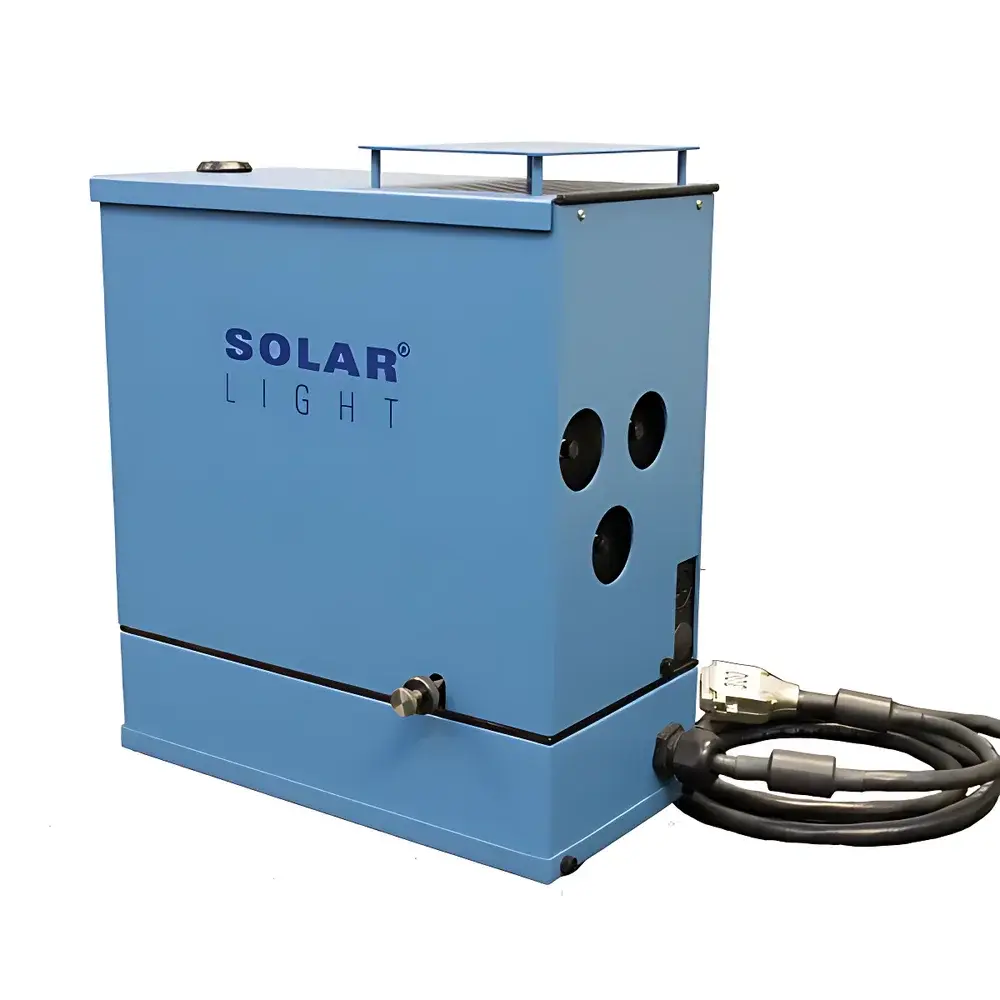
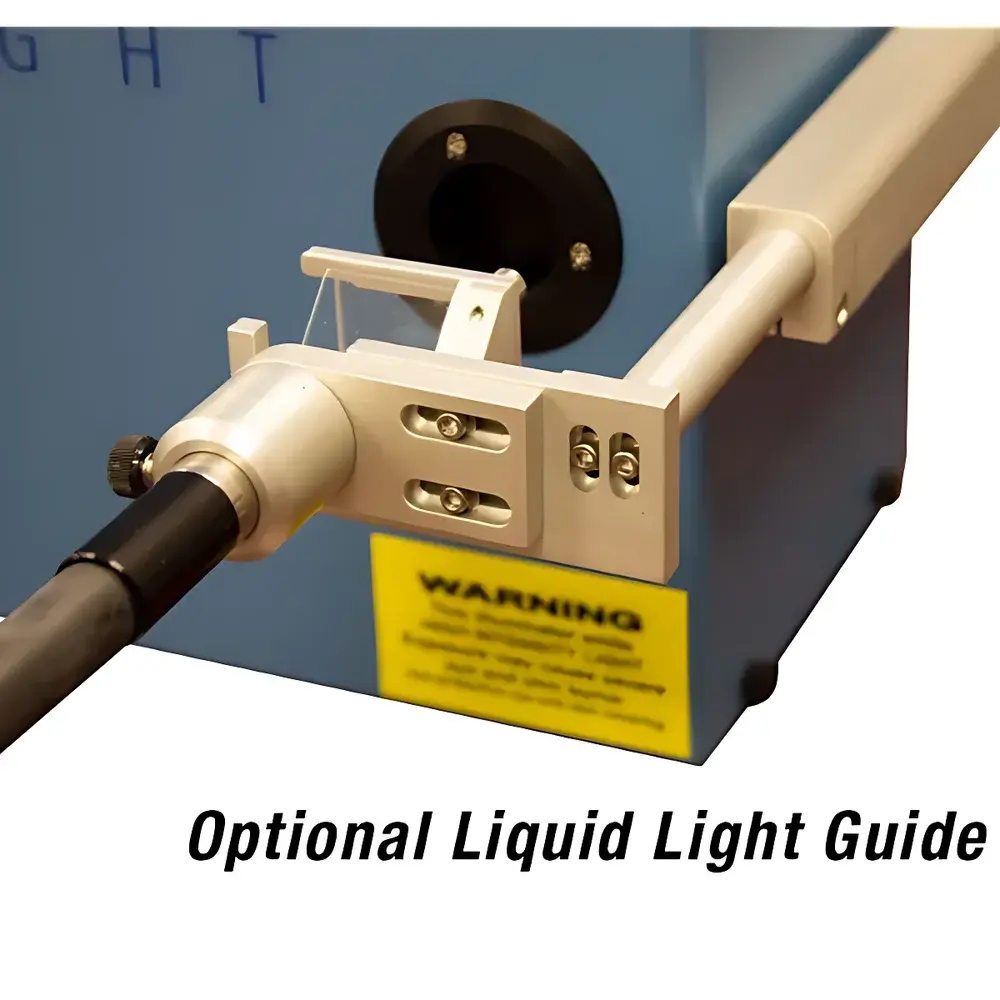
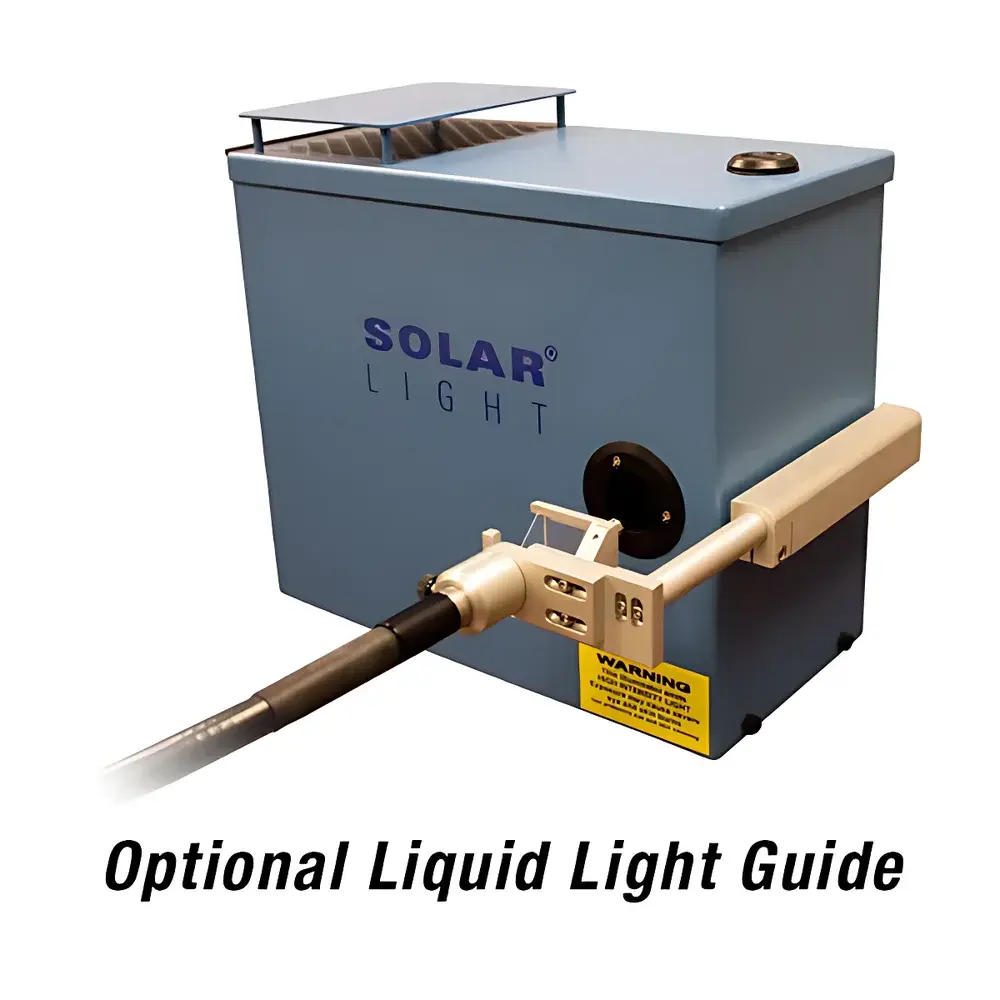
Solar Light 16S Series 150W–300W UV Solar Simulator
| Brand | Solar Light |
|---|---|
| Origin | USA |
| Model | 16S Series (150W–300W UV) |
| Spectral Range | 290–400 nm (UV-A/UV-B selectable) |
| Beam Uniformity (center) | >90% |
| Compliance | ASTM G154, ASTM G155, IEC 61215, ISO 4892-3 |
| Output Orientation | Vertical-down / Vertical-up / Horizontal |
| Optional Spectral Configurations | UVA-only, UVB-only, UVA+UVB, AM0 (250–2500 nm), AM1.5G (250–2500 nm), Visible-only |
| Optional Accessories | Motorized shutter with remote control, calibrated neutral density attenuation screens, spectral verification report, custom collimation optics |
Overview
The Solar Light 16S Series 150W–300W UV Solar Simulator is a research-grade, single-output solar simulation system engineered for precise, reproducible ultraviolet irradiance delivery in controlled laboratory environments. Unlike broadband arc lamps with unfiltered thermal emission, the 16S Series employs a high-stability, short-arc xenon lamp coupled with precision optical filtering and beam homogenization optics to generate spectrally defined UV radiation within the 290–400 nm range. Its design adheres to photobiological and materials testing requirements specified in ASTM G154 (fluorescent UV exposure), ASTM G155 (xenon-arc exposure), IEC 61215 (photovoltaic module qualification), and ISO 4892-3 (plastics—exposure to UV). The system delivers calibrated UV irradiance levels significantly exceeding peak tropical solar UV intensity—without concurrent infrared (IR) or convective thermal load—enabling accelerated photochemical degradation studies under thermally isolated conditions. This capability is critical for evaluating UV-induced polymer chain scission, pigment fading, sunscreen efficacy, epidermal DNA damage kinetics, and phototoxicity thresholds in dermatological and ophthalmic models.
Key Features
- High-spectral-fidelity UV output: Selectable configurations include UVA-only (315–400 nm), UVB-only (290–315 nm), UVA+UVB (290–400 nm), and extended-range options (AM0 or AM1.5G, 250–2500 nm) via interchangeable filter sets and optional monochromator integration.
- Beam uniformity >90% across central active area, verified per ASTM E927-19 methodology using NIST-traceable radiometric mapping.
- Stable irradiance output (<±1.5% drift over 8 h at constant power setting), achieved through feedback-regulated high-efficiency switching power supply and active lamp current stabilization.
- Modular mechanical architecture: Beam direction configurable as vertical-down, vertical-up, or horizontal; compatible with environmental chambers, gloveboxes, and custom sample stages.
- Integrated motorized shutter with TTL/RS-232 remote interface enables automated exposure timing and synchronization with external instrumentation (e.g., spectroradiometers, quantum sensors).
- Three standard beam diameters for 150W model (1 cm, 2 cm, 3 cm); four for 300W model (2 cm, 3 cm, 5.7 cm, 7.5 cm), all defined at ±5% intensity contour.
Sample Compatibility & Compliance
The 16S Series accommodates flat, rigid, or conformal samples up to 7.5 cm in diameter (300W configuration) without requiring vacuum coupling or active cooling interfaces. Its low-thermal-load UV delivery eliminates sample heating artifacts common in IR-rich sources—making it suitable for temperature-sensitive biological specimens (e.g., cultured keratinocytes, reconstructed epidermis models), organic photovoltaic layers, and UV-curable adhesives. All units are CE-marked and comply with EN 61000-6-3 (EMC) and EN 61000-6-4 (immunity). Optional factory-issued calibration certificates include spectral irradiance data referenced to NIST SRM 2253 (UV radiometer) and traceable uncertainty budgets per ISO/IEC 17025. Systems may be configured for GLP-compliant operation with audit-ready log files and user-accessible calibration history.
Software & Data Management
While the base 16S Series operates via front-panel controls and analog/digital I/O, optional Solar Light Control Suite (v4.2+) provides full remote orchestration via USB or Ethernet. The software supports programmable irradiance ramping, timed exposure sequences, real-time radiometric monitoring (when paired with optional ILT950 or SPM-100 sensors), and export of timestamped CSV datasets compliant with FDA 21 CFR Part 11 requirements—including electronic signatures, audit trails, and role-based access control. Calibration parameters are stored internally and auto-loaded on boot; firmware updates preserve user-defined spectral profiles and shutter timing presets.
Applications
- Accelerated weathering and photostability testing of polymers, coatings, and textiles per ISO 4892-3 and ASTM D4329.
- In vitro sunscreen SPF validation and UVA-PF assessment under standardized UV spectra (ISO 24443, COLIPA guidelines).
- Photobiological safety evaluation of LEDs and optical devices (IEC 62471).
- UV-induced DNA damage quantification (cyclobutane pyrimidine dimer formation) in cell culture models.
- Photocatalytic material screening (e.g., TiO₂ degradation kinetics) under controlled UV flux.
- Calibration and validation of UV radiometers, spectroradiometers, and dosimeters.
FAQ
What spectral standards does the 16S Series meet for UV exposure testing?
It is validated against ASTM G154 Class A (fluorescent UV), ASTM G155 Cycle 1 (xenon arc, UV-intensive), and ISO 4892-3 Method A (UV-only exposure), with optional spectral reports confirming compliance.
Can the system be integrated into an existing environmental test chamber?
Yes—horizontal and vertical-up beam orientations allow direct coupling to chamber viewports; optional water-cooled collimators mitigate thermal ingress at chamber interfaces.
Is spectral recalibration required after filter changes?
Each filter set is supplied with pre-characterized spectral irradiance curves; full recalibration is recommended annually or after 1,000 hours of lamp operation.
Does the 16S Series support automated dose control?
When paired with an ILT950 radiometer and Solar Light Control Suite, closed-loop irradiance regulation and cumulative fluence tracking are fully supported.
What lamp lifetime can be expected under typical usage?
Xenon lamps maintain ≥90% initial UV output for 1,000 hours at rated power; extended-life lamps (2,000 h) are available as an option.
Related Products






