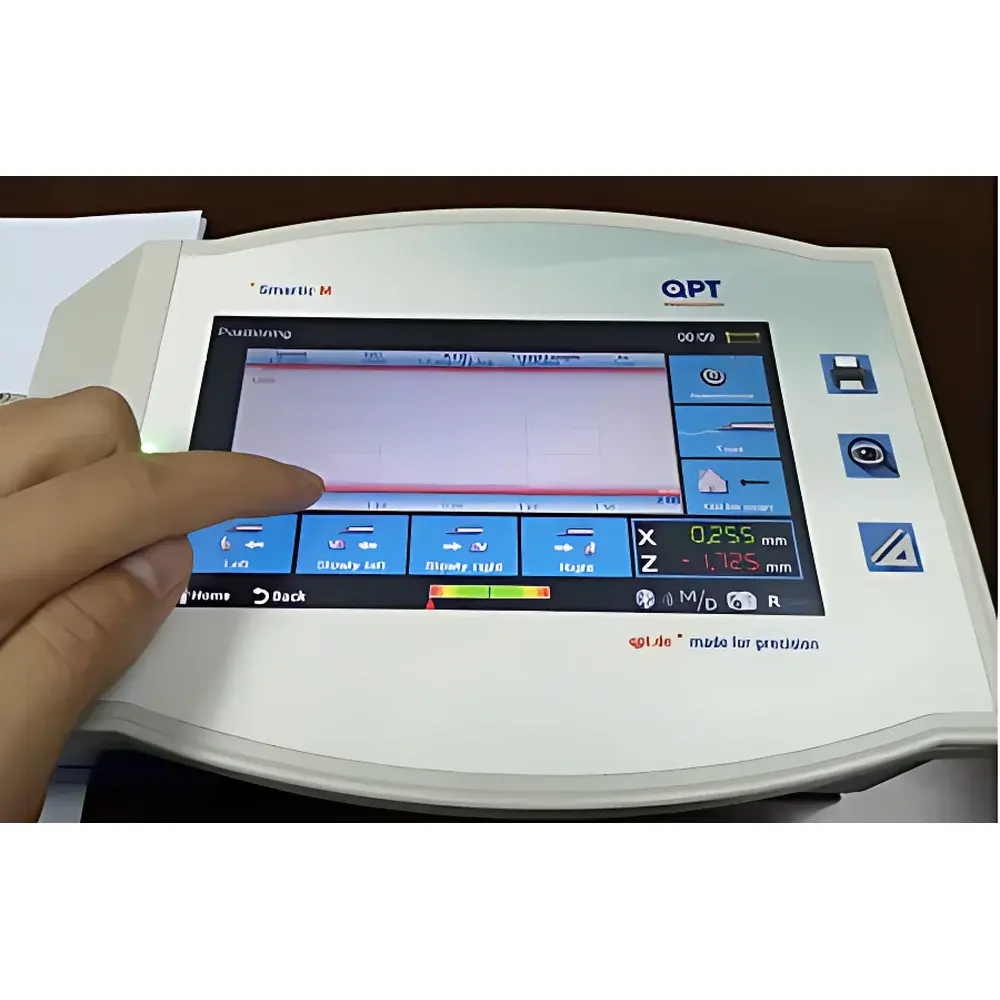
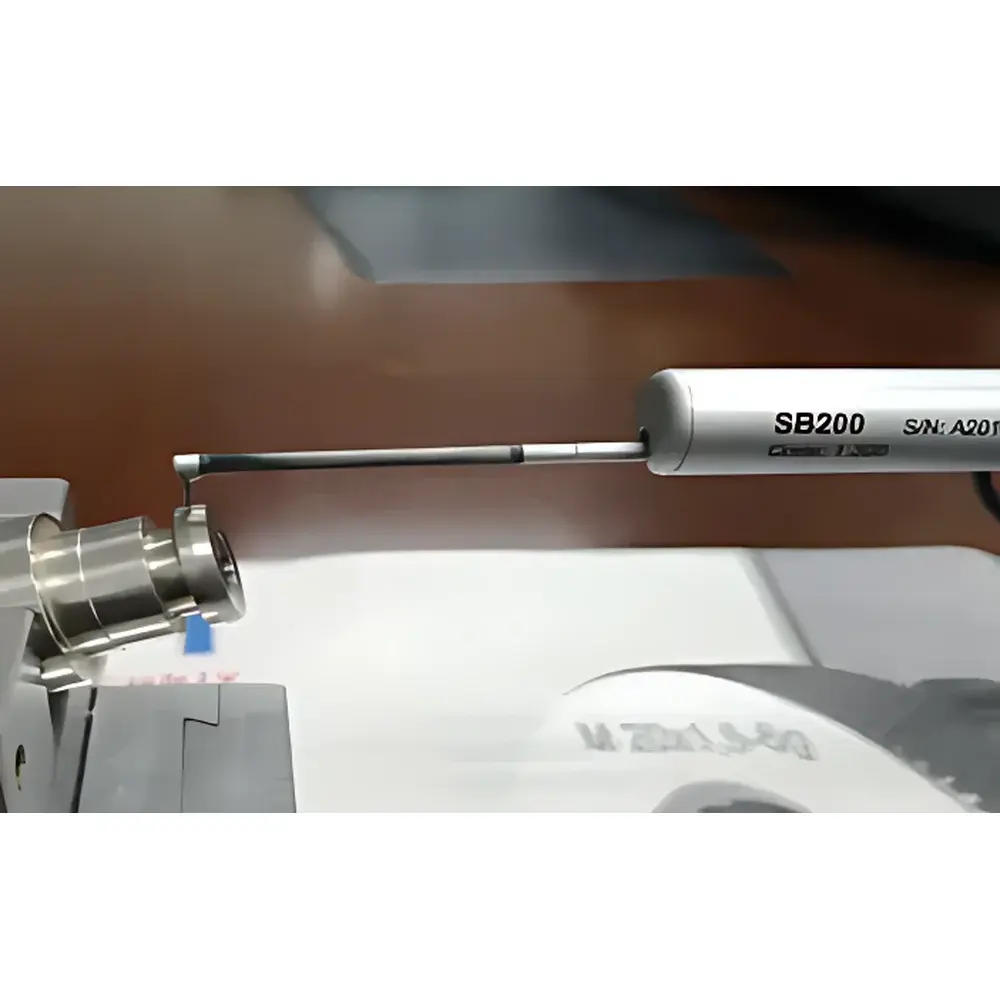
QPT Smartic M Portable Surface Roughness and Profile Tester
| Brand | QPT |
|---|---|
| Origin | Germany |
| Model | Smartic M |
| Measurement Principle | Contact Profilometry (Stylus-Based) |
| Measurement Method | Contact |
| Roughness Parameters | Ra, Rz (≡ Ry-JIS), Rq, Rt (≡ Rmax), Rp, Rv, R3z, R3y, Rz-JIS, Rs, Rsk, Rku, Rsm, Rmr, RPc, Rk, Rpk, Rvk, Mr1, Mr2 |
| Vertical Measurement Range | ±1500 µm |
| Vertical Resolution | 0.0001 µm |
| Filter | Gaussian (ISO 11562 compliant) |
| Sampling Lengths | 0.08 / 0.25 / 0.8 / 2.5 / 8 mm |
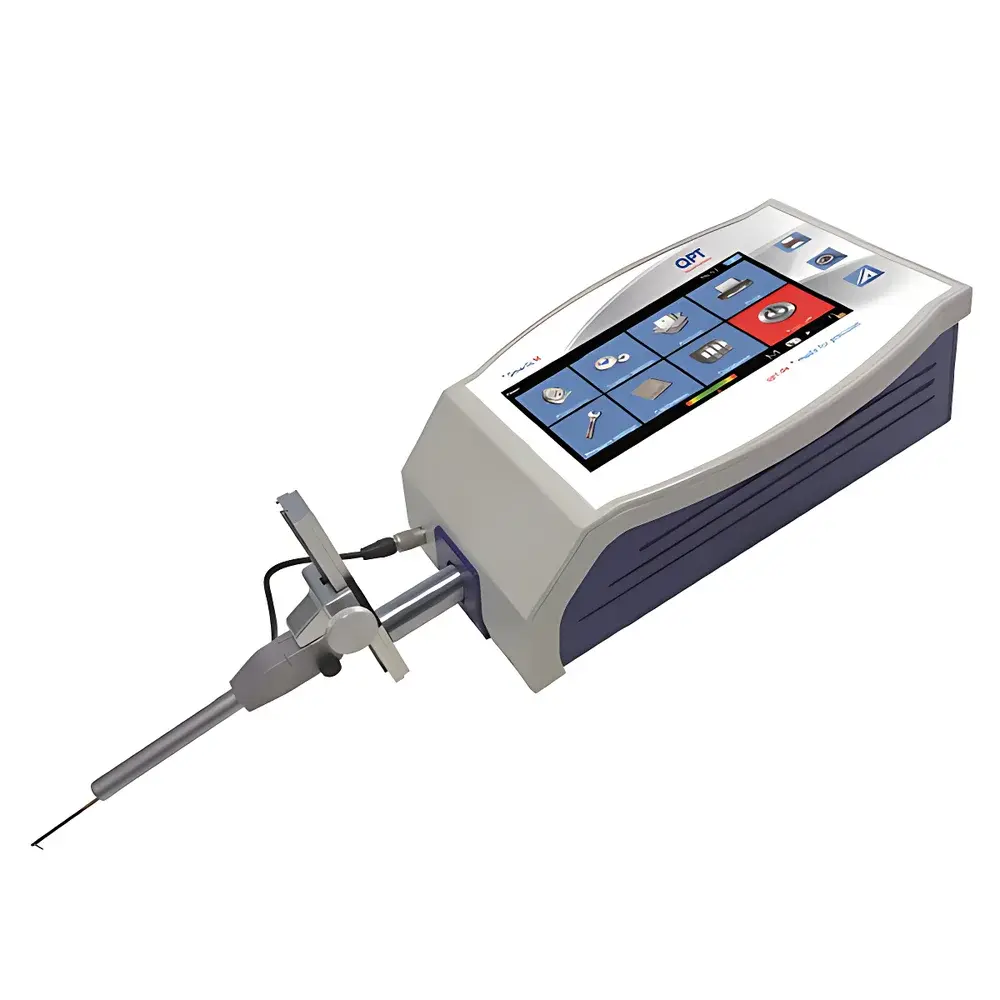
| Display | 7-inch color TFT touchscreen |
| Data Storage | 4,000 roughness records or 1,000 profile traces |
| Interface | USB 2.0 (data export to Excel, PDF, DXF, PNG/JPEG |
| Probe Mounting | Magnetic coupling |
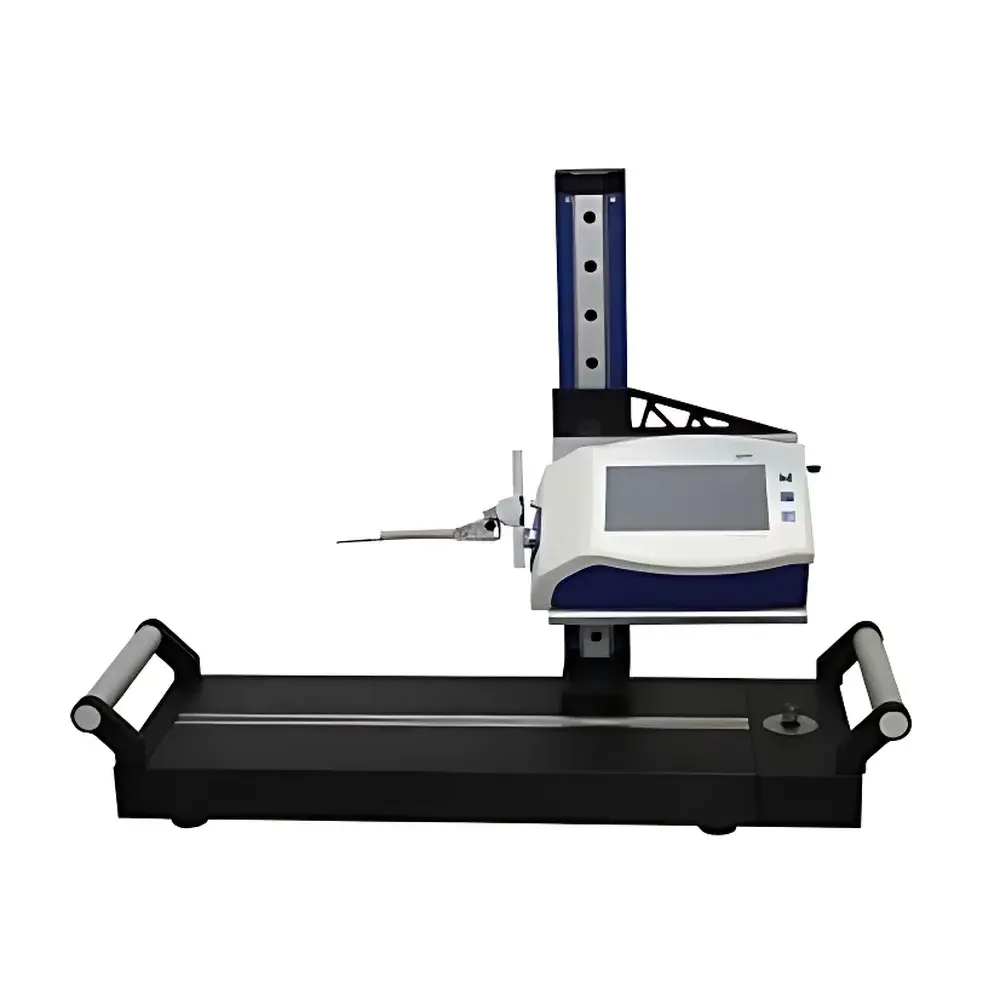
| Traverse Length | 60 mm |
| Standards Compliance | ISO 4287, ISO 13565-1/2/3, DIN 4768, VDA 2007, JIS B 0601 (2001/2013), JIS B 0611, JIS B 0612, ASME B46.1, ISO 12085, ISO 11562 |
Overview
The QPT Smartic M is a high-precision, handheld surface roughness and profile tester engineered for field-deployable metrology in quality control, manufacturing verification, and maintenance environments. It operates on the principle of contact profilometry—employing a diamond-tipped stylus (typically 2 µm radius, 90° included angle) traversing the surface at controlled speed and force (standard 0.75 mN, adjustable per ISO 3274). The vertical displacement of the stylus is converted into high-fidelity analog signals via a linear variable differential transformer (LVDT) sensor, digitized with 16-bit resolution, and processed using real-time Gaussian filtering per ISO 11562. Designed for traceable, repeatable assessment of machined, ground, honed, blasted (e.g., shot-peened, sandblasted), and coated surfaces, the Smartic M delivers metrological integrity without requiring laboratory-grade environmental stabilization.
Key Features
- Integrated 7-inch capacitive color touchscreen with intuitive icon-driven UI—enabling full operation without external PC or keyboard
- Magnetic probe coupling system ensures rapid, repeatable, and mechanically stable attachment to ferromagnetic workpieces; optional non-magnetic fixtures available for aluminum, stainless steel, or composite substrates
- 60 mm motorized traverse length supports comprehensive evaluation of large-area surface textures and step-height profiles
- Vertical resolution of 0.0001 µm (0.1 nm) and ±1500 µm measurement range accommodate both ultra-smooth optical finishes and highly textured industrial surfaces
- Gaussian filter implementation fully conforms to ISO 11562:1996 for spectral separation of roughness, waviness, and form components
- Five selectable sampling lengths (0.08–8 mm) enable compliance with application-specific standards—including automotive VDA 2007 (0.8 mm), aerospace ASME B46.1 (0.03–25 mm), and JIS B 0601 (2013) (0.25/0.8/2.5 mm)
Sample Compatibility & Compliance
The Smartic M is validated for use on flat, curved (minimum radius ≥ 10 mm), and inclined surfaces across metallic, ceramic, and polymer substrates. Its low-force probing strategy minimizes plastic deformation on soft materials (e.g., anodized aluminum, PTFE coatings), while its robust mechanical damping suppresses vibration artifacts during on-machine or in-situ measurements. The instrument meets essential requirements of ISO/IEC 17025:2017 for calibration traceability when used with certified reference specimens (e.g., NIST SRM 2101, PTB 101 series). All reported parameters—including 22 primary roughness metrics and derived functional parameters (Rk family, Rmr, RPc)—are computed in strict accordance with ISO 4287:1997, ISO 13565-2:2012 (for core roughness characterization), and JIS B 0601:2013. Calibration certificates include uncertainty budgets aligned with GUM (JCGM 100:2008).
Software & Data Management
On-device firmware supports dual-mode data handling: standalone acquisition and PC-linked analysis. Measurement results—including numerical parameter tables, 2D profile plots, amplitude distribution histograms, and material ratio curves—are stored internally (4,000 roughness sets or 1,000 full-profile traces). USB 2.0 interface enables direct export to industry-standard formats: CSV/Excel for statistical process control (SPC) integration, PDF for audit-ready reports, DXF for CAD-based tolerance overlay, and PNG/JPEG for documentation archives. Optional QPT Analyze Pro software (Windows-based) provides advanced post-processing: multi-trace comparison, filtering parameter optimization, custom parameter scripting (via Lua API), and GLP/GMP-compliant audit trails—including user login, timestamped edits, and electronic signature support per FDA 21 CFR Part 11.
Applications
- Automotive: Verification of cylinder bore honing patterns, crankshaft journal roughness, and brake disc surface texture per VDA 2007 and ISO 13565-3
- Aerospace: In-process inspection of turbine blade leading-edge finishes, additive-manufactured part as-built topography, and thermal barrier coating roughness per ASME B46.1
- Medical Devices: Quantification of implant surface microstructure (e.g., Ti-6Al-4V dental screws) against ISO 12085 and ASTM F2792 for osseointegration prediction
- Tooling & Dies: Monitoring EDM surface integrity, wire-cut finish uniformity, and mold cavity replication fidelity
- Energy Sector: Assessment of wind turbine gear tooth flank roughness, pipeline internal coating consistency, and nuclear fuel cladding surface quality
FAQ
Does the Smartic M support automatic probe leveling?
Yes—the integrated tilt-compensation algorithm dynamically adjusts the stylus lift-off and scanning plane orientation in real time, ensuring consistent contact geometry even on slightly inclined or warped surfaces.
Can it measure surfaces with high aspect-ratio features, such as deep grooves or narrow channels?
The standard 2 µm-radius stylus limits lateral resolution to ~5 µm; for features narrower than 20 µm or deeper than 100 µm, a specialized narrow-profile probe (e.g., 120° conical tip) is recommended and available as an accessory.
Is calibration traceable to national metrology institutes?
Yes—QPT provides optional factory calibration with NIST-traceable step-height and roughness reference standards, documented per ISO/IEC 17025 requirements.
What is the typical measurement repeatability under controlled conditions?
For Ra measurements on Grade A reference specimens (Ra = 0.8 µm), the 3σ repeatability is ≤ ±0.02 µm (CV < 2.5%) across 10 repeated scans under ISO 4288:1996 test conditions.
Does the device support multi-language UI and report generation?
The firmware includes embedded English, German, French, Spanish, and Japanese language packs; report templates are customizable and support localized units, terminology, and regulatory footers.