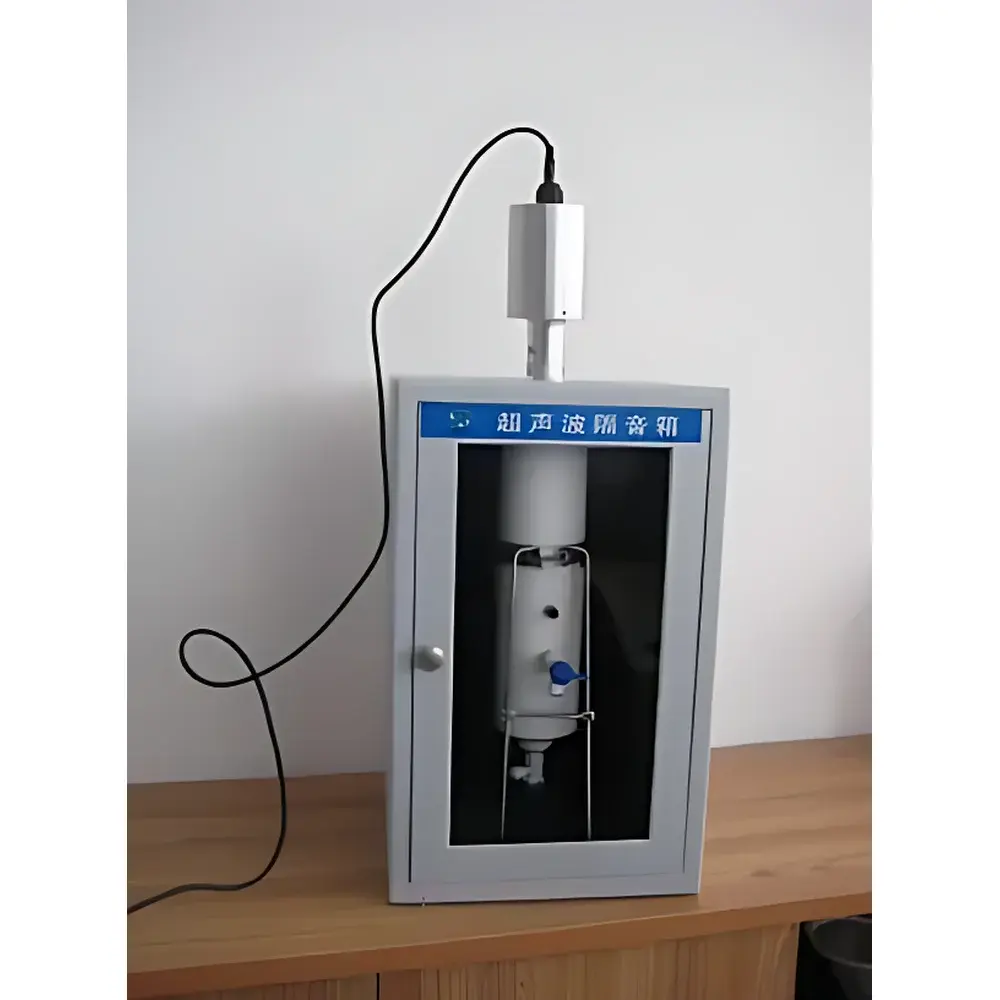
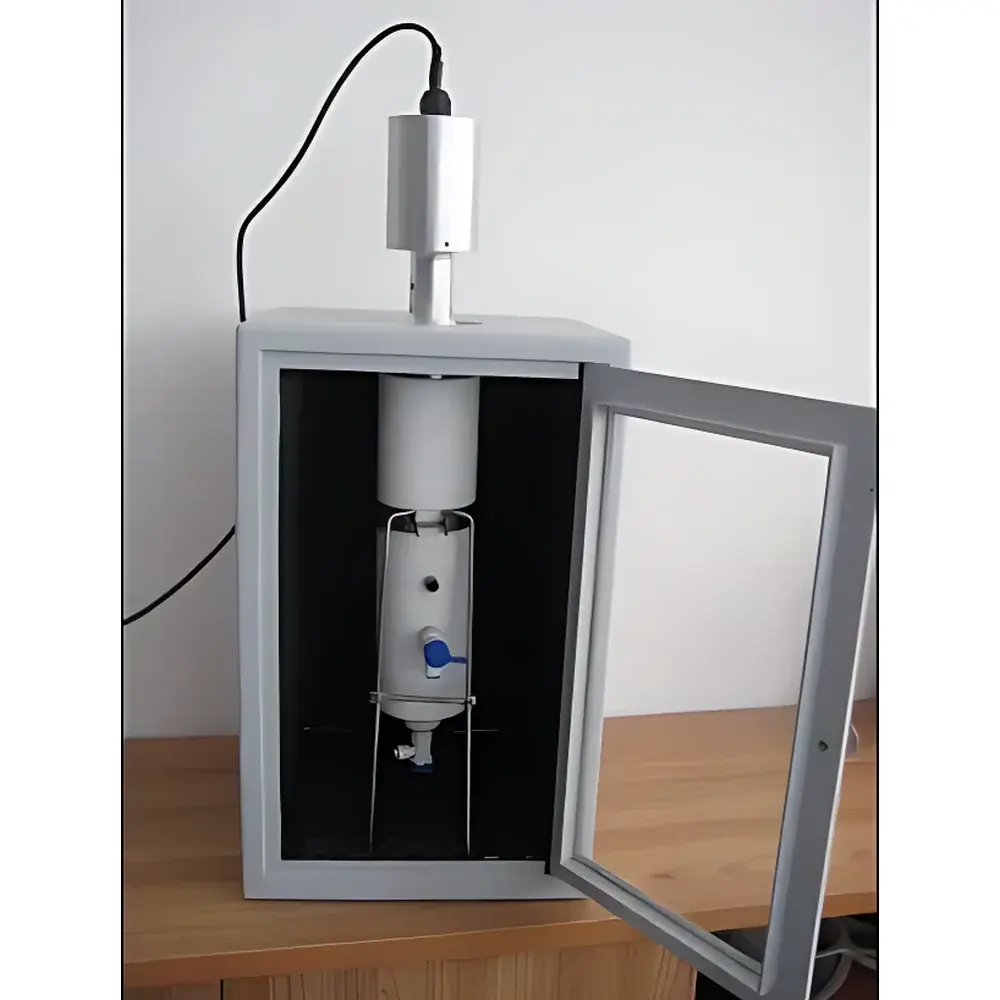
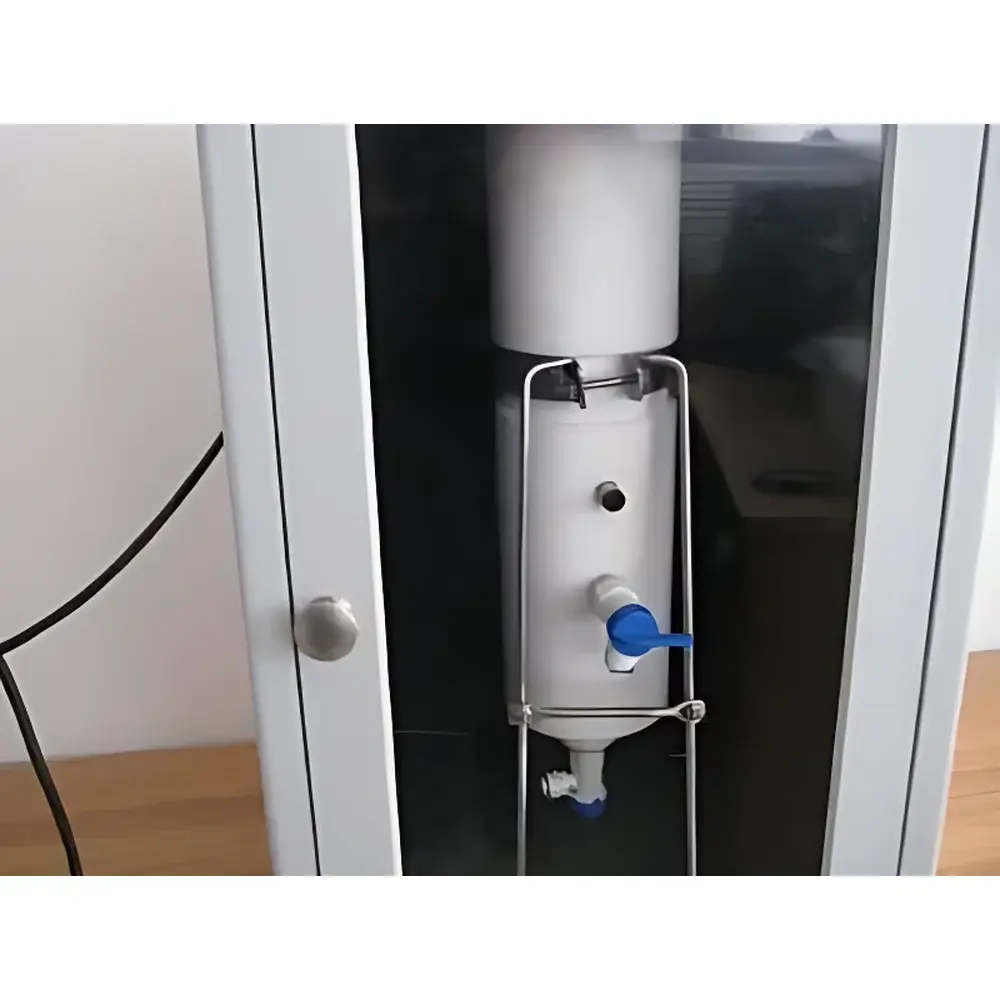
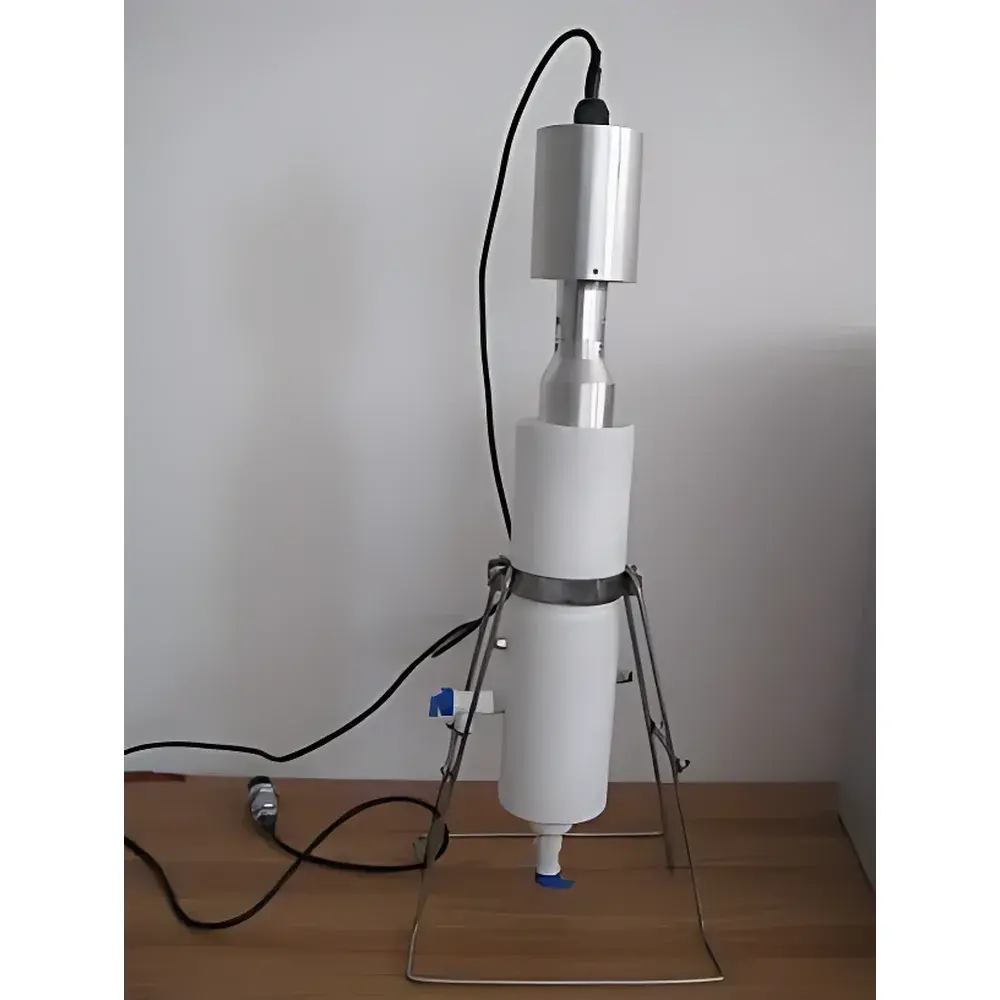
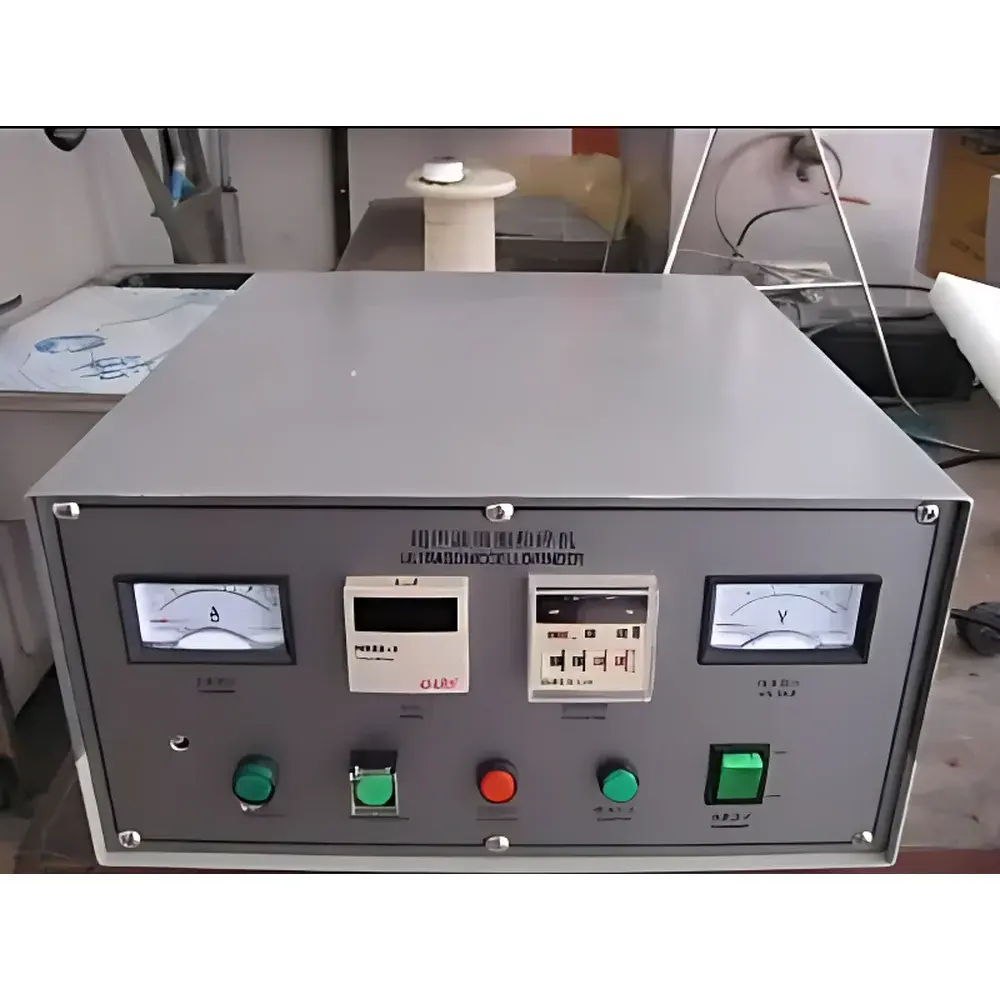
SYCS SCQ-2500F High-Power Ultrasonic Cell Disruptor
| Brand | SYCS |
|---|---|
| Origin | Shanghai, China |
| Model | SCQ-2500F |
| Output Power | 2500 W |
| Frequency | 20 kHz or 25 kHz (selectable) |
| Probe Tip Diameters Available | 5–30 mm (7 options) |
| Sample Volume Range | 0.5–2500 mL |
| Timer Range | 1 s to 9 h 59 min 59 s |
| Warranty | 1 year (main unit), 6 months (sonotrode) |
Overview
The SYCS SCQ-2500F is a high-power ultrasonic cell disruptor engineered for robust, reproducible lysis of biological materials in research and industrial laboratories. It operates on the principle of acoustic cavitation—where high-intensity ultrasonic waves generate transient microbubbles in liquid media that collapse violently, producing localized shear forces, shockwaves, and extreme temperature/pressure gradients. This physical mechanism enables efficient disruption of cell membranes, organelles, and microbial structures without chemical additives or thermal degradation—critical for preserving labile biomolecules such as proteins, nucleic acids, and enzymes. Designed for demanding applications in molecular biology, biopharmaceutical development, and nanomaterial synthesis, the SCQ-2500F delivers scalable energy input across a wide dynamic range, supporting both small-volume precision lysis and high-throughput processing of viscous or particulate suspensions.
Key Features
- 2500 W nominal output power with continuous, linear amplitude control (0–100%) for precise energy delivery and process repeatability
- Dual-frequency operation at 20 kHz or 25 kHz—optimized for different sample viscosities and particle sizes; 20 kHz preferred for high-energy cavitation in aqueous buffers, 25 kHz for finer control in sensitive or low-volume applications
- Interchangeable titanium alloy sonotrodes (probe tips) with standardized diameters: 5, 8, 10, 15, 20, 25, and 30 mm—each calibrated for optimal acoustic coupling and tip velocity distribution
- Programmable digital timer with resolution down to 1 second and maximum duration of 9 hours, 59 minutes, 59 seconds—enabling unattended batch processing and protocol standardization
- Integrated pulse mode (on/off duty cycle) to minimize sample heating and prevent thermal denaturation during extended sonication
- Front-panel LCD interface with real-time display of amplitude, elapsed time, and operating frequency—no external software required for basic operation
- Robust chassis with integrated cooling fan and overtemperature/overload protection circuits compliant with IEC 61000-6-2 (EMC immunity) and IEC 61000-6-4 (EMC emissions)
Sample Compatibility & Compliance
The SCQ-2500F accommodates heterogeneous sample types including mammalian and plant tissue homogenates, bacterial cultures (Gram-positive and Gram-negative), yeast, spores, viral particles, and nanoparticle dispersions. Its broad volume range (0.5–2500 mL) supports both microcentrifuge tube-scale lysates and jacketed reactor configurations. All sonotrodes are manufactured from ASTM B348 Grade 5 titanium alloy (Ti-6Al-4V), ensuring corrosion resistance and mechanical stability under prolonged ultrasonic stress. The instrument meets CE marking requirements for laboratory equipment (2014/30/EU EMC Directive and 2014/35/EU LVD Directive). While not certified to ISO 13485 or FDA 21 CFR Part 11 out-of-the-box, its programmable parameters and audit-ready timer logs support GLP/GMP-aligned documentation when integrated into validated SOPs.
Software & Data Management
The SCQ-2500F operates autonomously via its embedded controller but supports optional RS-232 or USB-to-serial connectivity for remote parameter setting and event logging. When paired with SYCS’ optional LabLink™ PC software (v3.2+), users can define multi-step protocols—including amplitude ramps, frequency switching, and inter-pulse cooling intervals—and export timestamped CSV files containing amplitude history, cumulative energy (J), and runtime metadata. All data logs include operator ID fields and optional password-protected user accounts, facilitating traceability in regulated environments. Software-generated reports comply with ALCOA+ principles (Attributable, Legible, Contemporaneous, Original, Accurate, Complete, Consistent, Enduring, Available) for quality assurance review.
Applications
- Cell lysis for protein extraction and subcellular fractionation in proteomics workflows
- Chromatin shearing for ChIP-seq and ATAC-seq library preparation
- Nanoparticle dispersion and deagglomeration in colloidal chemistry and drug delivery formulation
- Emulsification of lipid-based nanocarriers and Pickering emulsions
- Accelerated solvent extraction of phytochemicals, alkaloids, and polyphenols from botanical matrices
- Disruption of biofilms and extracellular polymeric substances (EPS) for microbiome analysis
- Preparation of transmission electron microscopy (TEM) samples requiring uniform macromolecular dispersion
FAQ
What safety certifications does the SCQ-2500F hold?
It carries CE marking per EU directives 2014/30/EU (EMC) and 2014/35/EU (LVD), and conforms to IEC 61010-1:2010 for laboratory electrical safety.
Is the sonotrode calibration traceable to NIST or equivalent standards?
Sonotrode tip displacement amplitude is factory-calibrated using laser vibrometry against ISO 18437-1 reference methods; full calibration certificates are available upon request.
Can the SCQ-2500F be integrated into automated liquid handling platforms?
Yes—via TTL-triggered start/stop signals and analog voltage input for amplitude modulation (0–10 V), enabling synchronization with robotic arms or process controllers.
Does the device support temperature monitoring during sonication?
No built-in probe, but the optional PT100-compatible external temperature sensor port allows integration with third-party chillers or feedback loops.
How often should the sonotrode be replaced under routine use?
Titanium sonotrodes typically last 500–1000 hours of cumulative operation; replacement is recommended when tip erosion exceeds 0.2 mm or amplitude consistency falls below ±3% across setpoints.