
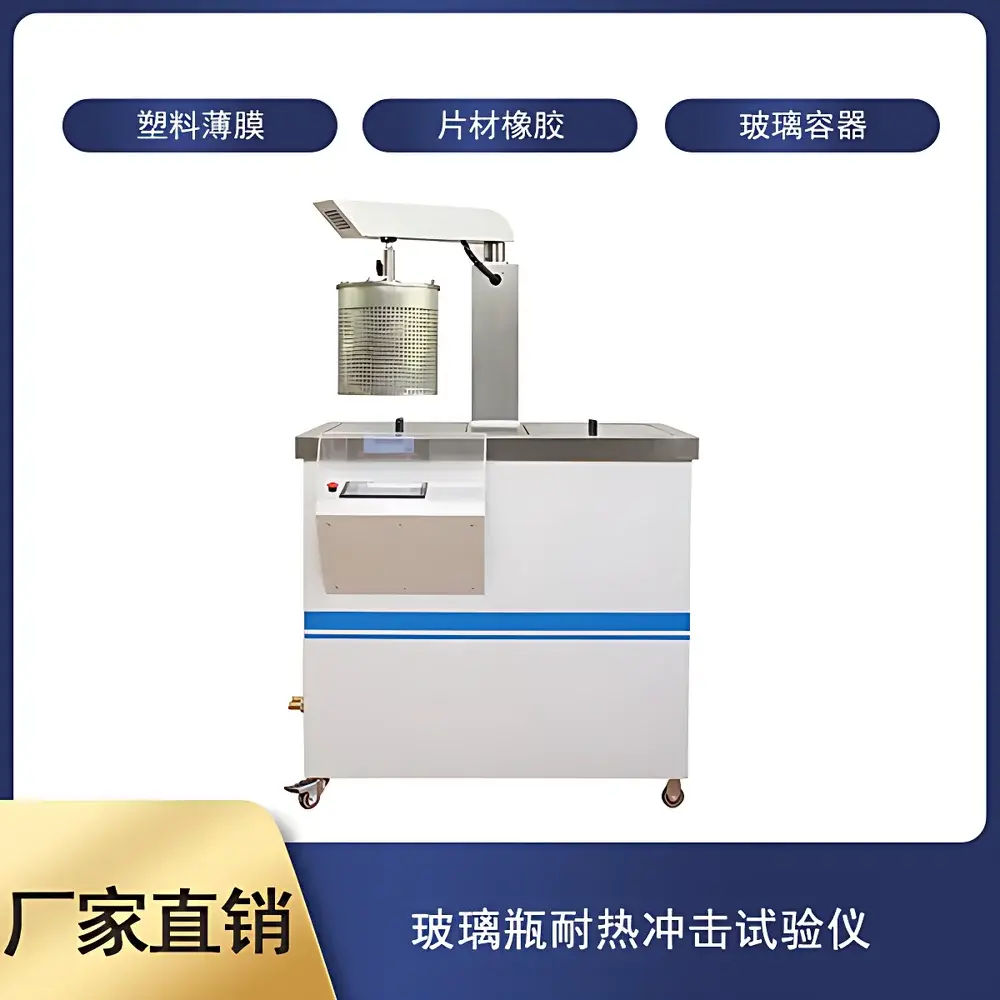
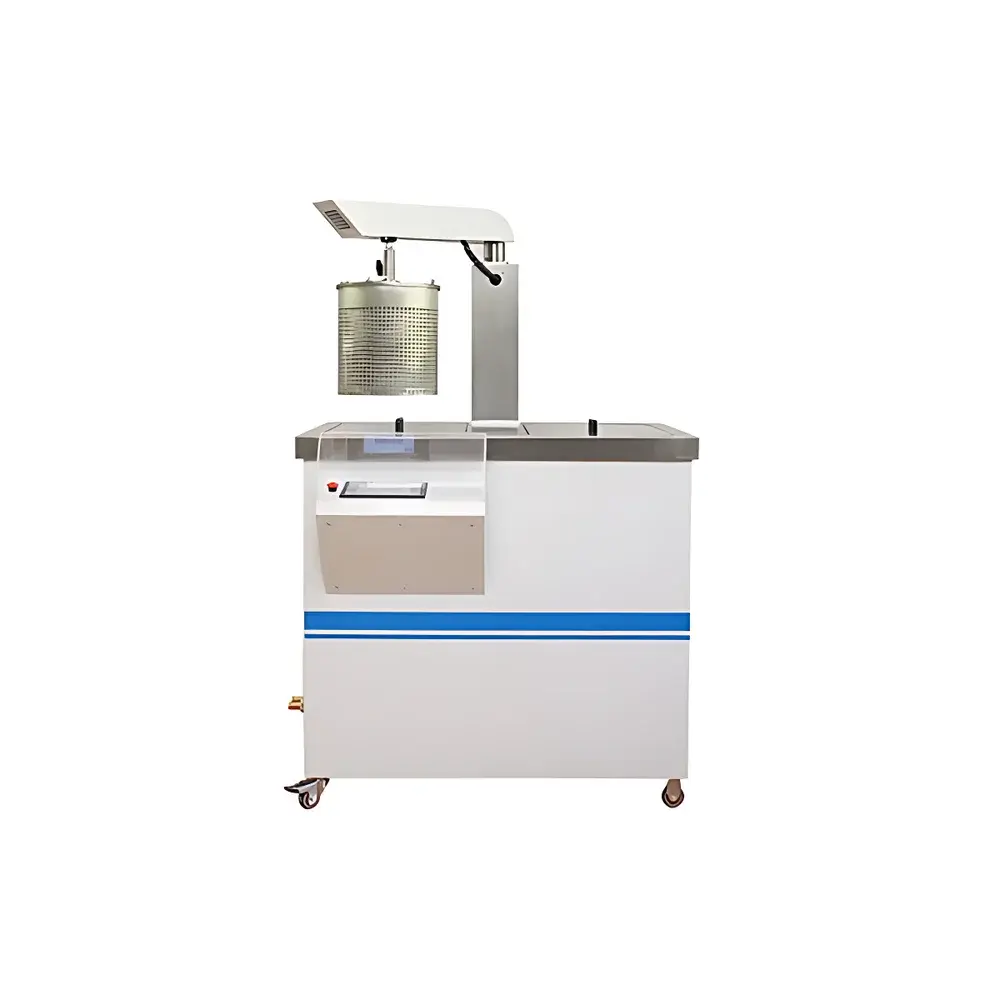
GBPI SCK-H Thermal Shock Tester for Glass Containers
| Brand | GBPI |
|---|---|
| Origin | Guangdong, China |
| Manufacturer Type | Direct Manufacturer |
| Country of Origin | China |
| Model | SCK-H |
| Pricing | Upon Request |
| Temperature Control Range | 5–99 °C (adjustable) |
| Temperature Accuracy | ≤ ±0.5 °C |
| Temperature Resolution | 0.1 °C |
| Water Uniformity | ≤ ±1 °C |
| Circulation Pump Flow Rate | 86 L/min |
| Hot/Cold Bath Volume | 50 L (optional 80 L) |
| Lifting Load Capacity | 30 kg |
| Dimensions (L×W×H) | 880 × 530 × 1300 mm |
| Power Supply | 220 V, 50 Hz |
| Heating Power | 2 × 3000 W |
| Net Weight | 50 kg |
| Compliance Standards | GB/T 4547–2007, YBB00182003–2015 |
Overview
The GBPI SCK-H Thermal Shock Tester for Glass Containers is an engineered solution for evaluating the thermal shock resistance—also known as thermal shock stability or thermal shock resistance—of pharmaceutical and beverage glass packaging. It operates on the principle of controlled, rapid temperature transition between two independently regulated water baths: one maintained at a low reference temperature (typically 5–25 °C), and the other at a high temperature (up to 99 °C). A sample container is immersed in the hot bath for a defined dwell time, then rapidly transferred—via motorized basket lift—to the cold bath. The number of cycles endured before crack formation or fracture is recorded as a quantitative measure of thermal shock performance. This method directly implements the standardized cold-hot immersion protocol specified in GB/T 4547–2007 (Glass containers — Thermal shock resistance test method) and YBB00182003–2015 (National Pharmaceutical Packaging Material Standard for Sodium Calcium Glass Vials), ensuring metrological traceability and regulatory alignment for QC laboratories in pharmaceutical manufacturing, glass container production, and third-party testing facilities.
Key Features
- Double-bath architecture with independent PID-controlled heating systems (2 × 3000 W) and precision temperature regulation (≤ ±0.5 °C accuracy, 0.1 °C resolution)
- High-efficiency water circulation system delivering 86 L/min flow rate, ensuring uniform thermal distribution (≤ ±1 °C bath uniformity) and minimized thermal lag during cycling
- Motor-driven stainless-steel sample basket with 30 kg lifting capacity, reducing operator fatigue and improving repeatability in manual transfer protocols
- Robust construction using imported corrosion-resistant stainless steel and CNC-machined structural components, rated for continuous operation under humid, high-temperature ambient conditions (0–40 °C, 5–95% RH)
- Intuitive 7-inch capacitive touchscreen HMI with embedded microcontroller-based logic, supporting programmable dwell times, cycle counts, and temperature setpoints per bath
- Aluminum-encapsulated heating elements and optimized thermal insulation minimize energy consumption while maintaining stable thermal equilibrium across extended test durations
Sample Compatibility & Compliance
The SCK-H accommodates a broad range of glass container formats, including but not limited to: infusion bottles (50–1000 mL), antibiotic vials (2–20 mL), molded and tubular serum vials, beer and wine bottles (250–750 mL), and carbonated beverage containers. Its 50 L standard bath volume (expandable to 80 L) allows simultaneous testing of multiple samples or large-diameter containers without compromising thermal homogeneity. The instrument fully complies with GB/T 4547–2007 and YBB00182003–2015, both of which define mandatory parameters for thermal shock evaluation—including minimum temperature differential (≥ 60 K), maximum allowable temperature fluctuation (±1 °C), and prescribed immersion durations. While not certified to ISO 7888 or ASTM C149, its operational methodology aligns with internationally recognized thermal stress assessment principles used in GLP-compliant quality control environments.
Software & Data Management
The base configuration includes embedded firmware with real-time temperature logging, cycle counter tracking, and pass/fail status flagging per test sequence. Optional PC-based software (sold separately) provides expanded functionality: automated report generation in PDF/CSV format, audit-trail-enabled user access logs, timestamped parameter history, and export compatibility with LIMS platforms. When configured with optional refrigeration modules, the system supports full-range sub-ambient cold bath operation (down to 2 °C), extending applicability to stringent USP and Ph. Eur. 3.2.1 thermal stability assessments. All digital records comply with ALCOA+ data integrity principles and may be validated for use in FDA 21 CFR Part 11-regulated environments upon implementation of appropriate electronic signature and access control policies.
Applications
- Quality assurance of molded and tubular glass vials in pharmaceutical primary packaging lines
- Validation of annealing process efficacy during glass container manufacturing
- Comparative thermal shock screening of alternative glass compositions (e.g., Type I borosilicate vs. Type III soda-lime)
- Stability qualification of new container-closure systems prior to regulatory submission
- Routine incoming inspection of glass packaging supplied to biologics and sterile drug manufacturers
- Root cause analysis of field failures linked to thermal processing or sterilization steps
FAQ
What standards does the SCK-H explicitly support?
The instrument is designed and verified for compliance with GB/T 4547–2007 and YBB00182003–2015. These are mandatory Chinese national and pharmaceutical packaging standards governing thermal shock testing of glass containers.
Can the cold bath be cooled below ambient temperature?
Yes—when equipped with the optional external refrigeration pump module, the cold bath can be stabilized between 2 °C and 25 °C, enabling testing under more severe thermal gradients.
Is the temperature calibration traceable to national standards?
Each unit ships with a factory calibration certificate referencing NIST-traceable RTD probes. Users may perform in-house verification using Class A platinum resistance thermometers per ISO/IEC 17025 guidelines.
How is data integrity ensured during long-duration testing?
Embedded non-volatile memory retains all test parameters and results even during power interruption. Optional software adds role-based user authentication, electronic signatures, and immutable audit trails.
What maintenance is required for sustained accuracy?
Routine tasks include quarterly verification of temperature uniformity, annual recalibration of control sensors, and periodic cleaning of circulation filters and bath interiors using deionized water and mild alkaline detergent.
Related Products





