
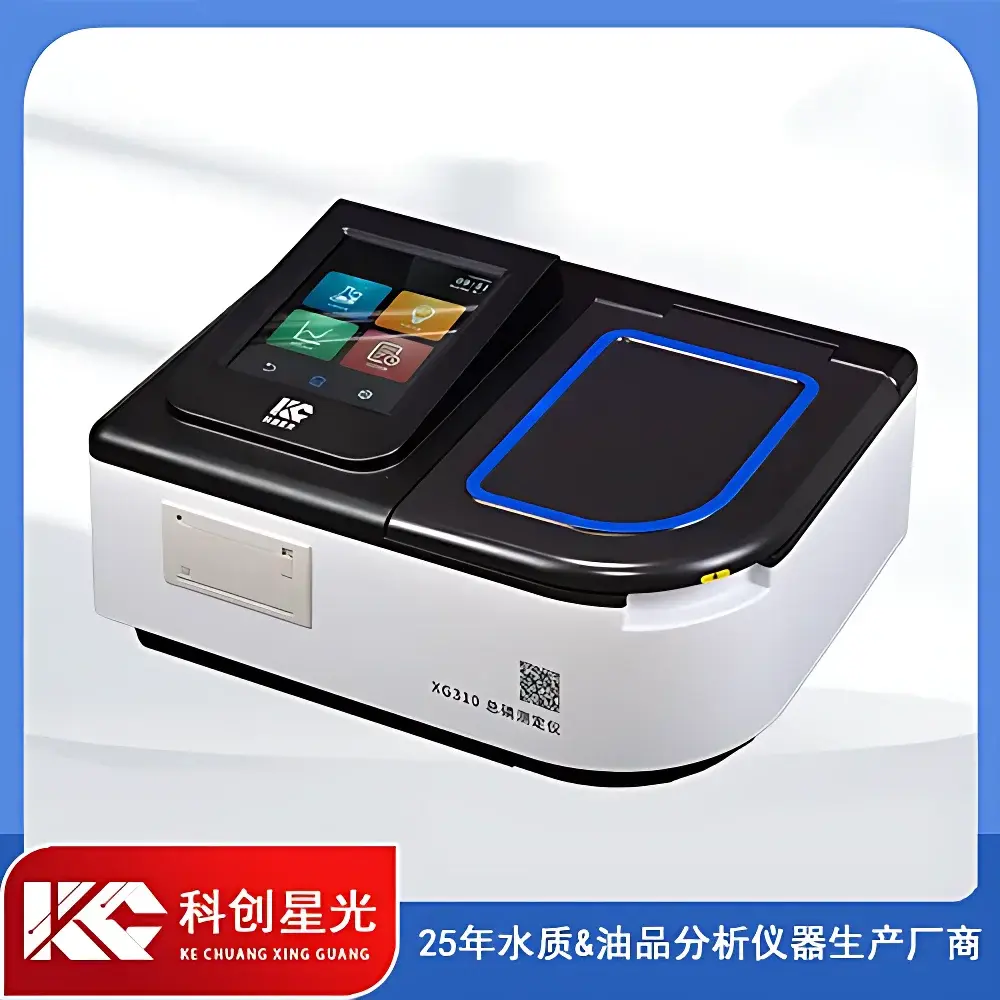
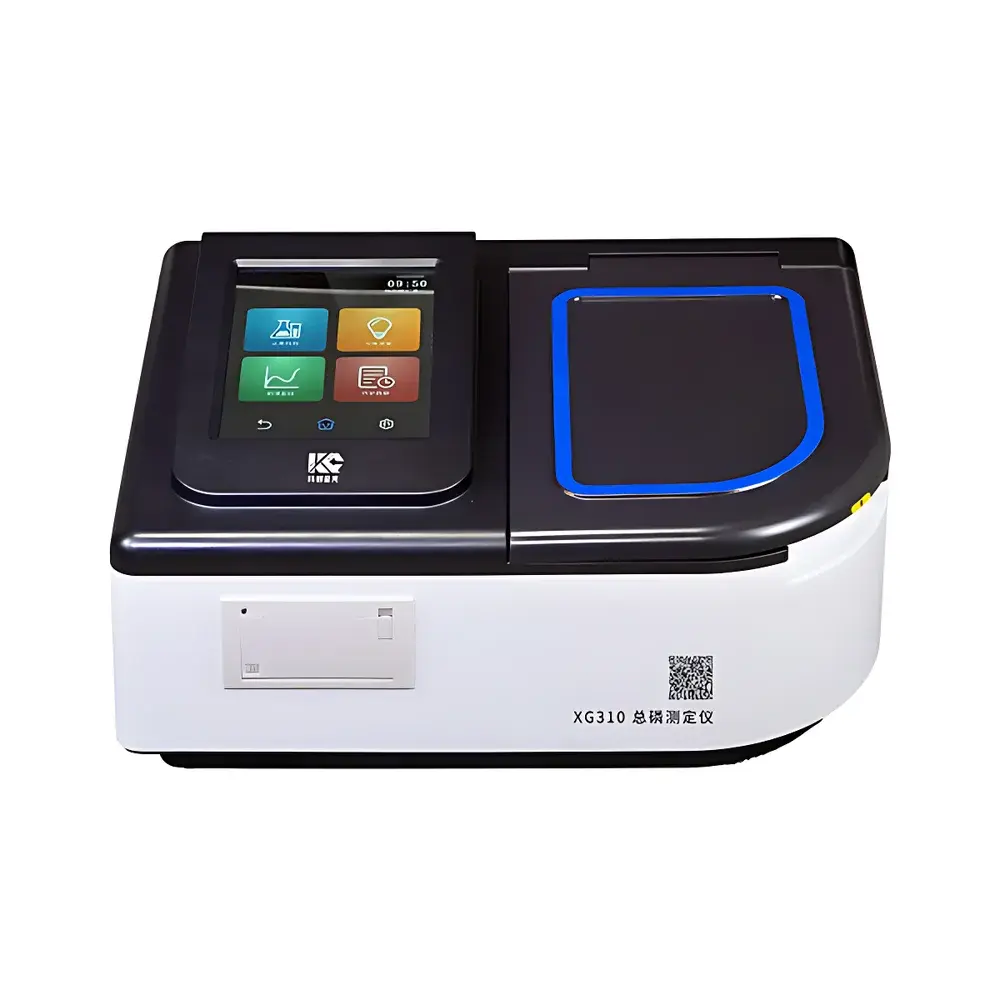
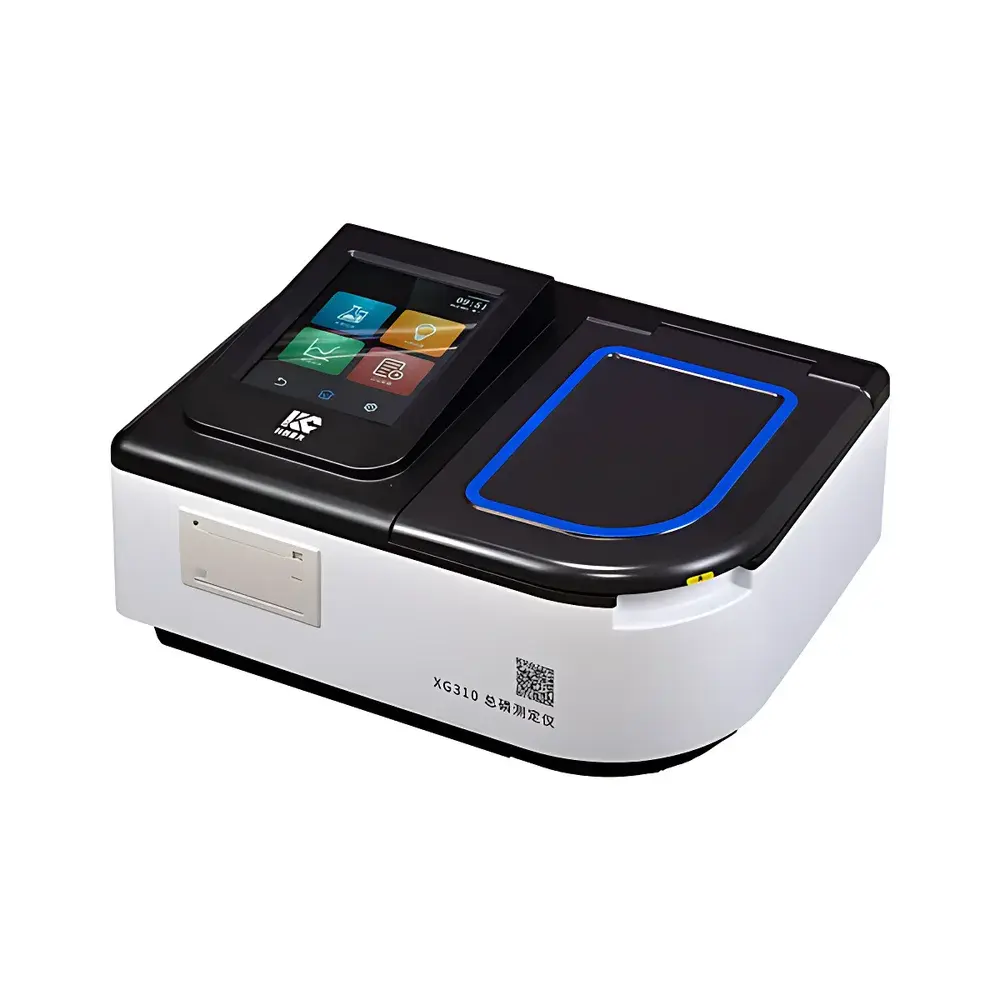
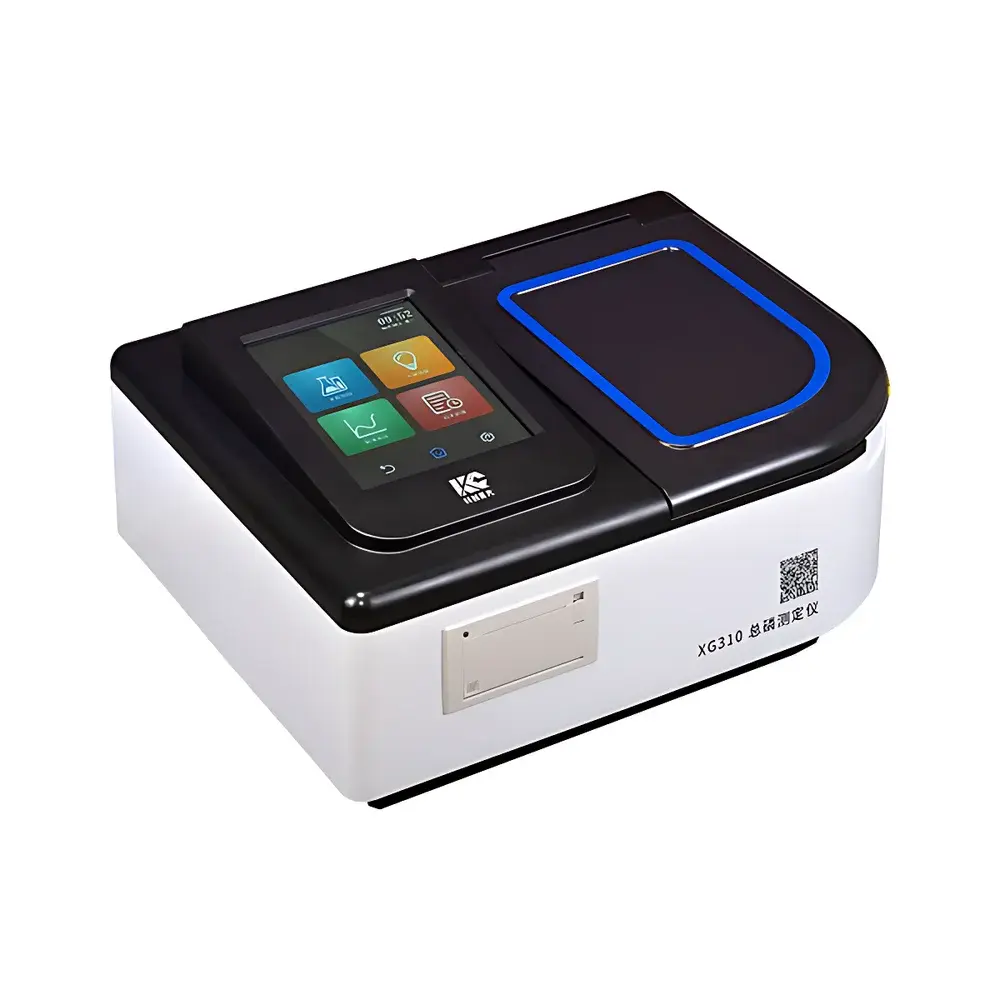
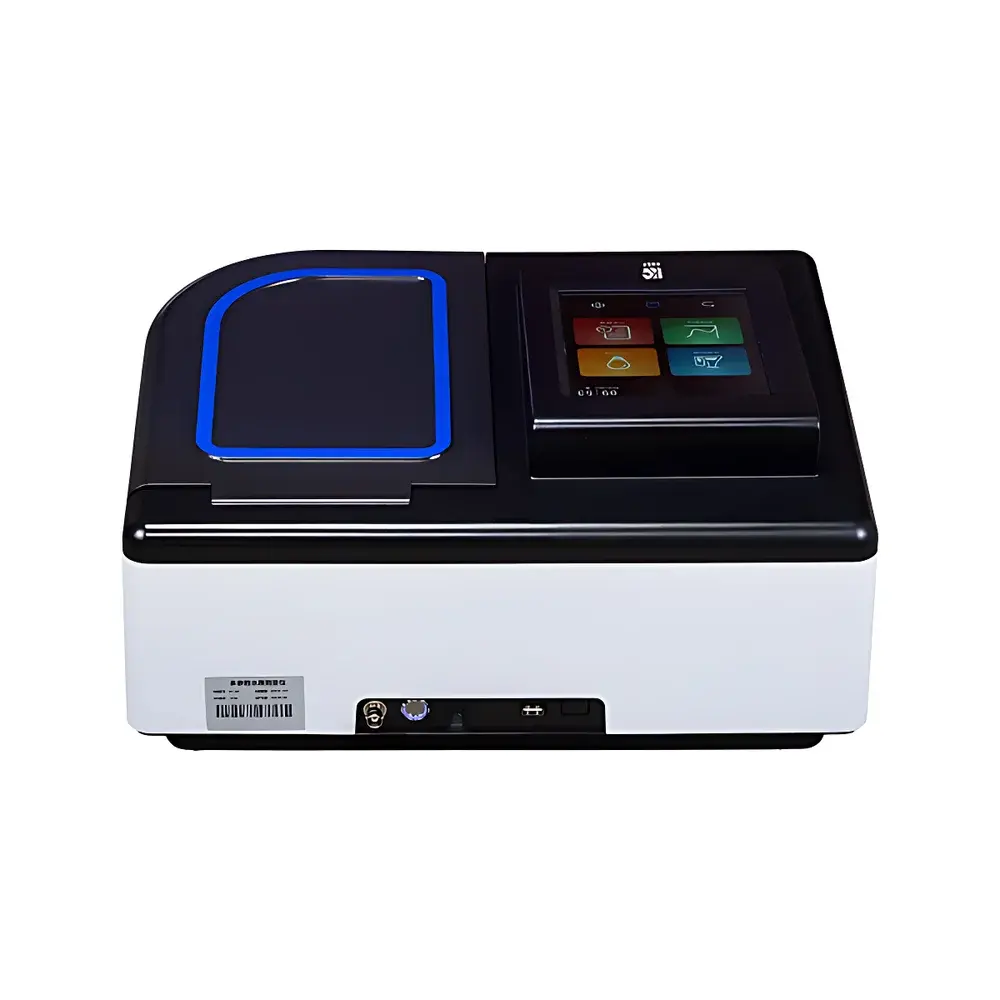
KC Starlight XG310 Benchtop Total Phosphorus Analyzer
| Brand | KC Starlight |
|---|---|
| Origin | Beijing, China |
| Manufacturer Type | Direct Manufacturer |
| Product Category | Domestic |
| Model | XG310 |
| Price | USD 2,450 (FOB) |
| Measured Parameter | Total Phosphorus |
| Instrument Type | Laboratory Benchtop Analyzer |
| Measurement Principle | Spectrophotometry (Ammonium Molybdate Method) |
| Measurement Range | 0–20 mg/L |
| Accuracy | ≤ ±2% |
| Detection Limit | 0.02 mg/L |
| Resolution | 0.001 mg/L |
Overview
The KC Starlight XG310 Benchtop Total Phosphorus Analyzer is a dedicated laboratory instrument engineered for rapid, reliable quantification of total phosphorus (TP) in aqueous environmental samples—including surface water, wastewater, effluent, and treated drinking water. It operates on the standardized ammonium molybdate spectrophotometric method (aligned with GB/T 11893–1989), wherein orthophosphate—liberated after high-temperature acid digestion of all phosphorus-containing species—is reacted with ammonium molybdate and antimony potassium tartrate under acidic conditions to form phosphomolybdenum heteropoly acid, which is subsequently reduced to molybdenum blue by ascorbic acid. The intensity of the resulting blue chromophore, measured at 700 nm, is directly proportional to total phosphorus concentration. Designed for routine compliance monitoring and QC/QA workflows, the XG310 integrates optical, electronic, and thermal subsystems into a compact, self-contained platform that eliminates reliance on external spectrophotometers or manual calibration curves.
Key Features
- Long-life LED cold light source (200,000-hour operational lifetime) delivering stable photometric output with <0.005 A drift over 20 minutes—ensuring high reproducibility across sequential measurements.
- Dedicated ST32-bit ARM microprocessor enabling real-time signal processing, adaptive noise filtering, and optimized photometric compensation for turbidity and color interference.
- Integrated automatic dilution logic: users input raw sample concentration range; the system calculates and executes precise on-board dilution (1:2 to 1:100) without manual volumetric transfer or recalibration.
- 8-inch 2K-resolution capacitive touchscreen with intuitive flat UI architecture—designed for one-touch navigation, guided assay protocols, and zero-training operation by non-specialist lab personnel.
- Robust ABS polymer enclosure rated for chemical resistance (ISO 10993-compliant materials), thermal stability up to 40 °C ambient, and mechanical durability under continuous benchtop use.
- On-device thermal printing module supporting immediate hard-copy report generation (including date/time stamp, sample ID, result, operator ID, and method reference).
- Low-power architecture: nominal 5 W consumption, compatible with 12 V / 3 A DC input—suitable for mobile labs, field-deployable setups, or backup power integration.
Sample Compatibility & Compliance
The XG310 accepts standard 16 mm OD glass or quartz digestion tubes (compatible with KC Starlight’s optional Smart Rapid Digestion Unit, model SDU-200). It supports liquid samples with suspended solids ≤50 mg/L (pre-filtration recommended per GB/T 11893–1989). All measurement protocols adhere to the Chinese National Standard GB/T 11893–1989, which is technically harmonized with ISO 6878:2004 (Water quality — Determination of phosphorus — Ammonium molybdate spectrometric method). Data integrity meets GLP documentation requirements: audit trail logging (operator ID, timestamp, method version, raw absorbance values, dilution factor) is embedded in firmware and exportable via USB. While not FDA 21 CFR Part 11-certified out-of-box, the system supports configurable user access levels and encrypted data storage—enabling validation pathways for regulated wastewater treatment facilities operating under local environmental authority mandates.
Software & Data Management
The embedded firmware provides full local data handling: up to 1,000,000 measurement records stored with metadata (sample ID, batch number, digestion temperature/duration, reagent lot, calibration date). Data export is supported via USB mass storage mode in CSV format—structured for direct ingestion into LIMS platforms (e.g., LabWare, Thermo Fisher SampleManager) or statistical analysis tools (Minitab, JMP). No cloud dependency or proprietary software installation is required. Firmware updates are performed offline via FAT32-formatted USB drive. Calibration management includes multi-point standard curve generation (up to 8 points), bracketing verification standards, and automatic recalibration alerting based on optical drift thresholds.
Applications
- Regulatory compliance testing for municipal and industrial wastewater discharge permits (e.g., China’s “Discharge Standard of Pollutants for Municipal Wastewater Treatment Plants” GB 18918–2002).
- Process control in tertiary wastewater treatment plants, particularly for phosphorus removal unit optimization (e.g., coagulation/flocculation efficiency tracking).
- Environmental monitoring programs assessing eutrophication risk in lakes, reservoirs, and estuarine systems.
- Educational laboratories requiring ISO/GB-aligned instrumentation for undergraduate analytical chemistry and environmental science curricula.
- Third-party testing labs performing accredited TP analysis under CNAS accreditation scope (CNAS-CL01:2018, equivalent to ISO/IEC 17025:2017).
FAQ
Is the XG310 compliant with international standards such as ISO 6878?
Yes—the underlying measurement principle, reagent chemistry, and validation protocol align with ISO 6878:2004. Full technical equivalence documentation is available upon request.
Does the instrument require external digestion equipment?
Yes—a dedicated rapid digestion unit (e.g., KC Starlight SDU-200) is required to achieve complete oxidation of organic and condensed phosphates prior to analysis.
Can the XG310 be validated for GMP environments?
While designed for environmental labs, its audit-trail capability, user-role management, and traceable calibration support IQ/OQ/PQ execution per ASTM E2500 and Annex 11 guidelines.
What maintenance is required for long-term optical stability?
No routine lamp replacement is needed due to the 200,000-hour LED source. Annual verification of photometric linearity using NIST-traceable neutral density filters is recommended.
Is remote data transmission supported?
Not natively—but USB-exported CSV files are compatible with MQTT or OPC UA gateways when integrated into IIoT-enabled lab infrastructure.







