
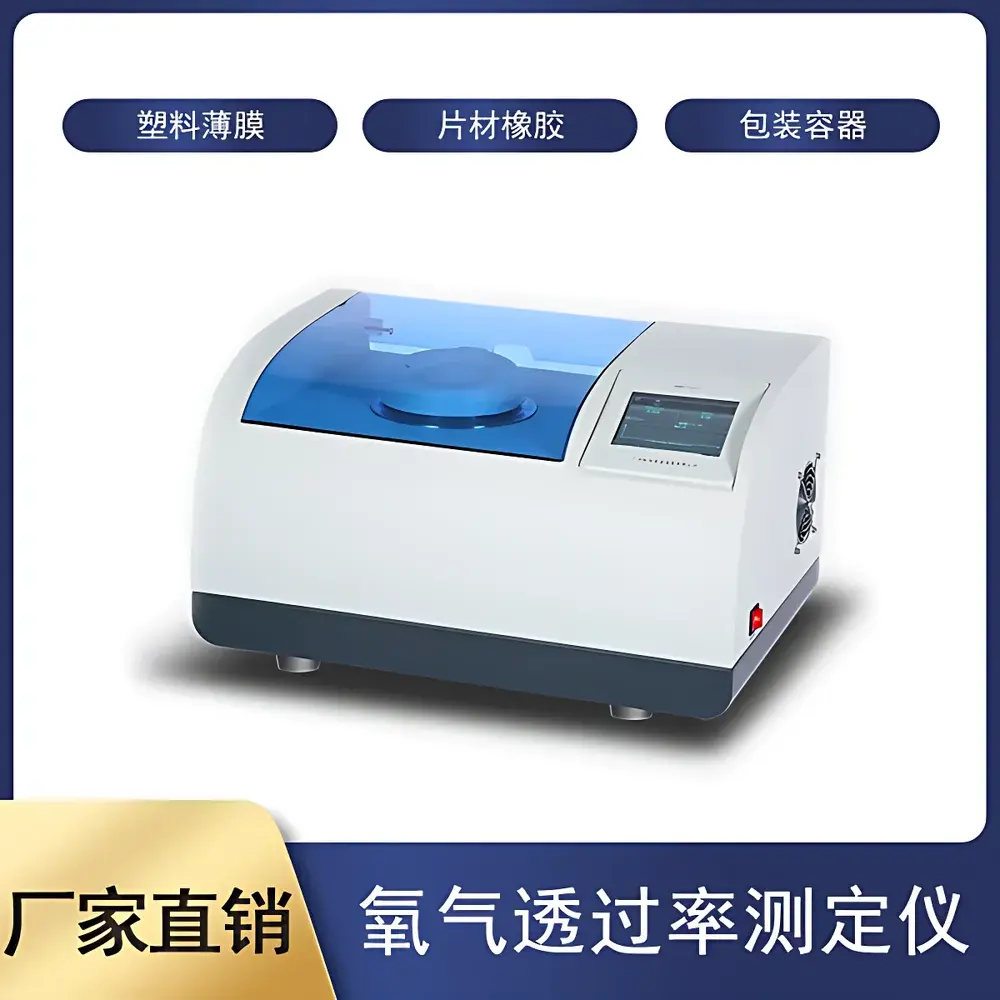
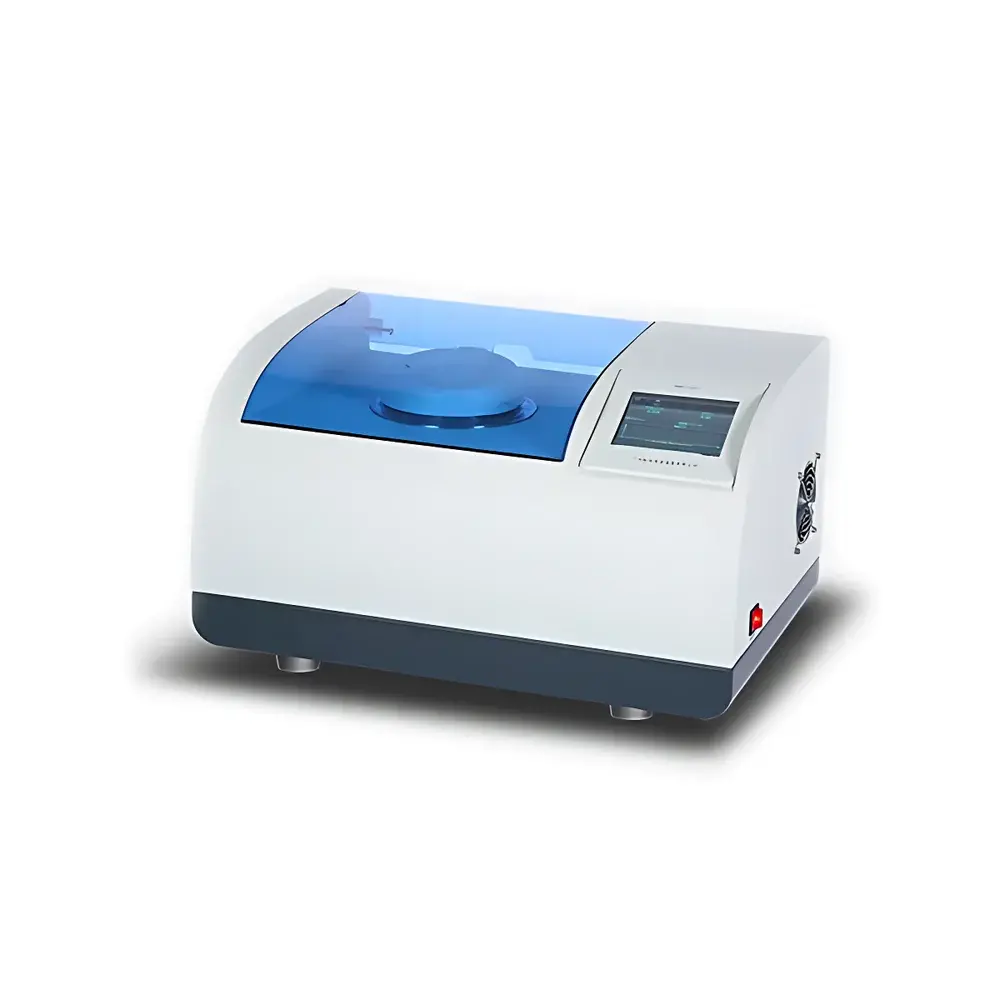
GBPI Y110-1 Oxygen Transmission Rate Tester for Thin-Film Materials
| Brand | GBPI |
|---|---|
| Origin | Guangdong, China |
| Manufacturer Type | Manufacturer |
| Region of Origin | Domestic (China) |
| Model | Y110-1 |
| Price Range | USD 14,000 – 70,000 |
| Test Principle | Coulometric Sensor-based OTR Measurement (ISO 15105-2, ASTM D3985) |
| Measurement Range | 0.02–16,500 cm³/(m²·24h) [extendable to 260,000 cm³/(m²·24h) with auxiliary fixture] |
| Accuracy | ±0.001 cm³/(m²·24h) |
| Temperature Control | 15–45 °C, ±0.1 °C |
| Humidity Control | 0–90 % RH, ±1 % RH |
| Permeation Area | 50.24 cm² (down to 0.785 cm² with optional fixtures) |
| Specimen Size | Ø100 mm |
| Max Thickness | ≤3 mm |
| Sample Capacity | 1 test cell (expandable to 10 cells) |
| Carrier Gas Pressure | ≥0.1 MPa |
| Gas Inlet | 1/8″ NPT |
| Dimensions | 600 × 400 × 330 mm |
| Power | 500 W, AC 220 V / 50 Hz |
Overview
The GBPI Y110-1 Oxygen Transmission Rate (OTR) Tester is a precision instrument engineered for quantitative determination of oxygen permeability through thin-film and sheet materials under controlled temperature and humidity conditions. It operates on the principle of coulometric detection in accordance with ISO 15105-2 and ASTM D3985—standards specifying the use of electrochemical oxygen sensors to measure real-time O₂ flux across a specimen sealed between two gas chambers. The test chamber is divided into upper (high-O₂ concentration) and lower (carrier gas) compartments; oxygen molecules permeating through the sample are carried by a dry nitrogen stream to a high-sensitivity coulometric sensor, where quantification occurs via Faraday’s law of electrolysis. This method ensures trace-level sensitivity, long-term baseline stability, and compliance with regulatory requirements for barrier performance evaluation in packaging, medical devices, photovoltaics, and battery enclosures.
Key Features
- High-accuracy coulometric oxygen sensor with auto-range calibration and over-range protection—ensures sensor longevity and measurement integrity during extended operation.
- Electromagnetic programmable temperature control system achieving ±0.1 °C stability across 15–45 °C, supporting both accelerated aging and ambient-condition testing protocols.
- Dual-gas humidity generation (dry + humidified N₂ streams) enables precise RH control from 0–90 % at ±1 % RH accuracy—critical for evaluating moisture-dependent OTR behavior in polymers and laminates.
- ARM-based embedded architecture allows standalone operation via integrated 7-inch color touchscreen—no external PC required for routine testing, data visualization, or report generation.
- Modular hardware design facilitates field maintenance and scalability: single-cell configuration supports rapid qualification; optional multi-cell expansion kits enable parallel testing up to 10 specimens.
- GMP-compliant software architecture aligned with Annex 11 (EU GMP) and FDA 21 CFR Part 11—featuring role-based user access, full audit trail (system, method, and result level), electronic signatures, and immutable data logging.
Sample Compatibility & Compliance
The Y110-1 accommodates flat films, sheets, foils, and rigid containers—including plastic bottles (e.g., PET carbonated beverage containers), aluminum-laminated pouches, pharmaceutical blister packs, solar backsheet laminates, Li-ion battery housings, and medical-grade wound dressings. Its versatile fixture set supports ASTM F1307 (rigid containers), ASTM F1927 (flexible packaging), ASTM F2622 (high-barrier films), and ISO 15105-2 (general film testing). Regulatory alignment includes Chinese Pharmacopoeia YBB00082003-2015, GB/T 19789-2005, DIN 53380-3, JIS K-7126-B, and USP . All instruments are supplied with NIM-certified reference standards (GBW(E)130543/4) for in-house verification per ISO/IEC 17025 metrological traceability requirements.
Software & Data Management
The proprietary GBPI OTR Control Suite provides intuitive workflow navigation, customizable test methods, and real-time monitoring of four synchronized parameters: temperature, relative humidity, O₂ concentration, and calculated transmission rate. Curve overlay, zoom, and hide functions support comparative analysis across batches or material variants. Reports comply with GLP/GMP documentation standards—automatically generated in PDF, Excel, or Word format with embedded metadata (operator ID, timestamp, environmental logs, calibration history). Database queries permit retrospective retrieval of raw sensor outputs, intermediate calculations, and audit records—retained indefinitely with configurable backup intervals and encryption.
Applications
This system serves critical quality assurance roles across regulated industries: evaluating EVOH- or PVDC-coated food packaging for shelf-life extension; validating moisture/oxygen barrier integrity of sterile barrier systems (SBS) per ISO 11607; assessing UV-stabilized backsheet degradation in photovoltaic modules; verifying hermeticity of implantable device housings; characterizing fuel permeation resistance in automotive polyethylene fuel tanks; and quantifying OTR in lithium battery polymer casings to prevent electrolyte oxidation. It also supports R&D activities such as comparative laminate optimization, accelerated aging correlation studies, and diffusion coefficient modeling using Fickian and non-Fickian transport frameworks.
FAQ
Does the Y110-1 measure water vapor transmission rate (WVTR) or only oxygen transmission rate (OTR)?
The Y110-1 is specifically configured for OTR measurement using a coulometric oxygen sensor. For WVTR, GBPI offers the W3/030 series based on infrared detection per ISO 15106-2.
Can the instrument be validated per IQ/OQ/PQ protocols?
Yes—full validation documentation packages (including URS, DQ, IQ/OQ templates, and PQ test scripts) are available upon request and align with ISO/IEC 17025 and ASTM E2500.
Is third-party calibration certification included with purchase?
Each unit ships with factory calibration certificates traceable to NIM (National Institute of Metrology, China); ISO/IEC 17025-accredited calibration services are offered separately.
What maintenance intervals are recommended for the coulometric sensor?
Sensor lifespan exceeds 24 months under typical usage; annual recalibration and electrolyte replenishment are advised per GBPI Maintenance Schedule M-Y110-01.
How is data integrity ensured during power interruption?
The embedded ARM controller features non-volatile memory with automatic save-on-interrupt functionality—no data loss occurs during unexpected shutdowns.






