
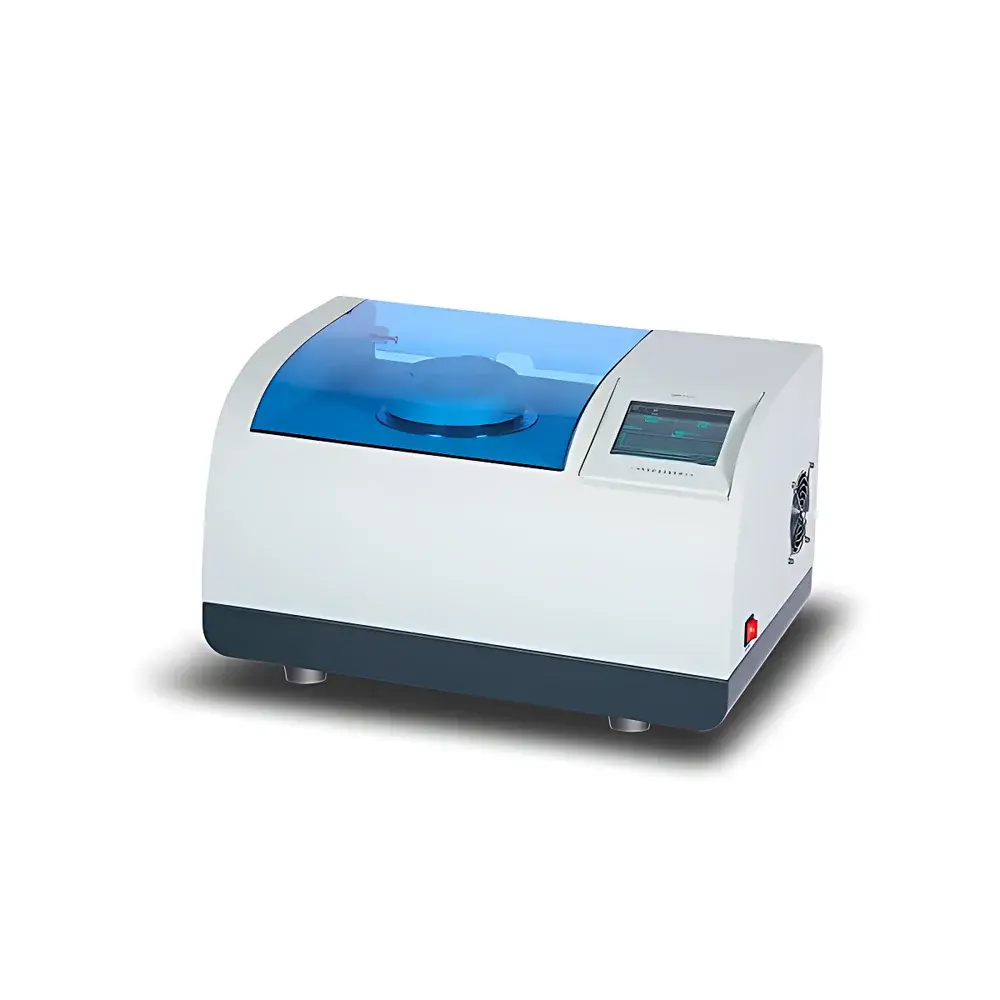
GBPI Y110-P Oxygen Transmission Rate (OTR) Tester
| Brand | GBPI |
|---|---|
| Origin | Guangdong, China |
| Manufacturer Type | Manufacturer |
| Region Category | Domestic |
| Model | Y110-P |
| Price Range | USD 14,000 – 70,000 |
| Test Range | 0.02–16,500 cm³/(m²·24h) (up to 260,000 cm³/(m²·24h) with mask accessory) |
| Accuracy | 0.001 cm³/(m²·24h) |
| Temperature Control | 15–45 °C ±0.1 °C |
| Humidity Control | 30–90 %RH ±1 %RH |
| Permeation Area | 50.24 cm² (down to 0.785 cm² with optional fixture) |
| Specimen Size | Φ100 mm |
| Max Thickness | ≤3 mm |
| Sample Quantity | 1 |
| Carrier Gas Pressure | ≥0.1 MPa |
| Gas Inlet | Φ3 mm tubing / 1/8″ NPT |
| Dimensions | 600 × 400 × 330 mm |
| Weight | 80 kg |
| Power | 750 W, AC 220 V, 50 Hz |
Overview
The GBPI Y110-P Oxygen Transmission Rate (OTR) Tester is a gravimetric and coulometric sensor-based instrument engineered for precise, traceable measurement of oxygen permeation through packaging materials under controlled temperature and humidity conditions. It operates on the principle of dynamic gas transmission analysis: a test specimen is sealed between two chambers — one containing flowing oxygen (test side), the other carrying nitrogen (carrier gas side). Oxygen molecules permeating through the material are swept by the carrier gas stream into a high-sensitivity electrochemical oxygen sensor, where concentration is quantified in real time. The resulting OTR value is calculated per ISO 15105-2 and ASTM D3985 protocols as cm³/(m²·24h), normalized to standard atmospheric pressure and specified T/RH conditions. Designed for regulatory-grade testing, the Y110-P meets the physical and metrological requirements of pharmaceutical primary packaging validation (YBB00082003-2015), food contact material compliance (GB/T 19789-2005), and global standards including ASTM F1307 (for containers), ASTM F1927 (for flexible barrier films), and DIN 53380-3.
Key Features
- High-resolution oxygen sensing: Coulometric sensor with detection limit of 0.001 cm³/(m²·24h), enabling accurate characterization of ultra-high-barrier materials such as aluminum foil, SiOx-coated PET, and multilayer laminates.
- Precise environmental control: Dual-stream humidity generation (dry + saturated gas mixing) achieves ±1 %RH stability; electromagnetic step-programmable heating/cooling ensures ±0.1 °C thermal uniformity across the test chamber.
- Modular sample configuration: Standard 50.24 cm² test area (Φ100 mm); optional micro-fixtures reduce effective area to 0.785 cm² for small or irregular samples; dedicated container adapters enable OTR testing of bottles, pouches, and trays per ASTM F2622.
- Standalone ARM-based controller: Embedded real-time OS allows full test execution without PC dependency; local data logging, method storage, and pass/fail evaluation are retained onboard.
- GMP-aligned software architecture: Compliant with Annex 11 (EU GMP) and FDA 21 CFR Part 11 requirements — featuring role-based access control (Administrator, Operator, Reviewer), full audit trail (system, method, run-level), electronic signatures, and immutable data history.
- Traceable calibration infrastructure: Supplied with NIM-certified reference films (GBW(E)130497/8) and certified manufacturing license (CMC No. GBW(E)130497/8); supports dual-mode calibration using certified standard membranes or traceable O2/N2 gas mixtures.
Sample Compatibility & Compliance
The Y110-P accommodates flat sheet specimens up to 3 mm thick and Φ100 mm in diameter, including polymer films (LDPE, PP, PET, PA), metallized substrates (AlOx, SiOx, Al foil), laminates, rubber sheets, ceramic wafers, and rigid thermoplastics. With optional fixtures, it extends to 3D packaging formats — sachets, blister cavities, injection-molded cups, and HDPE bottles — validated per ASTM F1307. All test methods adhere to GLP documentation practices. Instrument design and software workflows satisfy ISO/IEC 17025 clause 5.5 (equipment verification), USP , and ICH Q5C stability protocol requirements for barrier property assessment in drug product development.
Software & Data Management
The GBPI OTR Studio v4.x software provides intuitive Windows-native interface with drag-and-drop method builder, real-time multi-parameter visualization (OTR, O2 concentration, T, RH), and synchronized curve scaling/panning. Raw sensor outputs and derived metrics are stored in encrypted SQLite database with SHA-256 hashing. Reports generate automatically in PDF, Excel, or Word format — embedding metadata (operator ID, timestamp, calibration status, environmental logs). Data export supports LIMS integration via CSV/ODBC; all modifications trigger timestamped audit entries with user context and pre-/post-value snapshots.
Applications
This system serves critical quality control and R&D functions across regulated and industrial sectors: barrier validation of sterile medical device pouches (ISO 11607-1), shelf-life modeling for oxygen-sensitive pharmaceuticals (e.g., biologics, oxidizable APIs), formulation screening of active packaging layers, incoming inspection of food-grade laminates, reliability testing of photovoltaic backsheet films, and performance benchmarking of display protection films (LCD/OLED encapsulation). It is routinely deployed in national drug control institutes, packaging R&D centers, and contract testing laboratories performing method transfer and inter-laboratory comparison studies.
FAQ
What gases are required for operation?
High-purity oxygen (≥99.999%) and nitrogen (≥99.999%), each equipped with calibrated pressure regulators (0–0.4 MPa output).
Is the instrument supplied with calibration standards?
Yes — certified reference films (125 µm LDPE, NIM GBW(E)130497/8) and traceable gas certification documentation are included.
Can the Y110-P test rigid containers?
Yes — with optional container test kits compliant with ASTM F1307 and ASTM F2622, supporting volume-normalized OTR reporting for bottles, trays, and blister packs.
Does the system support 21 CFR Part 11 compliance?
Yes — full electronic signature capability, audit trail, role-based permissions, and data integrity safeguards are implemented per current FDA guidance.
What maintenance is required for long-term sensor stability?
Annual sensor verification using reference films is recommended; the coulometric sensor has typical service life of >24 months under routine use and includes automatic over-range protection.






