
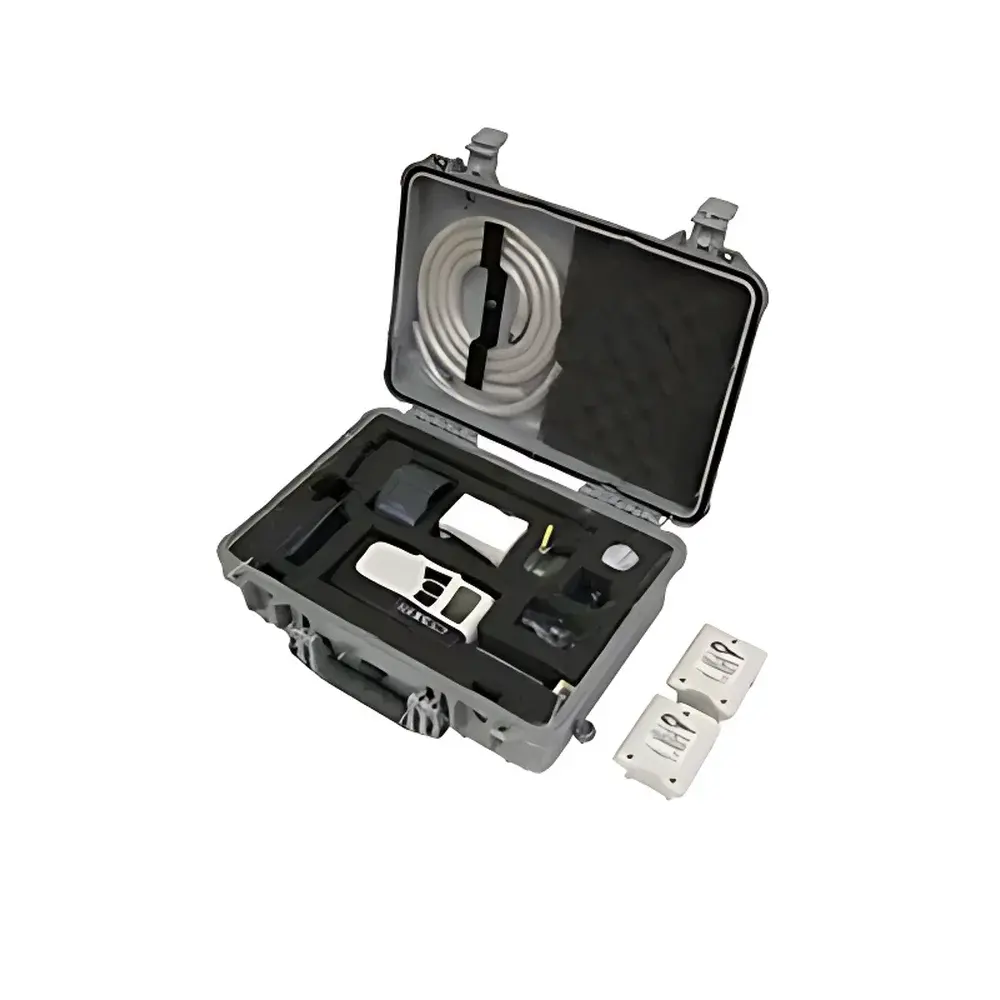
SKC DPS PM2.5 Particulate Sampling System
| Brand | SKC |
|---|---|
| Origin | USA |
| Manufacturer Type | Authorized Distributor |
| Origin Category | Imported |
| Model | DPS |
| Pricing | Upon Request |
Overview
The SKC DPS PM2.5 Particulate Sampling System is a field-deployable, gravimetric-grade ambient air monitoring platform engineered for regulatory-compliant collection of inhalable particulate matter fractions—specifically PM2.5, PM10, or both simultaneously—according to U.S. EPA Reference and Equivalent Methods (40 CFR Part 53). The system operates on the principle of inertial impactor separation: airborne particles are drawn through a size-selective inlet where aerodynamic diameter governs deposition onto a pre-weighed filter substrate. For PM2.5 sampling, the system utilizes a sharp-cut cyclonic or jet-type impactor with a 50% cut-point at 2.5 µm ±0.2 µm under standard conditions (25°C, 101.3 kPa), validated per ISO 10993-1 and ASTM D6780. Flow rate is precisely maintained at 10 L/min using a microprocessor-controlled Leland Legacy pump, ensuring volumetric accuracy within ±2% across variable backpressure conditions typical of extended filter loading.
Key Features
- Programmable Leland Legacy sampling pump with real-time flow monitoring, temperature/pressure compensation, and data logging (up to 10,000 records)
- Rechargeable lithium-ion battery pack supporting continuous operation ≥24 hours at 10 L/min (typical field duty cycle)
- Universal AC input charger (100–240 VAC, 50/60 Hz) compatible with global power infrastructure
- Dual-stage rain shield and wind-resistant mounting bracket for unattended outdoor deployment
- Modular impactor interchangeability: PM2.5 (225-3901), PM10 (225-390), or PM10–PM2.5 dichotomous (225-3911) configurations
- Calibration-ready design with integrated flow calibration adapter (NIST-traceable port) and certified flowmeter compatibility
- Robust transport case with IP65-rated locking mechanism, shock-absorbing foam inserts, and labeled component organization
Sample Compatibility & Compliance
The DPS system is validated for use with standardized 47 mm diameter filter media meeting EPA Method IO-3.1 and ISO 7708 requirements. Recommended substrates include: (1) Quartz fiber filters (SKC 255-1823; thickness: 432 µm, max operating temperature: 1000°C, binder-free, ash content <0.001%) for gravimetric mass determination post-desiccation; and (2) Polytetrafluoroethylene (PTFE)-membrane filters with polypropylene support ring (SKC 225-1747; pore size: 2.0 µm, thickness: 2.0 µm) for subsequent organic compound extraction (e.g., PAHs, PCBs) via Soxhlet or accelerated solvent extraction. All filter housings and impactor stages are constructed from anodized aluminum and stainless steel to prevent catalytic interference or metal leaching during thermal desorption or acid digestion. The system conforms to U.S. EPA Designated Reference Method equivalency criteria and supports GLP-compliant audit trails when paired with SKC’s optional DataLink software.
Software & Data Management
The Leland Legacy pump firmware supports bidirectional communication via USB or Bluetooth (optional module), enabling configuration upload/download, real-time flow diagnostics, and event-triggered logging (e.g., low-battery alerts, pressure excursion flags). Raw time-stamped data—including instantaneous flow (L/min), cumulative volume (L), temperature (°C), barometric pressure (kPa), and pump runtime (hr:min:sec)—are exportable in CSV format for integration into laboratory information management systems (LIMS). When used in regulated environments (e.g., state implementation plans, industrial hygiene surveys), the system supports 21 CFR Part 11-compliant electronic signatures and audit logs when deployed with validated SKC DataLink v4.x or third-party platforms compliant with ASTM E2500-13 validation protocols.
Applications
- Ambient air quality monitoring networks (AQS) conducting routine PM2.5/PM10 compliance measurements per NAAQS
- Source apportionment studies requiring co-located fine and coarse fraction collection for elemental carbon, water-soluble ions, and trace metals analysis
- Workplace exposure assessment in construction, mining, and manufacturing sectors per OSHA Method ID-202 and NIOSH Method 0600
- Indoor air quality investigations in schools, hospitals, and office buildings under ASHRAE Standard 62.1
- Method development and interlaboratory comparison exercises accredited to ISO/IEC 17025
FAQ
What filter types are certified for use with the DPS system in EPA-compliant monitoring?
Quartz fiber filters (SKC 255-1823) and PTFE-membrane filters (SKC 225-1747) are specified in SKC’s Method Validation Report No. MV-2022-08 and meet EPA’s substrate performance criteria for PM2.5 gravimetry and organic speciation.
Can the DPS system operate continuously for 7-day sampling campaigns?
Yes—when equipped with dual battery packs and configured for 10 L/min constant flow, the system achieves >168 hours of uninterrupted operation with ≤±1.5% flow drift, verified per ISO 9001 calibration procedures.
Is the impactor assembly traceable to NIST standards?
All impactors are individually tested against NIST SRM 1691 (monodisperse polystyrene latex spheres) and supplied with a Certificate of Conformance listing cut-point deviation, pressure drop, and flow calibration coefficients.
Does the system support remote telemetry or cellular data transmission?
The base DPS configuration does not include embedded telemetry; however, it interfaces seamlessly with third-party IoT gateways (e.g., Campbell Scientific CR1000X) via analog voltage output (0–5 V) or RS-232 serial protocol for networked environmental monitoring stations.







