
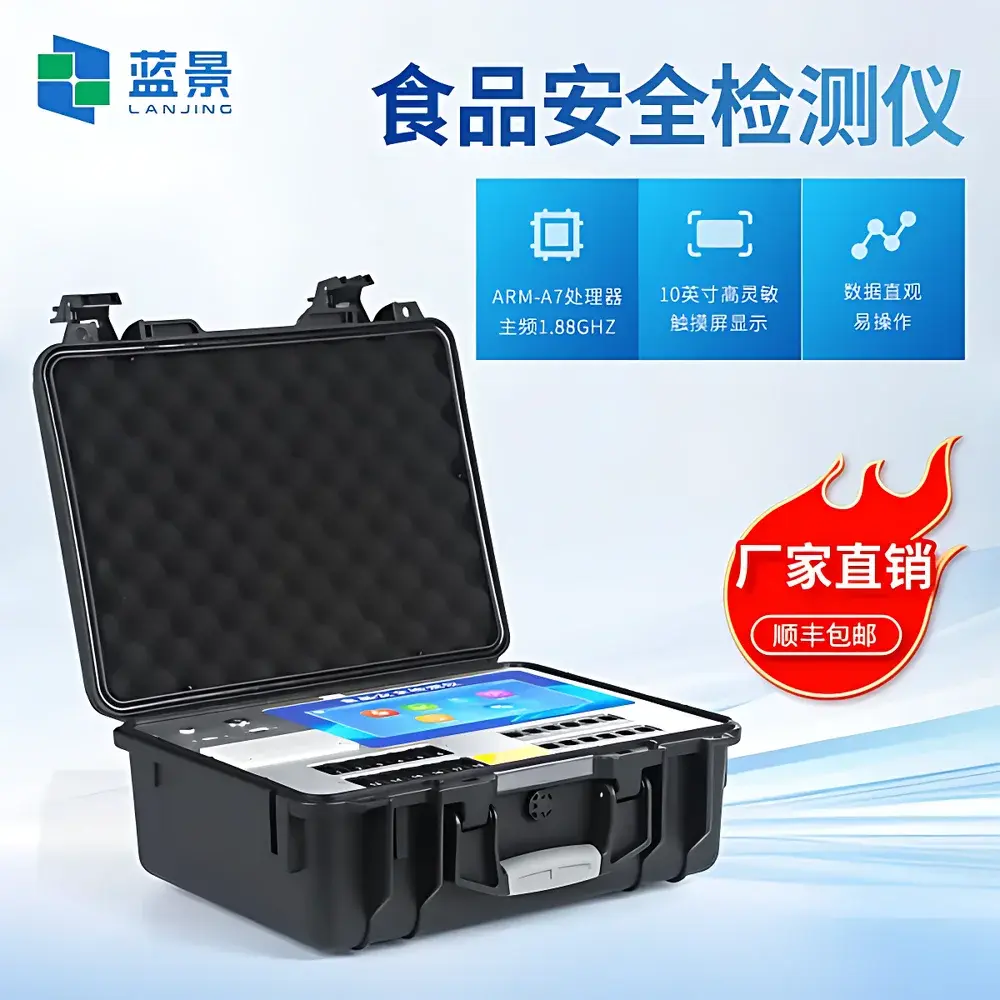
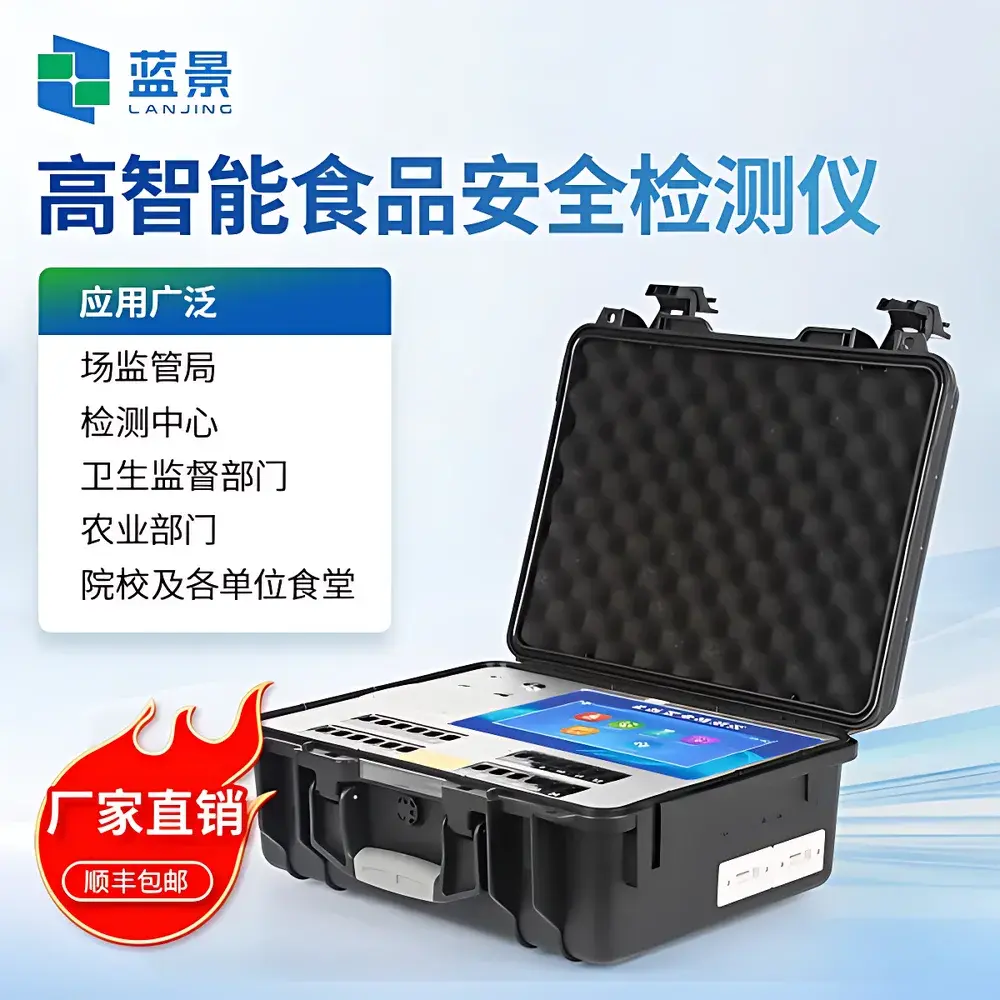
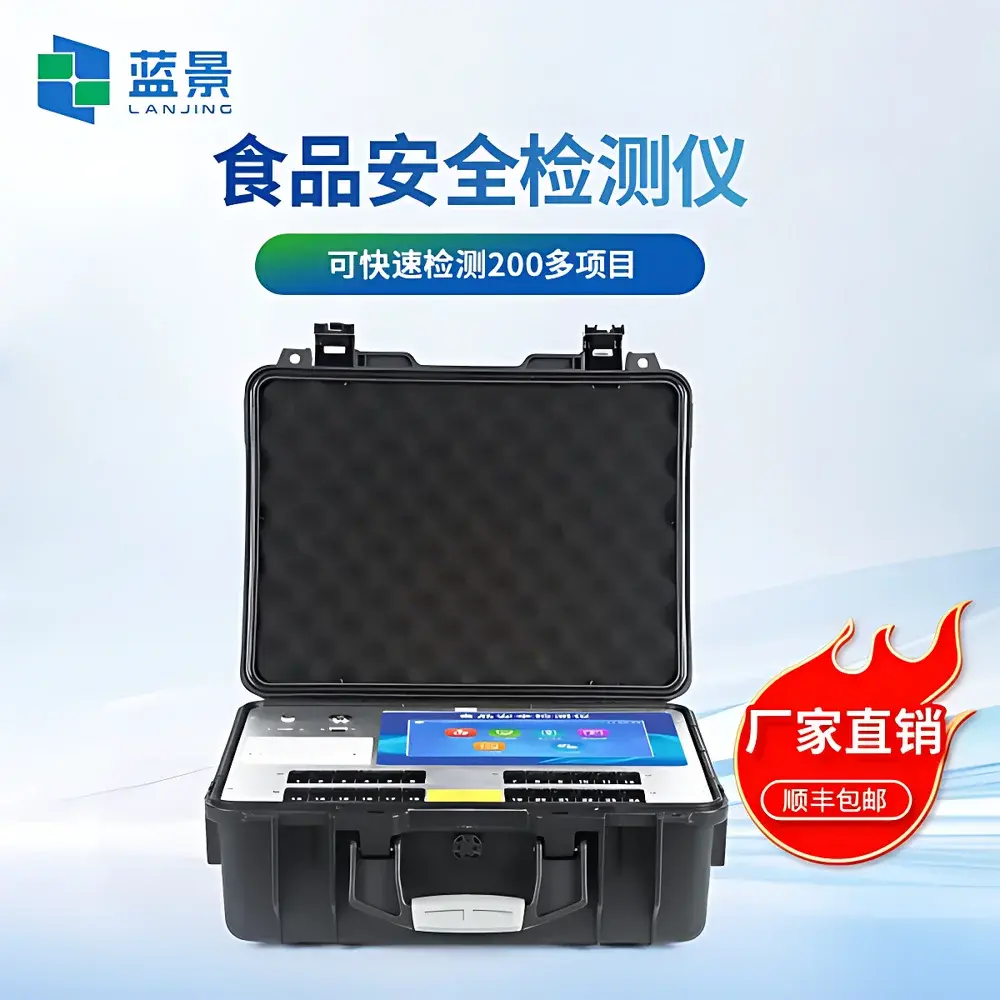
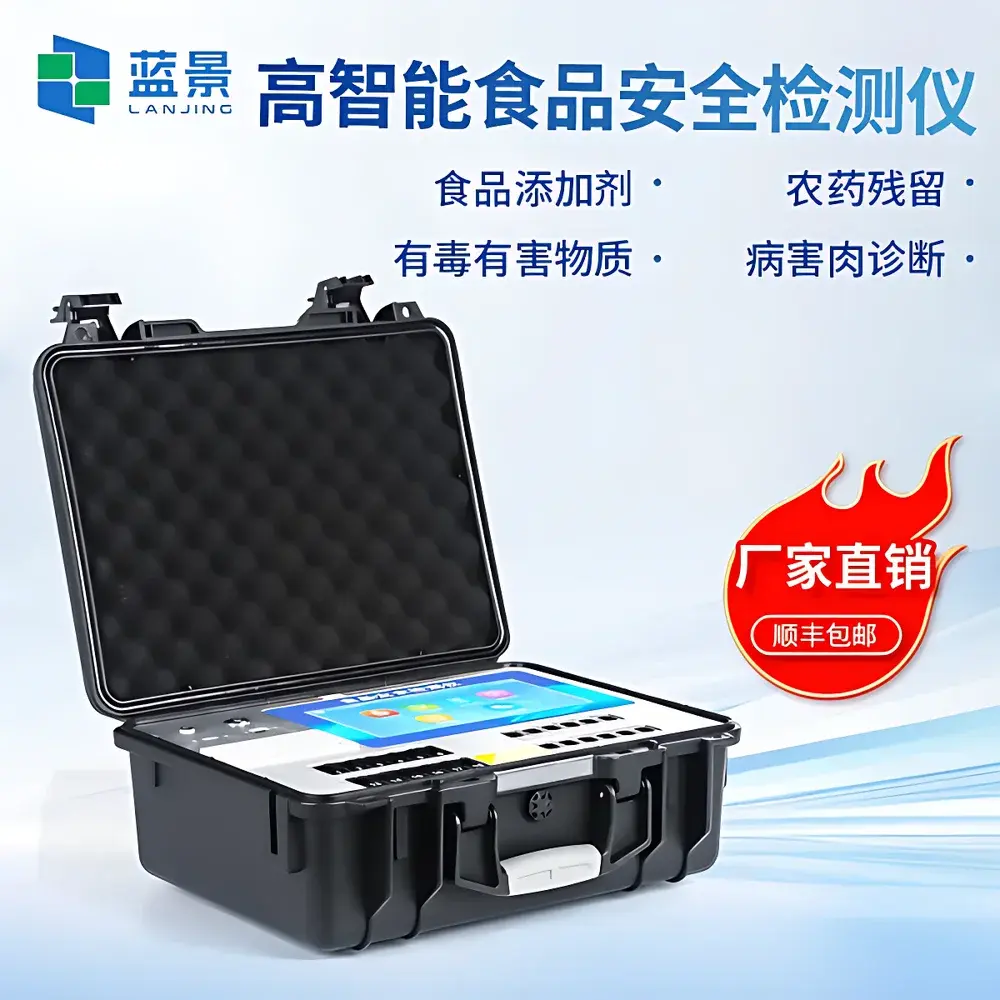
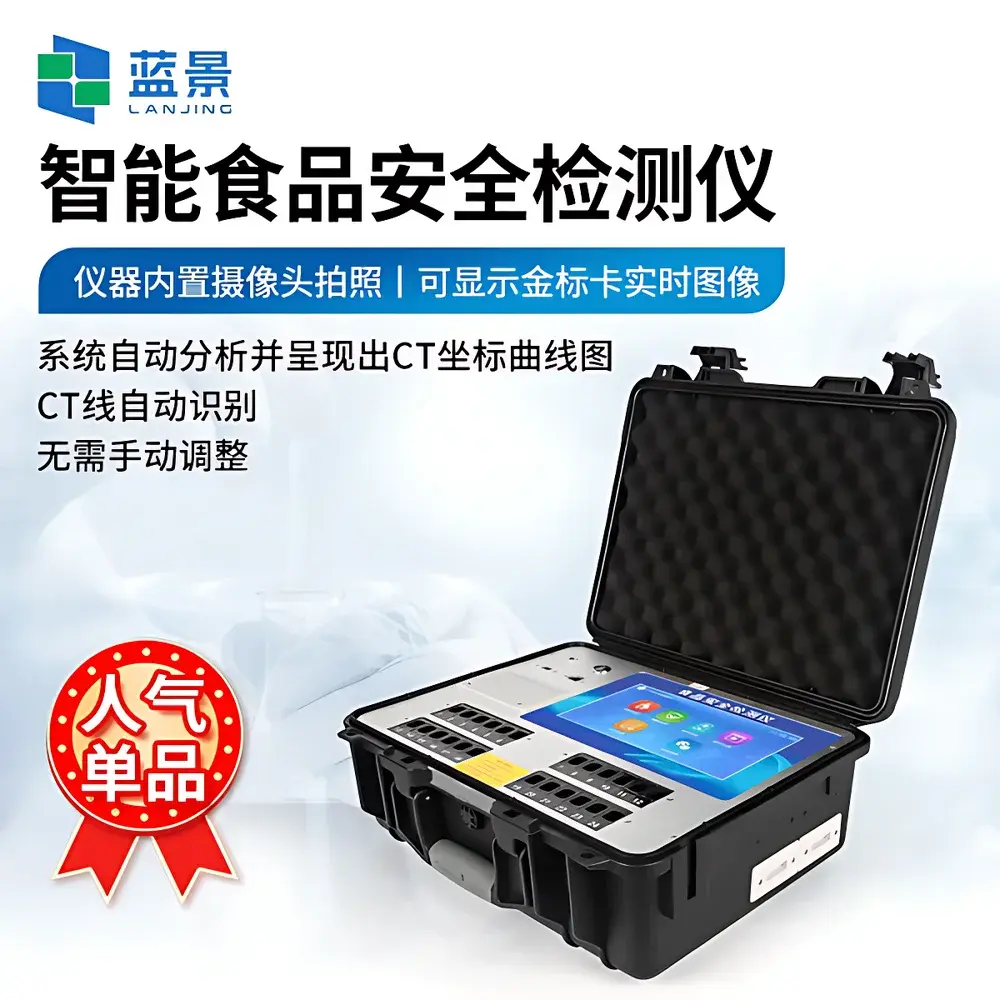
Lanjing LJ-GS600 Integrated Portable Food Safety Analyzer
| Brand | Lanjing |
|---|---|
| Origin | Shandong, China |
| Manufacturer Type | Direct Manufacturer |
| Country of Origin | China |
| Model | LJ-GS600 |
| Price | USD 4,500 (FOB) |
| Display | 10-inch capacitive touchscreen |
| Operating System | Android-based UI with embedded operation videos |
| Connectivity | Wi-Fi, 4G LTE, GPRS, Ethernet |
| Power Supply | DC 12 V (vehicle-compatible), optional 6 Ah rechargeable Li-ion battery |
| Dimensions | 43 × 35 × 19 cm |
| Net Weight | 5.1 kg |
| Detection Channels | 24 optical channels with quad-wavelength cold light source (410 / 520 / 590 / 630 nm) |
| Gold Immunochromatographic Modules | Dual-track automatic scanning, real-time camera imaging, auto CT-line recognition |
| Data Storage | 200,000 test records |
| Output | Thermal printer (QR code + report), USB 2.0 export (Excel), cloud upload via regulatory platform |
| Regulatory Compliance | Pre-loaded national MRLs (GB standards), updatable firmware, audit-trail ready for GLP-aligned workflows |
Overview
The Lanjing LJ-GS600 Integrated Portable Food Safety Analyzer is an engineered field-deployable instrument designed for on-site, multi-analyte screening in food safety surveillance and quality assurance programs. It operates on three complementary analytical principles: enzymatic inhibition (for organophosphate and carbamate pesticide residues), colorimetric spectrophotometry (for chemical contaminants, nutrients, and adulterants), and lateral-flow colloidal gold immunochromatography (for targeted detection of veterinary drug residues, mycotoxins, illegal dyes, and pathogen antigens). Its modular architecture integrates sample preparation support, optical detection, image-based immunoassay interpretation, and regulatory-grade data management into a single ruggedized platform—enabling simultaneous analysis of over 200 analytes across food matrices including raw produce, meat, dairy, grains, oils, beverages, condiments, and aquatic products. The system is purpose-built for frontline use by regulatory agencies, third-party laboratories, food processors, and inspection teams requiring rapid, reproducible, and auditable results under variable environmental conditions.
Key Features
- Android-based operating system with intuitive Chinese–English bilingual interface, embedded instructional video library, and customizable user authentication (PIN or ID card access)
- Dual independent colloidal gold detection modules with motorized track-based cartridge handling, real-time CMOS imaging, and automated CT-line quantification—eliminating manual alignment and subjective interpretation
- 24-channel photometric system featuring quad-wavelength cold LED sources (410/520/590/630 nm) and dynamic light-intensity calibration to ensure stability across ambient temperature fluctuations
- Integrated thermostatically controlled cuvette holder (adjustable 25–45 °C) for optimized enzyme reaction kinetics and reduced matrix interference in pesticide and toxin assays
- Onboard regulatory database compliant with GB 2760, GB 2761, GB 2762, GB 2763, and GB 5009 series standards—with OTA, ZEN, AFB1, DON, and other mycotoxin thresholds pre-configured and field-upgradable
- Cloud-connected architecture supporting secure data transmission to provincial/municipal food safety supervision platforms (e.g., China’s National Food Safety Risk Monitoring Information System) with full traceability, time-stamped audit logs, and role-based access control
- Field-optimized power design: supports 12 V DC input (car adapter), internal 6 Ah Li-ion battery (≥6 h continuous operation), and seamless transition between grid and mobile power sources
- Expandable assay portfolio: firmware-upgradable detection protocols; compatible with all commercially available colloidal gold test strips per ISO/IEC 17025 validation guidelines
Sample Compatibility & Compliance
The LJ-GS600 accommodates diverse food and feed samples following standardized pretreatment procedures outlined in GB/T 5009, GB/T 22286, and SN/T 1947. Validated matrices include homogenized fruit/vegetable extracts, centrifuged meat homogenates, clarified milk filtrates, solvent-extracted oil supernatants, and aqueous eluates from grain or spice samples. All quantitative colorimetric methods comply with ISO 15141 (spectrophotometric performance criteria), while immunochromatographic modules meet ISO 20355 requirements for lateral-flow assay precision and linearity. Instrument firmware includes built-in validation checks for blank subtraction, inter-channel cross-talk correction, and repeatability assessment per ICH Q2(R2) principles. Data integrity conforms to ALCOA+ criteria (Attributable, Legible, Contemporaneous, Original, Accurate, Complete, Consistent, Enduring, Available) and supports 21 CFR Part 11–compliant electronic signatures when integrated with qualified LIMS environments.
Software & Data Management
The embedded software suite provides end-to-end workflow management—from sample registration (customizable fields for batch ID, operator, location, matrix type) to result visualization and regulatory reporting. Each test generates timestamped metadata including environmental temperature, humidity, reagent lot number, and calibration status. Results are stored locally in encrypted SQLite format with SHA-256 hashing and exported as ISO/IEC 27001–aligned CSV or Excel files via USB 2.0. Cloud synchronization employs TLS 1.2 encryption and OAuth 2.0 authentication. The regulatory platform interface enables geospatial mapping of contamination hotspots, trend analysis of seasonal residue patterns, and automated alert generation when measured values exceed jurisdictional action limits. Audit trails record all user actions—including parameter modifications, calibration events, and data deletions—with immutable timestamps and operator IDs.
Applications
The LJ-GS600 serves critical functions across the food supply chain: routine screening at slaughterhouses and wet markets (e.g., clenbuterol in pork, formaldehyde in aquatic products); verification of label claims in processing plants (e.g., protein content in dairy, iodine in salt, amino acid nitrogen in soy sauce); rapid response during foodborne illness investigations (e.g., histamine in spoiled fish, Staphylococcal enterotoxin surrogates); compliance audits for HACCP plans and BRCGS-certified facilities; and academic research on emerging adulterants (e.g., synthetic dyes, novel veterinary antibiotics, nanoparticle-based preservatives). Its portability and battery operation make it suitable for mobile labs deployed during large-scale events (Olympics, expos), border inspection posts, and rural extension services where fixed-lab infrastructure is unavailable.
FAQ
Does the LJ-GS600 support method validation per ISO/IEC 17025?
Yes—the instrument’s optical performance, temperature control accuracy, and repeatability meet ISO/IEC 17025 clause 5.9 requirements for in-house method verification. Validation reports and SOP templates are provided upon request.
Can test results be directly imported into LIMS systems?
Yes—structured Excel exports and HTTP API endpoints enable integration with major LIMS platforms (e.g., LabWare, STARLIMS, Thermo Fisher SampleManager) without middleware.
Is firmware update capability available remotely?
Firmware updates are distributed via secure HTTPS download; remote push deployment requires prior network authorization and digital signature verification.
What is the minimum detectable concentration for lead in rice flour?
Based on GB 5009.12–2023 methodology, the validated LOD is 0.2 mg/kg in solid matrices after acid digestion and chelation-based color development.
How does the system handle matrix interference in high-fat samples like lard?
Integrated sample dilution algorithms and dual-wavelength ratio correction (e.g., 590 nm reference vs. 410 nm signal) compensate for turbidity and lipid-induced absorbance drift.






