
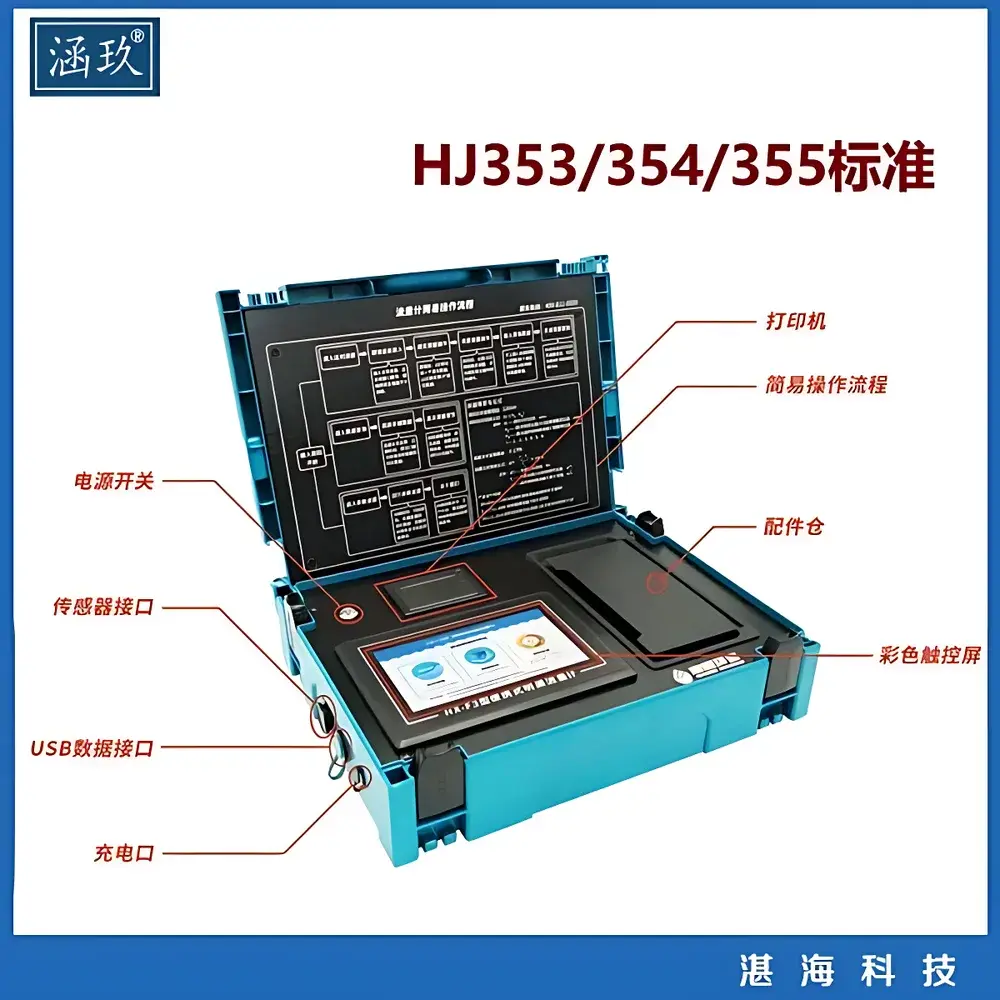
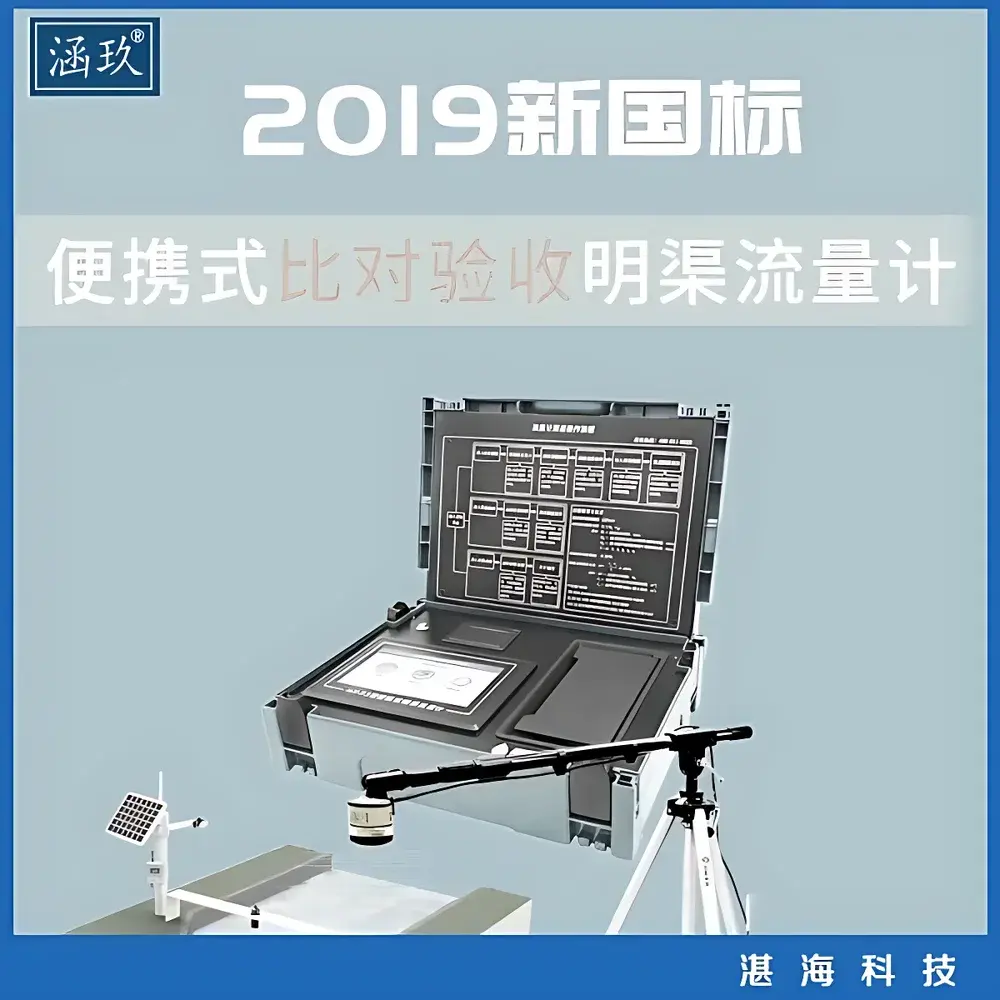
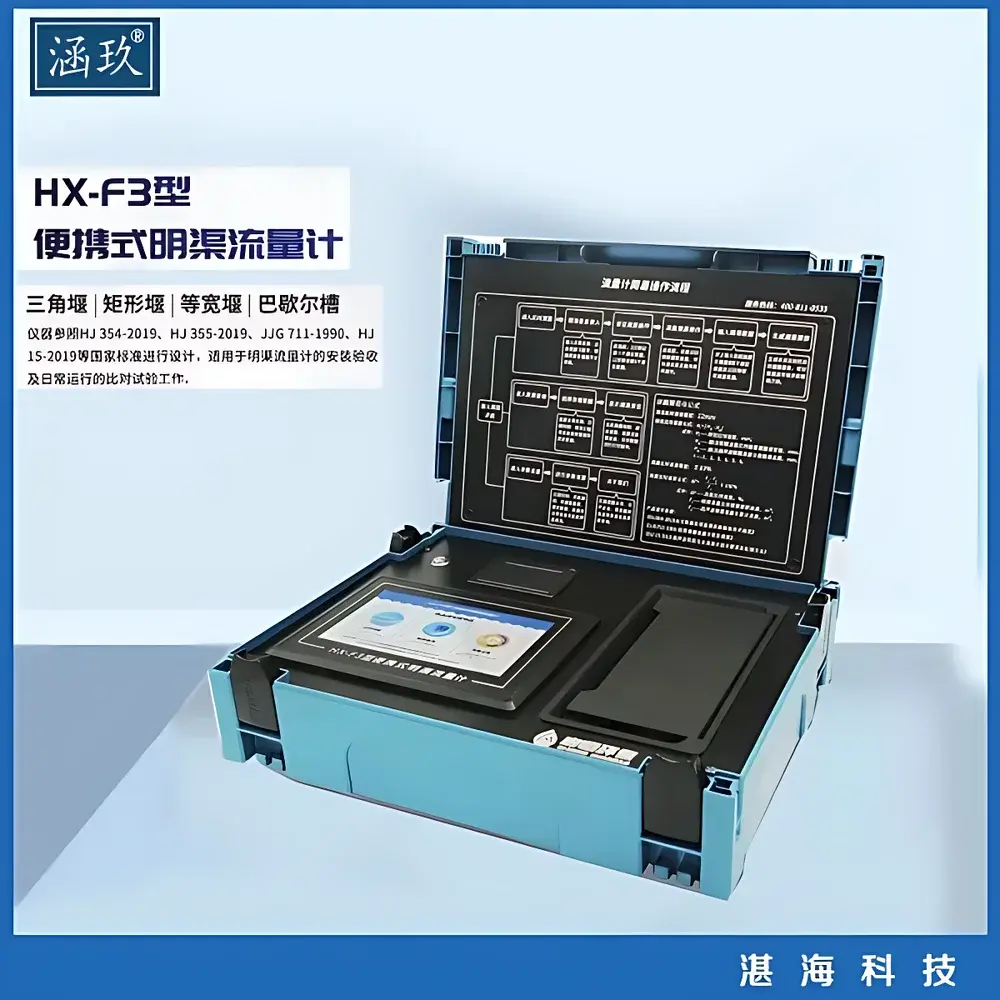
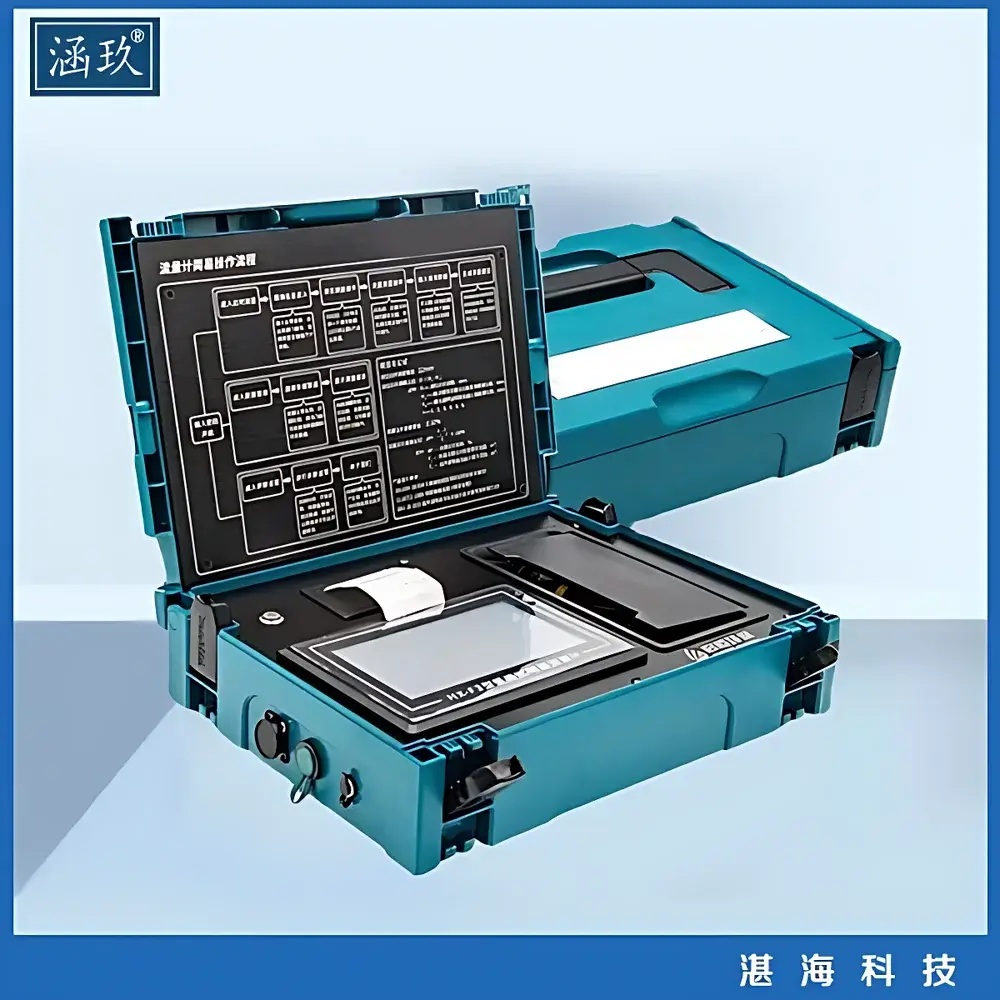
Zhanhaikeji HX-F3 Online Flowmeter Verification System for Open-Channel Flowmeters
| Brand | Zhanhaikeji |
|---|---|
| Origin | Jiangsu, China |
| Manufacturer Type | Authorized Distributor |
| Country of Origin | China |
| Model | HX-F3 |
| Price | USD 2,800 (FOB Jiangsu) |
Overview
The Zhanhaikeji HX-F3 Online Flowmeter Verification System is a field-deployable calibration and validation platform engineered for quantitative performance assessment of open-channel flowmeters—primarily ultrasonic Doppler, area-velocity (AV), magnetic, and radar-based sensors installed in weirs, flumes (e.g., Palmer-Bowlus, Parshall, Palmer-Bowlus), and natural or lined channels. Unlike portable handheld calibrators, the HX-F3 integrates synchronized multi-sensor data acquisition, real-time hydraulic reference computation, and traceable verification protocols compliant with ISO 748:2021 (Measurement of liquid flow in open channels — Velocity-area method) and ASTM D5942-22 (Standard Practice for Field Verification of Open-Channel Flow Measurement Devices). It operates on the principle of concurrent measurement: high-accuracy velocity profiling (via calibrated ultrasonic transit-time or electromagnetic probes) and cross-sectional geometry mapping (via laser distance sensor and inclinometer) are time-synchronized to compute a reference volumetric flow rate (Qref) independent of the device under test (DUT). This dual-path methodology enables direct comparison between Qref and the DUT’s output, yielding bias, repeatability, and linearity metrics per ISO/IEC 17025:2017 clause 7.7.
Key Features
- Real-time dual-path verification: Simultaneous acquisition of velocity profiles (up to 16 depth points), water surface elevation, channel slope, and wetted geometry via integrated ultrasonic velocity probe, Class II laser distance sensor (±1 mm accuracy), and digital inclinometer (±0.1° resolution).
- Automated uncertainty propagation engine: Calculates combined standard uncertainty (k=2) for Qref per GUM (JCGM 100:2008), incorporating contributions from velocity measurement, cross-sectional area estimation, and temporal synchronization jitter.
- Field-rugged housing: IP67-rated aluminum enclosure with thermal management for continuous operation between −10 °C and +50 °C; battery-powered (12 V DC, 12 Ah LiFePO₄, >8 h runtime) with optional solar charging interface.
- Non-intrusive installation: Modular probe mounts compatible with standard weir/flume access ports; no channel dewatering or structural modification required during verification.
- Traceable calibration chain: All embedded sensors supplied with NIST-traceable calibration certificates; factory verification performed against gravimetric water flow standard (uncertainty ≤ ±0.25% of reading).
Sample Compatibility & Compliance
The HX-F3 supports verification of all major open-channel flowmeter technologies deployed in municipal wastewater, irrigation canals, industrial effluent channels, and stormwater monitoring networks. It accommodates channel widths from 0.3 m to 12 m and depths up to 4.5 m. The system complies with ISO 748:2021, ISO 14034:2016 (Environmental management — Environmental technology verification), and meets functional requirements for regulatory acceptance under China’s HJ 354-2019 (Technical Specifications for Online Monitoring System of Pollutant Sources – Wastewater) and EU WFD Annex II (Monitoring Programmes). Data logs include mandatory metadata fields for GLP/GMP audit trails: operator ID, GPS coordinates, ambient temperature/humidity, barometric pressure, and sensor serial numbers.
Software & Data Management
The HX-F3 runs Zhanhaikeji FlowVerify v3.2 firmware, featuring an embedded Linux OS with TLS 1.2-secured web interface accessible via local Wi-Fi or Ethernet. Verification reports are generated in PDF/A-1b format with embedded digital signatures compliant with eIDAS Regulation (EU No 910/2014). Raw data exports support CSV, JSON, and XML schemas aligned with IEC 61850-7-4 and EPA SWMM input conventions. Audit logs record all user actions—including parameter edits, report generation, and firmware updates—with immutable timestamps and SHA-256 hashing. Optional integration with enterprise SCADA systems is available via Modbus TCP or OPC UA (compliant with IEC 62541).
Applications
- Pre-commissioning acceptance testing of new open-channel flowmeters per contractual SLA requirements.
- Periodic in-situ verification (every 3–6 months) mandated by environmental regulators for continuous emission monitoring systems (CEMS) and wastewater discharge permits.
- Troubleshooting drift or inconsistency in long-term flow records—distinguishing sensor degradation from hydraulic changes (e.g., sedimentation, biofilm growth, or weir crest erosion).
- Supporting ISO/IEC 17025 accreditation for environmental testing laboratories performing third-party flowmeter verification services.
- Validation of computational fluid dynamics (CFD) models used in hydraulic design of flow control structures.
FAQ
Does the HX-F3 require laboratory recalibration between field deployments?
No. Each unit undergoes full system-level verification at the Jiangsu production facility using a primary gravimetric flow standard. Field recalibration is not required unless physical damage occurs or after exposure to extreme shock/vibration exceeding IEC 60068-2-64.
Can the HX-F3 verify flowmeters installed in partially filled pipes or irregular channels?
Yes. Its geometric mapping module supports non-rectangular, trapezoidal, U-shaped, and irregular cross-sections. Users define custom section geometry via point-cloud input or select from 12 built-in flume/weir templates.
Is the software validated for FDA 21 CFR Part 11 compliance?
FlowVerify v3.2 includes electronic signature functionality, audit trail logging, and role-based access control. While not formally certified, its architecture satisfies all technical controls outlined in Part 11 Subpart B for closed systems used in regulated environments.
What is the minimum recommended interval between verification events?
Per ISO 748:2021 Annex D and HJ 354-2019 Section 6.3.2, quarterly verification is recommended for critical discharge monitoring; semi-annual intervals apply for non-regulated irrigation applications.
Related Products







