
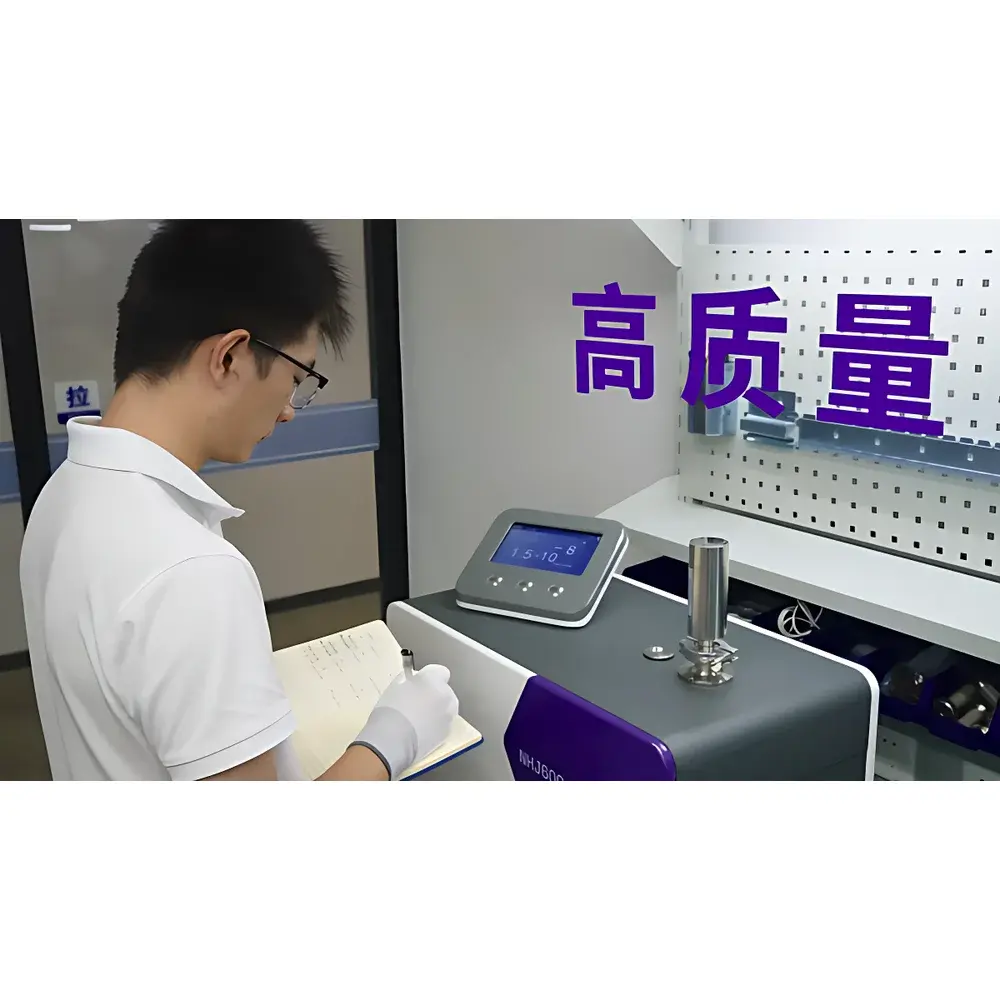
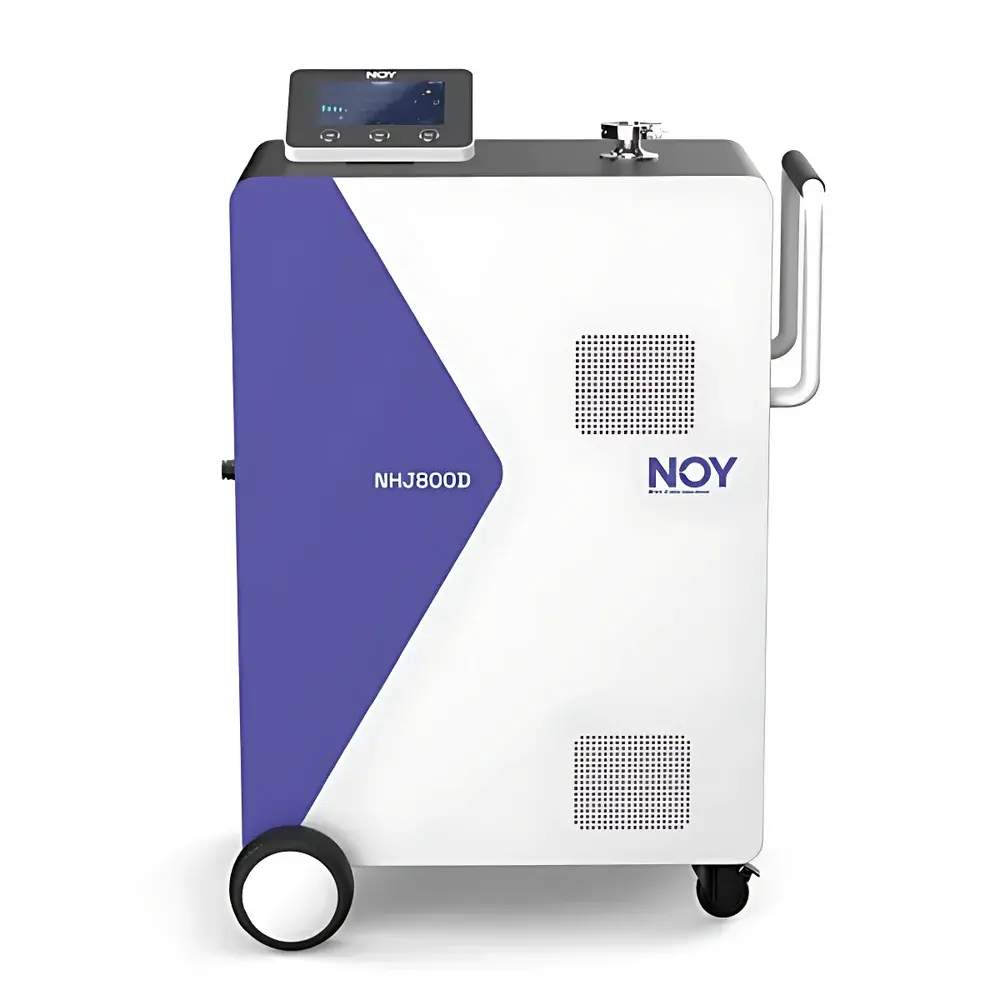
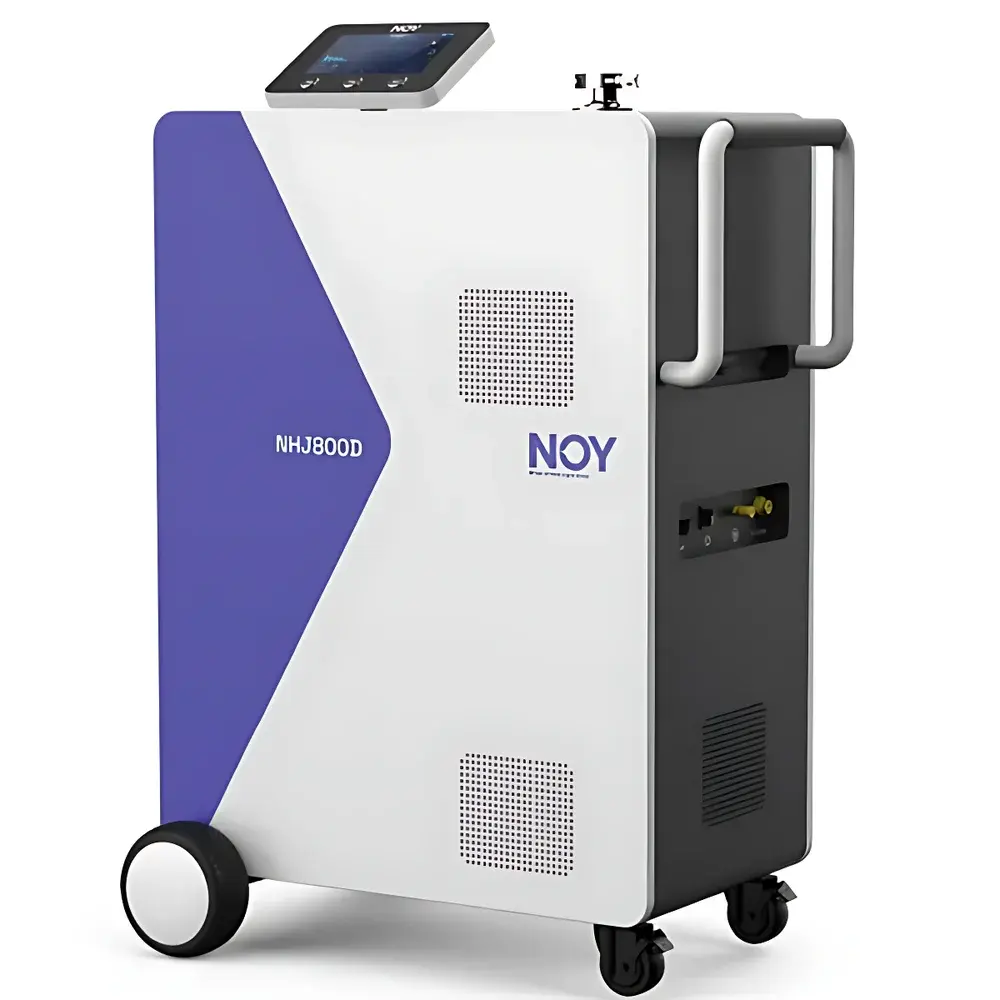
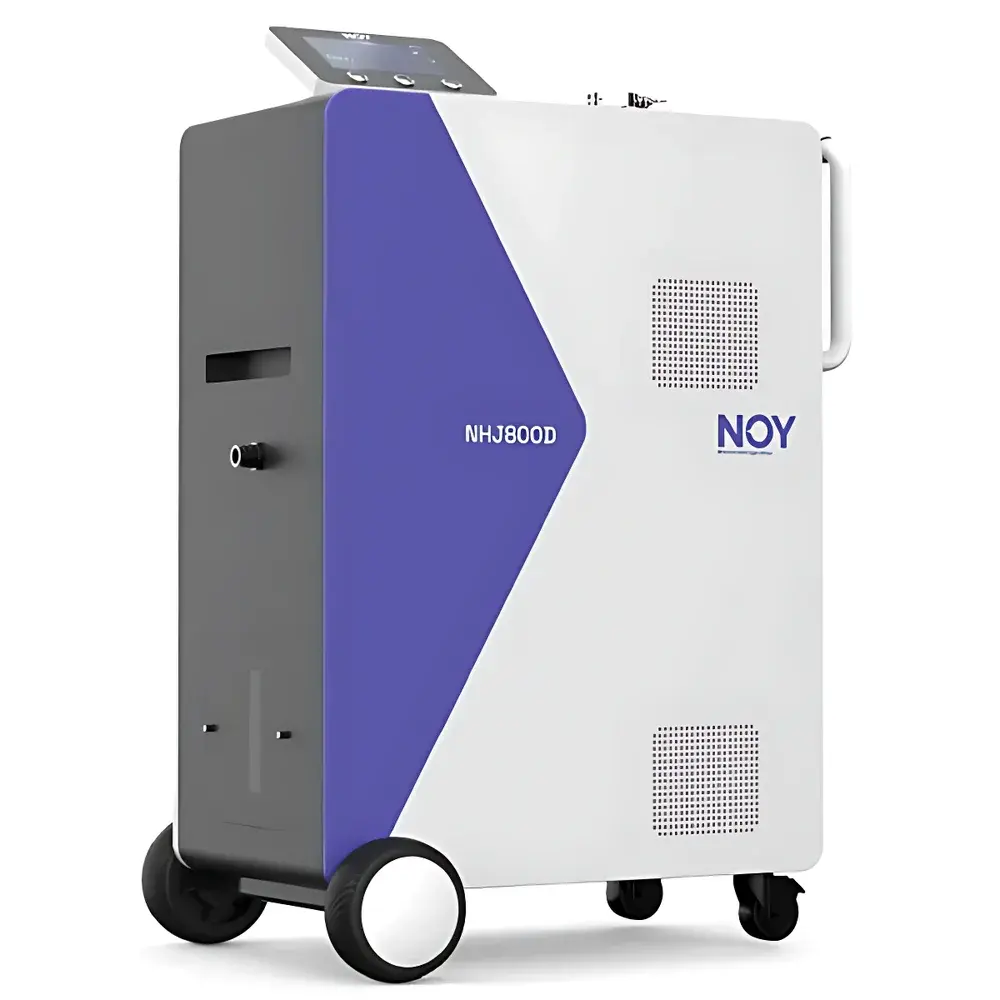
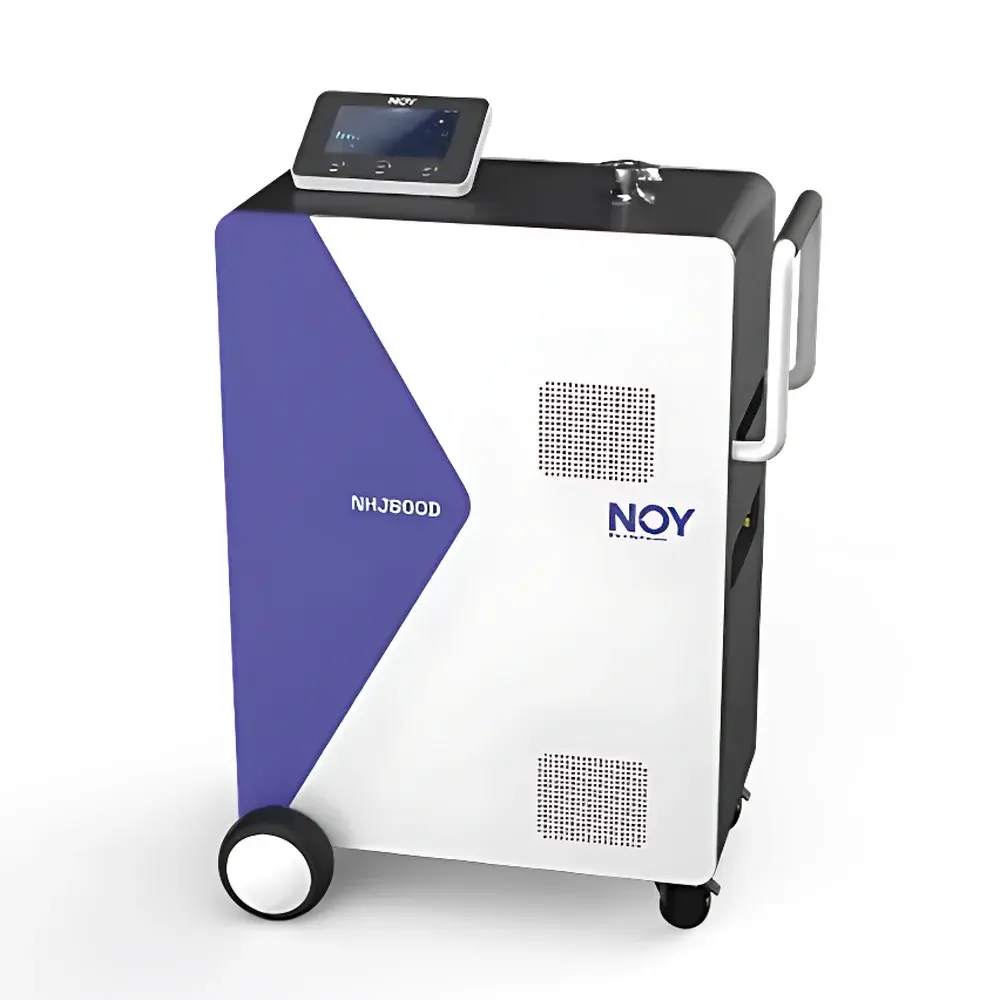
NOY NHJ800D Dry-Pump Helium Mass Spectrometer Leak Detector
| Brand | NOY |
|---|---|
| Origin | Anhui, China |
| Manufacturer Type | Original Equipment Manufacturer (OEM) |
| Product Category | Domestic |
| Model | NHJ800D |
| Instrument Type | Portable |
| Detection Method | Vacuum Mode |
| Minimum Detectable Leak Rate | 3×10⁻¹³ Pa·m³/s |
| Startup Time | ≤90 s |
| Response Time | ≤0.5 s |
| Maximum Inlet Pressure | ≤2000 Pa |
| Leak Rate Display Range | 1×10⁻² to 1×10⁻¹³ Pa·m³/s |
Overview
The NOY NHJ800D Dry-Pump Helium Mass Spectrometer Leak Detector is a fully integrated, portable helium leak detection system engineered for high-reliability vacuum integrity verification in cleanroom environments, semiconductor fabrication facilities, vacuum coating systems, and aerospace component manufacturing. It operates on the fundamental principle of helium mass spectrometry—ionizing helium atoms introduced into a vacuum chamber and separating them via magnetic sector mass filtering at m/z = 4. The instrument employs a 180° non-uniform magnetic field configuration to achieve high mass resolution and signal stability under varying operational conditions. Unlike oil-lubricated systems, the NHJ800D integrates a maintenance-free dry scroll backing pump, eliminating hydrocarbon contamination, oil backstreaming, and associated particulate generation—critical for ISO Class 5 (Class 100) or stricter cleanroom compliance. Its vacuum-mode operation requires connection to the test object under vacuum, enabling quantitative measurement of absolute leak rates in SI units (Pa·m³/s), traceable to national metrological standards.
Key Features
- Dry-pump architecture with integrated scroll vacuum pump—zero oil vapor emission, compliant with ISO 14644-1 cleanroom requirements
- Sub-second response time (≤0.5 s) and rapid system startup (≤90 s), minimizing downtime during high-throughput QA/QC workflows
- High-sensitivity detection limit of 3×10⁻¹³ Pa·m³/s, suitable for ultra-high vacuum (UHV) system validation per ASTM E493 and ISO 20486
- 7-inch full-color rotatable touchscreen interface with ergonomic angle adjustment for operator comfort and multi-position usability
- Auto-protection logic: “Large-Leak Detection” mode triggers audible/visual alarm if preset vacuum threshold is not achieved during evacuation; “Ion Source Protection” prevents atmospheric exposure during venting or overpressure events
- Real-time leak rate display across 12 decades (1×10⁻² to 1×10⁻¹³ Pa·m³/s) with selectable units (mbar·L/s, atm·cm³/s, Pa·m³/s)
Sample Compatibility & Compliance
The NHJ800D is compatible with sealed or evacuated components ranging from small electronic housings (10 m³). It supports both fixed-point testing (via sniffer probe in residual gas mode) and integral vacuum testing (hardline connection to test chamber). All internal surfaces contacting process gas are electropolished stainless steel (316L), ensuring inertness toward reactive gases and compatibility with semiconductor-grade helium (≥99.999% purity). The system meets electromagnetic compatibility (EMC) requirements per IEC 61326-1 and safety standards per IEC 61010-1. Its software architecture supports audit trails and user access control, facilitating alignment with GLP/GMP documentation practices and FDA 21 CFR Part 11 readiness when paired with validated data export protocols.
Software & Data Management
The embedded firmware enables real-time data logging at configurable intervals (10 ms–10 s), with timestamped leak rate values stored internally (≥10,000 records) and exportable via USB to CSV or native Excel (.xlsx) format. No third-party drivers or runtime dependencies are required—data files retain full metadata including instrument ID, operator tag, test duration, and environmental pressure/temperature readings (if external sensors are connected). Optional PC-based remote control software provides live waveform visualization, trend analysis, pass/fail threshold scripting, and report generation compliant with ISO/IEC 17025 calibration record templates.
Applications
- Leak validation of vacuum furnaces, electron beam welders, and sputtering systems in advanced materials R&D
- In-process QA of hermetically sealed MEMS devices, medical implant housings, and lithium-ion battery enclosures
- Final acceptance testing of cryogenic piping, superconducting magnet vessels, and fusion reactor subcomponents
- Preventive maintenance auditing of UHV beamlines and synchrotron front-end components
- Compliance verification against ASME BPVC Section V, Article 10 and MIL-STD-883 Method 1014 for microelectronics packaging
FAQ
What vacuum level must the test object reach before initiating helium spray testing?
The NHJ800D requires the test volume to be evacuated to ≤2000 Pa at the detector inlet. For optimal sensitivity, a base pressure below 10 Pa is recommended prior to helium introduction.
Is the system compatible with helium recovery loops?
Yes—the dry-pump design and absence of oil traps allow seamless integration with closed-loop helium recirculation systems commonly used in high-volume production environments.
Does the instrument support automated pass/fail decision logic based on configurable leak thresholds?
Yes—users can define up to five independent leak rate thresholds with corresponding visual indicators and relay outputs for integration into PLC-controlled test stations.
How is calibration traceability maintained?
The NHJ800D accepts NIST-traceable calibrated leak standards (e.g., stainless steel capillary or permeation-type) for routine performance verification. Factory calibration certificates include uncertainty budgets per ISO/IEC 17025 requirements.
Can the touchscreen interface be locked during unattended operation?
Yes—password-protected screen lock and configurable idle timeout prevent accidental parameter changes during extended testing cycles.




