
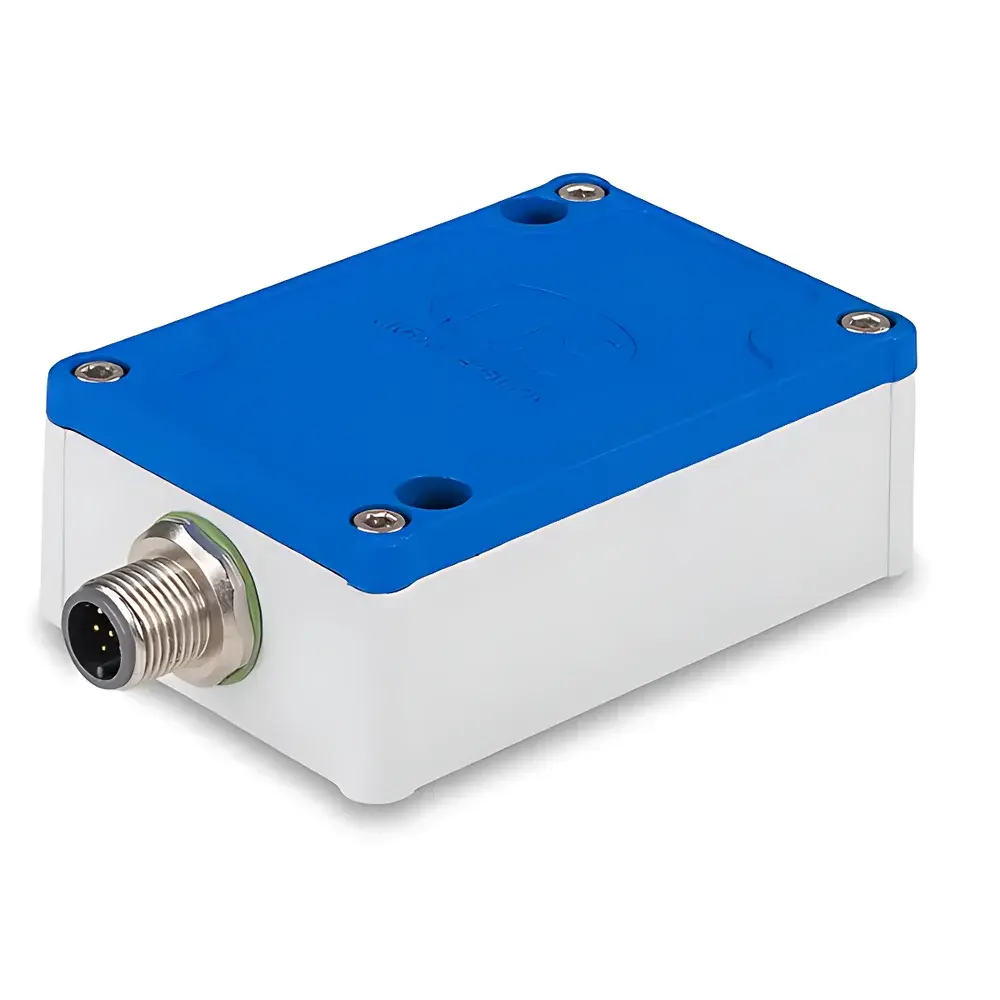
Micro-Hybrid inertialSENSOR ACC5703 Three-Axis Accelerometer
| Brand | Micro-Hybrid |
|---|---|
| Origin | Germany |
| Model | ACC5703 |
| Axes | 3 |
| Measuring Range | ±0.1 g to ±8 g (configurable) |
| Resolution (Digital) | ≤0.016 mg |
| Resolution (Analog Current) | ≤0.24 mg |
| Resolution (Analog Voltage) | ≤0.31 mg |
| Noise Density | 30 µg/√Hz (typ.) |
| Sensitivity (Current Output) | ≤80 mA/g |
| Sensitivity (Voltage Output) | ≤20 V/g |
| Zero Output | 12 mA or 2.5 V |
| Linearity | 0.45 % FSO (typ.) |
| Frequency Range | 0–1000 Hz (configurable) |
| Sampling Rate | Up to 4 kHz |
| Cross-Axis Sensitivity | 1 % FSO |
| Temperature Stability | ±0.2 mg/K (typ.) |
| Supply Voltage | 5–32 VDC |
| Power Consumption | <3 W |
| Operating Temperature | −40 °C to +85 °C |
| Storage Temperature | −40 °C to +85 °C |
| Digital Interface | RS485 |
| Analog Outputs | 4–20 mA (max. 390 Ω) and 0.5–4.5 V (min. 1 kΩ), configurable |
| Switching Output | 0/5 V (min. 1 kΩ) |
| Protection Rating | IP67 (when connected) |
Overview
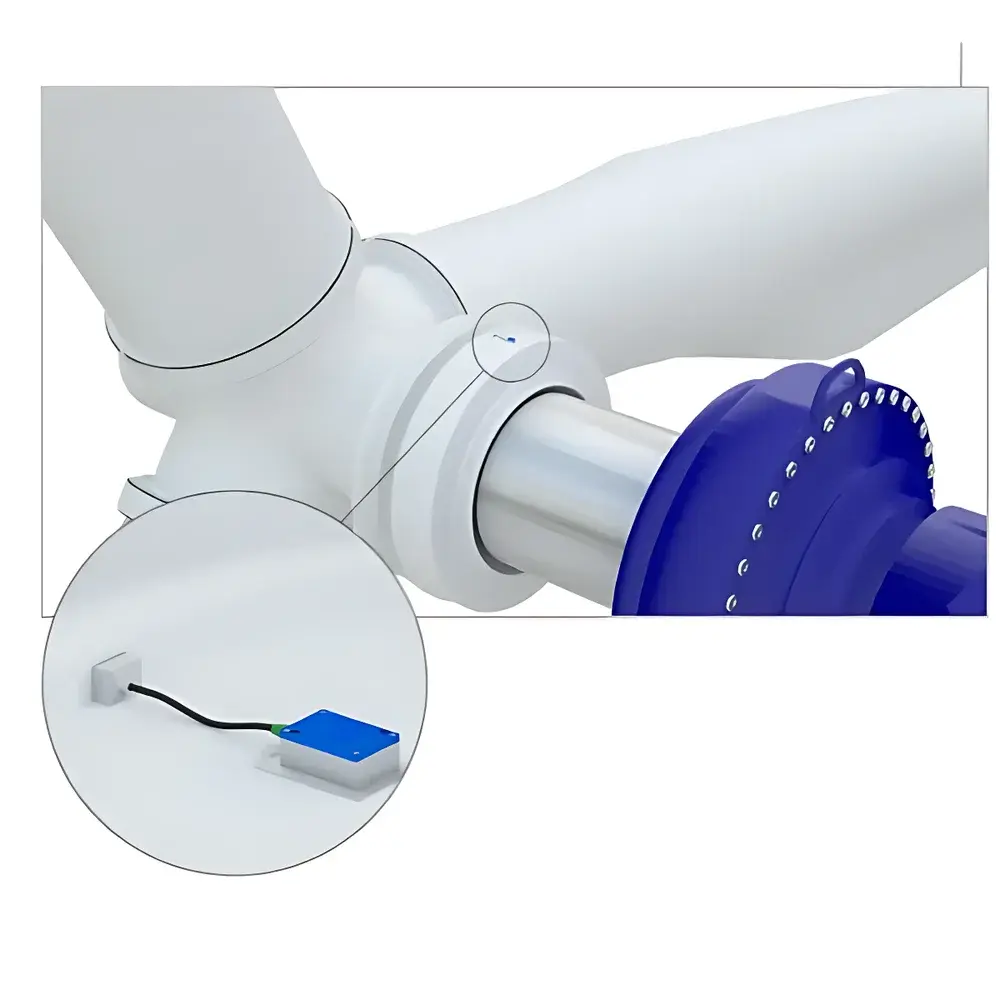
The Micro-Hybrid inertialSENSOR ACC5703 is a high-stability, industrial-grade three-axis accelerometer engineered for demanding environmental monitoring, mobile asset tracking, and automotive electronic applications. Based on robust MEMS capacitive sensing technology, it delivers precise dynamic acceleration measurements across orthogonal X-, Y-, and Z-axes under harsh mechanical and thermal conditions. Its wide configurable measurement range (±0.1 g to ±8 g) supports both low-g vibration analysis—such as structural health monitoring of bridges or wind turbine towers—and higher-g transient event detection, including vehicle crash pulse characterization and emergency braking validation. The sensor operates over an extended temperature range (−40 °C to +85 °C), ensuring reliability in uncontrolled outdoor deployments, vehicle-mounted telematics systems, and portable field instrumentation used in disaster response scenarios.
Key Features
- Triple-axis MEMS capacitive sensing architecture with integrated signal conditioning and digital processing
- Configurable full-scale range and frequency bandwidth (0–1000 Hz), enabling application-specific optimization without hardware modification
- Dual analog output modes: 4–20 mA current loop (max. load 390 Ω) and ratiometric 0.5–4.5 V voltage output (min. load 1 kΩ), supporting compatibility with legacy PLCs and modern DAQ systems
- RS485 digital interface compliant with Modbus RTU protocol, facilitating daisy-chain network deployment in distributed environmental sensor arrays
- IP67-rated housing with integrated cable gland (when mated with specified connector), certified for continuous operation in dust-laden, rain-exposed, or splash-prone environments
- Low-noise performance (30 µg/√Hz typ.) and high linearity (0.45 % FSO typ.) ensure metrological integrity for long-term trend analysis and regulatory-compliant data logging
- Supply flexibility: operates from 5–32 VDC with total power consumption below 3 W, suitable for battery-backed portable units and vehicle electrical systems
Sample Compatibility & Compliance
The ACC5703 is designed for direct mounting onto rigid metallic or composite surfaces via M5 threaded inserts or adhesive bonding. It requires no external calibration when installed per manufacturer torque specifications (0.8–1.2 N·m). The device complies with EN 61000-6-2 (immunity) and EN 61000-6-4 (emissions) for industrial environments. Its analog outputs meet IEC 61000-4-4 (EFT) and IEC 61000-4-5 (surge) requirements up to Level 3. While not intrinsically safe, its low-power design and encapsulated construction support use in non-hazardous zone deployments aligned with ATEX Category 3G/3D guidelines. For environmental monitoring applications, the sensor’s stability and traceable calibration path enable adherence to ISO/IEC 17025-accredited measurement practices when integrated into validated data acquisition workflows.
Software & Data Management
Configuration and real-time monitoring are supported via Micro-Hybrid’s proprietary PC-based toolset (ACC-ConfigSuite v3.x), which provides intuitive parameter setup—including filter coefficients, scaling factors, and alarm thresholds—for both analog and digital channels. The RS485 interface supports timestamped data streaming at up to 4 kHz, compatible with industry-standard SCADA platforms (e.g., Ignition, Siemens Desigo CC) and time-series databases (InfluxDB, TimescaleDB). All configuration changes are logged with user ID and timestamp; firmware updates preserve prior settings and support rollback. Audit trails comply with GLP and FDA 21 CFR Part 11 requirements when deployed with validated host software and electronic signature modules.
Applications
- Real-time road surface condition assessment in intelligent transportation systems (ITS)
- Vibration-based fault detection in rotating machinery within remote utility substations
- Seismic precursor monitoring in landslide-prone regions using solar-powered wireless nodes
- Crash pulse reconstruction and airbag trigger logic validation in ADAS development vehicles
- Structural integrity verification of temporary emergency shelters during post-disaster deployment
- Dynamic load profiling of cargo containers during intermodal transport (rail, truck, ship)
FAQ
Is the ACC5703 calibrated before shipment?
Yes — each unit undergoes individual factory calibration against NIST-traceable reference standards, with calibration certificate (including sensitivity, offset, and cross-axis error data) provided with delivery.
Can the analog and digital outputs operate simultaneously?
Yes — all output channels (4–20 mA, 0.5–4.5 V, RS485, and switching output) are active concurrently and synchronized to the internal sampling clock.
What mounting orientation affects zero bias?
The sensor exhibits minimal thermal zero shift (±0.2 mg/K typ.), but mechanical stress from improper mounting torque or substrate warping may introduce static offset; follow the torque specification (0.8–1.2 N·m) and use flat, rigid mounting surfaces.
Does it support synchronization across multiple units?
No native hardware sync input is provided; however, deterministic latency (<50 µs jitter) and Modbus timestamping enable software-level time alignment in multi-sensor networks with sub-millisecond precision.
Is firmware update capability available in the field?
Yes — firmware updates are performed over RS485 using signed binary packages; the bootloader validates digital signatures and maintains dual-bank memory to prevent bricking during power interruption.
Related Products







