
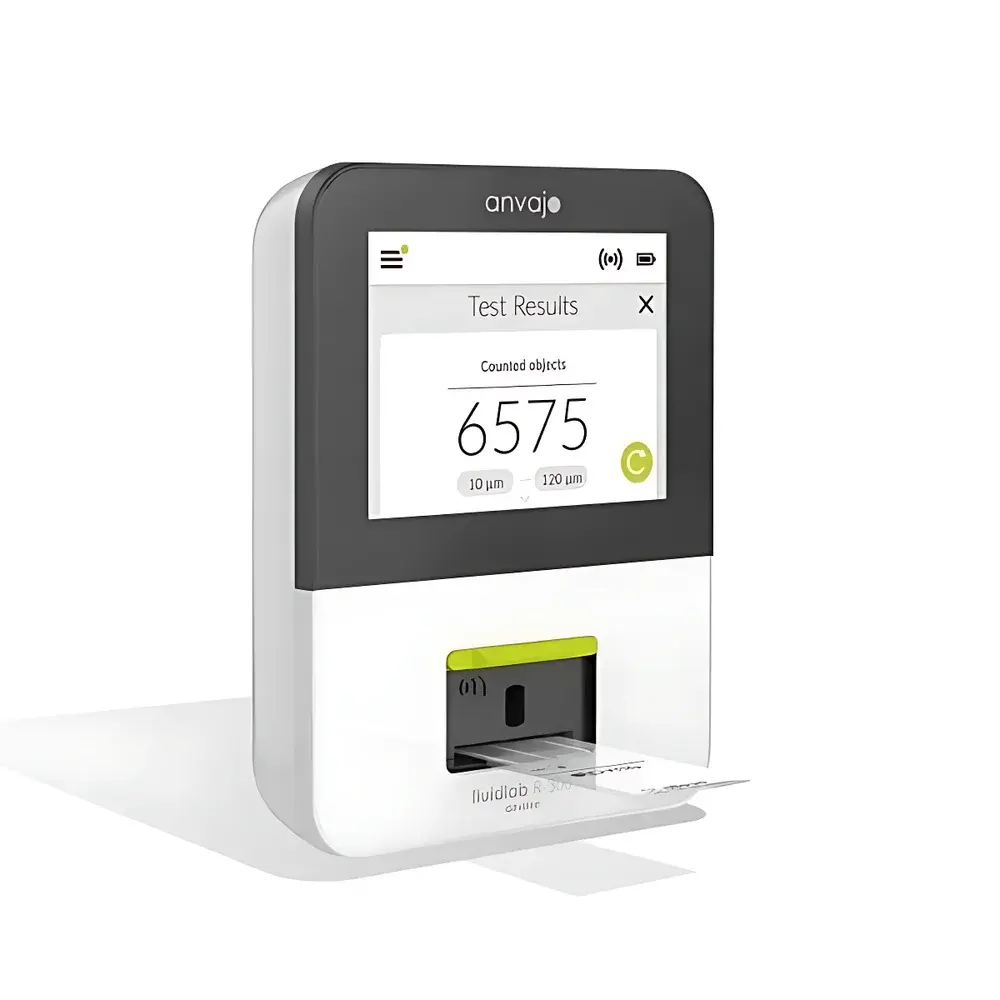
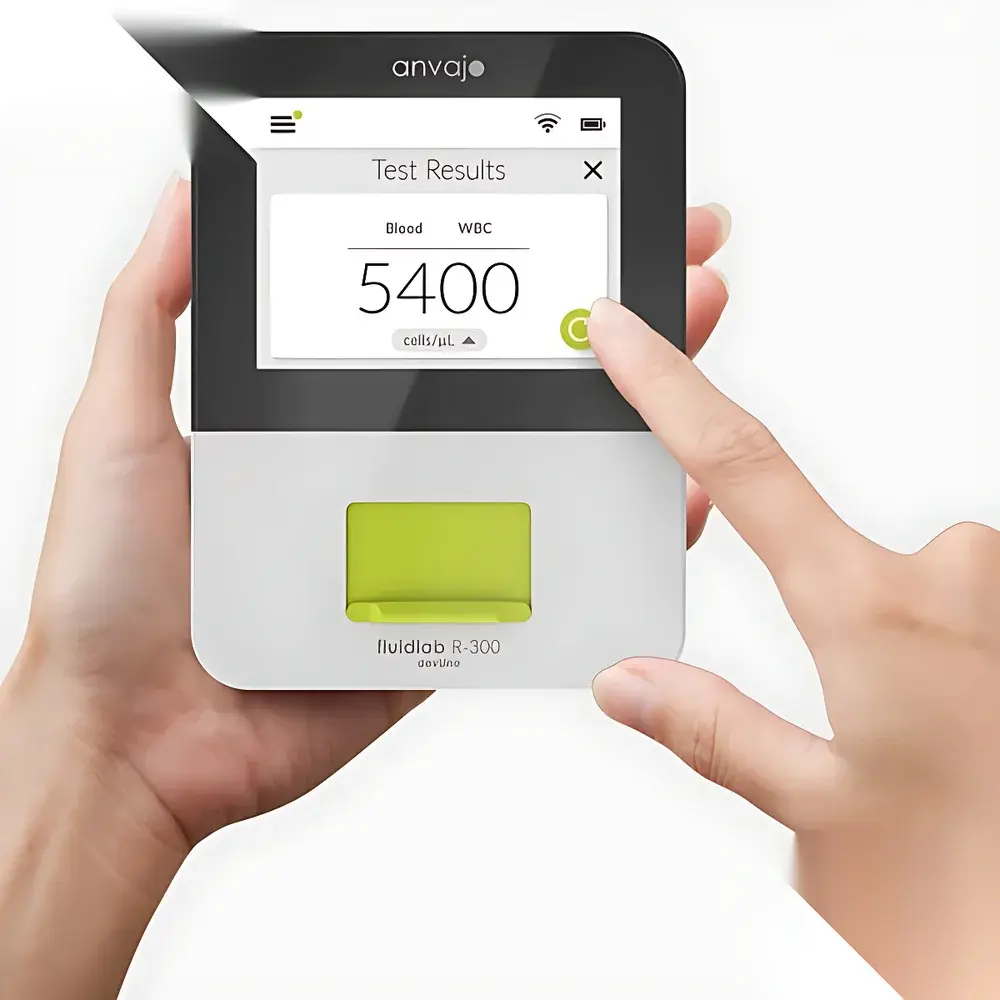
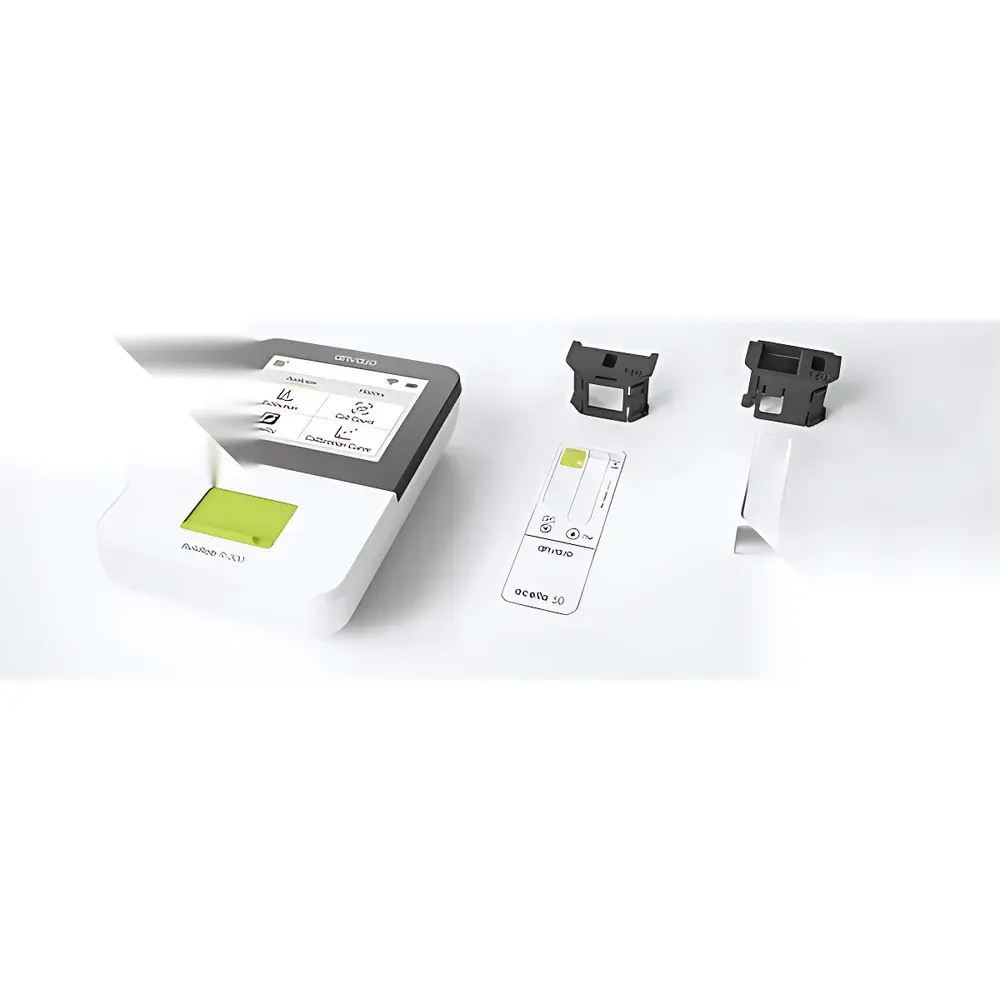
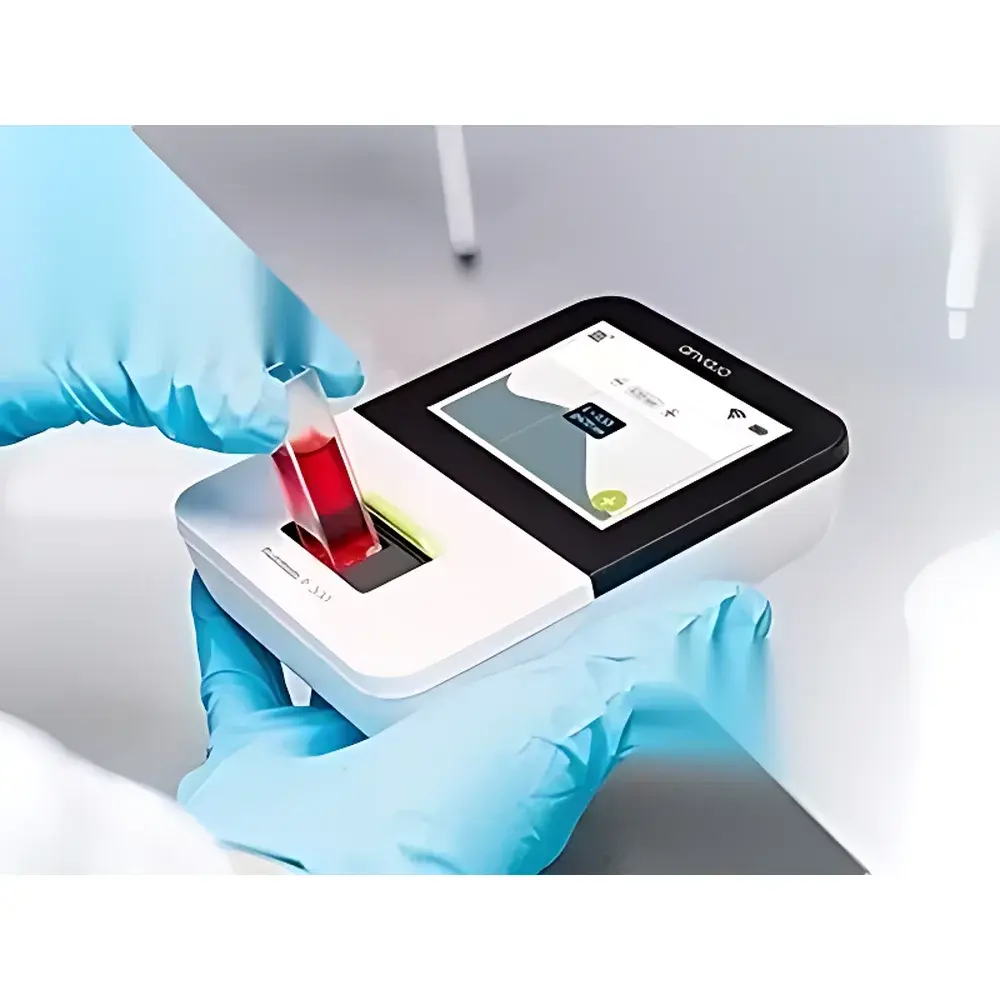
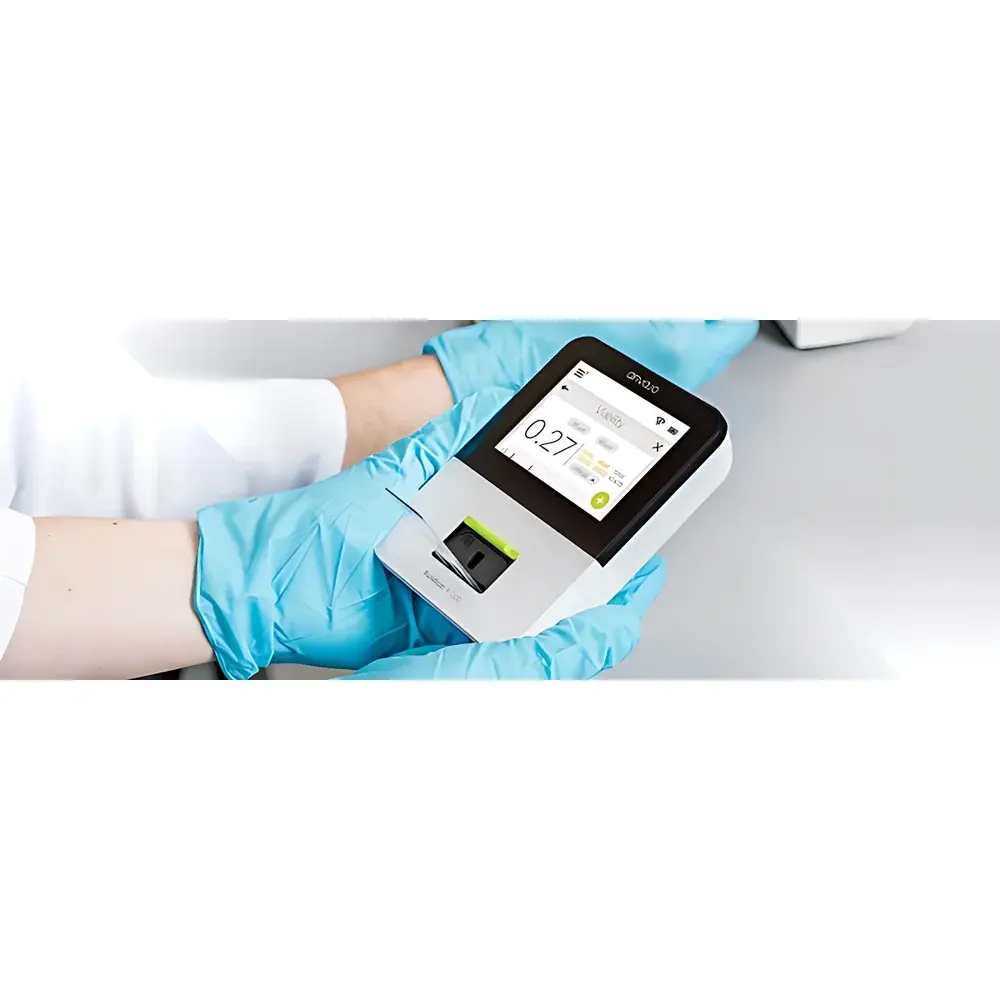
Anvajo fluidlab R-300 Portable Cell Counter & UV-Vis Spectrophotometer
| Brand | Anvajo |
|---|---|
| Origin | USA (Designed in Germany, Assembled/Qualified in USA) |
| Manufacturer Type | Authorized Distributor |
| Product Origin | Imported |
| Model | fluidlab R-300 |
| Pricing | Available Upon Request |
Overview
The Anvajo fluidlab R-300 is a dual-function, benchtop-portable analytical instrument engineered for integrated cell analysis and UV-Vis absorbance spectroscopy. It uniquely combines digital holographic microscopy (DHM)—a label-free, non-invasive imaging modality rooted in coherent laser interferometry—with full-spectrum photometric measurement (375–700 nm). Unlike conventional brightfield or fluorescence-based counters requiring dyes or fixation, the R-300 quantifies viable and total cell populations directly from native suspension by reconstructing 3D refractive index maps from single-shot holograms. This enables real-time, stain-free viability assessment based on intrinsic optical path length differences between live and dead cells—principally driven by membrane integrity and cytoplasmic density changes. Its compact, battery-capable form factor supports deployment across core labs, bioprocessing suites, field sites, and GMP-adjacent QC environments where space, speed, and regulatory traceability are critical.
Key Features
- Digital Holographic Microscopy (DHM) engine: Enables rapid (<20 s), automated cell counting and viability determination without chemical staining or sample preparation
- Cell size range: 3–80 µm (total count); 8–80 µm (viability discrimination), suitable for mammalian cells, yeasts, algae, and bacterial aggregates
- Minimal sample volume requirement: 4–20 µL per measurement—optimized for precious or low-yield cultures
- Integrated UV-Vis spectrophotometer: Fixed-wavelength scanning across 375–700 nm with <1.5 nm optical resolution; supports OD600, protein A280/A260, turbidity, and kinetic time-series assays
- Auto-focusing and AI-assisted image segmentation: Eliminates manual focus adjustment and reduces operator-dependent variability
- Large-field-of-view (LFoV) optics: Captures >10⁵ cells per frame, ensuring statistical robustness (CV <5% for n ≥ 3 replicates)
- No routine recalibration or lamp replacement: Solid-state LED light sources and factory-traceable optical calibration ensure long-term measurement stability
Sample Compatibility & Compliance
The fluidlab R-300 accepts standard 10 × 10 mm cuvettes for spectrophotometric measurements and proprietary disposable microfluidic slides for DHM-based cell analysis. These slides are manufactured under ISO 13485-certified processes and are supplied sterile and RNase/DNase-free. The system complies with ISO 21501-3 for particle sizing methodology equivalence and aligns with ASTM E2877-22 guidelines for optical cell counting validation. For regulated environments, the instrument supports audit-ready data export (CSV, PDF, PNG) with embedded metadata (timestamp, operator ID, slide lot, firmware version). While not FDA 510(k)-cleared as an IVD device, its design principles adhere to GLP and GMP documentation expectations—including full traceability of measurement parameters and user actions via Datalab software logs.
Software & Data Management
Anvajo Datalab is a desktop application (Windows/macOS) that establishes secure Wi-Fi or direct hotspot connectivity with the R-300. It provides centralized control over both DHM and spectrophotometric workflows, including protocol templating, multi-parameter batch processing, and comparative cohort analysis. All raw holograms and spectral scans are stored locally with SHA-256 checksums. Export functions support FAIR data principles: measurements include embedded EXIF-like metadata (exposure time, numerical aperture, integration gain, wavelength step), enabling reproducible reprocessing. Firmware updates are delivered via signed OTA packages with cryptographic verification. Datalab also generates CFR Part 11–compatible electronic records when configured with user authentication and session logging—meeting requirements for QC laboratories operating under 21 CFR Part 11 and EU Annex 11.
Applications
- Bioprocess monitoring: Real-time tracking of CHO, HEK293, or hybridoma culture viability and density during upstream development
- Cell banking & cryopreservation QC: Post-thaw viability assessment without trypan blue artifacts or osmotic stress
- Microbial fermentation: Rapid OD600 kinetics and yeast/bacterial concentration estimation in bioreactor samples
- Academic research: Label-free longitudinal studies of apoptosis, necrosis, or drug-induced cytotoxicity
- Point-of-use diagnostics: Field-deployable quantification of algal biomass, probiotic suspensions, or vaccine titers
- Teaching labs: Integrated platform for teaching core concepts in biophotonics, quantitative microscopy, and spectrophotometric assay design
FAQ
Does the fluidlab R-300 require daily calibration or routine maintenance?
No. The instrument uses factory-calibrated solid-state optical components and does not rely on consumable lamps or mechanical moving parts. Annual verification using NIST-traceable reference slides and cuvettes is recommended for ISO-compliant environments.
Can it distinguish between apoptotic and necrotic cells?
It reports overall viability based on morphological and refractive index criteria derived from DHM phase contrast. While it does not classify apoptosis-specific markers (e.g., phosphatidylserine exposure), its high-resolution phase images can be exported for secondary analysis with third-party AI tools.
Is the Datalab software compatible with LIMS integration?
Yes—Datalab supports configurable CSV/XML export templates and RESTful API access (available under enterprise license), enabling bidirectional synchronization with major LIMS platforms including LabVantage, STARLIMS, and Thermo Fisher SampleManager.
What is the maximum allowable debris concentration for reliable cell counting?
The system tolerates up to 15% (v/v) particulate interference (e.g., cell debris, microcarriers) without significant impact on accuracy, provided particles fall outside the 3–80 µm detection window or exhibit distinct phase signatures.
How is data security handled during Wi-Fi transmission?
All wireless communication uses WPA2-Enterprise encryption with TLS 1.2+ tunneling. Device pairing requires explicit user approval, and no measurement data is stored on cloud servers unless explicitly uploaded by the operator.





