Environmental Management System (EMS) for Laboratories
| Brand | SCYZ (Sichuan Yan Zhi) |
|---|---|
| Origin | Sichuan, China |
| Manufacturer Type | Authorized Distributor |
| Regional Classification | Domestic (China) |
| Model | Custom-Configurable |
| Pricing | Available Upon Request |
Overview
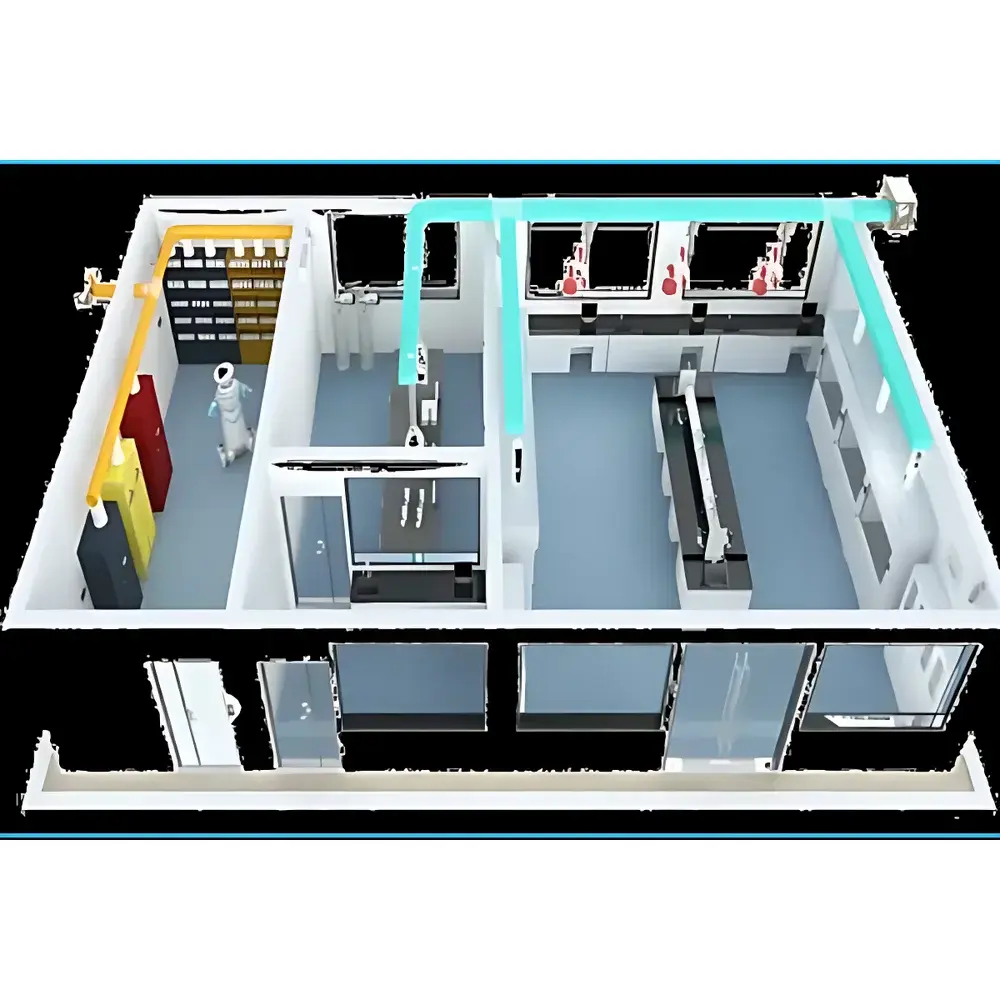
The Environmental Management System (EMS) for Laboratories is an integrated, software-driven infrastructure platform engineered to monitor, analyze, and regulate critical environmental parameters across analytical and testing laboratories. Built on a four-layer architecture—perception layer (sensor networks), transmission layer (secure IoT protocols), platform layer (centralized database and rule engine), and control layer (actuator integration)—the system implements real-time, multi-parameter environmental surveillance in compliance with ISO/IEC 17025:2017 Clause 6.3 (environmental conditions) and GLP principles governing laboratory facility integrity. It does not perform physical measurements itself but serves as the central orchestration hub that acquires, validates, contextualizes, and acts upon environmental telemetry from certified third-party sensors (e.g., NIST-traceable hygrometers, Class 2 sound level meters, PM2.5/CO₂ analyzers, and calibrated lux meters). Its primary operational scope includes maintaining documented environmental stability for method validity, instrument calibration integrity, reference material storage, and sample holding conditions—ensuring that “environment” (the ‘E’ in the QA/QC ‘people, equipment, materials, methods, environment, measurement’ framework) remains within defined, auditable tolerances.
Key Features
- Multi-Parameter Real-Time Monitoring: Aggregates time-synchronized data streams from distributed sensors measuring temperature (±0.3 °C accuracy), relative humidity (±2% RH), ambient noise (30–130 dB(A)), illuminance (0–200,000 lux), airborne particulates (PM1.0/PM2.5/PM10), CO₂ concentration (0–5000 ppm), and water quality indicators (pH, conductivity, turbidity) where integrated.
- Anomaly Detection & Predictive Alerting: Implements statistical process control (SPC) algorithms—including Shewhart control charts, moving range analysis, and deviation thresholding—to identify out-of-specification trends ≥15 minutes before parameter breach; alerts are delivered via email, SMS, and in-platform dashboard notifications with severity tagging (Level 1–3).
- Actuator Integration & Closed-Loop Control: Interfaces natively with BACnet/IP, Modbus TCP, and dry-contact relay outputs to trigger HVAC setpoint adjustments, humidifier/dehumidifier activation, fume hood sash positioning, emergency ventilation ramp-up, and lighting dimming—all governed by user-defined logic rules and priority hierarchies.
- Audit-Ready Reporting Engine: Generates PDF/CSV reports compliant with ISO 19011 audit trail requirements, including timestamped sensor metadata, calibration status flags, operator login logs, and change history for all configuration modifications.
Sample Compatibility & Compliance
The EMS is agnostic to sample type or assay methodology; its function is infrastructural—not analytical. It supports laboratories conducting chemical analysis (e.g., HPLC, ICP-MS), microbiological testing (ISO 11133), stability studies (ICH Q1–Q5), and reference material certification (ISO 17034). All environmental thresholds are configurable per SOP and align with regulatory expectations: USP <1058> Analytical Instrument Qualification (AIQ) for environmental influence assessment, FDA 21 CFR Part 11 electronic record integrity for logged data, and EU Annex 11 computerized system validation (CSV) principles. Sensor hardware must be independently validated per ISO/IEC 17025 Section 6.4 prior to EMS integration.
Software & Data Management
The system runs on a hardened Linux-based server (on-premise or private cloud deployment) with PostgreSQL relational database backend. Role-based access control (RBAC) enforces segregation of duties (e.g., analyst, supervisor, QA auditor, IT administrator). All environmental data is stored with immutable timestamps, cryptographic hashing, and daily encrypted backups. Audit trails capture every data point ingestion, manual override, report generation, and user session—including IP address, duration, and action type—meeting GLP/GMP data integrity requirements. Optional integration with LIMS (e.g., LabWare, Thermo Fisher SampleManager) enables automatic linkage of environmental context to test records.
Applications
- Regulatory-compliant environmental qualification of analytical instrument rooms (e.g., FTIR, GC-MS suites requiring ±1 °C/±5% RH stability)
- Continuous monitoring of cold chain storage areas for biological standards and reagents (2–8 °C, -20 °C, -70 °C zones)
- Dynamic adjustment of cleanroom pressure differentials and particle counts per ISO 14644-1 Class 5–8 specifications
- Energy consumption analytics correlating HVAC runtime with occupancy patterns and external weather data
- Root cause analysis support during OOS/OOT investigations by retrieving historical environmental conditions at time of assay execution
FAQ
Does the EMS include physical sensors or only software?
The EMS platform requires externally installed, calibrated environmental sensors. SCYZ provides system integration services and can recommend NIST-traceable sensor vendors meeting ISO/IEC 17025 accreditation criteria.
Can the system interface with existing building management systems (BMS)?
Yes—native drivers support BACnet MS/TP, BACnet IP, Modbus RTU/TCP, and OPC UA. Custom API connectors (RESTful JSON) are available for proprietary BMS platforms.
Is data export compliant with FDA 21 CFR Part 11?
Electronic records generated by the EMS include digital signatures, audit trails, and secure e-signature workflows when deployed with validated identity management (e.g., LDAP/Active Directory integration and two-factor authentication).
What is the typical implementation timeline?
Standard deployment—including sensor mapping, network configuration, rule engine setup, and UAT—requires 6–10 weeks for a mid-size laboratory (≤15 monitored zones).
Does SCYZ provide validation documentation?
Yes—SCYZ delivers IQ/OQ documentation packages aligned with GAMP 5 guidelines, including traceability matrices, test scripts, and summary reports suitable for internal QA review or regulatory inspection.