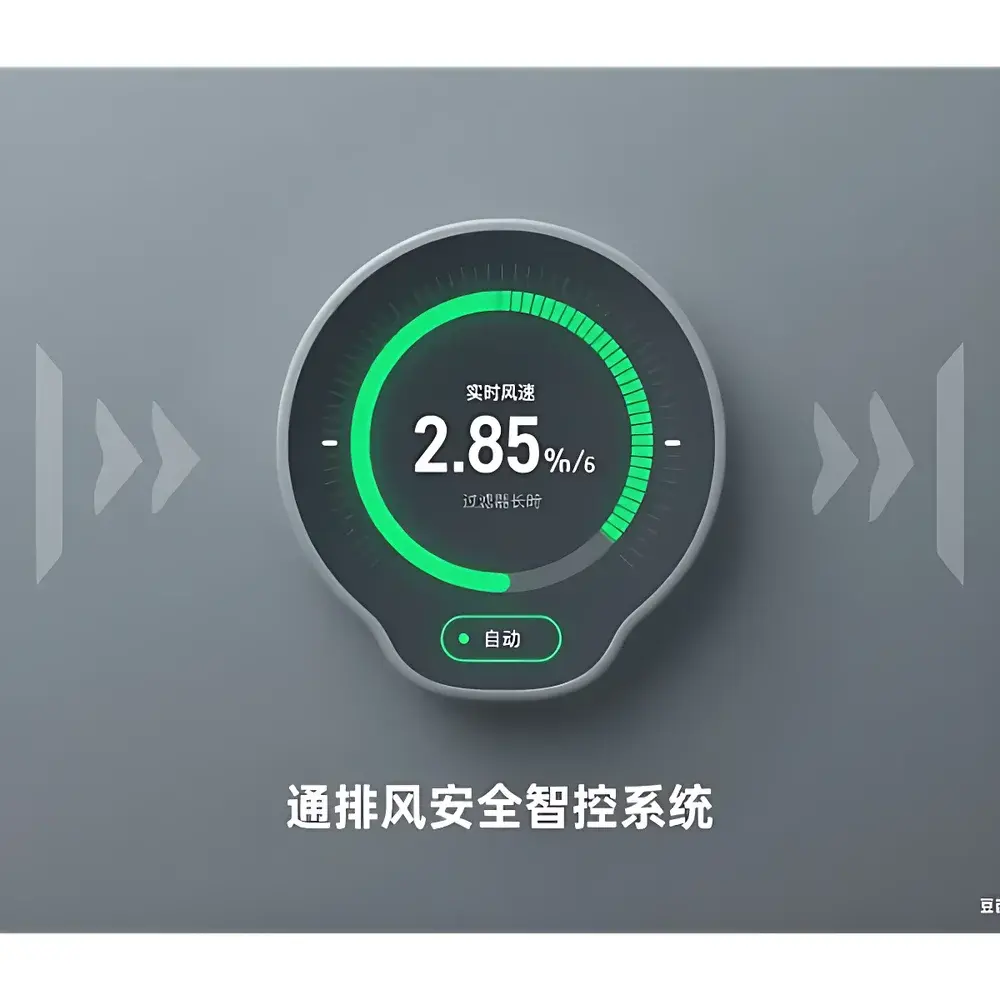
SCYZ Intelligent Laboratory Ventilation Safety Control System
| Brand | SCYZ |
|---|---|
| Origin | Sichuan, China |
| Manufacturer Type | Authorized Distributor |
| Product Origin | Domestic (China) |
| Model | Custom-Configurable |
| Pricing | Available Upon Request |
Overview
The SCYZ Intelligent Laboratory Ventilation Safety Control System is an integrated engineering solution designed for precision management of laboratory air quality and exhaust ventilation. Built upon a layered architecture—comprising sensing, transmission, platform, and control layers—the system implements closed-loop feedback control using real-time air quality data, motorized fan actuation, and programmable logic. It operates on the fundamental principle of demand-controlled ventilation (DCV), where airflow rates are dynamically modulated in response to measured concentrations of volatile organic compounds (VOCs), carbon dioxide (CO₂), particulate matter (PM₂.₅/PM₁₀), and other hazardous airborne contaminants typical in chemical, pharmaceutical, and analytical laboratories. Unlike fixed-speed ventilation systems, this architecture ensures continuous compliance with occupational exposure limits (OELs) defined by OSHA 29 CFR 1910.1200 and ACGIH TLVs, while maintaining energy efficiency and operational traceability required under ISO/IEC 17025:2017 Clause 6.3 (Environmental Conditions) and GLP Principle 5 (Facility Management).
Key Features
- Demand-Responsive Fan Control: Motorized centrifugal fans (0.55–2.2 kW) support continuous 0–100% variable-speed operation via PID-regulated VFD output, enabling precise airflow modulation based on real-time sensor inputs.
- Multi-Parameter Air Quality Monitoring: Integrated sensors continuously measure CO₂, VOCs (ppm range), temperature, relative humidity, and airborne particulates—calibrated per ISO 16000-23 and ASTM D6196 standards.
- Automated Start/Stop Sequencing: Logic-based activation synchronized with lab activity schedules, fume hood sash position signals, or external LIMS/API triggers—minimizing idle runtime and reducing cumulative fan wear.
- Fault Diagnostics & Event Logging: Embedded self-diagnostics detect motor current anomalies, thermal overload, communication timeout, and sensor drift; all events logged with timestamps and severity codes compliant with FDA 21 CFR Part 11 audit trail requirements.
- Remote Supervisory Interface: Web-based HMI accessible via secure HTTPS/TLS connection, supporting role-based user permissions (admin/operator/auditor), live status dashboards, and historical trend export in CSV/PDF formats.
- Environmental Resilience: IP54-rated enclosure housing industrial-grade PLC and I/O modules; operational within –10 °C to +50 °C ambient range—validated per IEC 60068-2 environmental testing protocols.
Sample Compatibility & Compliance
The system is engineered for integration into general chemistry, biosafety level 1–2 (BSL-1/2), and QC/QA laboratories handling solvents, acids, alkaline reagents, and low-to-moderate volatility compounds. It supports seamless interoperability with third-party devices including fume hoods (e.g., Thermo Fisher, Erlab), HVAC BMS platforms (BACnet/IP, Modbus TCP), and laboratory information management systems (LIMS) via RS485 serial or Ethernet interfaces. All firmware and configuration data adhere to ISO/IEC 27001-aligned security practices, and system validation documentation—including IQ/OQ protocols—is provided to support GxP-regulated environments subject to FDA, EMA, or NMPA inspections.
Software & Data Management
The embedded SCYZ-VentOS v2.1 control software provides deterministic real-time scheduling, configurable alarm thresholds (with hysteresis), and granular event logging (minimum 12-month retention). Data integrity is enforced through cryptographic hashing of log entries and write-once archival mode. Exported datasets include timestamped sensor readings, fan speed profiles, alarm history, and maintenance alerts—formatted for direct ingestion into statistical process control (SPC) tools or enterprise data lakes. Optional 21 CFR Part 11 compliance package includes electronic signature workflows, user authentication (LDAP/Active Directory), and immutable audit trails with operator attribution.
Applications
- Chemical synthesis labs requiring dynamic VOC abatement during reflux, distillation, or solvent evaporation steps.
- Pharmaceutical QC laboratories maintaining ISO 14644-1 Class 7/8 cleanroom-adjacent ventilation stability.
- University teaching labs deploying standardized safety protocols across multiple concurrent experiments.
- Environmental testing facilities managing multi-zone exhaust demands from TO-15, EPA Method 25A, or ASTM D5197 workflows.
- Industrial R&D centers integrating ventilation control into broader digital twin frameworks for facility energy optimization.
FAQ
Does the system support integration with existing BMS or LIMS platforms?
Yes—native Modbus TCP, BACnet/IP, and OPC UA drivers are included; custom API adapters can be commissioned for proprietary systems.
What calibration standards apply to the onboard air quality sensors?
Sensors are factory-calibrated against NIST-traceable reference gases and particulate standards; field recalibration intervals follow ISO 17025-recommended practices (typically every 6–12 months depending on usage intensity).
Is cybersecurity certification available for regulated environments?
The system meets IEC 62443-3-3 SL2 requirements; full penetration test reports and SOC 2 Type II attestation documentation are available under NDA.
Can ventilation setpoints be modified remotely without physical access?
Yes—authorized users may adjust alarm thresholds, schedule parameters, and fan curves via the web HMI with dual-factor authentication and session timeout enforcement.
How is system uptime ensured during network outages?
Local PLC retains last-known-good configuration and executes fail-safe ventilation mode (minimum 6 ACH) autonomously until network recovery; all offline events are buffered and synced upon reconnection.
Related Products