
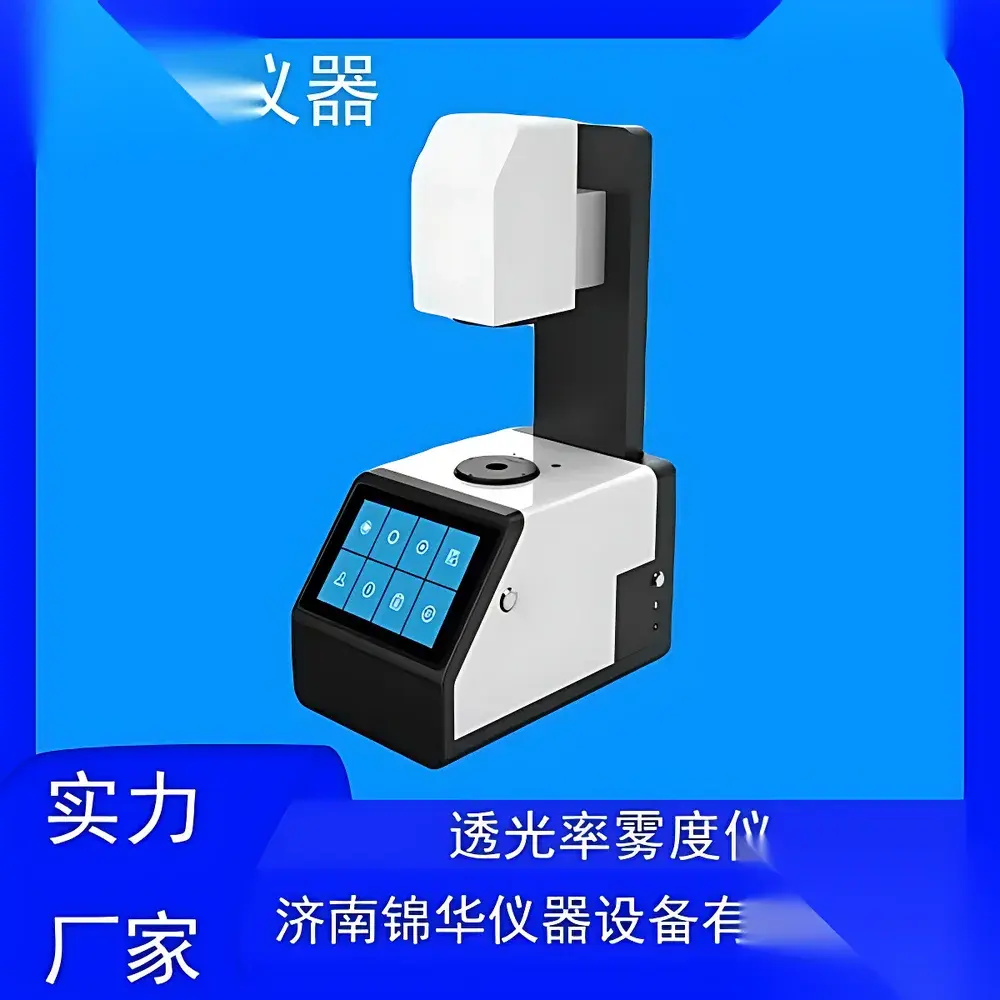
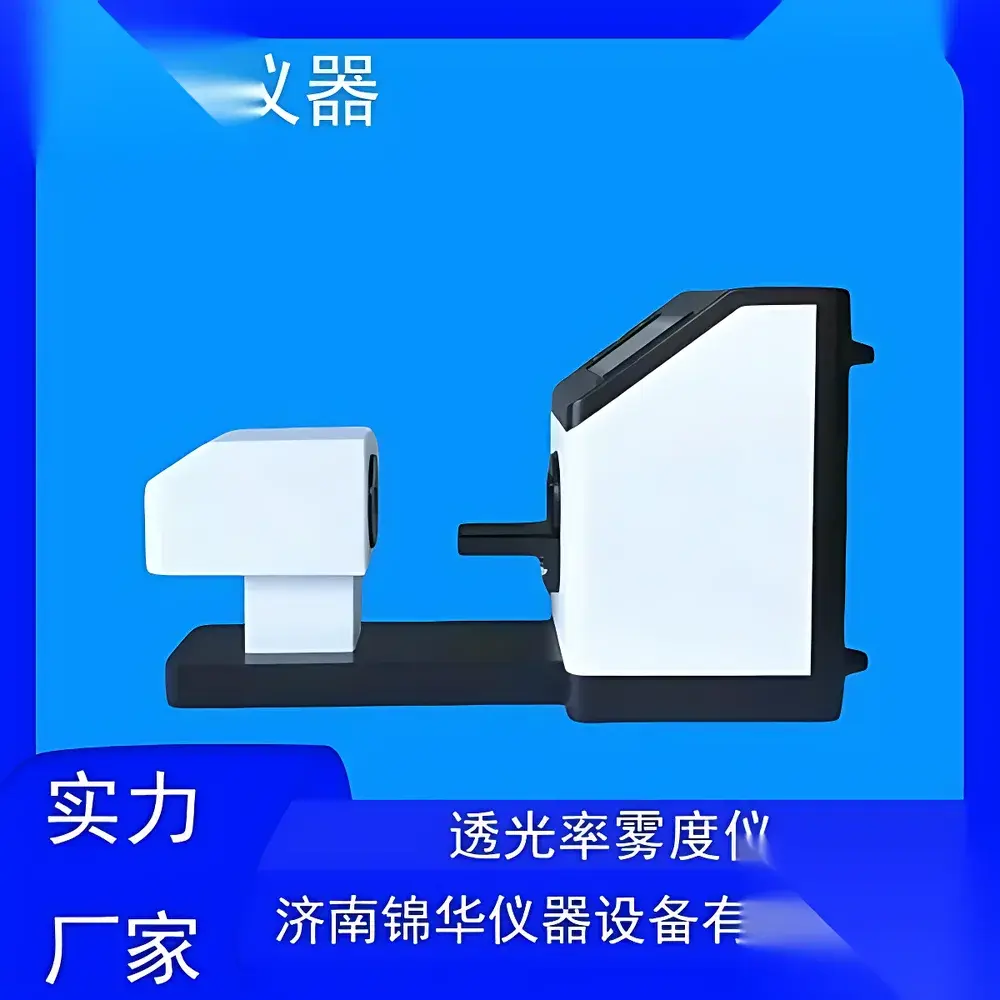
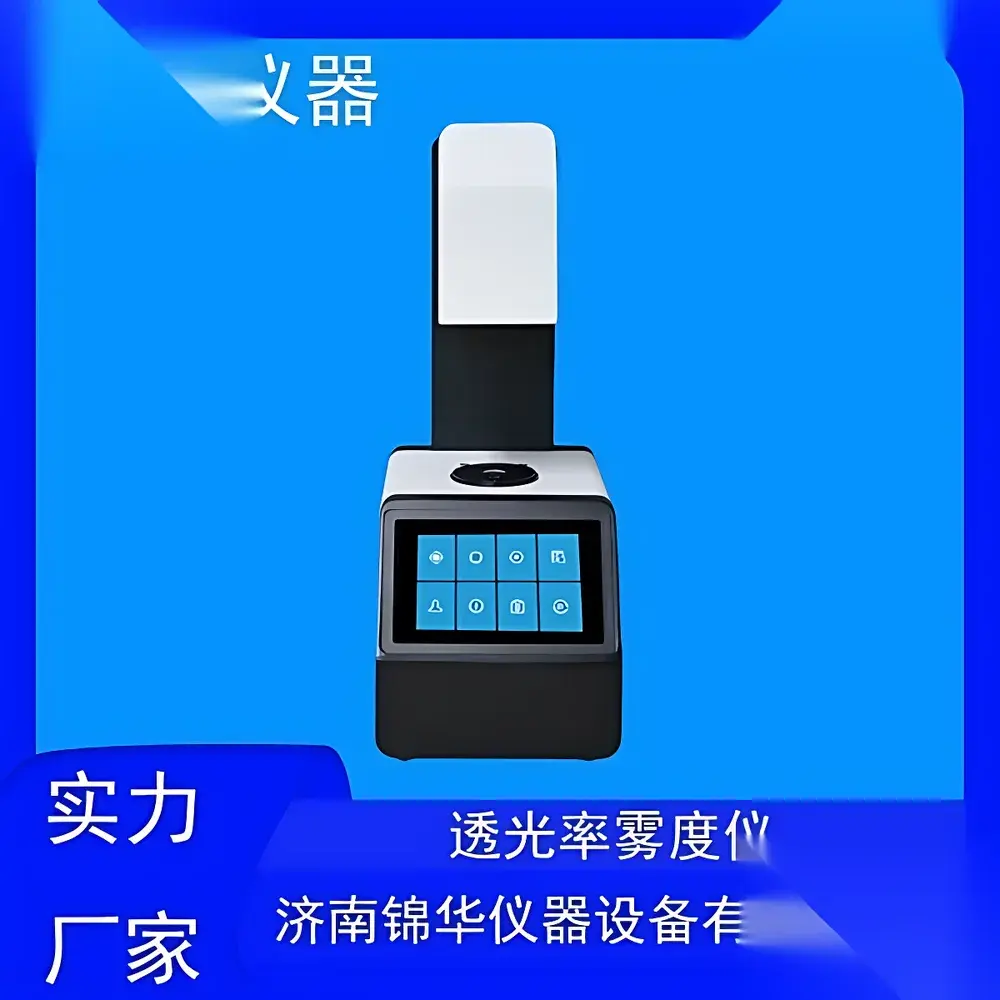
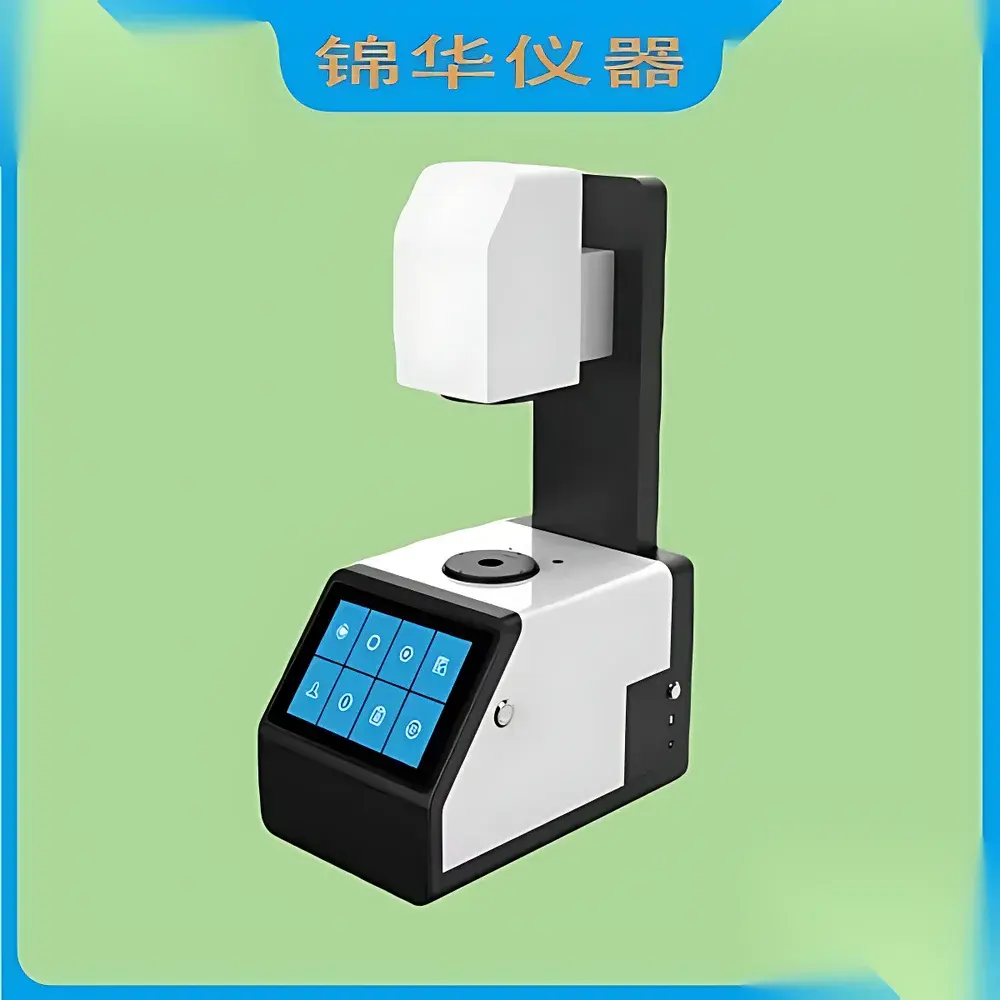
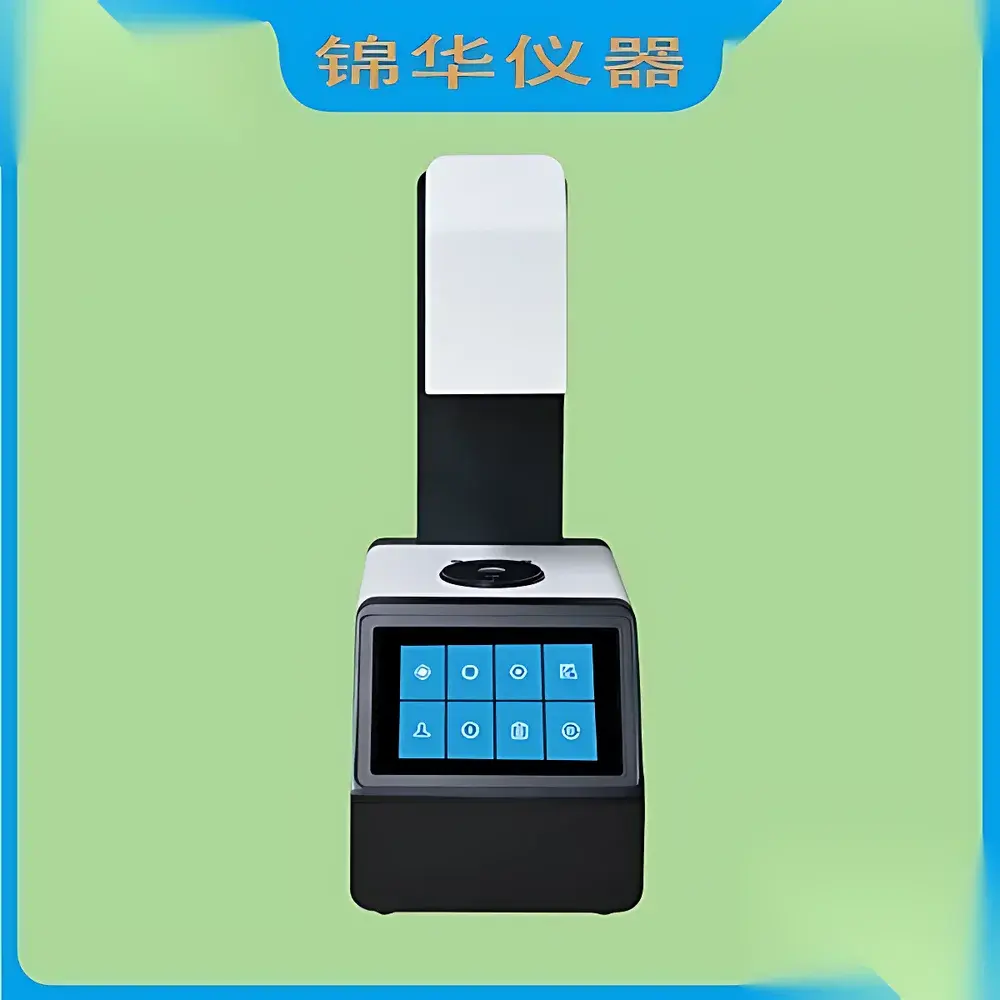
Jinhuatester TH-02 Haze and Luminous Transmittance Meter
| Brand | Jinhuatester |
|---|---|
| Model | TH-02 |
| Measurement Principle | 0/D geometry (diffuse transmission) |
| Standards Compliance | ASTM D1003, ASTM D1044, ISO 13468, ISO 14782, GB/T 2410, JIS K 7105, JIS K 7361, JIS K 7136 |
| Illuminants | CIE-A, CIE-C, CIE-D65 |
| Aperture Sizes | 21 mm, 7 mm |
| Display | 7-inch capacitive touchscreen, Android OS |
| Measurement Time | ≤1.5 s |
| Repeatability | ±0.05% |
| Resolution | 0.01% |
| Transmittance Range | 0–100% |
| Sample Thickness Limit | ≤145 mm |
| Power Supply | DC 12 V / 3 A |
| Operating Temperature | 5–40 °C, RH ≤80% (non-condensing at 35 °C) |
| Storage Temperature | −20–45 °C, RH ≤80% (non-condensing at 35 °C) |
| Dimensions (L×W×H) | 310 × 215 × 540 mm |
| Weight | 6 kg |
| Interface | USB |
Overview
The Jinhuatester TH-02 Haze and Luminous Transmittance Meter is a dual-standard optical measurement instrument engineered for precision assessment of haze and total luminous transmittance in transparent and translucent materials. It operates on the 0/D (zero-degree illumination / diffuse collection) geometry defined in ASTM D1003 and ISO 13468, where collimated incident light strikes the sample at normal incidence, and the total transmitted light—including both direct (specular) and scattered components—is collected by an integrating sphere with a diffusely reflective inner surface. The ratio of scattered light flux to total transmitted light flux yields haze (%), while the ratio of total transmitted light flux to incident light flux determines luminous transmittance (%). This configuration ensures high reproducibility across diverse material types without requiring optical alignment or warm-up time—measurements stabilize within 1.5 seconds after initiation.
Key Features
- Simultaneous compliance with ASTM D1003/D1044 and ISO 13468/ISO 14782, enabling cross-border quality reporting and regulatory alignment in global supply chains
- Dual aperture selection (7 mm and 21 mm) supports standardized testing of small-area samples (e.g., optical films, display cover glass) and larger-format substrates (e.g., architectural glazing, automotive laminates)
- Triple CIE-standard illuminants (A, C, D65) allow spectral weighting consistent with human photopic vision under varying ambient conditions—critical for color-critical applications such as OLED encapsulation and medical packaging
- Open-access measurement chamber accommodates vertical or horizontal orientation, facilitating testing of rigid sheets, flexible films, liquid-filled cuvettes, and curved or oversized specimens up to 145 mm in thickness
- LED-based optical source provides stable spectral output over >50,000 hours, eliminating lamp replacement cycles and drift-related recalibration requirements
- Embedded Android platform with 7-inch capacitive touchscreen delivers intuitive workflow navigation, real-time graphing, and on-device data review—no external PC required for routine operation
Sample Compatibility & Compliance
The TH-02 is validated for use across polymer processing, flat-panel display manufacturing, pharmaceutical packaging, and architectural glazing QA/QC laboratories. Its mechanical design permits unobstructed placement of samples ranging from 0.05 mm PET film to 12 mm tempered glass. All reported haze and transmittance values adhere to the statistical sampling protocols and acceptance criteria outlined in ASTM D1003 Annex A1 (for plastics) and ISO 14782 Clause 7 (for thin films). Instrument calibration traceability follows NIST-traceable reference standards for luminous transmittance (certified neutral-density filters) and haze (polycarbonate reference plaques). The device meets functional requirements for GLP-compliant environments when paired with optional audit trail logging via USB export.
Software & Data Management
Data acquisition, storage, and export are managed through the onboard Android OS interface. Each measurement record includes timestamp, operator ID (configurable), aperture used, illuminant selected, standard applied (ASTM or ISO), and raw photometric values. Up to 10,000 test records can be retained internally; historical datasets are exportable in CSV format via USB 2.0 port for integration into LIMS or statistical process control (SPC) platforms. While the TH-02 does not natively support FDA 21 CFR Part 11 electronic signature functionality, its deterministic measurement logic, non-volatile memory architecture, and immutable timestamping enable retrospective validation in GMP-aligned workflows when documented per internal SOPs.
Applications
- Quality control of anti-reflective and hard-coated optical films used in smartphone displays and AR/VR lenses
- In-process verification of haze uniformity in extruded PMMA and polycarbonate sheets for automotive lighting housings
- Batch release testing of sterile barrier packaging (e.g., Tyvek®-laminated pouches) per ISO 11607-1
- Evaluation of UV-stabilized agricultural greenhouse films under CIE-D65 illumination to assess long-term photo-degradation effects
- Comparative analysis of nanostructured anti-fog coatings on PET substrates using 7 mm aperture for localized homogeneity mapping
FAQ
Does the TH-02 require warm-up before measurement?
No. The solid-state LED light source achieves thermal and photometric stability immediately upon power-on. No warm-up period is specified in the operating manual.
Can the TH-02 measure liquids?
Yes—when used with optional quartz or borosilicate cuvettes (not included), the open chamber supports vertical or horizontal liquid cell positioning. Users must ensure cuvette walls meet ASTM D1003 surface finish requirements.
Is calibration certification included with purchase?
A factory calibration report with reference standard IDs and uncertainty values is supplied. NIST-traceable recalibration services are available through authorized Jinhuatester service centers.
What environmental conditions affect measurement accuracy?
Ambient temperature fluctuations exceeding ±2 °C/hour or relative humidity above 80% at 35 °C may induce condensation on optical surfaces, leading to spurious scatter. The instrument should be operated in climate-controlled labs meeting ISO 29553 environmental class E2.
How is compliance with ISO 13468 verified during operation?
The instrument firmware applies the ISO-defined spectral weighting function (CIE photopic luminosity curve) and integrates measured irradiance across 380–780 nm using pre-characterized LED spectral power distribution data stored in non-volatile memory.




