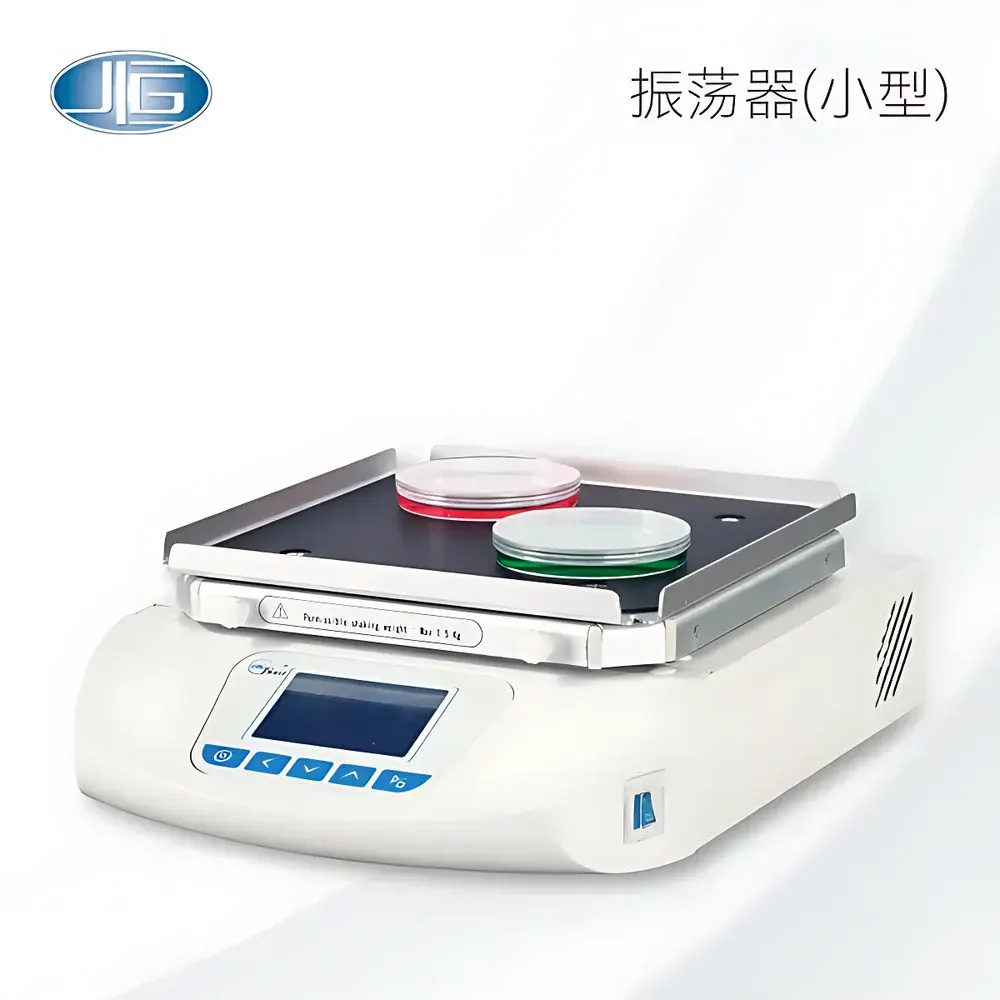
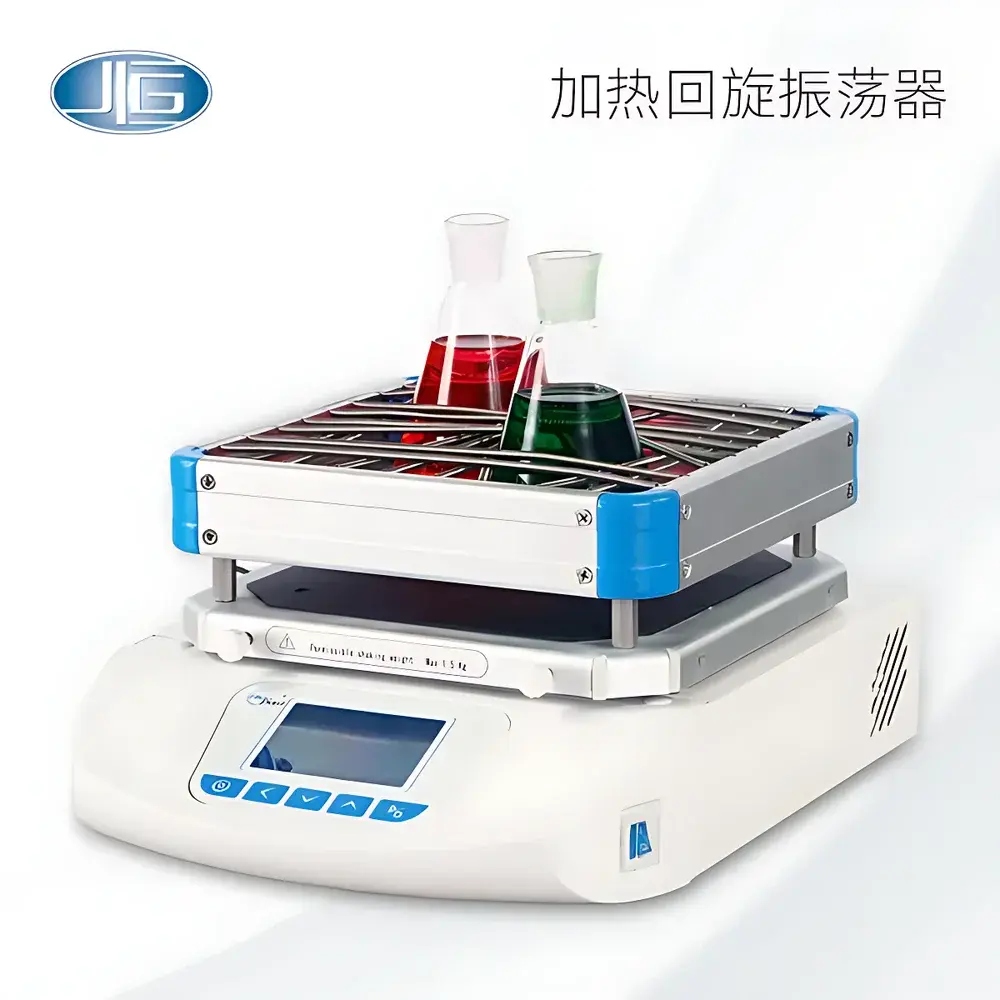
Yiheng HZQ Orbital Shaker with Heating Function
| Brand | Yiheng |
|---|---|
| Origin | Shanghai, China |
| Manufacturer Type | Direct Manufacturer |
| Instrument Category | Air-Bath Constant-Temperature Orbital Shaker |
| Timer Range | 0–5999 min |
| Oscillation Frequency | 40–300 rpm (model-dependent variants: 40–250 rpm |
| Oscillation Amplitude | 20 mm |
| Platform Quantity | 1 |
| Heating Capability | Up to ≥100 °C |
| Drive System | Brushless DC Motor with Adjustable Starting Torque |
| Control Interface | Microprocessor-Based LCD Display with Menu-Driven Operation |
| Safety Features | Power-Failure Recovery, Overload Protection, Auto-Stop on Excessive Vibration |
| Programmability | Multi-Step Ramp/Soak Sequencing (Optional) |
| Platform Fixture | Standard Aluminum Spring Clamp (compatible with Erlenmeyer flasks, test tubes, microplates) |
Overview
The Yiheng HZQ Orbital Shaker with Integrated Heating Function is an engineered platform for precise, reproducible orbital agitation under controlled thermal conditions. Designed around the principle of eccentric-drive orbital motion—where a circular platform rotates about a fixed central axis with a 20 mm displacement radius—the instrument delivers uniform mixing, suspension, and aeration across liquid-phase biological and chemical samples. Unlike conventional air-bath shakers limited to ambient or modestly elevated temperatures, the HZQ series incorporates a high-efficiency resistive heating system capable of sustained operation up to and exceeding 100 °C. This capability enables applications requiring simultaneous thermal activation and mechanical homogenization—such as gel staining/destaining, solid-phase combinatorial synthesis, enzymatic reaction optimization, and temperature-sensitive cell culture maintenance—without compromising oscillation stability or thermal uniformity across the platform surface.
Key Features
- Microprocessor-controlled digital interface with backlit LCD display showing real-time values for temperature, rotational speed (rpm), and remaining timer duration—supporting intuitive menu navigation and parameter lockout to prevent accidental modification during experiments.
- Brushless DC motor architecture delivering high starting torque, wide-speed regulation (40–300 rpm, depending on model variant), constant torque output across the full range, and zero maintenance requirements over extended service life.
- User-adjustable motor start-up torque setting allows optimization for variable load inertia—critical when transitioning between small-volume microtubes and large-capacity flasks—ensuring reliable initiation without stalling or overshoot.
- Integrated safety logic monitors vibration amplitude in real time; automatic shutdown occurs if excessive mechanical resonance or unbalanced loading is detected, followed by smooth deceleration and restart readiness upon correction.
- Modular platform design accommodates rapid interchange of accessory fixtures—including universal aluminum spring clamps (standard), conical flask holders, microplate carriers, and custom tray inserts—enabling seamless adaptation across assay formats without tools.
- Optional multi-segment programming supports up to 9-step time-temperature-speed profiles, facilitating automated incubation cycles, thermal ramping protocols, and sequential agitation phases aligned with kinetic assay timelines.
Sample Compatibility & Compliance
The HZQ shaker accommodates standard laboratory vessels including 15–500 mL Erlenmeyer flasks, 10–100 mL test tubes, 96-well microplates, and Petri dishes. Its open-air bath configuration ensures unrestricted access for gas exchange, reagent addition, or visual monitoring during operation—making it suitable for aerobic microbial cultures, hybridization reactions, and solvent-based chemical syntheses. The unit complies with IEC 61010-1:2010 for electrical safety in laboratory equipment and meets CE marking requirements for electromagnetic compatibility (EMC Directive 2014/30/EU). While not certified for GLP/GMP production environments out-of-the-box, its programmable logging capability (when paired with optional RS-232/USB data export) supports audit-ready recordkeeping aligned with ISO/IEC 17025 traceability expectations for method validation.
Software & Data Management
The base controller operates autonomously without external software dependency. For enhanced documentation, optional communication modules enable serial or USB connectivity to host PCs running Yiheng’s proprietary data acquisition utility—capable of timestamped logging of setpoints and actuals (temperature ±0.5 °C, speed ±2 rpm, time ±1 s), event-triggered alerts, and CSV export compatible with LIMS integration. All logged parameters are stored locally in non-volatile memory with power-failure recovery—retaining active settings and elapsed runtime upon grid restoration per IEC 60664-1 insulation coordination standards.
Applications
- Gel electrophoresis post-run processing: uniform Coomassie or silver staining/destaining at elevated temperatures (50–70 °C) with continuous orbital motion to minimize diffusion artifacts.
- Combinatorial library synthesis: parallel solvent-mediated coupling reactions under inert atmosphere with simultaneous heating (60–100 °C) and gentle agitation to enhance mass transfer in heterogeneous systems.
- Enzyme kinetics assays: controlled thermal ramping from 4 °C (storage) to 37 °C (reaction) while maintaining defined orbital frequency to prevent sedimentation of immobilized biocatalysts.
- Microbial growth studies: aerobic cultivation of thermotolerant strains (e.g., Geobacillus, Bacillus stearothermophilus) at 55–75 °C with consistent O2 transfer via surface-aerated orbital mixing.
- Antibody-antigen binding optimization: temperature-gradient screening of immunoassay incubation steps (25–45 °C) with synchronized shaking to accelerate equilibrium attainment without denaturation.
FAQ
What is the maximum operating temperature of the HZQ heating shaker?
The unit achieves and maintains temperatures up to ≥100 °C across the entire platform surface, verified by calibrated PT100 sensor feedback and PID-controlled heating elements.
Can the HZQ be used for sterile cell culture applications?
While the shaker supports temperature-controlled agitation, it is not classified as a Class II biosafety device; users must implement external sterilization protocols (e.g., UV irradiation, alcohol wiping) and operate within laminar flow hoods when handling viable cells.
Is the timer function programmable for delayed start?
Yes—the microcontroller supports both countdown timing and delay-start functionality, allowing users to schedule initiation up to 5999 minutes after setup.
Does the instrument support external temperature probes for sample-specific monitoring?
No native port exists for external probe input; temperature control and readout are based solely on the integrated chamber sensor. For sample-core measurement, users should employ independent calibrated thermocouples placed directly in representative vessels.
How is calibration traceability maintained for routine QC?
Yiheng provides factory calibration certificates referencing NIST-traceable standards for temperature and speed. End users may perform periodic verification using accredited secondary standards per ISO/IEC 17025 guidelines.