
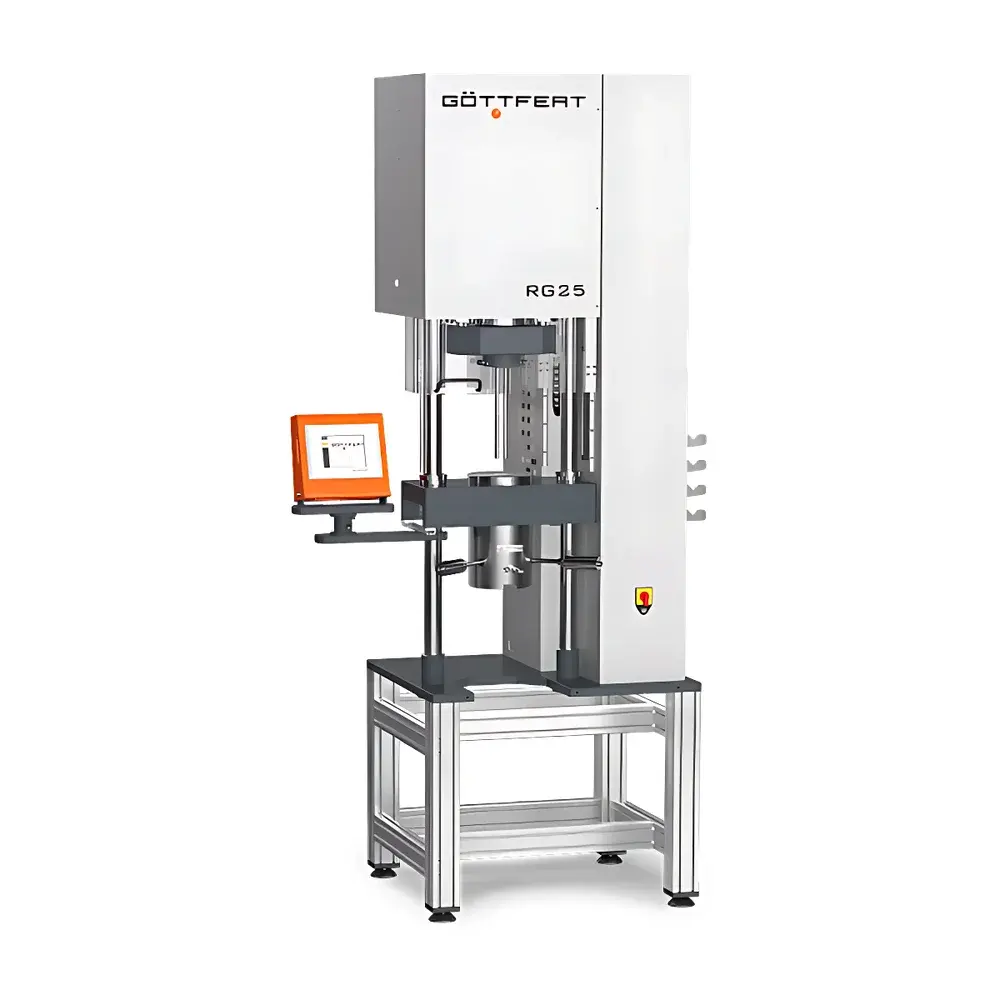
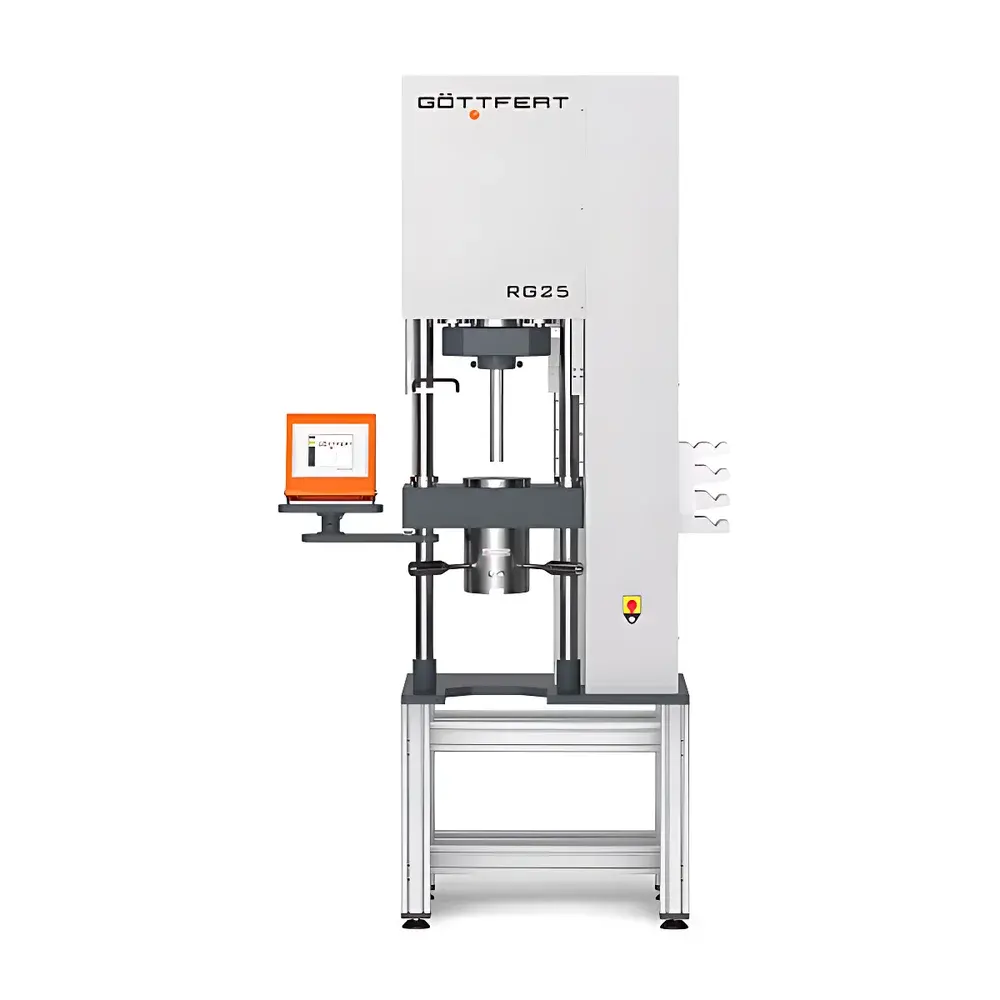
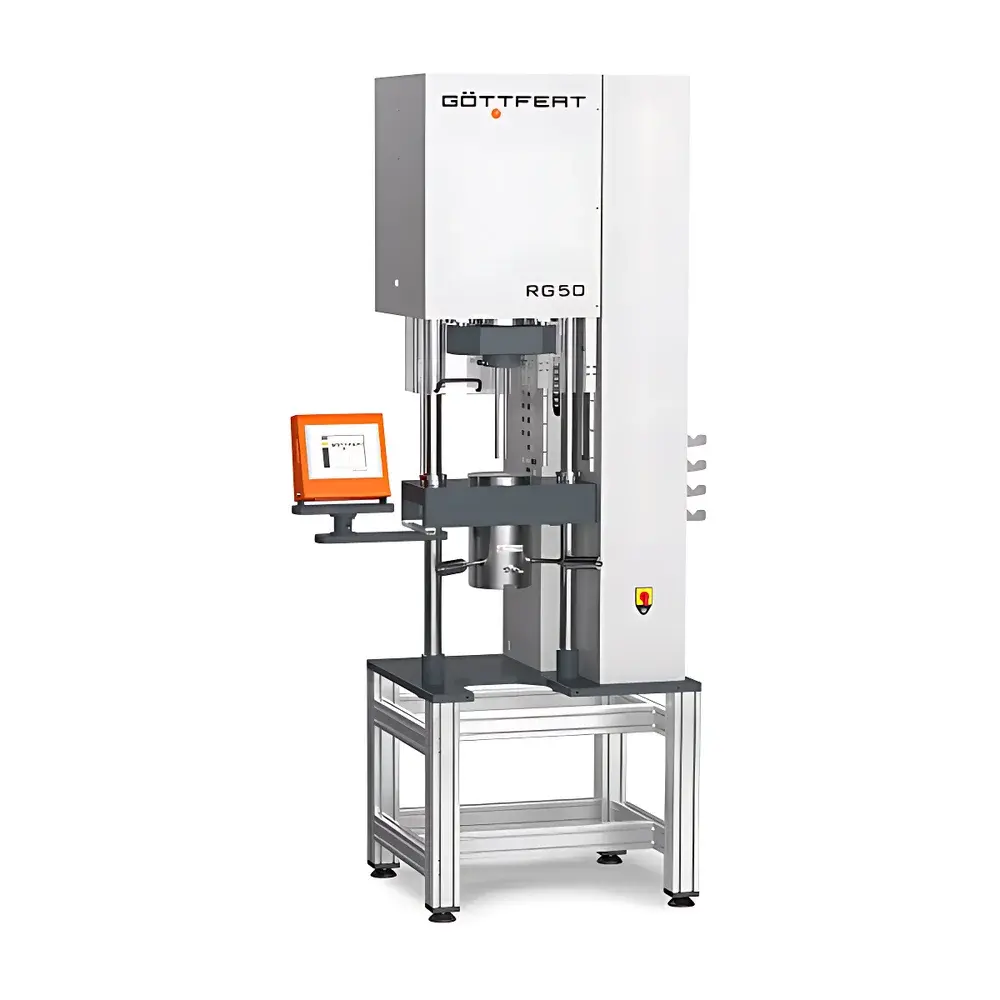
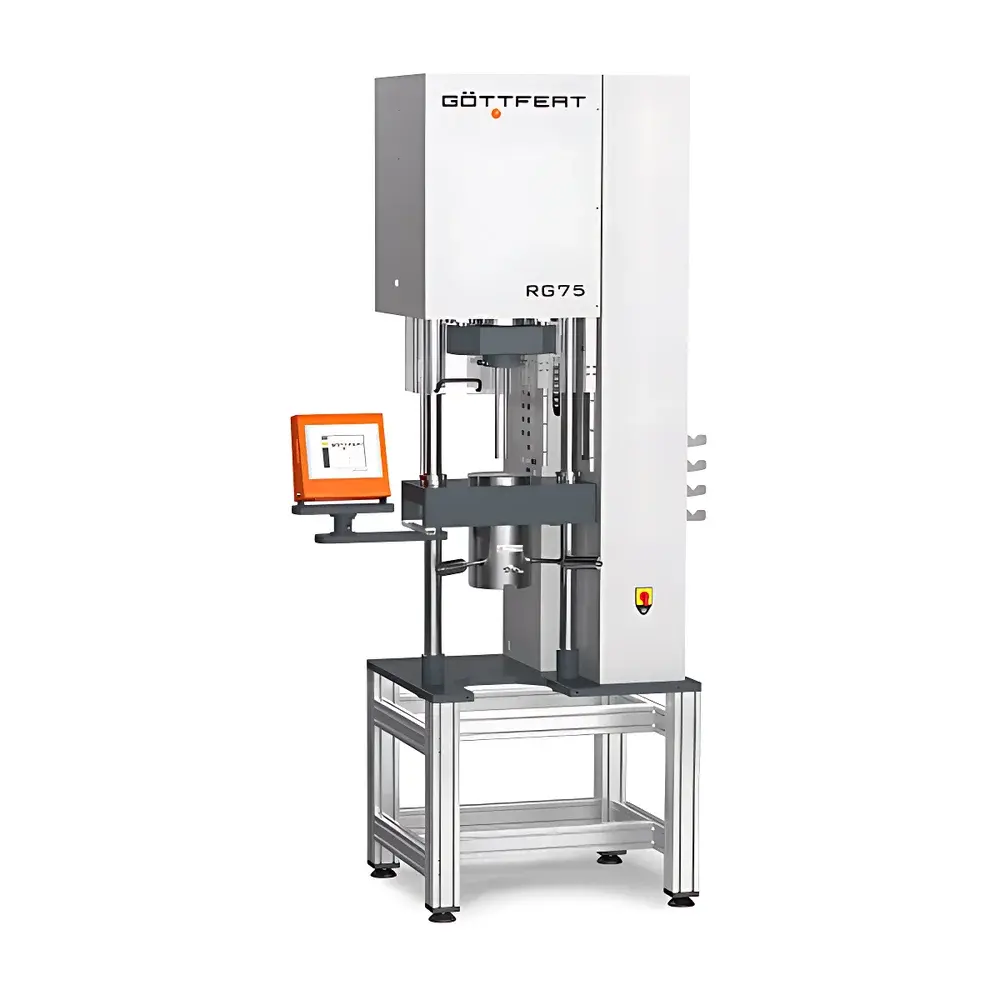
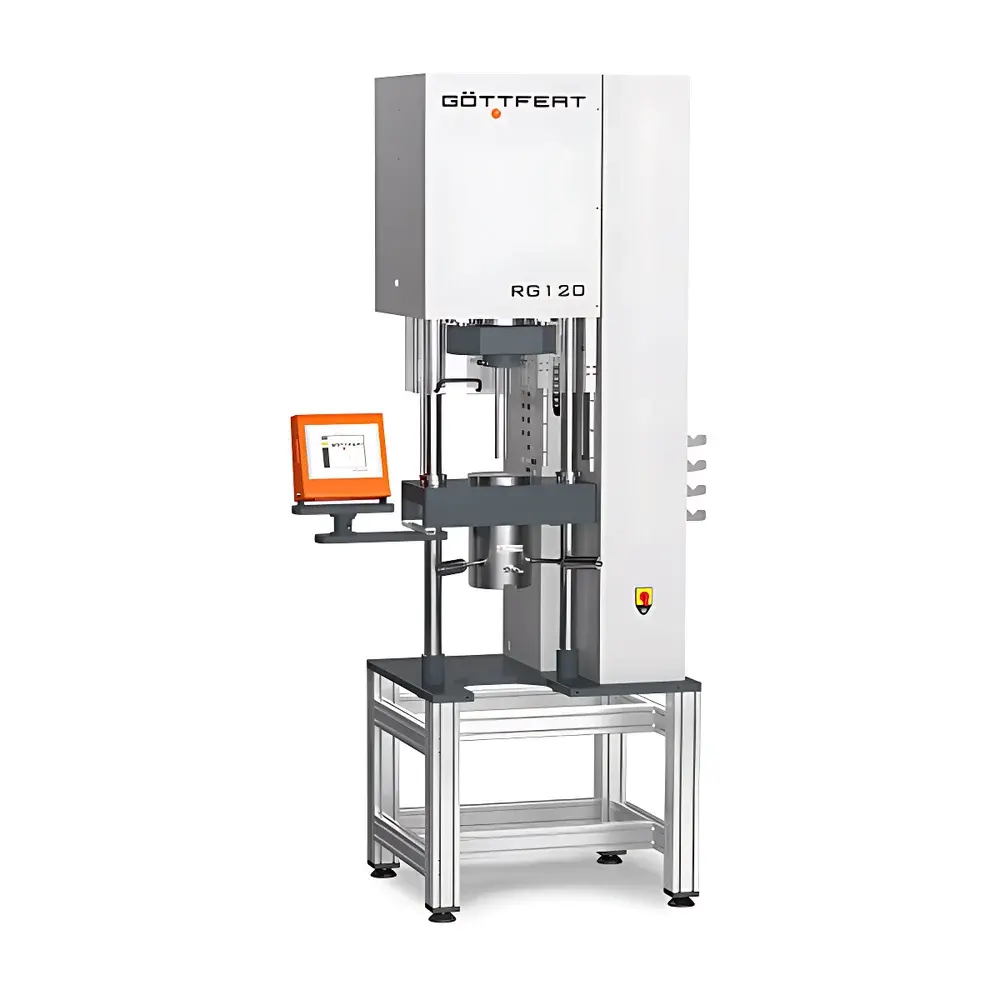
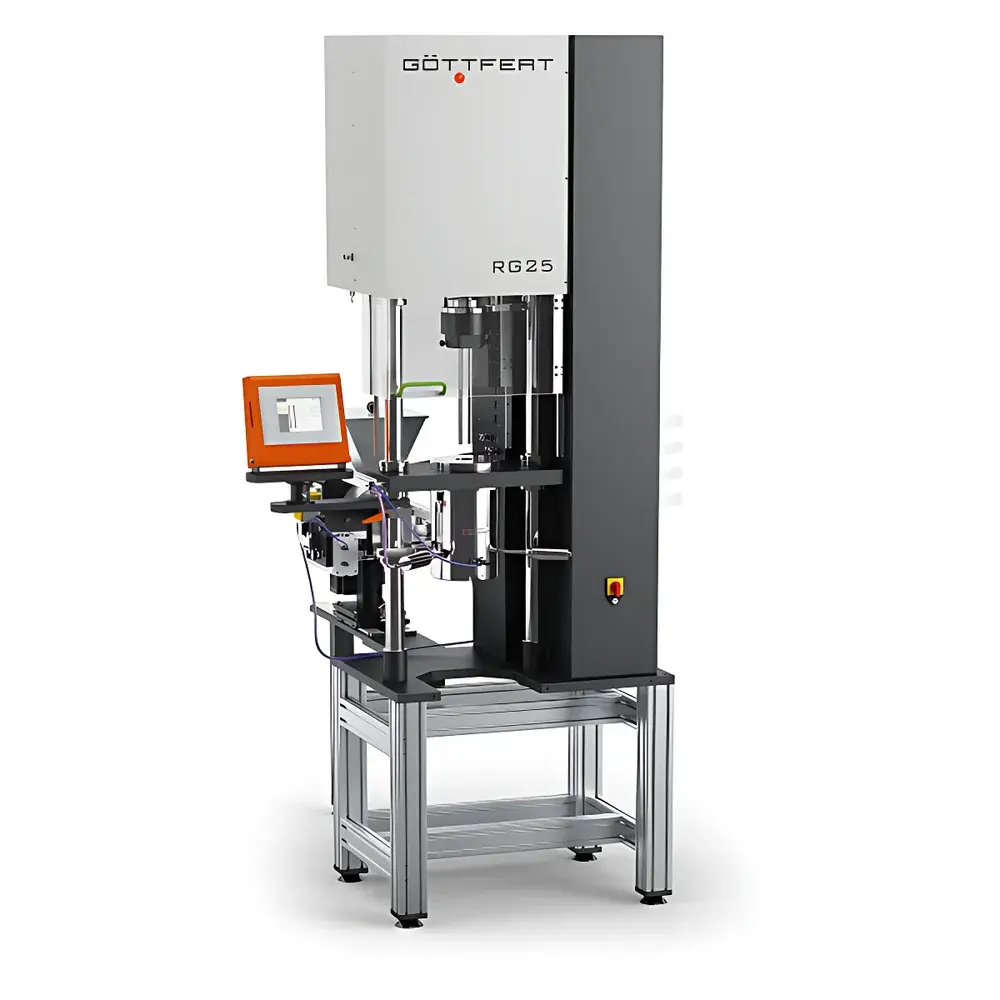
Goettfert RHEOGRAPH 25/50/75/120 Capillary Rheometer
| Brand | Goettfert |
|---|---|
| Origin | Germany |
| Instrument Type | Capillary Rheometer |
| Maximum Force | 25 / 50 / 75 / 120 kN |
| Temperature Range | 60–400 °C (optional up to 500 °C) |
| Dynamic Speed Ratio | 1:1,000,000 |
| Speed Range | 0.00004–40 mm/s |
| Pressure Sensor Accuracy | ±0.2% FS |
| Pressure Sensor Resolution | 0.005% FS |
| Die Diameter Options | 12.0 / 15.0 / 20.0 / 25.0 mm |
| Piston Diameter Options | 11.99 / 14.99 / 19.99 / 24.99 mm |
| Temperature Control Resolution | 0.01 °C |
| Temperature Stability | ±0.1 °C |
| Dimensions (L×W×H) | 920 × 700 × 1655 mm |
| Weight | 400–600 kg |
Overview
The Goettfert RHEOGRAPH 25/50/75/120 is a high-force, research-grade capillary rheometer engineered for precise melt flow characterization of thermoplastics, elastomers, and highly viscous polymer melts under processing-relevant shear conditions. Based on the fundamental principle of capillary rheometry—measuring pressure drop across a precisely dimensioned die while extruding molten material at controlled piston velocities—the system enables direct determination of apparent viscosity, shear stress, shear rate, and extensional behavior. Designed for compliance with DIN 54811, ASTM D3835, ISO 11443, ASTM D5099, and ASTM D5930 (TC), it serves as a foundational platform for advanced polymer rheological analysis in R&D laboratories, quality control environments, and academic institutions conducting polymer processing simulation and material development.
Key Features
- Four modular force configurations (25, 50, 75, and 120 kN) enabling scalable testing from low- to ultra-high-viscosity materials—including engineering resins, filled compounds, and reactive thermosets.
- Unmatched dynamic speed range of 1:1,000,000 (0.00004–40 mm/s), supporting both ultra-low-shear-rate relaxation studies and high-shear-rate processing simulations.
- High-resolution temperature control (0.01 °C display resolution, ±0.1 °C stability) across a standard range of 60–400 °C, with optional extension to 500 °C for high-performance polymers such as polyimides and PEEK.
- Automatic pressure sensor recognition (“Plug & Measure”) with 0.005% full-scale signal resolution and ±0.2% FS accuracy—delivering tenfold improvement in measurement reproducibility compared to prior-generation systems.
- Modular piston assembly options: single-, dual-, or triple-piston configurations with standardized die diameters (12.0, 15.0, 20.0, 25.0 mm) and matching piston diameters (11.99, 14.99, 19.99, 24.99 mm) ensuring minimal wall slip and accurate Bagley correction.
- Integrated 10.1-inch color touchscreen HMI with intuitive workflow navigation, real-time parameter monitoring, and on-board data preview—reducing operator dependency and minimizing setup errors.
Sample Compatibility & Compliance
The RHEOGRAPH series accommodates solid-state polymer granules, pellets, and powders that undergo thermal softening and melt extrusion within the heated barrel. It is optimized for high-viscosity, shear-thinning, and time-dependent materials exhibiting non-Newtonian behavior. All models comply with internationally recognized standards for polymer rheology testing, including ISO 11443 (determination of apparent viscosity), ASTM D3835 (melt flow rate and apparent viscosity), DIN 54811 (capillary rheometry of plastics), and ASTM D5930 (thermal conductivity measurement in conjunction with rheological testing). The system architecture supports GLP-compliant operation through audit-trail-enabled software logging, user access controls, and electronic signature readiness per FDA 21 CFR Part 11 requirements when integrated with validated Goettfert RheoControl software.
Software & Data Management
RheoControl software provides comprehensive instrument control, real-time data acquisition, and post-processing capabilities—including automatic Bagley and Rabinowitsch corrections, Mooney viscosity calculation, activation energy derivation (via Arrhenius analysis), and extensional viscosity estimation using the Cogswell and Meissner methods. Raw pressure, temperature, position, and time data are stored in vendor-neutral ASCII and HDF5 formats, facilitating third-party integration with MATLAB, Python (via Pandas/H5Py), or LIMS platforms. Calibration certificates, sensor metadata, and environmental logs are embedded directly into each dataset, ensuring traceability and regulatory readiness for ISO/IEC 17025-accredited laboratories.
Applications
- Processing window definition for extrusion, injection molding, and blow molding via shear-thinning profiles and melt fracture onset detection.
- Quality assurance of polymer batches through comparative viscosity fingerprinting at multiple shear rates and temperatures.
- PVT (pressure–volume–temperature) characterization for equation-of-state modeling in CAE simulation tools (e.g., Moldflow, Polyflow).
- Extensional rheology assessment using Rheotens or haul-off modules to quantify melt strength and drawability.
- Surface defect analysis—including shark-skin, melt fracture, and die swell quantification—using synchronized high-speed imaging and pressure transients.
- Thermal conductivity mapping of polymer melts under shear, supporting coupled thermo-mechanical modeling.
FAQ
What sample forms are compatible with the RHEOGRAPH series?
Solid polymer granules, pellets, or powders—typically supplied in standard 25–50 g quantities—are loaded manually into the preheated barrel. No solvent dissolution or pre-melting is required.
Can the system perform simultaneous PVT and rheological measurements?
Yes—when equipped with the optional PVT test unit, the RHEOGRAPH enables concurrent pressure, volume change (via piston displacement), and temperature recording under isothermal or isobaric conditions.
Is calibration traceable to national metrology institutes?
All pressure sensors are factory-calibrated against DAkkS-accredited reference standards; NIST-traceable calibration certificates are available upon request.
How does the system handle wall slip in filled or low-adhesion polymers?
Multi-die testing with Bagley correction, combined with optional slip-corrected analysis modules in RheoControl software, mitigates wall-slip artifacts without requiring surface modification of dies.
What safety certifications does the instrument carry?
The RHEOGRAPH series conforms to CE marking requirements under the EU Machinery Directive 2006/42/EC and Low Voltage Directive 2014/35/EU, with additional compliance to UL 61010-1 for North American markets.



