
SOCOREX Calibrex™ Digital 525 Organic Bottle Top Dispenser
| Brand | SOCOREX |
|---|---|
| Origin | Germany |
| Model | Digital 525 |
| Instrument Type | Manual Bottle Top Dispenser |
| Volume Range | 0.1–100 mL |
| Minimum Increment | 0.02 mL |
| Accuracy | ±3.0% |
| Precision (CV) | ≤0.17% at max volume |
| Compliance | EN ISO 8655 |
| Sterilization | Fully autoclavable at 121 °C / 250 °F |
| Piston Material | Ground Glass with Ceramic Ball Valve |
| Chemical Resistance | Optimized for organic solvents, non-crystallizing acids and bases |
Overview
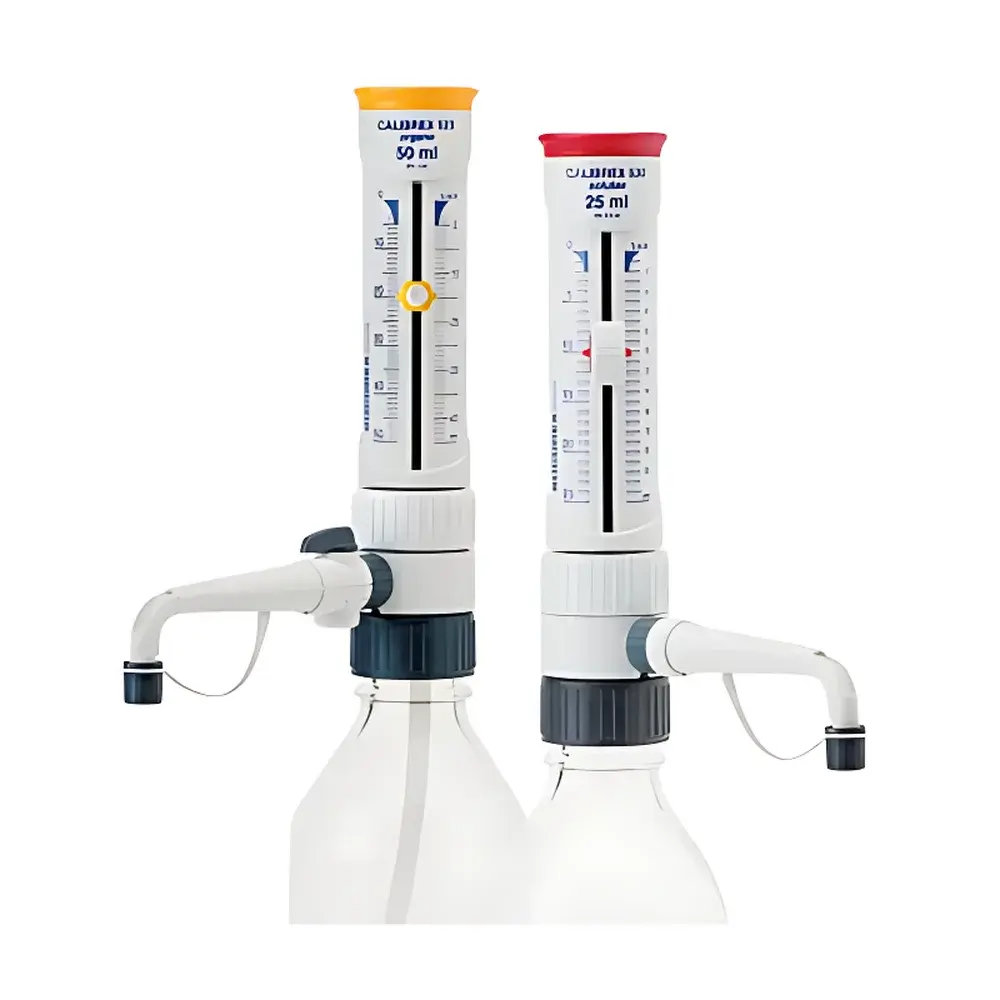
The SOCOREX Calibrex™ Digital 525 Organic Bottle Top Dispenser is an engineered precision liquid handling instrument designed for repeatable, contamination-controlled dispensing of aggressive organic solvents, non-crystallizing acids, and alkaline solutions. It operates on a positive displacement principle using a ground glass piston and ceramic ball valve assembly—eliminating reliance on air displacement or spring-loaded mechanisms that compromise accuracy under variable temperature or viscosity conditions. The system delivers volumetric reproducibility in accordance with EN ISO 8655-3 (2022), with certified accuracy of ±3.0% across its full 0.1–100 mL range and coefficient of variation (CV) as low as 0.17% at maximum volume. Its fully autoclavable architecture—validated for 121 °C / 250 °F steam sterilization—ensures compliance with GLP and GMP laboratory requirements where sterility, traceability, and reusability are mandatory.
Key Features
- Chemically inert fluid path: All wetted components—including FEP inlet tubing, ground glass piston with PTFE-coated outer wall, ceramic ball valve, platinum-plated valve plate, ETFE body, and FEP/PCTFE nozzle—are selected for high resistance to organic solvents (e.g., acetone, chloroform, THF), weak to moderate non-crystallizing acids (e.g., acetic, formic), and alkalis (e.g., aqueous ammonia, sodium hydroxide).
- Dual-volume setting interface: Equipped with both a sliding cursor (elastic detent lock) and a rotary volume adjustment knob—enabling user-selectable ergonomics without compromising resolution. Minimum increment is 0.02 mL, with dual-scale engraved display ensuring wide-angle readability from multiple bench orientations.
- Visual flow monitoring: Transparent borosilicate glass piston housing and integrated observation windows along the dispensing tube allow real-time verification of liquid fill level, piston movement, and discharge continuity—critical for volatile or low-surface-tension fluids.
- 360° rotatable dispensing tip: The 120 mm standard dispensing tube rotates freely to accommodate multi-position vessel alignment, angled flask necks, or confined fume hood workflows—without mechanical stress on internal seals.
- Integrated flow control valve (optional): A three-position valve (a = recirculation, b = dispensing, c = lock) enables zero-loss priming, closed-loop solvent conditioning, and safe storage—fully compatible with all 525/530 series units and autoclavable without disassembly.
- Tool-free maintenance & sterilization: Entire unit—including inlet tube, dispensing tube, valve assembly, and piston—disassembles and reassembles manually. No screws, clips, or specialized tools required. Validated for full-cycle autoclaving per ISO 17665-1.
Sample Compatibility & Compliance
The Digital 525 is explicitly validated for use with low-to-moderate vapor pressure organic solvents (e.g., methanol, ethanol, ethyl acetate, DMSO), non-crystallizing acidic and basic aqueous solutions (pH 2–12), and halogenated hydrocarbons. It is not recommended for highly crystallizing media (e.g., concentrated H₂SO₄, saturated NaOH), oxidizing agents (e.g., nitric acid >30%), or hydrogen fluoride. All models comply with EN ISO 8655-3 for gravimetric performance testing and meet material safety requirements per EU Regulation (EC) No. 1935/2004 for food contact materials. Each unit ships with a factory-issued QC certificate bearing a unique serial number, traceable to NIST-traceable reference standards.
Software & Data Management
As a manual mechanical dispenser, the Digital 525 does not incorporate embedded electronics or software. However, its design supports full integration into regulated environments via external documentation systems. The built-in calibration adjustment knob—protected by a tamper-evident seal ring—allows for in-lab recalibration per SOPs aligned with ISO/IEC 17025 and FDA 21 CFR Part 11 when paired with audit-trail-enabled balance data acquisition software (e.g., METTLER TOLEDO LabX, Sartorius Cubis® II). Calibration records, including date, operator ID, reference standard ID, and deviation values, are retained externally in accordance with GLP Annex 11 and GMP Annex 11 requirements.
Applications
- Preparation of calibration standards and QC samples in environmental, pharmaceutical, and agrochemical laboratories
- Accurate dispensing of solvents in HPLC mobile phase preparation and sample extraction workflows
- Reagent addition in synthetic chemistry protocols requiring stoichiometric control under inert atmosphere
- Dispensing of corrosive but non-crystallizing bases in titration standardization and buffer formulation
- High-integrity transfer in cell culture and molecular biology labs where endotoxin-free, autoclavable hardware is mandated
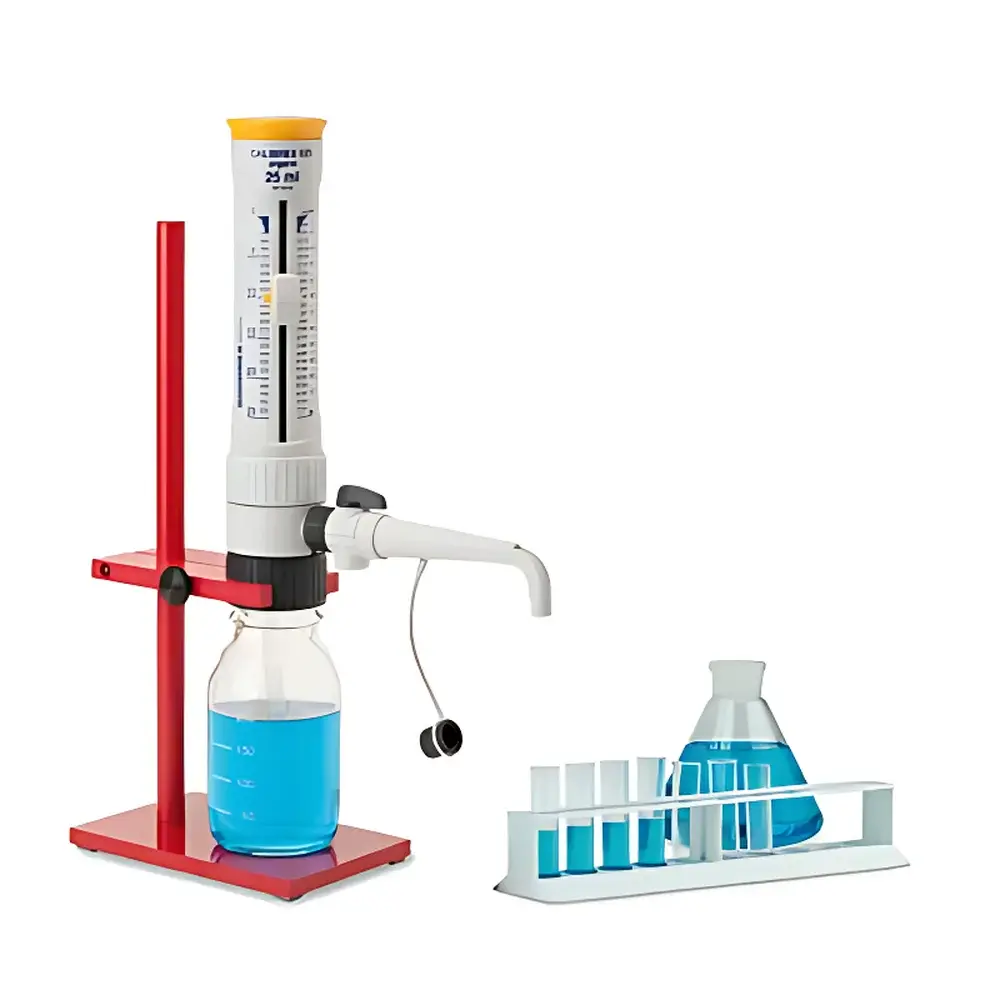
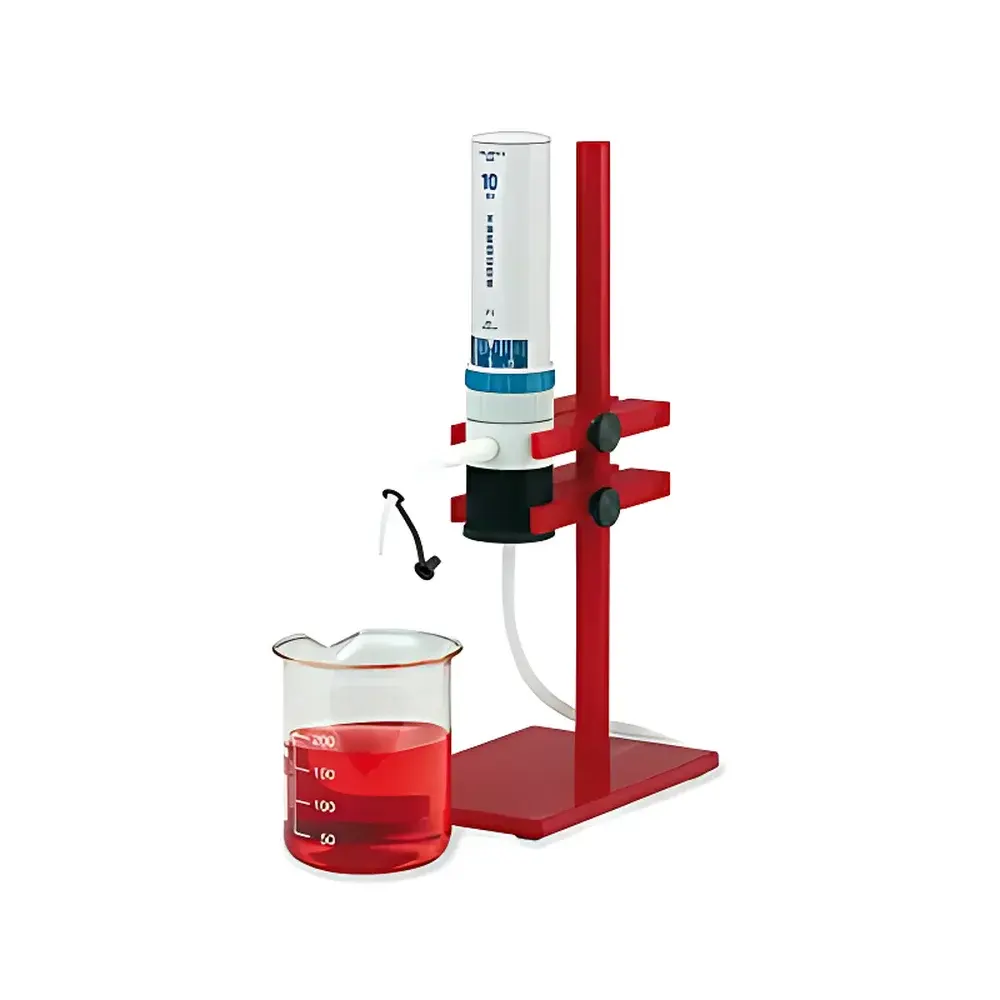
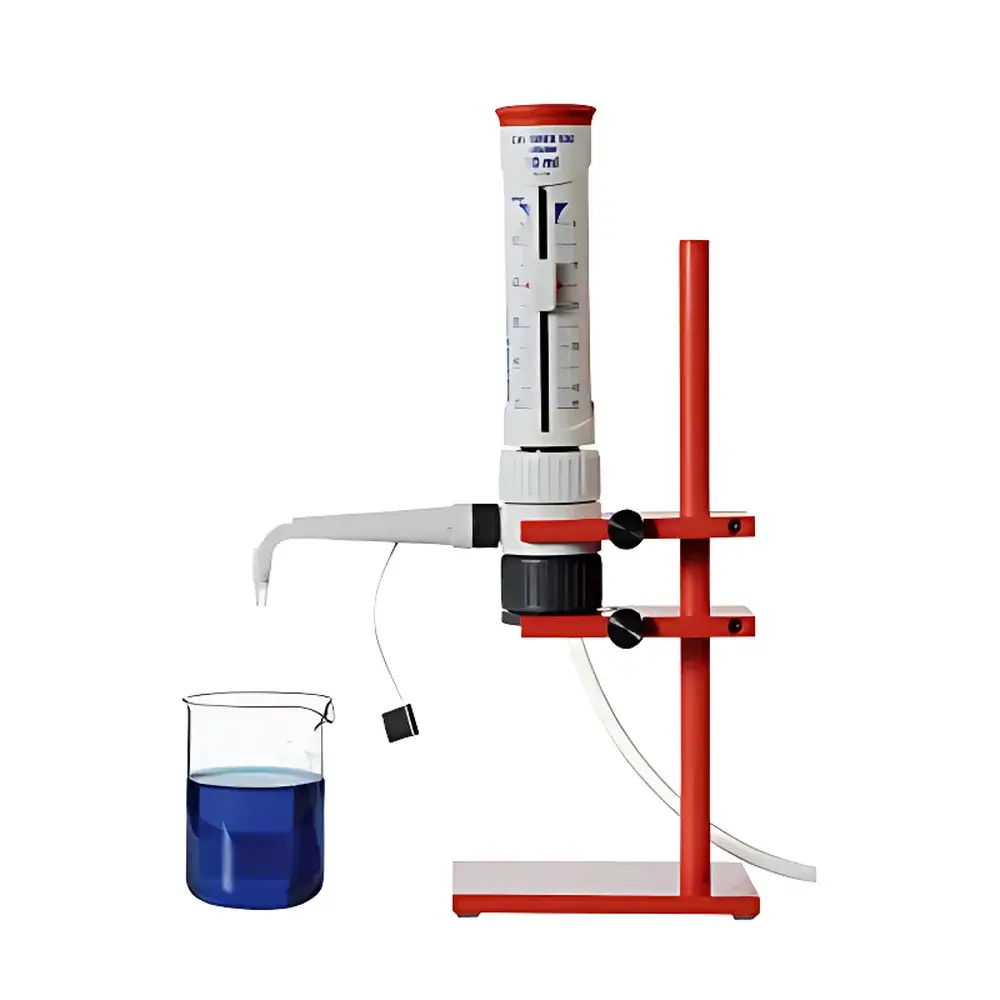
- Multi-vessel distribution using optional 60 cm extension tubing and remote dispensing rack (max. lift height: 2 m; max. horizontal reach: 10 m)
FAQ
What distinguishes the Digital 525 Organic from the 530 Inorganic model?
The 525 uses a ground glass piston with ceramic ball valve optimized for organic solvents and non-crystallizing acids/bases; the 530 employs a PFA-coated glass piston for superior resistance to salts, strong acids (e.g., HCl, HNO₃), and strong alkalis (e.g., >1 M NaOH).
Can the Digital 525 be calibrated in-house without external service?
Yes—the integrated, seal-protected calibration knob permits user-adjusted calibration following documented procedures and traceable gravimetric verification per EN ISO 8655-6.
Is the entire unit truly autoclavable—including the piston and valve?
Yes. All components—including ground glass piston, ceramic ball valve, FEP tubing, ETFE housing, and FEP/PCTFE nozzle—have been validated for repeated 121 °C / 250 °F steam sterilization cycles without dimensional drift or chemical degradation.
What bottle neck sizes does it support out-of-the-box?
Standard configuration includes adapter rings for 32 mm, 38 mm, and 40 mm GL-thread bottles; optional 25 mm and 28 mm adapters are available separately.
Does the flow control valve affect accuracy during dispensing?
No. The valve introduces no additional dead volume or flow restriction in dispensing mode (position b); its internal geometry maintains laminar flow continuity and preserves volumetric fidelity per EN ISO 8655-3 test protocols.



