
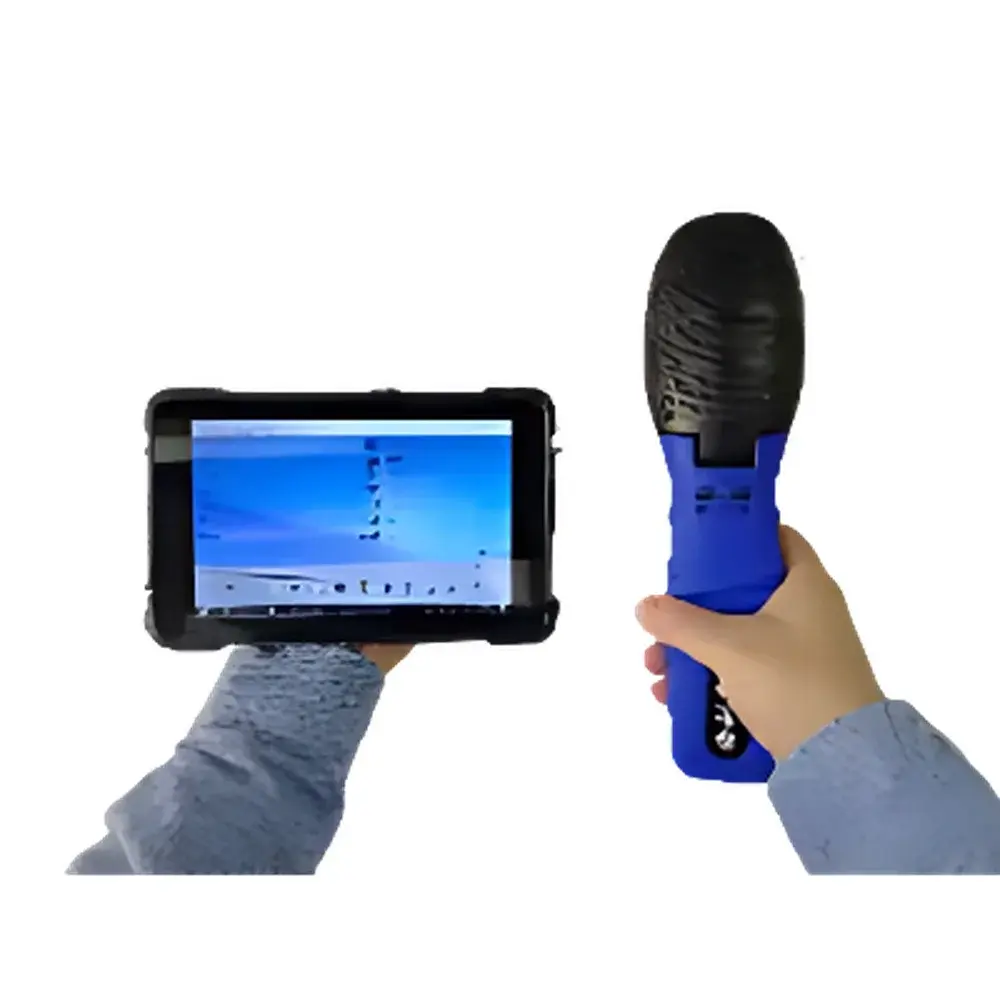
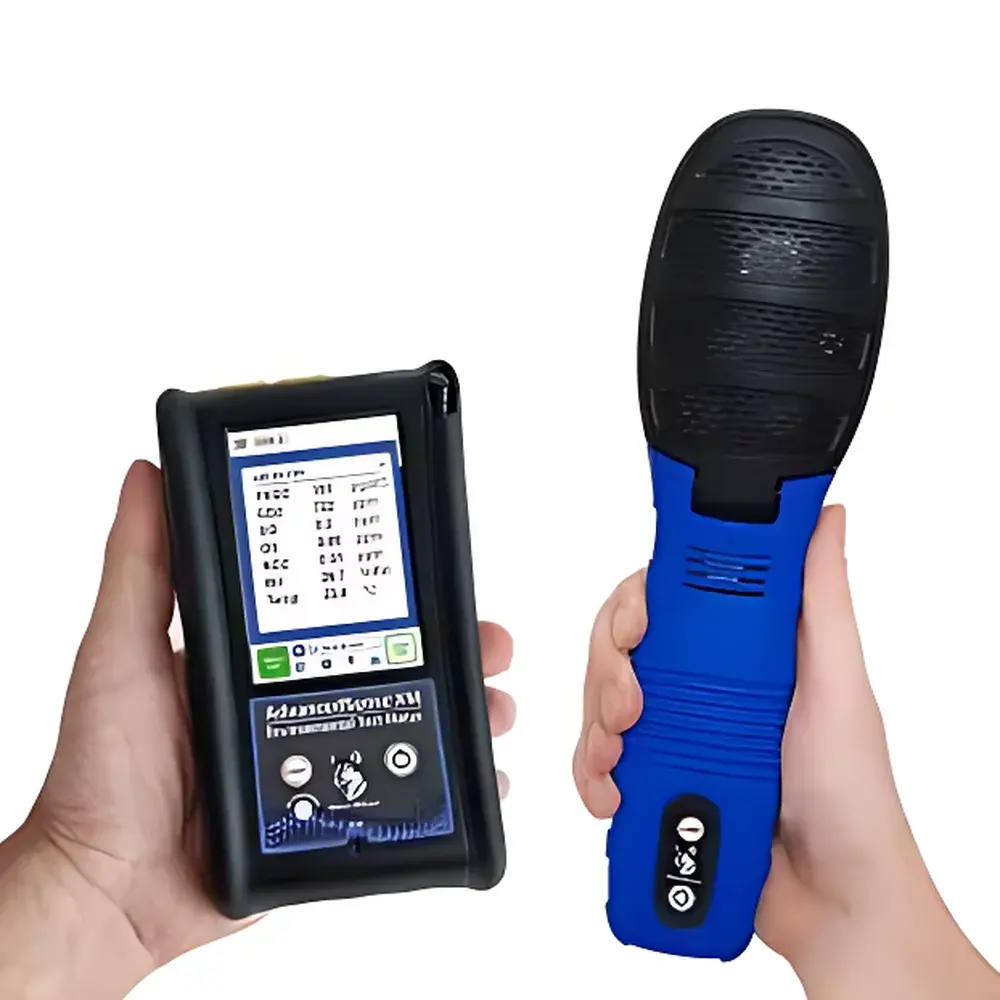
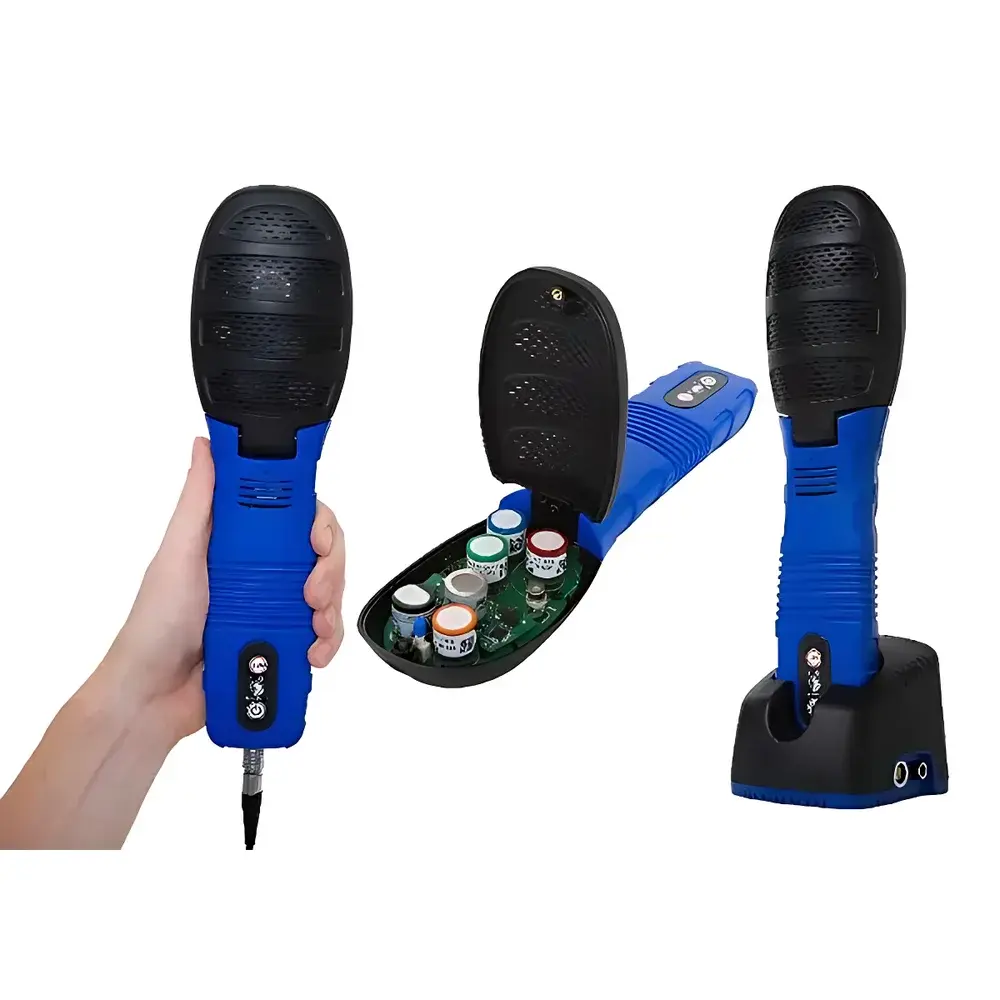
Graywolf DSII 8 Portable Multi-Gas Ambient Air Quality Monitor
| Brand | Graywolf |
|---|---|
| Model | DSII 8 |
| Type | Portable Gas Detector |
| Detectable Gases | TVOC, HCHO, NH₃, CO, CO₂, NO, NO₂, O₃, SO₂, H₂S, Cl₂, H₂, HCN, F₂, HCl, PH₃, HF, AsH₃, C₂H₄O (EtO), SiH₄, ClO₂, CCl₂OOCℓ₂, B₂H₆, and over 20 additional gases |
| Response Time (90%) | <1 min |
| Measurement Resolution | 1 ppb |
| Operating System | Wolf OS |
| Data Units | mg/m³, µg/m³, ppm, ppb, % vol |
| Connectivity | Multi-sensor modular interface for simultaneous real-time acquisition of up to 20 parameters |
Overview
The Graywolf DSII 8 is a field-deployable, multi-parameter ambient air quality monitor engineered for precision measurement of toxic and volatile gases in occupational, indoor, and environmental settings. Utilizing electrochemical, photoionization (PID), and metal-oxide semiconductor (MOS) sensor technologies—calibrated per ISO 16000-23 and ASTM D6196—this instrument delivers trace-level detection with sub-ppb resolution across a broad spectrum of hazardous analytes. Its modular architecture integrates a central data acquisition unit with interchangeable, NIST-traceable sensor modules, enabling simultaneous real-time quantification of up to 20 physical and chemical parameters—including temperature, relative humidity, differential pressure, airflow velocity, and particulate mass concentration—without sacrificing analytical fidelity or operational flexibility.
Key Features
- Modular sensor platform supporting hot-swappable probes for TVOC (PID), formaldehyde (electrochemical), ammonia (MOS), carbon monoxide (electrochemical), nitrogen oxides (chemiluminescence-compatible), ozone (UV absorption), hydrogen sulfide (electrochemical), and 15+ additional regulated gases.
- Dual-mode operation: instant spot-check capability with live digital display and configurable continuous logging intervals (1 sec–24 hr) for trend analysis and compliance reporting.
- Wolf OS embedded operating system with on-device annotation tools—supporting text notes, voice memos, geotagged still images, and timestamped metadata capture during active sampling.
- Multi-unit conversion engine allowing seamless switching between mass-based (mg/m³, µg/m³) and volumetric (ppm, ppb, % vol) concentration units per regulatory requirement (e.g., OSHA PELs, ACGIH TLVs, EU Directive 2004/101/EC).
- Low-noise analog front-end and 24-bit ADC ensure signal stability and reproducibility below 1 ppb for critical low-concentration applications such as cleanroom monitoring or post-remediation verification.
Sample Compatibility & Compliance
The DSII 8 is validated for use in non-explosive atmospheres (IEC 60079-0, Class II, Division 2) and conforms to EN 50104 (gas detectors), EN 50131-1 (intrusion systems compatibility), and ISO 16000-29 (indoor air—sampling strategies). Sensor modules are certified to meet EN 45544-2 for toxic gas detection and undergo annual factory recalibration traceable to NIST Standard Reference Materials (SRMs). The device supports GLP-compliant audit trails, including user login logs, calibration history, sensor drift compensation records, and tamper-evident data encryption compliant with FDA 21 CFR Part 11 requirements for electronic records and signatures.
Software & Data Management
Data export is supported via USB-C, Bluetooth 5.0, and optional Wi-Fi 802.11ac. Raw time-series datasets (CSV, XML, or proprietary .wlf format) are compatible with Graywolf’s desktop software suite—AirSight Pro—which enables spectral deconvolution of overlapping PID responses, statistical outlier detection, baseline correction algorithms, and automated report generation aligned with ISO 16000-17 and US EPA Method TO-15 workflows. All stored measurements include embedded GPS coordinates, barometric pressure compensation, and ambient temperature/humidity correction coefficients applied in real time.
Applications
- Indoor Air Quality (IAQ) assessment per ASHRAE Standard 62.1 and ISO 16000-1 through -40 series, including post-construction off-gassing evaluation and HVAC performance validation.
- Occupational exposure monitoring in semiconductor fabrication, pharmaceutical manufacturing, wastewater treatment, and confined-space entry operations—aligned with OSHA 1910.120 and EU Directive 89/391/EEC.
- Environmental screening at brownfield sites, landfill perimeter zones, and near industrial fence lines for fugitive emissions tracking.
- Epidemiological field studies requiring high-temporal-resolution ambient exposure mapping across urban microclimates.
- Emergency response triage for chemical release incidents, supporting incident command system (ICS) documentation and chain-of-custody data integrity.
FAQ
Is the DSII 8 suitable for outdoor ambient air monitoring under varying meteorological conditions?
Yes—the instrument operates continuously from –10 °C to 50 °C with IP54-rated enclosure and integrated thermal drift compensation across all sensor channels.
Can sensor modules be calibrated independently without returning the full system?
Yes—each probe features individual calibration memory and supports field recalibration using certified span gases and zero-air sources per ISO 6141.
Does the device support integration with building management systems (BMS) or SCADA platforms?
Yes—via Modbus RTU over RS-485 or MQTT over Ethernet/Wi-Fi, enabling real-time telemetry to centralized environmental dashboards.
Are sensor cross-sensitivities documented and compensated for in firmware?
Yes—cross-interference matrices for each sensor type are embedded in Wolf OS v3.2+, with dynamic correction algorithms activated when co-detection thresholds are exceeded.
What is the typical service life of electrochemical sensors under routine use?
Electrochemical cells maintain ±5% accuracy for 24 months; MOS and PID lamps are rated for ≥10,000 hours of cumulative operation with scheduled lamp replacement and filter maintenance.
Related Products







