
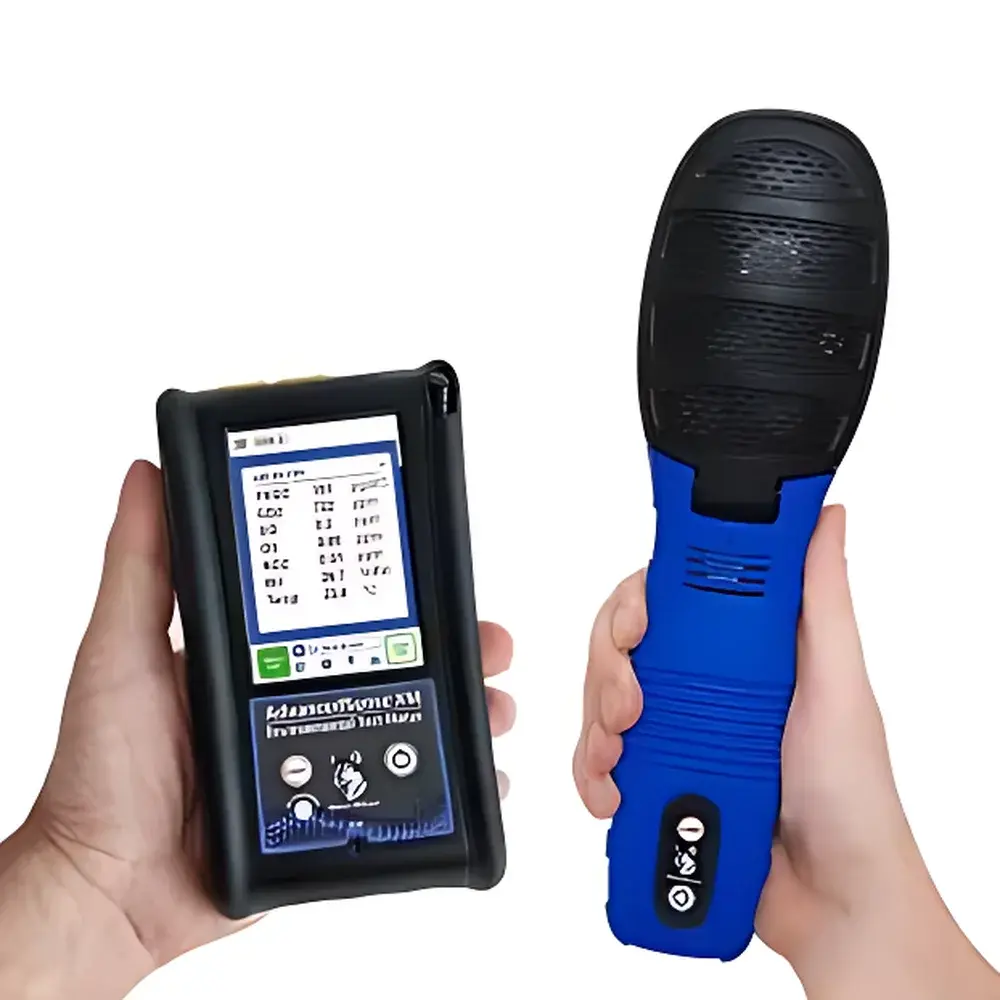
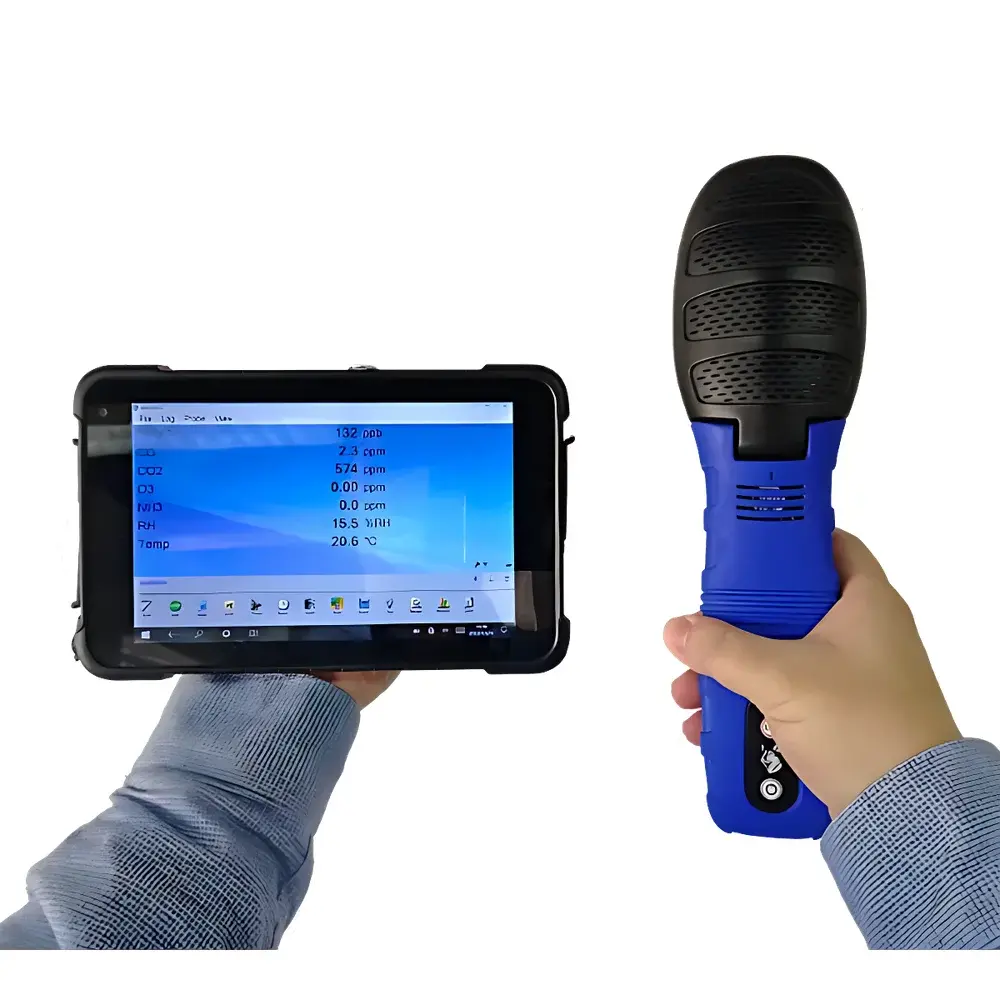
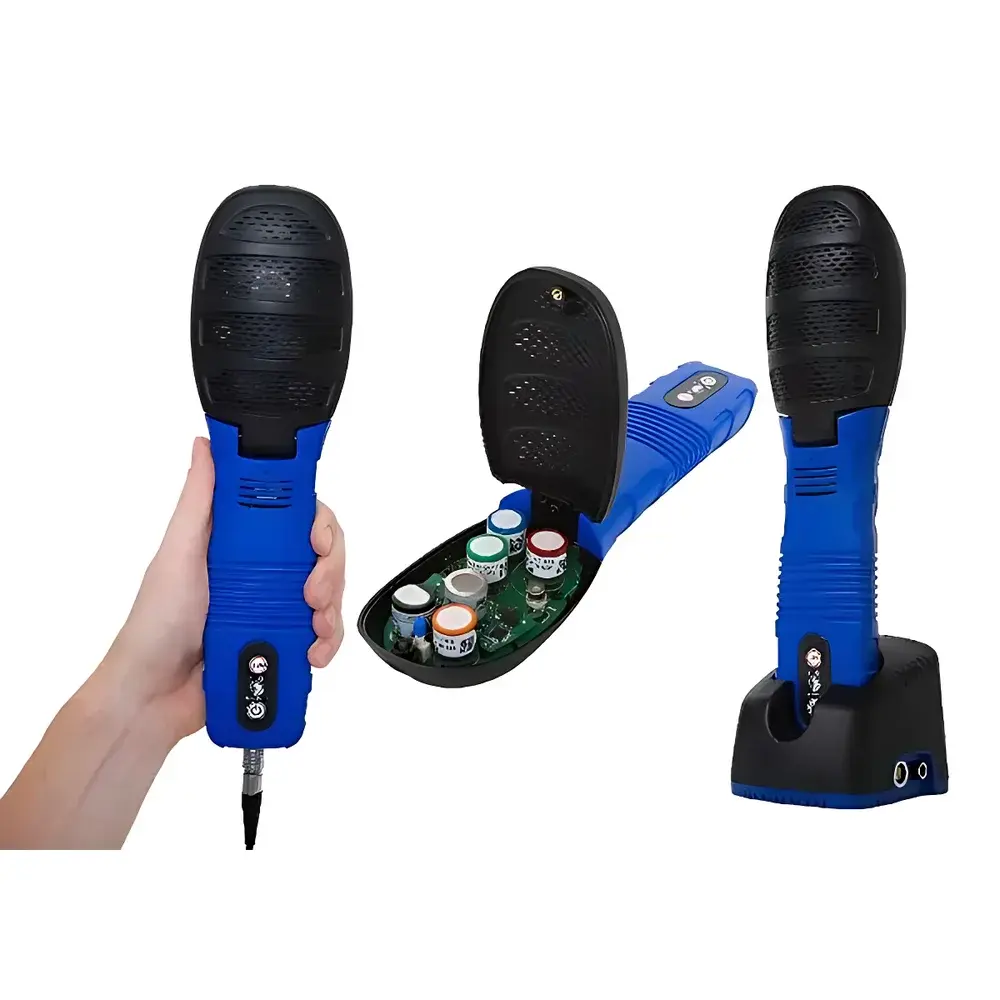
Graywolf DSII-5 Portable Multi-Gas Environmental & Emergency Air Quality Analyzer
| Brand | Graywolf |
|---|---|
| Model | DSII-5 |
| Origin | Beijing, China |
| Distribution Status | Authorized Distributor |
| Detection Targets | TVOC, HCHO, NH₃, CO, CO₂, Temperature, Relative Humidity, and >20 Gaseous Parameters |
| Response Time (90%) | <1 min |
| Units | mg/m³, µg/m³, ppm, ppb, % |
| Operating System | Wolf OS |
| Data Logging | Real-time & Long-term Continuous Monitoring |
| Probe Interchangeability | Hot-swappable modular sensor architecture |
| Display Annotation | Text, voice, image tagging during measurement |
Overview
The Graywolf DSII-5 is a professional-grade, portable multi-gas environmental and emergency air quality analyzer engineered for precision field deployment in indoor air quality (IAQ), occupational health, environmental screening, and rapid-response scenarios. Built upon a modular probe architecture and powered by the proprietary Wolf OS operating system, the DSII-5 implements electrochemical, NDIR (non-dispersive infrared), PID (photoionization detection), and capacitive sensing technologies—each sensor calibrated traceably to NIST-traceable standards—to deliver simultaneous, real-time quantification of up to 22 gaseous and environmental parameters. Its low-noise, high-resolution data acquisition system ensures sub-ppb detection limits for key contaminants including formaldehyde (HCHO), carbon monoxide (CO), ammonia (NH₃), and total volatile organic compounds (TVOC), while maintaining metrological integrity across dynamic ambient conditions. Designed for compliance with ISO 16000-23 (indoor air—determination of formaldehyde), ASTM D6196 (selection of sorbents), and EN 13725 (odor concentration measurement), the DSII-5 serves as a primary instrument for GLP-aligned field investigations and pre-compliance screening prior to fixed-station validation.
Key Features
- Modular multi-probe interface supporting hot-swappable sensors—no firmware reflash or recalibration required when changing probes.
- Simultaneous real-time acquisition of ≥20 parameters: temperature, relative humidity, CO₂ (NDIR), CO (electrochemical), HCHO (PID + catalytic oxidation), TVOC (broad-spectrum PID), NH₃ (electrochemical), O₂, O₃, NO₂, SO₂, H₂S, Cl₂, and 12 additional gases via optional certified sensor modules.
- Dual operational modes: instantaneous spot-check mode with live display and time-stamped annotation (text, voice memo, JPEG capture); and scheduled long-term logging mode with user-defined intervals (1 sec–24 hr) and onboard storage for >1 million data points.
- Configurable concentration units per parameter: mg/m³, µg/m³, ppm, ppb, and % volume—automatically converted using molecular weight and ideal gas law at measured T/RH.
- Wolf OS v4.2 firmware with embedded audit trail, user-access levels (operator/administrator), and automatic timestamping synchronized to GPS or internal RTC (±0.5 sec/month).
Sample Compatibility & Compliance
The DSII-5 is validated for use in ambient air, indoor environments (offices, schools, hospitals), industrial workspaces (confined entry, HVAC ducts), and post-incident emergency zones (chemical spills, fire residues, biotoxin events). All factory-installed and field-upgradable sensors comply with IEC 61000-4 electromagnetic immunity standards and carry CE marking under Directive 2014/30/EU (EMC) and 2012/19/EU (WEEE). Sensor calibrations adhere to ISO/IEC 17025 requirements through Graywolf’s accredited calibration laboratory (A2LA Certificate #2318.01). The device supports FDA 21 CFR Part 11–compliant data export workflows when paired with Graywolf DataLink Pro software (electronic signatures, immutable audit logs, role-based access control).
Software & Data Management
DataLink Pro (Windows/macOS) provides full bidirectional communication with the DSII-5 via USB-C or Bluetooth 5.0. It enables automated report generation aligned with ASHRAE Standard 62.1, ISO 16000 series, and EU Directive 2009/125/EC. Raw time-series datasets export in CSV, XML, or native .GWD format with embedded metadata (GPS coordinates, operator ID, calibration history, probe serial numbers). Trend visualization includes moving-average smoothing, percentile analysis (e.g., 95th-percentile CO exposure), and overlay of regulatory thresholds (ACGIH TLVs®, OSHA PELs, WHO IAQ guidelines). All annotations—voice memos recorded directly on-device, annotated JPEGs of sampling locations, and contextual text notes—are preserved in exported reports with hash-verified integrity.
Applications
- Indoor Air Quality (IAQ) baseline surveys and post-remediation verification per ANSI/ASHRAE Standard 62.1 and LEED v4.1 IEQ Credit 1.
- Ongoing occupational exposure monitoring in laboratories, manufacturing cleanrooms, wastewater treatment facilities, and agricultural enclosures.
- Emergency response triage: rapid identification and semi-quantitative mapping of toxic gas plumes following chemical releases, structural fires, or hazardous material transport incidents.
- Building commissioning and HVAC performance diagnostics—including air change rate estimation via CO₂ decay method and duct velocity profiling using integrated pitot tube module.
- Environmental trend screening for community-level air toxics near industrial perimeters, landfill sites, or transportation corridors.
FAQ
Does the DSII-5 meet regulatory requirements for workplace exposure monitoring?
Yes—the electrochemical and NDIR sensors are type-approved for OSHA and ACGIH TLV®-compliant measurements when operated within specified temperature/humidity ranges and calibrated per Graywolf’s documented SOPs (Ref: GRAY-SOP-EM-007).
Can sensor modules be calibrated in the field without sending the unit to a service center?
Yes—zero/span calibration for all gas modules is supported via built-in calibration routines using certified span gases and zero air; full calibration certificates with uncertainty budgets are auto-generated and stored onboard.
Is raw sensor output accessible for third-party integration?
Yes—via ASCII over USB-C or Modbus RTU over RS-485 (optional adapter), enabling direct ingestion into SCADA, BMS, or custom Python/MATLAB analysis pipelines.
What is the battery life during continuous logging mode?
Up to 12 hours with all active sensors (CO₂ + HCHO + TVOC + T/RH), extendable to 24+ hours with selective sensor activation and 5-minute logging intervals.
How does the DSII-5 handle cross-sensitivity in complex gas mixtures?
Each sensor module incorporates embedded compensation algorithms trained on >15,000 mixed-gas reference exposures; interference correction matrices are updated via firmware patches and applied in real time during measurement.
Related Products







