
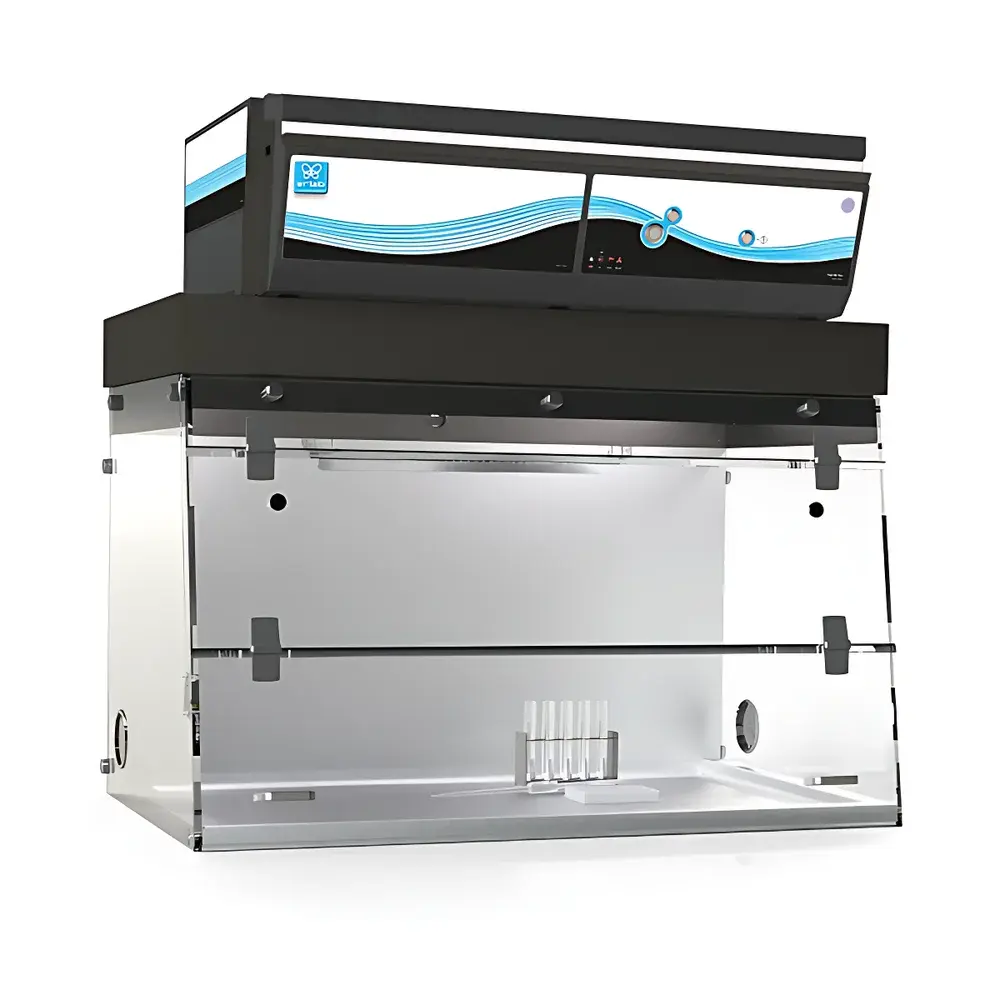
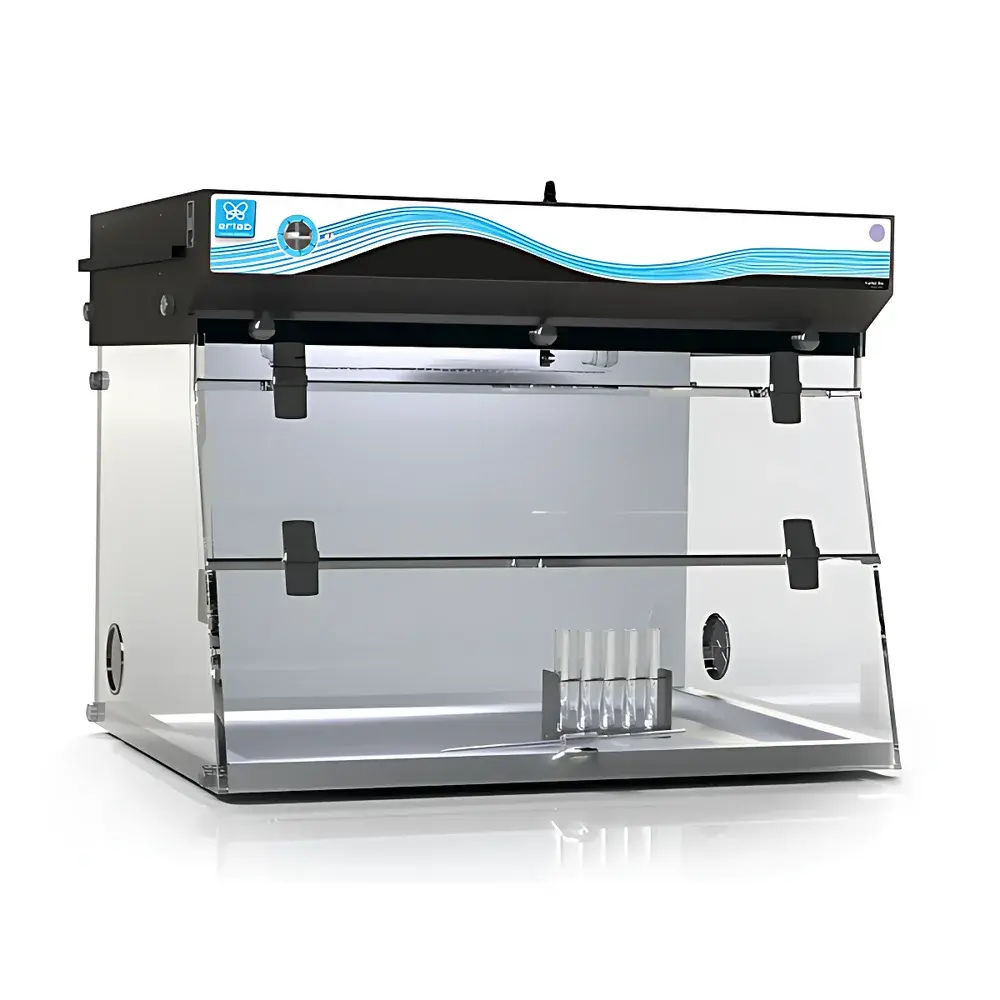
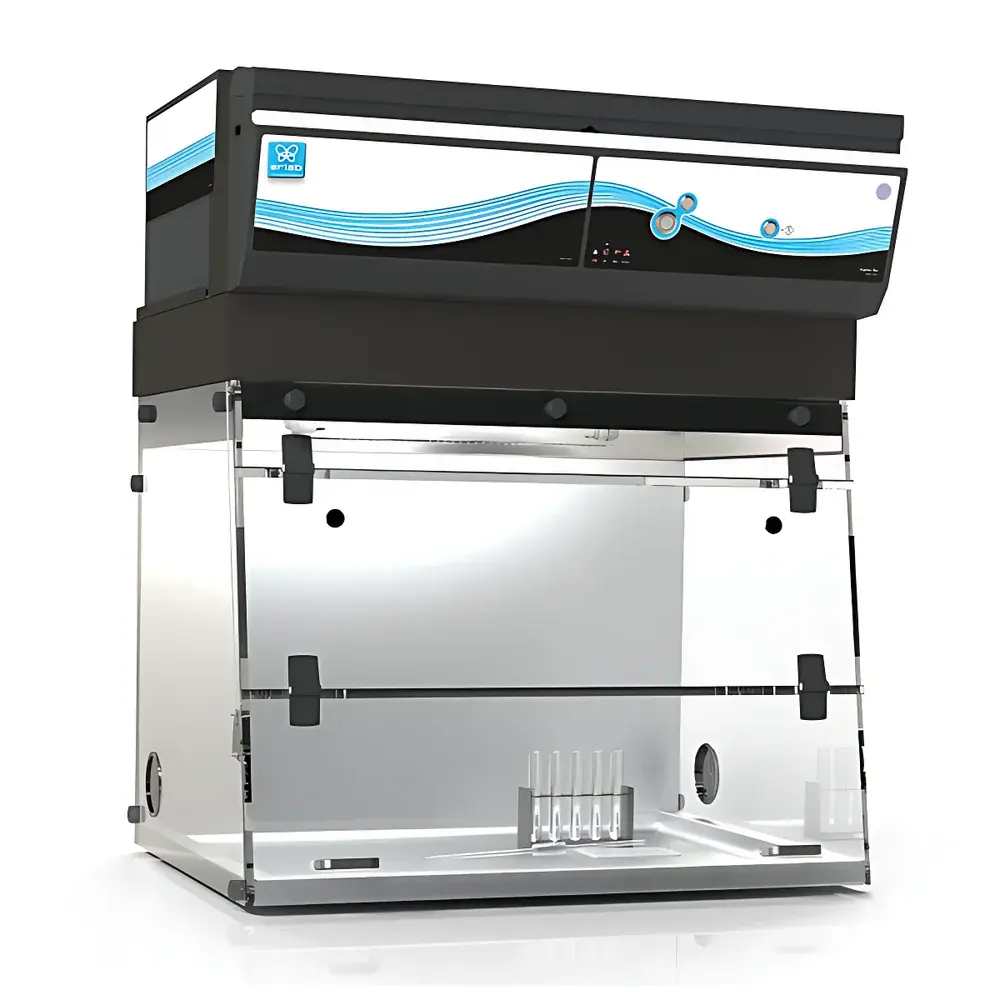
Erlab Captair Bio 391 Smart Vertical Laminar Flow Clean Bench
| Brand | Erlab |
|---|---|
| Origin | Jiangsu, China |
| Manufacturer Type | Authorized Distributor |
| Product Category | Domestic |
| Model | Captair Bio 391 Smart |
| Price Range | USD 2,800 – 7,000 |
| Instrument Type | Vertical Laminar Flow Clean Bench |
| Cleanliness Class | ISO Class 5 (equivalent to Federal Standard 209E Class 100) |
| Noise Level | ≤55 dBA |
| User Capacity | Single-user, front-access configuration |
| Airflow Pattern | Downward vertical laminar flow |
| Filtration | ULPA U17 (≥99.999995% @ ≥0.1 µm) + optional activated carbon pre-filter |
| UV Sterilization | Integrated high-intensity germicidal UV-C lamp (254 nm) with safety interlock |
| Monitoring | Real-time differential pressure sensor for pre-filter and ULPA filter status |
| Control Interface | Touch-enabled SmartPanel with visual/audible alerts |
| Remote Management | eGuard mobile & web application (iOS, Android, Windows/macOS) supporting real-time monitoring, parameter adjustment, event logging, and push notifications |
Overview
The Erlab Captair Bio 391 Smart is a vertically oriented laminar flow clean bench engineered specifically for molecular biology laboratories performing polymerase chain reaction (PCR), cloning, nucleic acid handling, and other contamination-sensitive workflows. It operates on the principle of unidirectional, downward laminar airflow—generated by a low-turbulence centrifugal blower and conditioned through a certified ULPA U17 filter—to create a particle-free workspace that meets ISO 14644-1 Class 5 (formerly Federal Standard 209E Class 100) requirements. Unlike horizontal flow hoods, its vertical design minimizes operator exposure to recirculated air while ensuring consistent velocity uniformity (0.3–0.5 m/s) across the work surface. The system integrates a UV-C (254 nm) sterilization cycle with automatic door interlock and timer-based activation, eliminating viable microorganisms and degrading residual DNA/RNA amplicons to prevent carryover contamination between runs.
Key Features
- ULPA U17 filtration delivering ≥99.999995% efficiency for particles ≥0.1 µm—validated per EN 1822-1:2019 and IEST-RP-CC001.5;
- Dual-stage filtration architecture: washable aluminum pre-filter + ULPA final filter, both monitored via integrated differential pressure transducers;
- SmartPanel control interface with color-coded LED indicators, audible alarms, and contextual prompts for maintenance events (e.g., filter replacement, UV lamp life expiry);
- eGuard cloud-connected platform enabling remote access to real-time airflow velocity, filter delta-P, UV operational history, and alarm logs from any web browser or mobile device;
- Compliance-ready audit trail functionality—including user login records, setting modifications, and sterilization cycle timestamps—supporting GLP and ISO/IEC 17025 documentation requirements;
- Ergonomic stainless steel work surface with rounded edges and seamless welds, compatible with standard lab disinfectants and autoclave-safe accessories;
- Low-noise operation (≤55 dBA at 1 m) achieved via vibration-damped blower assembly and acoustic insulation in the plenum housing.
Sample Compatibility & Compliance
The Captair Bio 391 Smart accommodates standard PCR tube racks, microcentrifuge tubes, pipette tip boxes, and open petri dishes without airflow disruption. Its vertical laminar flow profile ensures minimal turbulence around delicate samples during pipetting or gel loading. The unit complies with IEC 61010-1 (Safety Requirements for Electrical Equipment for Measurement, Control, and Laboratory Use) and IEC 61326-1 (EMC requirements for laboratory equipment). Optional activated carbon pre-filters mitigate volatile organic compounds (VOCs) commonly present in PCR reagent storage areas—critical for preserving enzyme integrity and preventing false-negative amplification. All materials in contact with the airstream meet USP Class VI biocompatibility standards.
Software & Data Management
The eGuard software suite provides secure, role-based access (administrator/operator) and supports export of CSV-formatted operational logs compliant with FDA 21 CFR Part 11 Annex 11 requirements. Event-driven notifications—such as elevated delta-P indicating clogged pre-filters or unexpected UV lamp deactivation—are timestamped and archived with digital signatures. Historical data can be synchronized with laboratory information management systems (LIMS) via RESTful API integration. Firmware updates are delivered over-the-air with cryptographic verification to ensure integrity and traceability.
Applications
- PCR setup and post-amplification analysis under contamination-controlled conditions;
- Plasmid purification, restriction digestion, and ligation reactions;
- Cell culture passaging where aerosolized nucleic acids pose cross-contamination risks;
- Next-generation sequencing (NGS) library preparation requiring ultra-low background DNA;
- Diagnostic assay development and validation in clinical microbiology labs;
- Teaching laboratories requiring intuitive operation and robust training mode functionality.
FAQ
What is the recommended service interval for ULPA filter replacement?
ULPA filter lifespan depends on ambient particulate load and usage frequency; typical replacement occurs every 18–24 months under standard biosafety level 2 (BSL-2) conditions. The eGuard system calculates remaining filter life based on cumulative operating hours and measured delta-P trends.
Can the Captair Bio 391 Smart be integrated into an existing building management system (BMS)?
Yes—via Modbus TCP or BACnet/IP protocol adapters (optional accessory), enabling centralized HVAC coordination and facility-wide environmental monitoring.
Is the UV-C lamp intensity validated per ISO 15858?
UV irradiance is factory-calibrated using NIST-traceable radiometers; each unit ships with a certificate of conformance verifying ≥100 µW/cm² at 1 cm distance from lamp surface.
Does the unit support external exhaust ducting?
No—the Captair Bio 391 Smart is a recirculating (Type A2-equivalent airflow pattern) clean bench and does not require external ductwork; all exhausted air is filtered and returned to the workspace.
How is user authentication managed in eGuard?
eGuard implements OAuth 2.0 with SAML 2.0 support for enterprise single sign-on (SSO), ensuring alignment with institutional identity providers and password policy enforcement.



