
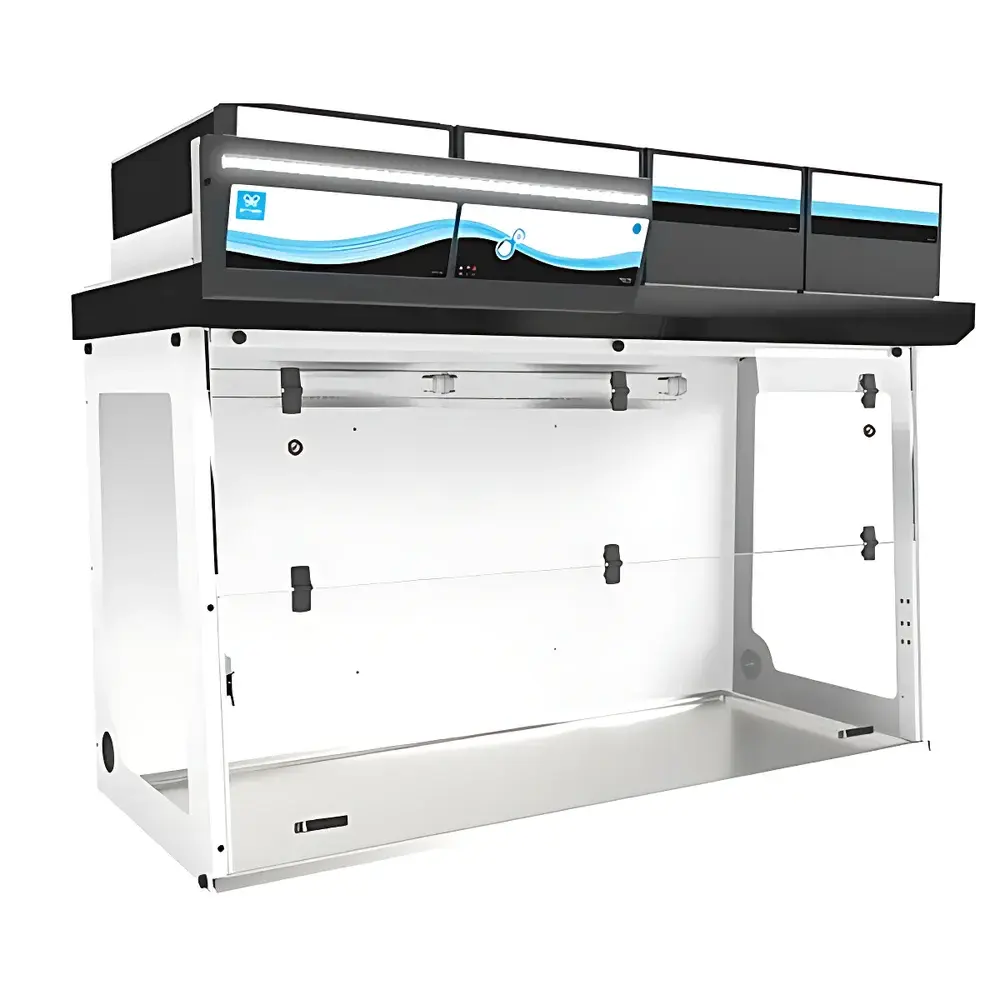
Erlab Flow 391 Smart Vertical Laminar Flow Clean Bench
| Brand | Erlab |
|---|---|
| Origin | Jiangsu, China |
| Manufacturer Type | Authorized Distributor |
| Product Category | Domestic |
| Model | Flow 391 Smart |
| Price Range | USD 2,800 – 7,000 |
| Instrument Type | Vertical Laminar Flow Clean Bench |
| Cleanliness Class | ISO Class 5 (equivalent to Federal Standard 209E Class 100) |
| Noise Level | 52 dBA |
| User Configuration | Single-user, front-access only |
| Airflow Pattern | Vertical downward laminar flow |
| Filter Type | HEPA H14 (≥99.995% @ 0.1 µm) or ULPA U17 (≥99.999995% @ 0.1 µm) |
| Optional Molecular Filter | Activated carbon + impregnated media for VOC adsorption |
| Dimensions (W×D×H) | 1013 × 635 × 1209–1311 mm |
| Power Consumption | 40–55 W |
| Compliance | EN ISO 14644-1:2015, EN 12464-1:2021, IEC 61000-6-3, IEC 61000-6-4 |
Overview
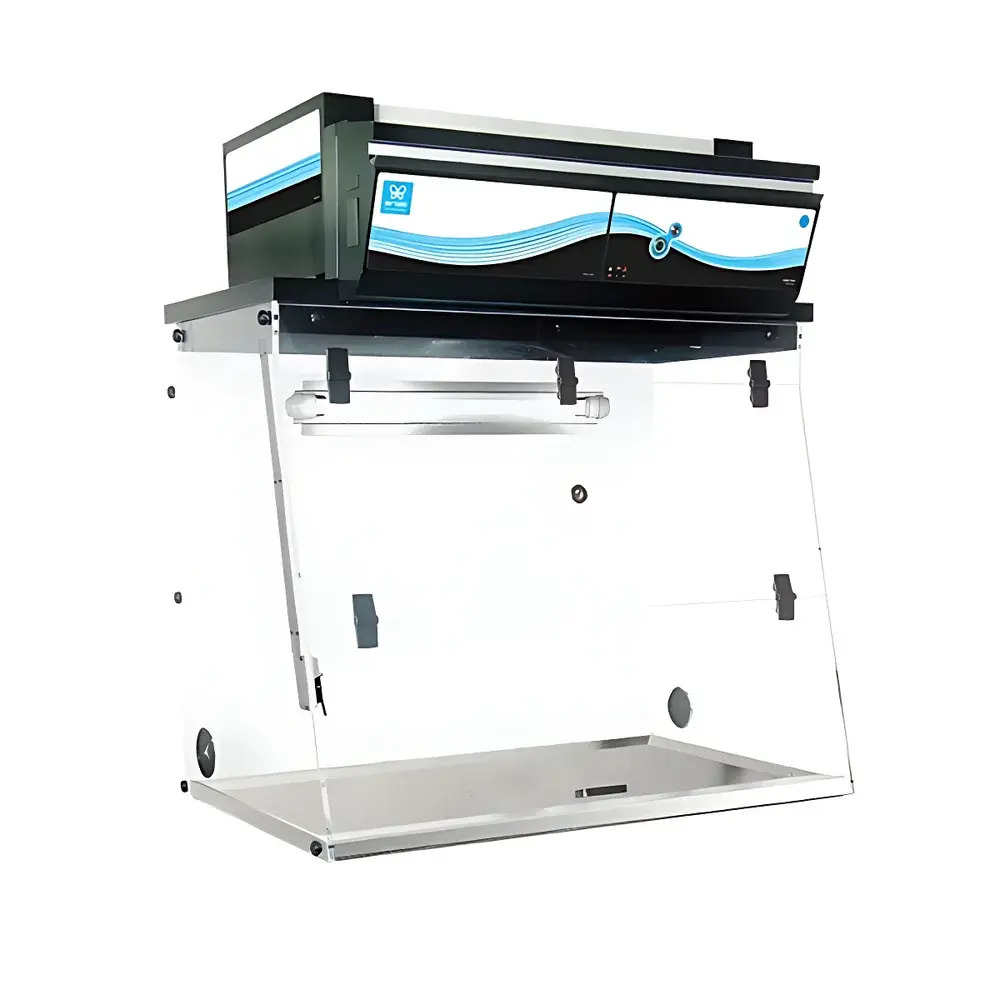
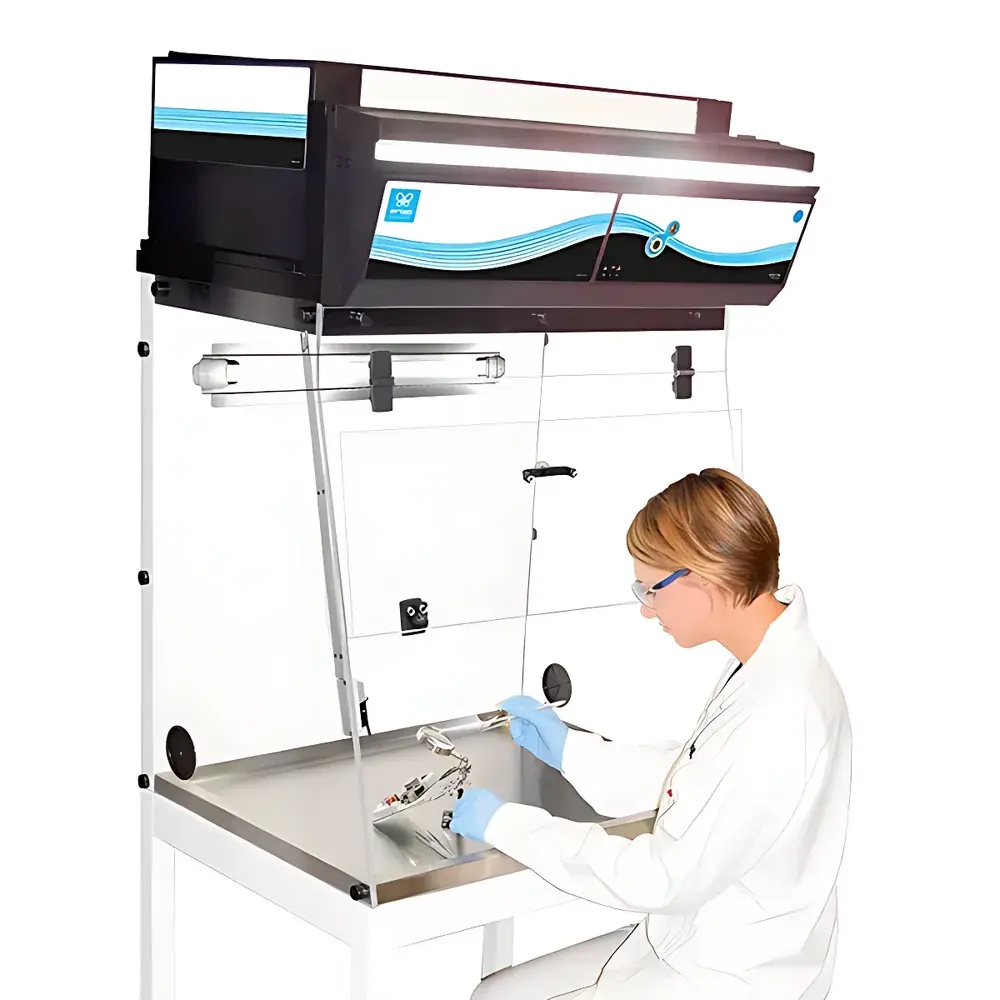
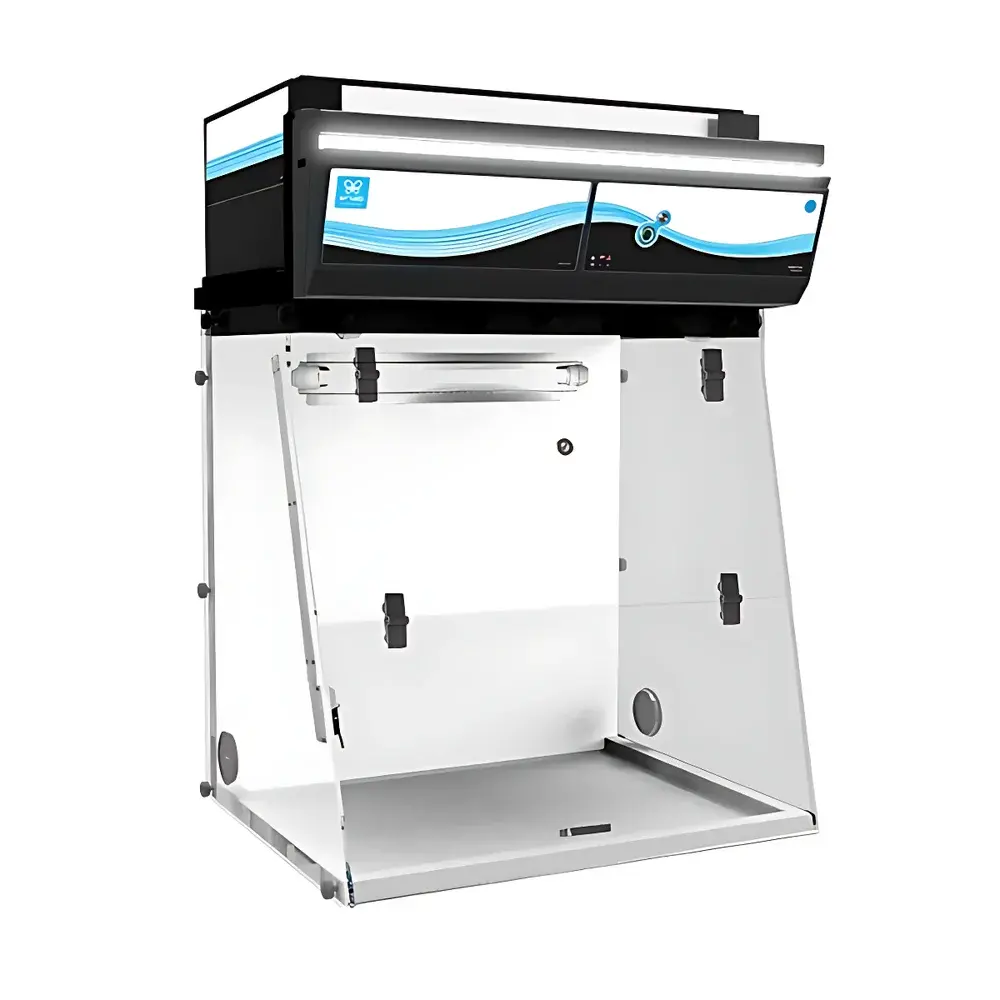
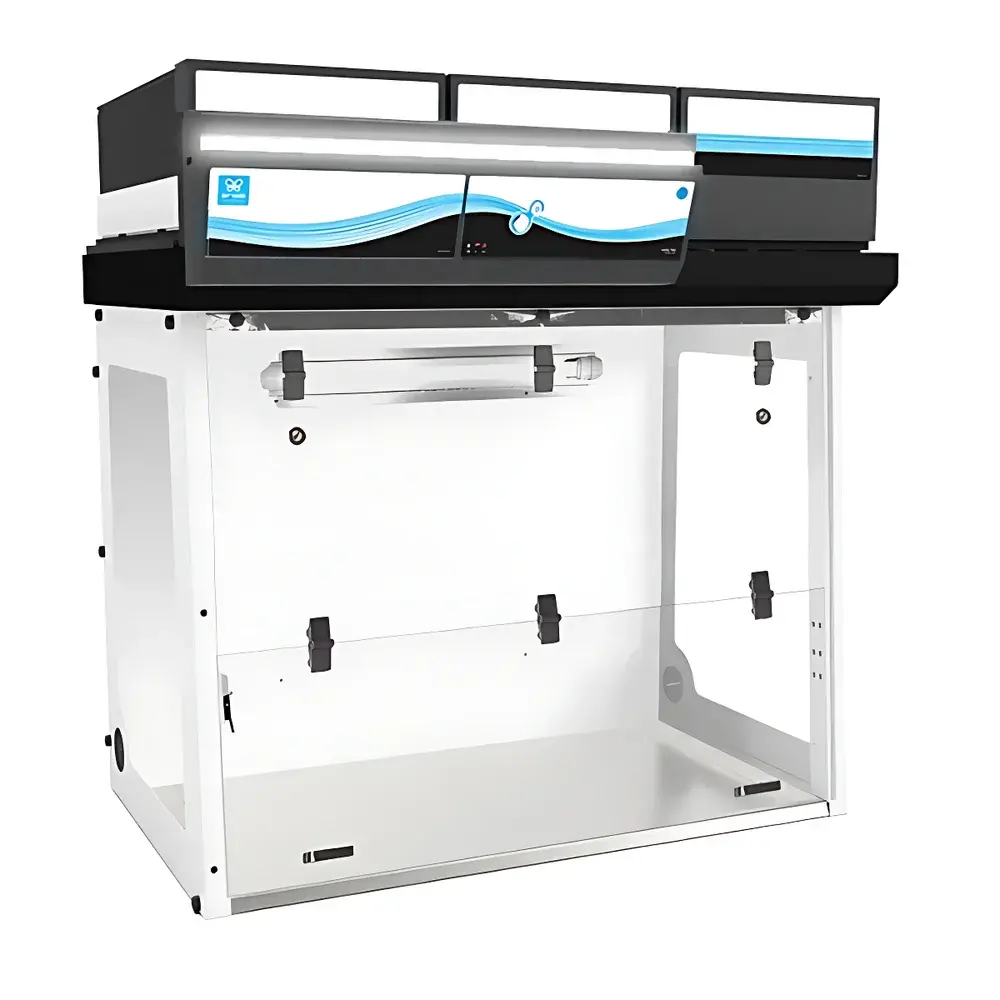
The Erlab Flow 391 Smart is a vertically oriented laminar flow clean bench engineered for precision sample protection in non-sterile but particle-controlled laboratory environments. It operates on the principle of unidirectional, downward laminar airflow—generated by a low-turbulence centrifugal blower and conditioned through either an H14 HEPA or U17 ULPA filter—to create an ISO Class 5 (formerly Class 100) work environment per EN ISO 14644-1:2015. Unlike biosafety cabinets, this clean bench provides product protection only—not personnel or environmental protection—and is therefore suitable for applications where containment of hazardous agents is not required. Its compact footprint (1013 mm wide × 635 mm deep), adjustable height (1209–1311 mm), and plug-and-play design make it ideal for modular lab layouts, shared facilities, and temporary installations requiring rapid deployment without ductwork or structural modification.
Key Features
- Smart optical interface with dynamic LED status band: Real-time visual feedback on airflow velocity, filter saturation, and operational safety level—integrated into the top fascia for immediate at-a-glance assessment.
- Dual-filter certification path: Factory-configurable selection between EN 1822-compliant HEPA H14 (≥99.995% efficiency at 0.1 µm) or ULPA U17 (≥99.999995% at 0.1 µm), both tested per ISO 14644-3:2019 protocols.
- Optional molecular filtration module: Comprising activated carbon and chemically impregnated media, designed to reduce volatile organic compounds (VOCs) from ambient air—critical for sensitive cell culture, semiconductor wafer handling, and analytical sample preparation.
- Energy-optimized operation: Brushless DC motor drive system delivering consistent airflow (0.3–0.5 m/s at work surface) while maintaining power draw between 40–55 W—meeting IEC 61000-6-3 (EMI emission) and IEC 61000-6-4 (EMI immunity) standards.
- Noise-controlled acoustic design: Acoustic dampening within the plenum and optimized fan blade geometry limit operational noise to ≤52 dBA at 1 m—ensuring compatibility with quiet-zone laboratories and adjacent instrumentation rooms.
- Modular service architecture: Front-access filter replacement, tool-free sash adjustment, and standardized mounting interfaces simplify preventive maintenance and extend service intervals in accordance with GLP-aligned lab SOPs.
Sample Compatibility & Compliance
The Flow 391 Smart supports a broad range of non-hazardous, non-volatile sample types including mammalian and insect cell cultures, plant tissue explants, microbiological media plates, microelectronics substrates, and pharmaceutical excipient weighing. It complies with EN 12464-1:2021 (lighting and indoor environmental requirements for workplaces), EN ISO 14644-1:2015 (cleanroom classification), and relevant sections of ISO/IEC 17025:2017 regarding equipment qualification. While not certified for biosafety use (i.e., no NSF/ANSI 49 or EN 12469 compliance), its ISO Class 5 performance is routinely validated using ISO 14644-2:2015 particle counting protocols and supported by traceable filter test reports (DOP/PAO challenge data available upon request). The unit meets CE marking requirements under the EU Machinery Directive 2006/42/EC and Electromagnetic Compatibility Directive 2014/30/EU.
Software & Data Management
The Flow 391 Smart features embedded firmware—not cloud-connected software—with local event logging capability. All operational parameters—including total runtime, filter usage hours, alarm triggers (e.g., airflow deviation >±10%, filter pressure drop >250 Pa), and LED status history—are stored in non-volatile memory for up to 12 months. Audit trails are exportable via USB-C port in CSV format, supporting FDA 21 CFR Part 11–compliant record retention when integrated into a validated laboratory information management system (LIMS). No remote monitoring or third-party API access is provided; data integrity is maintained through write-protected firmware and tamper-evident configuration locks.
Applications
- Tissue culture and primary cell isolation workflows where particulate exclusion—not biocontainment—is the primary requirement.
- Preparation of sterile reagents, buffers, and growth media in academic and contract research labs.
- Microelectronic component assembly and inspection, particularly for MEMS devices and photomask handling.
- Food microbiology testing (e.g., ISO 7218:2017 Annex A) involving enumeration of non-pathogenic indicator organisms.
- Environmental sample processing for pollen, spore, or particulate matter analysis under controlled background conditions.
- Calibration and setup of sensitive optical instruments requiring vibration- and particle-minimized staging areas.
FAQ
Is the Flow 391 Smart suitable for working with pathogenic organisms?
No. This unit provides product protection only and does not meet biosafety cabinet standards (e.g., NSF/ANSI 49 or EN 12469). It must not be used for BSL-2 or higher agents.
Can the ULPA filter be retrofitted into a HEPA-configured unit?
Yes—filter modules are mechanically and electrically interchangeable at service intervals, provided the control board firmware is updated to ULPA calibration curves.
Does the molecular filter require scheduled replacement?
Yes. Carbon-based molecular filters have finite adsorption capacity and should be replaced every 6–12 months depending on ambient VOC load; replacement interval tracking is integrated into the LED status logic.
What validation documentation is supplied with the unit?
Each unit ships with a Certificate of Conformance, factory airflow uniformity report (ISO 14644-3), and individual filter test certificate (EN 1822-3:2019). IQ/OQ protocols are available as optional add-ons.
Is the Flow 391 Smart compatible with ISO/IEC 17025 accreditation requirements?
Yes—its metrological traceability, defined operating parameters, and audit-log functionality support compliance with clause 6.4.10 (equipment records) and 6.5.2 (verification of fitness for purpose) when included in a lab’s equipment management system.



