
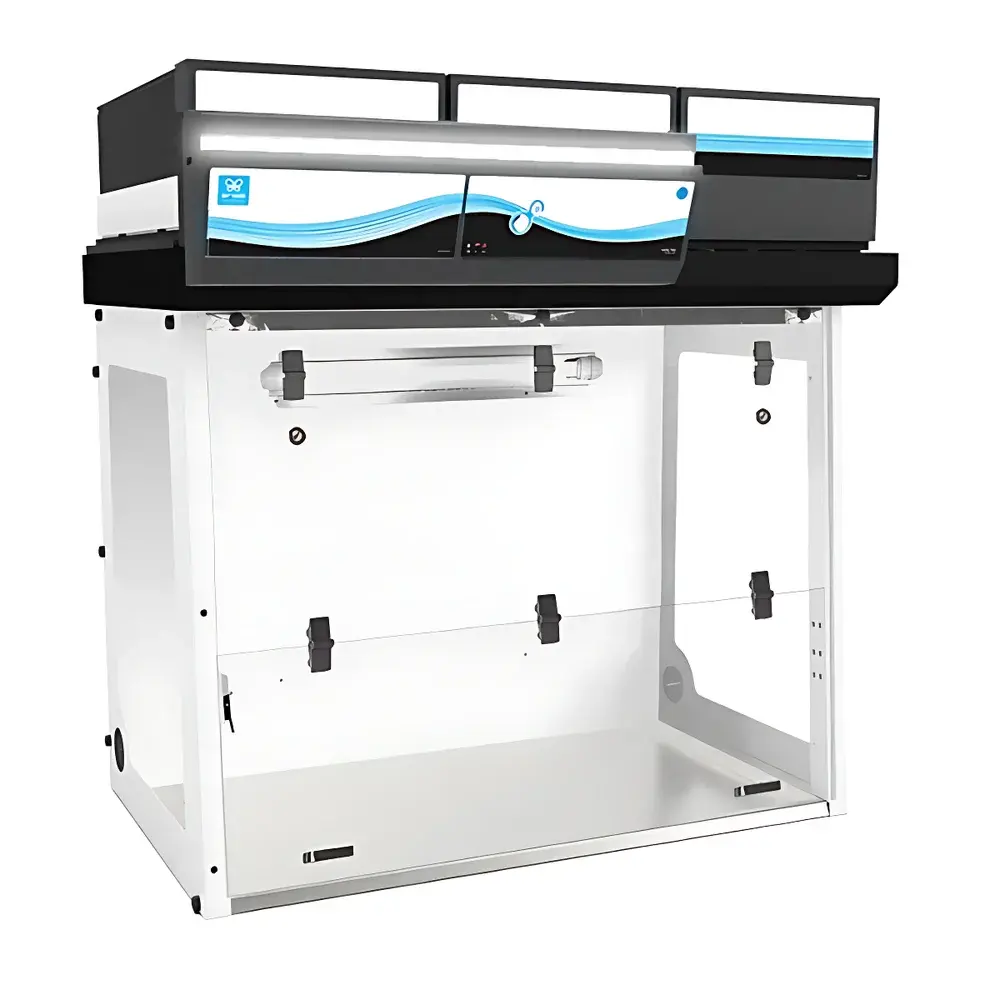
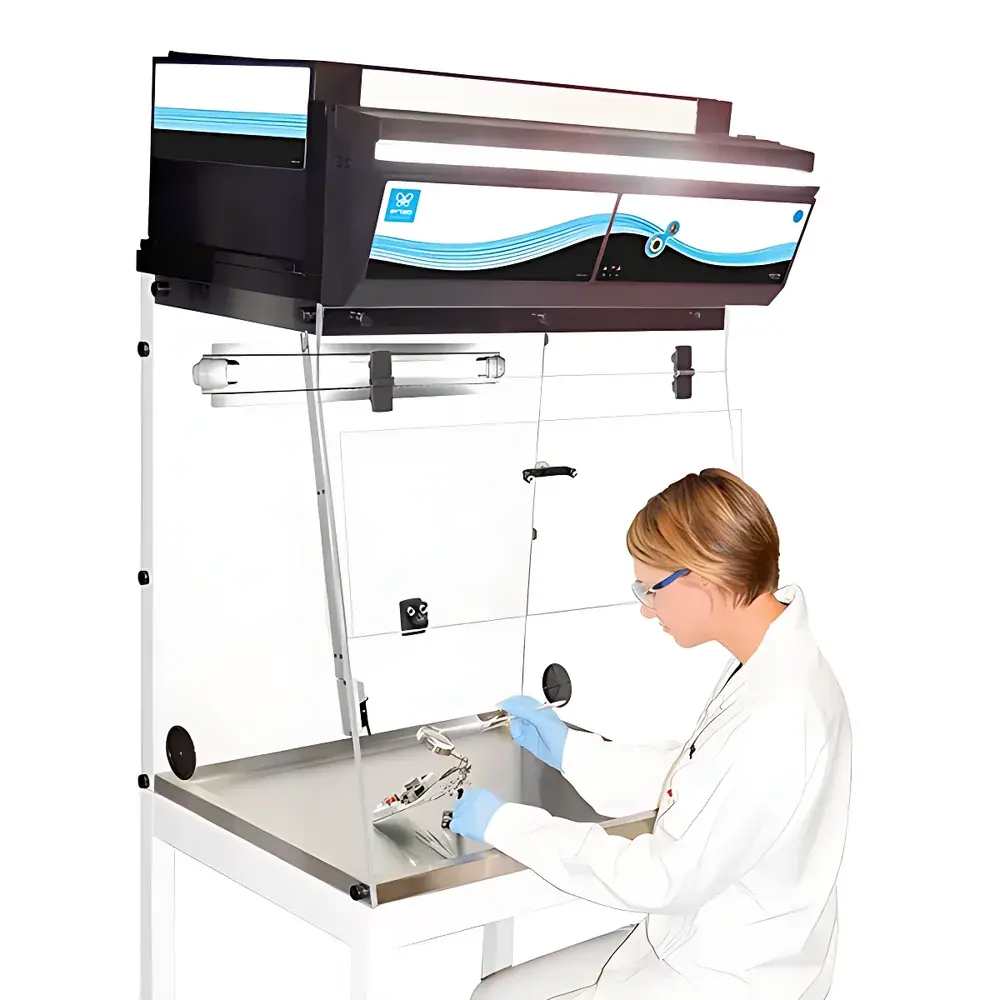
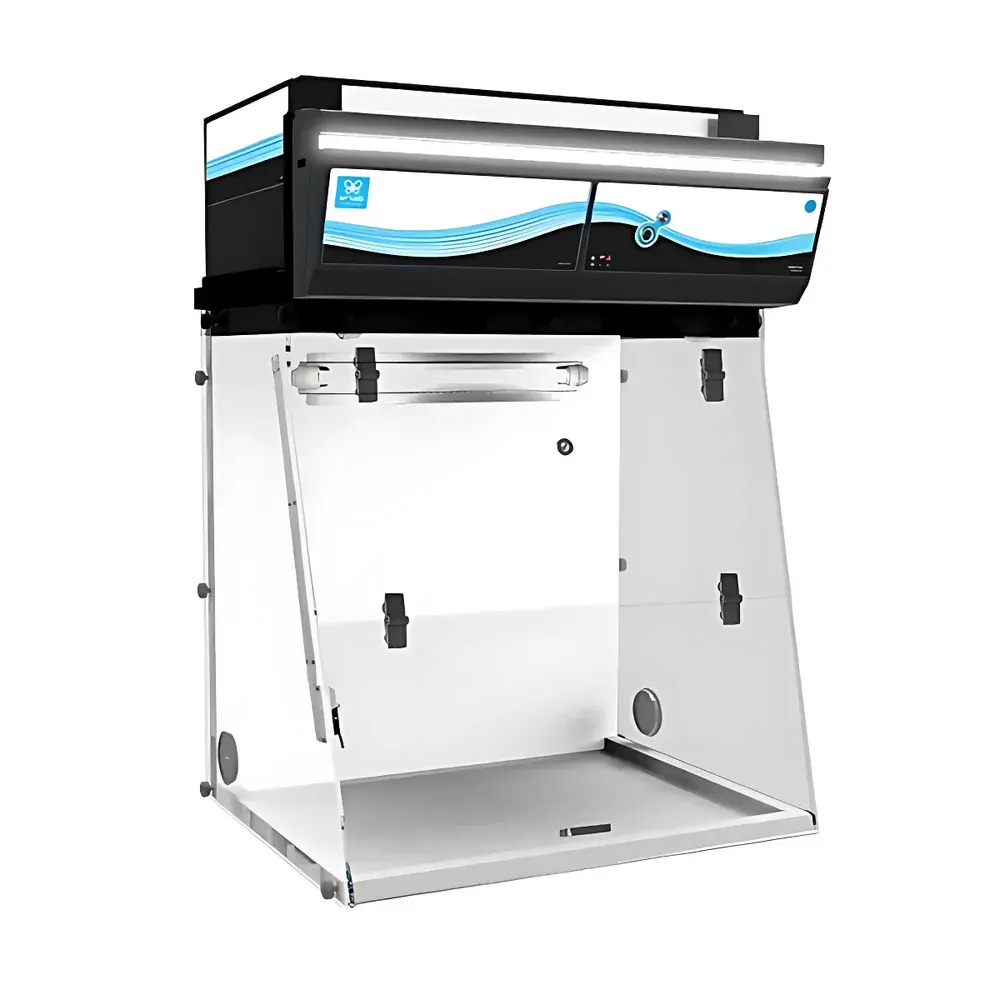
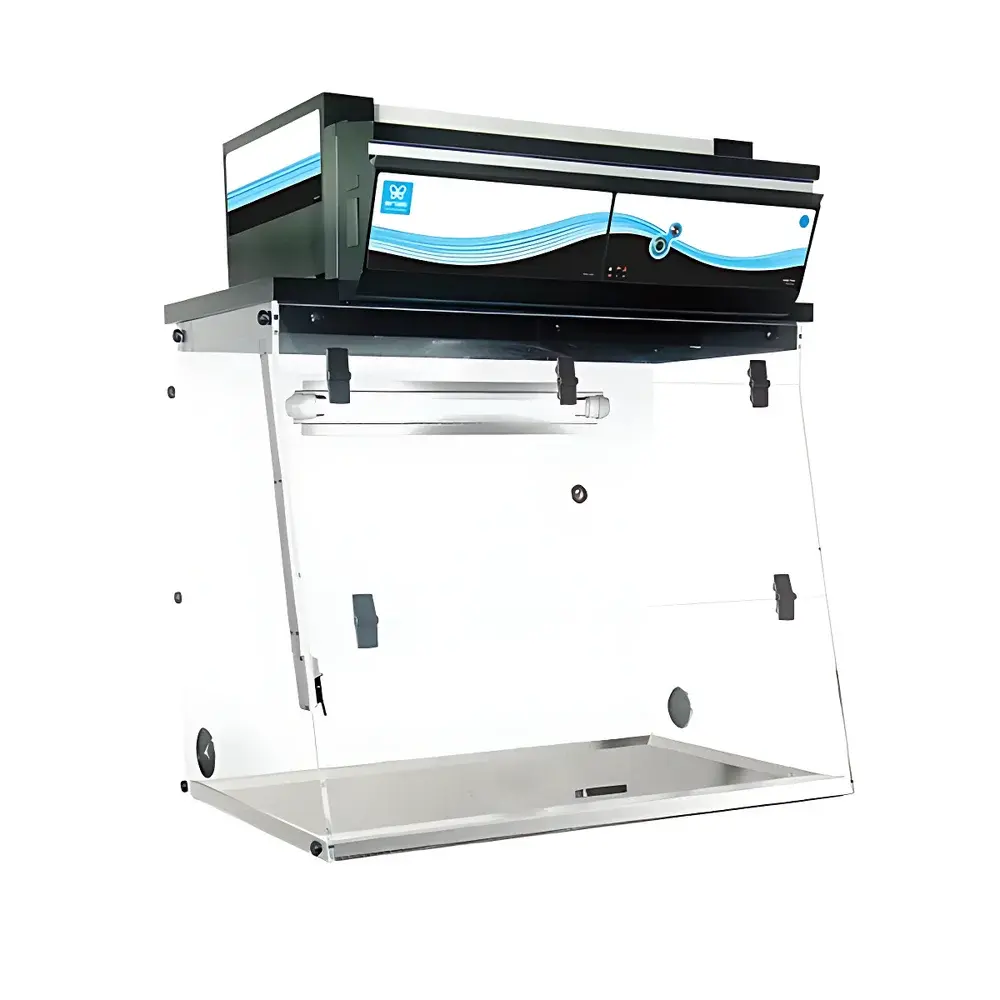
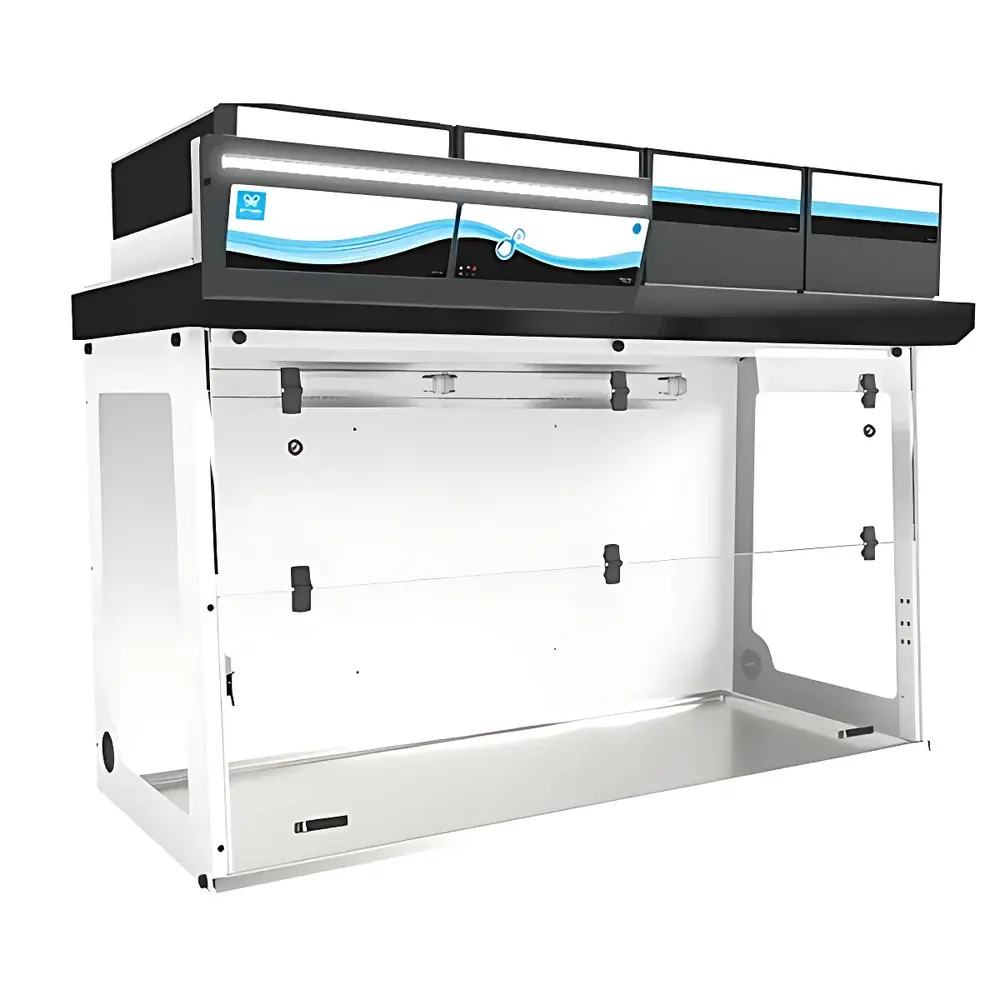
Erlab Flow 483 Smart Vertical Laminar Flow Clean Bench
| Brand | Erlab |
|---|---|
| Origin | Jiangsu, China |
| Manufacturer Type | Authorized Distributor |
| Origin Category | Domestic |
| Model | Flow 483 Smart |
| Price Range | USD 7,000 – 14,000 (FOB) |
| Instrument Type | Vertical Laminar Flow Clean Bench |
| Cleanliness Class | ISO Class 5 (equivalent to Federal Standard 209E Class 100) |
| Noise Level | ≤52 dB(A) |
| User Capacity | Single-user, front-access |
| Airflow Pattern | Vertical downward laminar flow |
| Filter Type | HEPA H14 (≥99.995% @ 0.1 µm) or ULPA U17 (≥99.999995% @ 0.1 µm) |
| Power Consumption | 90–95 W |
| Dimensions (W×D×H) | 1298 × 961 × 1340–1436 mm |
| Compliance | EN ISO 14644-1:2015, EN 12464-1:2021, IEC 61000-6-3, IEC 61000-6-4 |
Overview
The Erlab Flow 483 Smart is a vertically oriented laminar flow clean bench engineered for precision sample protection in non-sterile but particle-controlled laboratory environments. Unlike biological safety cabinets, it does not provide personnel or environmental protection—its primary function is unidirectional, downward laminar airflow across the work surface to maintain ISO Class 5 (Class 100) cleanliness per EN ISO 14644-1:2015. This makes it ideal for applications where sample integrity is paramount and operator exposure to hazardous agents is not a concern—such as cell culture (non-pathogenic), tissue engineering, semiconductor wafer handling, pharmaceutical formulation support, and food microbiology testing. The unit employs a high-efficiency air filtration system with either H14 HEPA (99.995% efficiency at 0.1 µm) or U17 ULPA (99.999995% efficiency at 0.1 µm) filters, ensuring reproducible particulate removal. Its fully self-contained, ductless design eliminates the need for external exhaust infrastructure, reducing installation complexity and lifecycle energy consumption.
Key Features
- Smart optical interface with dynamic LED status band: real-time visual feedback on airflow velocity, filter load, and operational safety thresholds—no manual calibration or software login required.
- Adjustable height column (1340–1436 mm) accommodates ergonomic positioning for seated or standing operation without compromising laminar uniformity.
- Modular top-mounted filtration assembly enables rapid, tool-free HEPA/ULPA filter replacement with validated seal integrity—minimizing downtime during scheduled maintenance.
- Integrated molecular filtration option (activated carbon + impregnated media) removes volatile organic compounds (VOCs) from recirculated air, critical for sensitive assays involving volatile solvents or low-concentration analytes.
- Low-power DC motor-driven centrifugal blower (90–95 W typical) ensures stable airflow at 0.45 ± 0.05 m/s across the full work surface, compliant with EN 12464-1:2021 illumination and airflow uniformity requirements.
- Acoustically optimized enclosure maintains noise levels ≤52 dB(A) at 1 m distance—suitable for shared laboratory spaces requiring low ambient disturbance.
Sample Compatibility & Compliance
The Flow 483 Smart supports open-vessel operations including Petri dishes, T-flasks, multiwell plates, and small-scale bioreactors—provided all procedures are conducted under non-hazardous, non-aerosol-generating conditions. It complies with ISO 14644-1:2015 for cleanroom classification, EN 12464-1:2021 for workplace lighting and airflow design, and IEC 61000-6-3/-6-4 for electromagnetic compatibility. While not certified to NSF/ANSI 49 or EN 12469 (which govern biosafety cabinets), its performance documentation—including filter certification reports, airflow mapping data, and particle challenge test results—supports internal GLP/GMP validation protocols. Users are responsible for periodic in-house certification per ISO 14644-3:2019 (testing methods) and local institutional SOPs.
Software & Data Management
The Flow 483 Smart operates via embedded firmware with no external PC dependency. All operational parameters—including cumulative runtime, filter usage hours, and alarm history—are stored in non-volatile memory and accessible via the front-panel LED interface. Optional USB-C data export (via service port) enables transfer of event logs for audit trail generation. Though not FDA 21 CFR Part 11 compliant out-of-the-box, the unit’s deterministic behavior, immutable timestamped alarms, and absence of user-modifiable settings facilitate integration into validated workflows when paired with laboratory information management systems (LIMS) that enforce electronic signature and change control policies.
Applications
- Non-pathogenic mammalian and insect cell culture, including transfection and passaging workflows.
- Preparation of sterile media, reagents, and buffers for downstream analytical or diagnostic use.
- Microelectronics handling: photomask inspection, microchip packaging, and thin-film deposition staging.
- Food safety testing: plating of selective agars, colony isolation, and enumeration under controlled particulate conditions.
- Plant tissue culture and callus propagation where airborne fungal spores compromise viability.
- Quality control in low-end cleanroom annexes where full ISO Class 5 rooms are cost-prohibitive.
FAQ
Does the Flow 483 Smart protect the operator from hazardous aerosols?
No. It provides only product protection via vertical laminar flow. For personnel or environmental protection, a Class II biological safety cabinet meeting NSF/ANSI 49 or EN 12469 is required.
Can this unit be installed in a standard laboratory without external ductwork?
Yes. As a recirculating, ductless system, it requires only a standard 100–240 V AC power outlet and adequate ambient air supply—no roof penetration or exhaust fan integration is needed.
What is the expected service life of the HEPA H14 filter under typical lab use?
Under continuous operation with average ambient particulate loading (≤0.5 mg/m³), H14 filters typically last 18–24 months; ULPA U17 filters may require replacement every 12–18 months. Actual lifespan depends on local air quality and frequency of surface decontamination.
Is remote monitoring or network connectivity supported?
No native Ethernet or Wi-Fi capability is included. However, the unit’s alarm outputs (dry contact) can be interfaced with building management systems (BMS) or centralized lab monitoring platforms via optional relay modules.
How is ISO Class 5 performance verified during commissioning?
Verification requires particle counting per ISO 14644-1 Annex B using a calibrated 0.1–0.5 µm optical particle counter, with ≥3 sampling points across the work surface at 0.3 m above the deck, each measured for ≥1 minute. Erlab provides a factory-issued test report; users must perform site-specific requalification annually or after filter replacement.
Related Products



