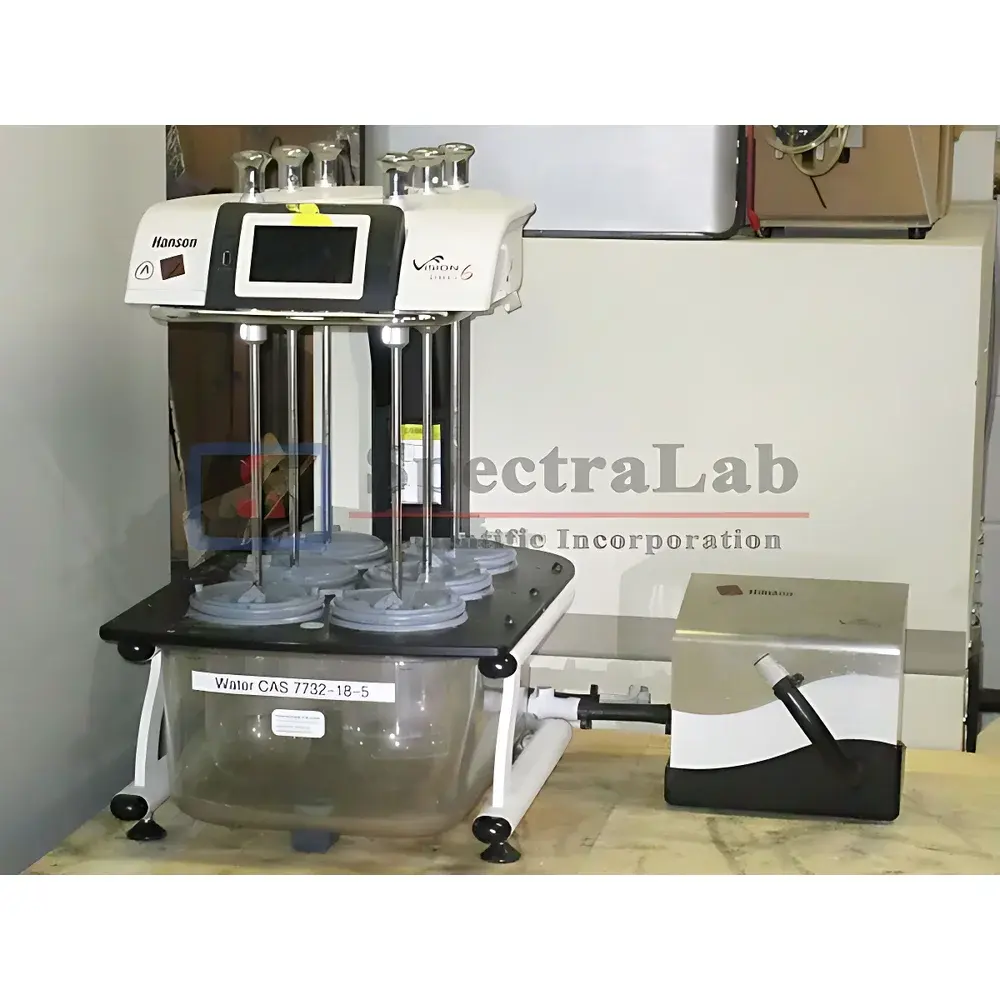
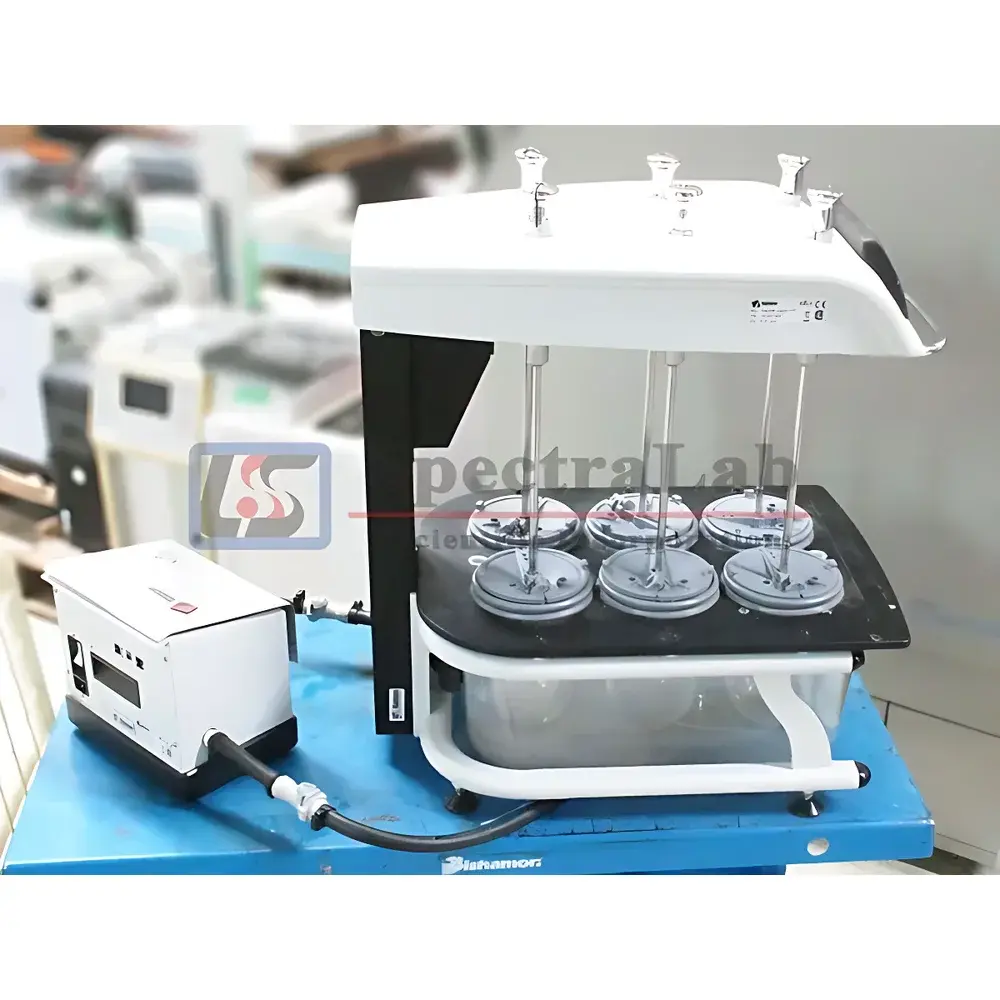
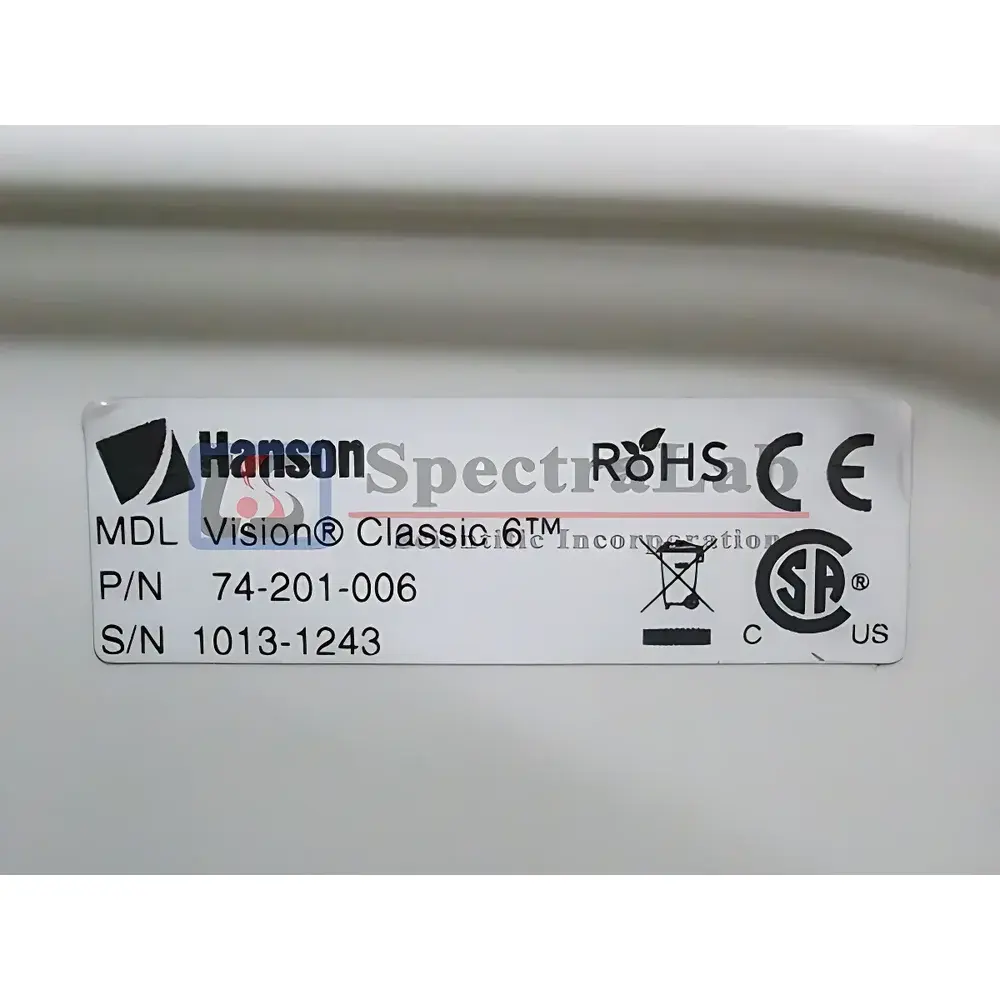
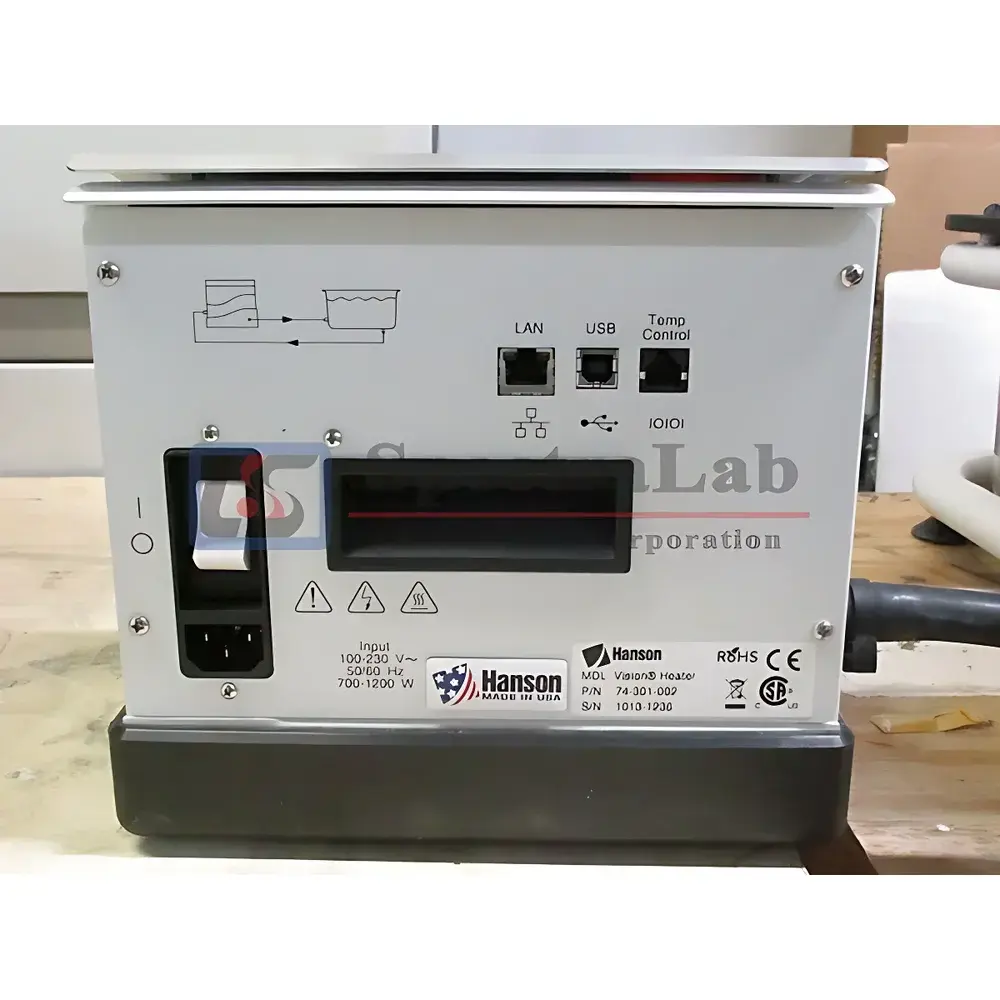
Hanson Research Vision G2 Classic 6 Dissolution Tester
| Brand | Hanson Research |
|---|---|
| Origin | USA |
| Model | Vision G2 Classic 6 |
| Temperature Range | 25–55 °C (±0.2 °C) |
| Rotational Speed Range | 25–250 rpm (±1 rpm) |
| Vessel Capacity | 11.4 L |
| Dimensions (D×W×H) | 585×394×673 mm |
| Power Supply | 220 V AC, 50–60 Hz, 65 W |
| Connectivity | RS232, USB, LAN |
| Software-Enabled Method Storage | Up to 100 protocols |
| Warranty | 6 months post-delivery |
| Operational Age | 3–4 years |
| Certification Status | Pre-tested and verified per USP <711> and ASTM D7832-14 compliance benchmarks |
Overview
The Hanson Research Vision G2 Classic 6 Dissolution Tester is a fully compliant, benchtop dissolution testing system engineered for precision, repeatability, and regulatory traceability in pharmaceutical quality control and formulation development laboratories. Based on the USP Apparatus 2 (paddle) configuration, it employs calibrated hydrodynamic fluid dynamics to simulate gastrointestinal transit conditions and quantitatively assess the rate and extent of drug release from solid oral dosage forms—including tablets, capsules, and modified-release formulations. The system integrates a thermostatically controlled water bath with active circulation, digitally regulated paddle rotation, and real-time temperature/rotation monitoring—ensuring adherence to ICH Q5C stability guidelines and pharmacopoeial requirements (USP , Ph. Eur. 2.9.3, JP 17). Its modular architecture supports both standalone operation and full integration into networked QC environments.
Key Features
- High-stability temperature control: Maintains bath setpoints from 25 °C to 55 °C with ±0.2 °C accuracy across all six vessels, validated via NIST-traceable thermistors and dual-point calibration routines.
- Precision motor-driven paddle assembly: Delivers consistent rotational speeds from 25 to 250 rpm with ±1 rpm tolerance; each shaft independently balanced and dynamically tested prior to deployment.
- Integrated connectivity suite: Equipped with RS232 serial, USB 2.0, and Ethernet (LAN) interfaces—enabling direct communication with LIMS, electronic lab notebooks (ELN), and automated data archival systems.
- Robust mechanical design: Stainless-steel vessel holders, corrosion-resistant bath housing, and vibration-damped base structure ensure long-term mechanical integrity and minimal inter-vessel variability.
- Pre-validated operational status: Each unit undergoes comprehensive functional verification at SpectraLab Scientific’s ISO/IEC 17025-accredited test facility—including temperature uniformity mapping, rotational speed linearity assessment, and vessel centering verification per USP Annex 1.
Sample Compatibility & Compliance
The Vision G2 Classic 6 accommodates standard 1-L USP-compliant dissolution vessels and supports alternate geometries (e.g., mini-vessels, flow-through cells) via optional adapters. It is routinely deployed in GLP- and GMP-regulated environments where audit readiness is mandatory. System firmware and embedded logic comply with FDA 21 CFR Part 11 requirements for electronic records and signatures when paired with validated software platforms. All pre-delivery units include a full test report documenting thermal uniformity (per ASTM D7832-14), rotational accuracy, and mechanical alignment—certified against current USP acceptance criteria for dissolution apparatus qualification.
Software & Data Management
While the Vision G2 Classic 6 operates effectively in stand-alone mode using its front-panel interface, its full data governance potential is realized when connected to Hanson’s Dissolution Pro™ or third-party validated software (e.g., Empower™, LabSolutions™). Method parameters—including dissolution timepoints, sampling intervals, temperature ramps, and rotation profiles—are stored locally (up to 100 methods) and exportable in CSV, XML, or PDF formats. Audit trails capture user logins, parameter changes, run initiations, and error events—supporting full ALCOA+ principles (Attributable, Legible, Contemporaneous, Original, Accurate, Complete, Consistent, Enduring, Available). Data encryption and role-based access control are enforced at the host application layer.
Applications
- Comparative dissolution profiling of generic and innovator products under discriminatory conditions (e.g., pH-shift, surfactant-containing media).
- Stability-indicating method development for extended-release matrix tablets and osmotic pump systems.
- Excipient interaction screening during preformulation studies—evaluating effects of surfactants, polymers, and pH modifiers on release kinetics.
- Batch release testing per pharmacopoeial monographs (e.g., USP-NF, EP) with automated pass/fail flagging based on Q-value thresholds.
- Supporting ANDA submissions through generation of dissolution data packages compliant with FDA Guidance for Industry (2019) on Dissolution Testing of Immediate-Release Solid Oral Dosage Forms.
FAQ
Is this unit supplied with full documentation and test reports?
Yes—each Vision G2 Classic 6 is delivered with a comprehensive factory test report, calibration summary, and USP qualification checklist, all generated under ISO/IEC 17025 procedures.
Can the system be integrated into an existing LIMS or ELN infrastructure?
Yes—native RS232, USB, and TCP/IP (LAN) support enables seamless integration with most laboratory informatics platforms using standard ASCII command sets or HL7-compliant middleware.
What level of technical support is provided post-purchase?
SpectraLab Scientific offers 6 months of hardware warranty, remote diagnostics assistance, and access to Hanson-certified field service engineers for on-site intervention if required.
Are replacement parts and consumables available?
All OEM-certified spare parts—including paddles, vessels, temperature probes, and drive belts—are stocked and shipped globally within 48 business hours.
Does the instrument meet current FDA and EMA regulatory expectations for dissolution equipment?
Yes—the Vision G2 Classic 6 meets the mechanical qualification, performance verification, and data integrity requirements outlined in FDA Guidance (2021), EMA CHMP Reflection Paper (2022), and ICH Q5C Annex III for dissolution apparatus validation.